Levant Time logo

Today's Essential

Iran-US standoff: endless proposals, but no breakthrough
By
LevantTime .
Published
May 1, 2026 - 21:23

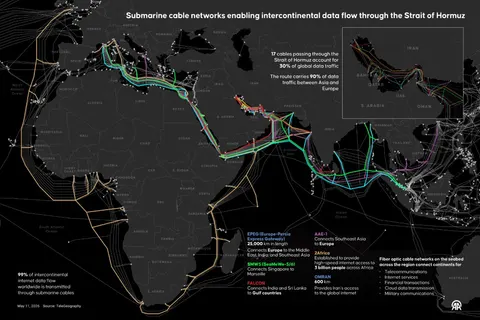
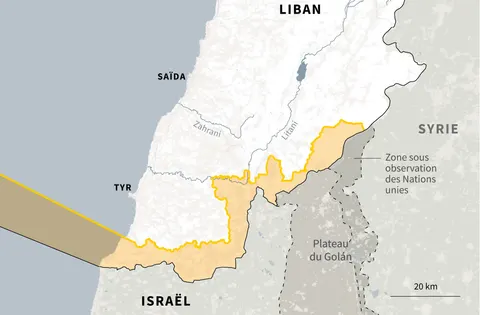
On a scale of 1 to 10, optimism regarding a breakthrough in the US-Iranian talks in Islamabad remains below average, with Tehran and Washington still at the stage of exchanging conditions and demands. The official Iranian agency, IRNA, revealed on Friday that the Islamic Republic submitted a new proposal for resuming negotiations to the United States on Thursday evening via the Pakistani mediator, which are supposed to bring a lasting end to the war. IRNA did not give details on the content of the Iranian offer while the Iranian Foreign Minister, Abbas Araghchi, got in touch with his Saudi, Qatari, Turkish, Egyptian, Iraqi, and Azerbaijani counterparts. According to Iranian media, he reportedly informed them of an upcoming new round of talks with the United States, even as President Donald Trump announced to reporters at the White House that he was not satisfied with the new Iranian document. "They want a deal because they no longer have military capabilities, but I am not satisfied with their proposals. We'll see what happens," he stated, before clarifying: "They are asking me to accept things that I cannot accept." The new submitted document constitutes a counter-proposal to the one Washington had submitted to Iran earlier in the week. The American news site Axios thus recalls that on Monday, White House envoy Steve Witkoff sent to the opposing party, still via the Pakistani mediator, amendments to Iranian proposals rejected earlier by President Donald Trump. Tehran said it was willing to reopen the Strait of Hormuz but proposed postponing the nuclear talks to a later date, whereas this issue is central for both the United States and Israel. Steve Witkoff therefore reintroduced the nuclear issue to the text being considered. Also according to Axios, among the modifications made to the Iranian document is the demand that Tehran commit to not transferring enriched uranium out of its damaged nuclear facilities, nor resuming activities at these sites, throughout the duration of the negotiations. Tehran, for its part, strangled by the blockade imposed by the United States on its ports, refuses to resume talks as long as the American siege is not lifted. Which of the two will be led to make concessions? For the time being, both sides seem to be digging their heels in, under the worried eyes of Israeli leaders who fear a certain American flexibility that Donald Trump brushed aside by affirming that the military option is still not ruled out. Tel Aviv remains in favor of a "surgical" military operation capable of dealing a death blow to the Mullah regime -one of the primary objectives of the war launched on February 28- and annihilating the Iranian nuclear program once and for all. For now, Tehran and Washington therefore continue to say they are in favor of talks, but while continuing the exchange of threats. Through the head of its judiciary, Gholamhossein Mohseni Ejei, Iran on Friday once again rejected any policy "imposed under threat" while saying it remained open to dialogue with the United States. "We do not approve of war in any way, we do not want war, we do not want it to continue. The Islamic Republic has never shied away from negotiations (...) but we will certainly not accept having a policy imposed on us," Mr. Ejei stated in a video broadcast on the judiciary's website, Mizan Online. He indicated that Iran is "absolutely not willing to renounce its principles and values in the face of a malicious enemy in order to avoid war or prevent it from continuing." Believing that the United States had "obtained nothing" during the war, he insisted that Tehran would not "yield" during negotiations. On Wednesday, President Donald Trump warned that the Iranians had "better get smart and fast!" by mentioning the possibility of an extension to the maritime blockade "for several months," according to a senior White House official. American sanctions Meanwhile, American pressure is mounting. On Friday, just hours after receiving the text of the new Iranian proposals, Washington once again imposed sanctions on Friday against six individuals and more than 20 entities, all linked to the Islamic Revolutionary Guard Corps and the Iranian financial structure. But at the same time, Washington has slightly reduced its military presence in the region. One of the three American aircraft carriers deployed to the Middle East, the USS Gerald Ford, deployed for the war in Iran, has left the region, a US official said on Friday, with two other such vessels remaining positioned there. The world's largest aircraft carrier is currently in the US European Command area of responsibility, according to the official, who estimated the number of US Navy ships remaining deployed in the Middle East at twenty. This count includes the aircraft carriers USS Abraham Lincoln and USS George Bush. Does this mean the United States has given up on strikes against Iran? The answer is obviously negative, as this redeployment could be a simple military tactic. The fact remains that the American president does not intend to seek authorization from Congress to continue the war against Iran. Friday indeed marks the 60-day deadline after which Donald Trump must, in principle, request this authorization. Before reporters at the White House, he announced that he was not going to do so. In any case, Democrats find themselves powerless to enforce this constitutional obligation, as they do not have the majority in Congress. Asked if he was considering new strikes against Iran, he simply replied: "Why would I tell you?"  Continuous escalation in South Lebanon On the Lebanese front, the escalation continues in South Lebanon, where the Israeli army has relentlessly bombarded numerous sites attributed to Hezbollah and carried out extensive demolition operations that have not spared historical and archaeological sites. The Israeli army blew up an old monastery and a school run by nuns in Yaroun, as well as the historical site of Chamah, which houses the maqam of Chamoun as-Safa, along with a historical fortress. Violent raids were carried out against a large number of villages, notably Habbouche, whose residents had earlier been called to evacuate the area. Around ten people were killed in this locality. Hezbollah reacted by launching, in turn, explosive drones and rockets against Israeli positions in the new buffer zone established by Tel Aviv at the border. This new wave of violence, which has become a daily occurrence, was followed by a vast exodus towards Sidon and Beirut, with many Southerners fearing a widening of the conflict. While the Israeli army acknowledged having difficulties countering the threat of Hezbollah's explosive drones, the pro-Iranian group announced that it had successfully dispatched reinforcements to South Lebanon. During an interview with a group of journalists, including AFP, the group's media relations director, Youssef el-Zein, revealed that these reinforcements did not use routes controlled by the Lebanese army, specifying that "other access points south of the Litani have not been closed." "We are convinced that the army is a national army," which "will not enter into a confrontation with Hezbollah," he said. According to the official, if Israel was able to infiltrate deep into Lebanese territory, it is because "the resistance had handed over its weapons south of the Litani" and "its infrastructure, including tunnels, were destroyed." But he assured that Hezbollah had been able to "rebuild its forces" after the last war with Israel and that it was "prepared for a long battle." When asked about Hezbollah's recent use of fiber-optic explosive drones against the Israeli army, Youssef al Zein said it was a "tactic" of the group. "We know the enemy's superiority, but at the same time we take advantage of its weak points," he said. Mr. Zein, who replaced Afif Naboulsi, killed in an Israeli strike on Beirut in November 2024, indicated that these drones were "manufactured in Lebanon." Attacks carried out using these drones have left two dead and several wounded over the past three days. On the political level, the showdown continues between the State and Hezbollah. The parliamentary bloc of this group, chaired by MP Mohammad Raad, once again rejected, in very harsh terms, any direct dialogue between Lebanon and Israel, castigating what it called "the destructive policy of a declining power" and boasting of having "succeeded in establishing a new military equation against Israel." The prospects for launching talks between Beirut and Tel Aviv were reviewed during the meeting that President Joseph Aoun had on Friday with the US Ambassador in Beirut, Michel Issa, who had previously met with the Lebanese Prime Minister, Nawaf Salam. These two meetings come the day after the announcement made by President Trump, according to which the Lebanese-Israeli negotiations are expected to start within two weeks. But Lebanon's position remains unchanged: No talks as long as Tel Aviv has not ended its attacks against Lebanese localities and infrastructure in the south of the country. President Aoun reiterated this condition to the diplomat.

Washington and Tel Aviv threaten Iran with a decisive operation
By
LevantTime .
Published
May 1, 2026 - 00:23

The United States and its Israeli ally threatened yesterday to resume strikes against Iran in order to force the Islamic Republic to return to the negotiating table. Despite the truce and initial talks on April 11 in Islamabad, diplomacy is still struggling to prevail. According to the American site Axios , President Donald Trump was to be briefed by Centcom (US Central Command) commander Brad Cooper on possible new military operations against Iran. The goal is to carry out a decisive military action. The options presented to him by the Centcom chief include a wave of strikes targeting infrastructure, but also the possibility of taking control of the Strait of Hormuz, possibly with the participation of US ground forces, according to the site, which cites two sources close to the matter. The specter of a return to strikes has prompted some countries, such as the United Arab Emirates, to issue fresh warnings to their citizens, asking them to avoid traveling to Iran, Iraq, and Lebanon. It has encouraged those who are there to leave. Although a ceasefire has been in effect since April 8, the United States is imposing a blockade on Iranian ships in retaliation for Tehran's closure of the Strait of Hormuz, through which a fifth of the world's consumed hydrocarbons transited before the conflict. Echoing the reports from Washington, Israeli Defense Minister Israel Katz warned that Tel Aviv might “have to act again” against Iran so that it does not “become a threat to Israel again” . The Iranian response was not long in coming: incendiary statements followed one another late in the day. Starting with the Supreme Leader, who claimed that the United States had suffered a “shameful defeat” against his country: “Two months after the largest military deployment and aggression led by the tyrants of this world in the region, and after the shameful defeat of the United States, a new chapter is opening” for the Gulf and the Strait of Hormuz, Ayatollah Mojtaba Khamenei declared in a written message. Wounded in strikes, he has not been seen in public since his appointment. Iranian President Masoud Pezeshkian, for his part, denounced the American blockade, which he said he views as an “extension of American military operations” . The same victorious tone was heard from the commander of the Aerospace Force of the Islamic Revolutionary Guard Corps, Majid Moussavi, who warned on state television that even a “brief” enemy operation would lead to “painful, prolonged, and extensive strikes” . Major energy crisis The war of words was quick to sow panic in the markets. The rise in tensions sent oil prices soaring: Brent crude briefly surpassed $126 a barrel on Thursday, an unprecedented level since 2022, during Russia's invasion of Ukraine. Indeed, the repercussions of the blockade of Hormuz are being felt a bit more every day by the global economy, amid creeping shortages, surges in inflation, and downward revisions in growth. “The world is facing the most severe energy crisis in its history,” judged the head of the International Energy Agency, Fatih Birol. UN Secretary-General Antonio Guterres also expressed alarm at the “stranglehold” on the global economy due to the paralysis of the strait. And the European Central Bank warned against the “intensification” of risks to inflation and growth in the eurozone. Lebanese-Israeli talks “within two weeks” On the Lebanese front, 15 people were killed in Israeli strikes in the south of the country, while President Joseph Aoun condemned Israel's “persistent violations” of the truce, which went into effect on April 17. “Israeli violations persist in the south despite the ceasefire, along with the demolition and leveling of homes and places of worship, as the number of victims climbs day by day,” President Aoun denounced. At the political level, the gap continues to widen between President Aoun, who is determined to conduct direct negotiations with Israel, and Hezbollah, which opposes them and is campaigning against him. President Trump announced during a press conference on Thursday a resumption of talks between Lebanese and Israelis in Washington “within two weeks,” while in Beirut, the US Embassy stressed on its X account that Lebanon today is “at a historic turning point” . According to the embassy, the upcoming dialogue represents for the country “a historic opportunity, allowing its people to take matters back into their own hands and build a sovereign and independent nation” . For the US Embassy, direct negotiations will allow Lebanon to have “solid guarantees for a restoration of national sovereignty, the preservation of its territorial integrity, and the security of its borders” . They are also likely to “ensure humanitarian and reconstruction support” . Affirming that Washington is willing to support Lebanon in this task, the embassy encourages the country to “be the sole master of its own destiny” .

Negotiations with Israel would put Aoun's life in danger
By
Taline Becharraoui
Published
Apr 29, 2026 - 20:27

The standoff between the Lebanese presidency and Hezbollah – and President Joseph Aoun’s resolve to press ahead with direct negotiations with Israel under Washington’s auspices – is reportedly placing his life at risk. The warning surfaced over the past 24 hours from an unlikely source: Israeli intelligence services. A report aired by Israel’s Channel 12 cited a military intelligence briefing indicating that “the involvement of the Lebanese president in direct negotiations with Israel could endanger his life.” According to local broadcaster MTV Lebanon, the information is being taken seriously at Baabda Palace, the seat of the presidency. Even so, Aoun appears unwilling to back down from his commitment to pursuing an agreement with Tel Aviv aimed at ending the conflict into which Hezbollah has drawn the country. Did these warnings weigh on the meeting that the head of state, Speaker of Parliament Nabih Berri and Prime Minister Nawaf Salam were due to hold on Wednesday in Baabda to discuss the framework for negotiations? Early in the day, reports circulated of Berri’s “hesitation”. It later became clear that he would not be heading to the presidential palace, under the pretext of “Israeli escalation in southern Lebanon.” The three leaders had spoken by phone the previous day. The reasons the tripartite meeting in Baabda – postponed indefinitely – failed to take place on Wednesday remain unclear. To what extent did the security threat play a role? Was it the real motive behind the pretext of Israeli escalation invoked by Berri? A more plausible reading is that the speaker’s hesitation stemmed primarily from his reluctance to take a clear position on direct negotiations, a stance that could place him in an awkward position. Berri, who also heads the Amal movement, an ally of Hezbollah – even if he occasionally distances himself through his statements – has already signaled his preference for indirect rather than direct talks. Any meeting with the president could therefore be interpreted as a marked departure from the militia ally, potentially undermining the delicate balancing act maintained by the veteran Lebanese politician since the outset of the conflict, particularly amid preparatory Lebanese-Israeli talks in Washington. Another notable development on Wednesday was a report by local broadcaster MTV Lebanon of “coordination between Baabda and the U.S. Embassy regarding the tripartite meeting at the presidential palace.” If confirmed, it would point to yet another sign of U.S. involvement in managing this delicate phase in Lebanon. “Antoine Lahd,” Once Again For his part, President Joseph Aoun continues to be the target of a smear campaign seeking to hold him responsible for the apparent failure of the ceasefire in southern Lebanon. This comes even as supporters of the so-called “axis of resistance” had attributed its establishment, on April 16, to Iran. It would therefore appear that, for Hezbollah and its allies, success is necessarily credited to Iran, while failure is laid at the door of the Lebanese state. So-called “resistance” voices are increasingly openly labelling Lebanese officials – and the president in particular – as “traitors who have ceded land to the Zionists,” a phrase frequently circulating on social media. Hezbollah MP Hassan Fadlallah, who has increasingly acted as the movement’s spokesperson in its attacks against the head of state, once again on Wednesday compared him to Antoine Lahd, the former commander of the South Lebanon Army in the 1980s until Israel’s withdrawal in 2000. A particularly humiliating statement, suggesting that Israel is seeking to install a puppet in Lebanon, despite the stated intention of the president and the Lebanese government to pull the country out of Iran’s sphere of influence. Meanwhile, Hezbollah continues to lose ground in southern Lebanon, even if it has managed – notably through the use of drones – to inflict losses on its Israeli adversary. The defining image of the past 24 hours is a video released by the Israeli army showing the detonation of a large tunnel belonging to the Lebanese militia in the village of Kantara. The blast was strong enough to trigger a slight seismic tremor recorded in Lebanon. The Israeli escalation in southern Lebanon has been increasingly evident over the past few days. Other areas, particularly Beirut, have remained spared since the ceasefire. However, particularly deadly strikes were carried out over the past 24 hours. Three Civil Defense rescue workers in the Tyre region, entire families, as well as a soldier and his brother, were killed. “No More Mr. Nice Guy!” On the Iranian-American negotiations front, there have been no major breakthroughs over the past 24 hours. Statements from U.S. President Donald Trump – still numerous – have continued to escalate, culminating in a thunderous “no more Mr. Nice Guy” on Wednesday at midday. Speaking alongside King Charles III, Trump claimed that “the United States has clearly won the war against Iran.” On his Truth Social platform, the U.S. president posted an image of himself mimicking a rifle shot and accused Iran of being “unable to make decisions or sign a non-nuclear agreement.” He added: “It would be better for them to get smart soon.” The explanation for Iran’s slow response to U.S. demands may lie in a major report published by Reuters on Wednesday. The document suggests that the Islamic Revolutionary Guard Corps has taken control of war-related decision-making, with Supreme Leader Mojtaba Khamenei’s role limited to endorsing their decisions. The issue, therefore, is not only the lack of unified positions and decision-making in Iran, but also the irreconcilability between U.S. demands and the concessions the Pasdaran are willing to make. According to Pakistani sources – the main mediator – Reuters reports that even the simplest response from Tehran now takes two to three days, with Ahmad Vahidi, a commander of the Revolutionary Guards, currently playing a central role. Reuters also cites Alan Eyre, a former U.S. diplomat and Iran expert, who argues that neither side is truly willing to engage in dialogue: the Revolutionary Guards fear appearing weak in the eyes of the Americans, while Washington is constrained by considerations ahead of the midterm elections. This helps explain the ongoing delays. The prospects of the war in Iran remain uncertain. According to the Wall Street Journal , the U.S. president convened his national security officials to make clear that the military must remain prepared for “a long blockade.” The newspaper also reports that he expressed frustration with Tehran’s latest proposal, which seeks to end the war, reopen the Strait of Hormuz, and defer nuclear negotiations to a later stage. President Trump, for his part, believes he can compel Iran to suspend uranium enrichment for 20 years, followed by strict limitations thereafter. As for the war’s objectives and possible trajectory, divisions between the United States and Israel are increasingly coming into the open – although they have long existed. While the Trump administration is focused on pressuring the Iranian regime, Israeli officials have not abandoned the prospect of regime change. Israeli Foreign Minister Gideon Saar made his position clear on Wednesday, saying: “If we find a way to change the regime in Iran, we will act.” Meanwhile in Iran, arrests of dissidents continue at an accelerated pace, as if to compensate for the regime’s growing paralysis. According to the UN High Commissioner for Human Rights, 21 people have been executed and more than 4,000 detained since the start of the conflict.

Lebanon’s Political Divide Deepens
By
Taline Becharraoui
Published
Apr 28, 2026 - 22:38

Tuesday, April 28 in Lebanon was still shaped by the starkly opposing speeches delivered a day earlier by President Joseph Aoun on the one hand, and Hezbollah secretary-general Naïm Qassem on the other. The former’s address was, in effect, a response to the latter. The president argued that the real “treason” of which he has been accused by the pro-Iranian camp since the launch of direct negotiations with Israel – aimed at ending the war triggered by Hezbollah in southern Lebanon – should instead be attributed to those driving the country into a spiral of destruction and violence. Unsurprisingly, the unprecedented response of a sitting president to the leader of a militia – one that, until the end of 2024, maintained a firm grip on the Lebanese state – has divided the country along its familiar political fault lines. Joseph Aoun continues to draw the ire of Hezbollah supporters on social media, as well as criticism from figures such as MP Ali Ammar, who accused him of “selling the country to the Zionists.” Underscoring the group’s stance, a Hezbollah official, quoted by the Qatari broadcaster Al Jazeera on Monday evening, said the group was prepared to return to suicide attacks against the Israeli army. At the same time, the president is receiving messages of support not only from those supportive of his approach, but also through the positions taken by several political figures, including former president Michel Sleimane and Beirut MP Fouad Makhzoumi. As a result, Hezbollah, appears increasingly isolated on the domestic stage. Internationally, attention has focused on remarks by US Secretary of State Marco Rubio, who emphasized what he described as the “unprecedented” framework of the Lebanon–Israel ceasefire, given that the two countries are “not in a state of war.” He argued that Hezbollah is not only at war with Israel, but also with the Lebanese state itself. He added that both countries agree on the role of an army that could disarm Hezbollah, while noting that the Israeli military has the right to intervene where the Lebanese authorities are unable to act. The US official also insisted that Israel has no territorial ambitions in Lebanon, a point later echoed on Tuesday by his Israeli counterpart, Gideon Saar. While the American official appears to support the Lebanese authorities in their standoff with Hezbollah, his remarks also reflect – and in some ways amplify – the deepening divisions within Lebanon that have now come into the open. The country is undoubtedly entering a delicate phase in its history, as political polarization hardens into open hostility amid a wider regional war. How far this trajectory will go remains an open question. Trump Reportedly Refused Expansion of Operations in Lebanon Meanwhile, the situation on the ground in southern Lebanon remains highly volatile. Israel has acknowledged casualties, while Hezbollah continues its operations without disclosing its own losses. The ceasefire appears to apply only to areas outside the south. In a serious development on Tuesday, the Israeli army called for the evacuation of several villages in Bint Jbeil that had previously remained outside the so-called “yellow line.” Israeli threats against Hezbollah have continued, including remarks the previous day by Defense Minister Israel Katz, who warned that statements by Naïm Qassem could “burn” Lebanon as a whole. Such rhetoric has fueled fears of a further widening of the conflict to other parts of the country. However, this may not reflect the full reality on the ground. According to a report by Israeli Channel 12, widely picked up by local media, US President Donald Trump reportedly rejected an expansion of Israeli operations in Lebanon during a phone call with Prime Minister Benjamin Netanyahu, urging restraint. He also reportedly asked him not to jeopardize the ceasefire and, by extension, the ongoing negotiations between Lebanon and Israel. The account, if confirmed, would suggest once again that the US president, aware of Lebanon’s fragile balance, remains keen to secure a swift diplomatic breakthrough. Will the Israelis adhere to this near-American red line, or will escalation on the ground – which could also serve Hezbollah’s interests – once again be used as a pretext to disregard it? The Iranian Proposal Under Review On the US-Iran negotiation front, the main development over the past two days has been the Iranian proposal that Foreign Minister Abbas Araghchi, during visits to Moscow after stops in Oman and Pakistan, delivered to US authorities. According to The Wall Street Journal , citing officials familiar with the matter, the proposal is “aimed at breaking the deadlock in the talks.” It outlines “a three-stage peace plan beginning with an end to what it describes as the Israeli-American war on Iran, accompanied by guarantees that strikes will not resume. Iranian authorities would then work with mediators on resolving the issue of closing the Strait of Hormuz, as part of a broader agreement on the matter.” Still according to the newspaper, the Iranians suggest that negotiations on the nuclear file and on the financing of Tehran’s regional armed groups would only resume after an agreement is reached on ending hostilities and on the Strait of Hormuz – an area Tehran continues to insist it must control. It is also noteworthy that this proposal was reportedly delivered to the Americans while Araghchi was in Russia, where he was received by President Vladimir Putin, and as “he placed responsibility for the failure of previous rounds of negotiations” on the United States, insisting that the Iranian system had demonstrated its “strength.” This comes as internal Iranian divisions continue to resurface through leaks to the media. Later on Tuesday (overnight in the United States), reports also carried by The Wall Street Journal indicated Donald Trump’s “discontent” with the Iranian proposals. According to sources cited by the newspaper, “the US president has so far rejected them,” while stressing that “negotiations are continuing.” Trump, the sources added, “does not rule out resuming strikes against Iran if he judges that the talks are not being taken seriously by the Iranian side.” “We will present a counter-proposal in the coming days,” the same sources said. The same tone was echoed by The New York Times , which added that the US president believes the Iranian proposal fails to reflect the current balance of power and contains no major concessions – particularly on the nuclear issue, which remains “essential” for Washington. Will US-Iran negotiations continue at this slow pace, as the potential closure of the Strait of Hormuz continues to weigh on the global economy and energy prices? Or are we instead witnessing the prelude to a renewed escalation? In both scenarios, Gulf countries remain on edge, with Qatar warning on Tuesday against what it described as a simmering, low-intensity conflict.

The Lebanese State breaks a taboo regarding the Hezb
By
LevantTime .
Published
Apr 27, 2026 - 22:40

The break seems complete, at least at the current stage, between President of the Republic Joseph Aoun and Hezbollah. In response to the smear campaign waged against him by pro-Iranian party circles, who practically treat him as a “traitor” due to the direct negotiations initiated with Israel, the Head of State responded directly to his detractors on Monday, in front of a delegation from Arkoub and Hasbaya. He thus stated, quite aptly and with complete frankness, in a clear allusion to Hezbollah, that “true treason is that of which those who drag the country into war to serve foreign interests are guilty.” This is the first time in many years that a President of the Republic has so frankly attacked Hezbollah's course of action. The tension between the authorities and the pro-Iranian party openly emerged when the Executive explicitly asked Hezbollah not to engage in a possible war that would be launched against Iran, affirming that the government would react very firmly if the pro-Iranian faction embarked on this path. Hezbollah ignored the government's warning, and at dawn on March 2, 48 hours after the launch of the American-Israeli attack against the mullah regime on February 28, it took the initiative to open the Southern Lebanon front by launching six rockets at northern Israel, in all likelihood at the instigation of the Iranian Revolutionary Guards. The day after the outbreak of hostilities by the Shiite party, the Council of Ministers made the decision to consider Hezbollah's militia-security apparatus illegal. Since then, tension has steadily grown between the government and the ally of the Pasdaran, particularly after President Aoun's decision to engage in direct negotiations with Israel, under the aegis of the United States. These direct talks were strongly condemned by Hezbollah, and just this Monday, April 27, the secretary-general of the pro-Iranian party, Sheikh Naim Qassem, asked the government to halt direct negotiations with the Jewish state. He took the opportunity to reiterate his refusal to hand over his party's weapons to the state, reaffirming that “the resistance continues.” On social networks, Hezbollah supporters practically unleashed themselves against President Aoun, even uttering threats against him and accusing him of colluding with Israel due to the direct negotiations with Israel. It is in this tense context that the Israeli air force continued its bombings against Hezbollah's infrastructure and positions in Southern Lebanon on Monday. In this regard, the pan-Arab channel El-Hadath reported on Monday that the Shiite party asked the residents of the Nabatiyeh region to leave their homes because it intends to turn this area into a battlefield against Israel. The standoff with Iran On the front of the conflict in Iran, Iranian diplomatic chief Abbas Araghchi traveled to Moscow for consultations with Russian leaders. However, these diplomatic negotiations are not reflected in an easing of tensions in the direct US-Iranian talks, which appeared to be at a complete standstill on Monday due to the fact that the Iranian side (guided by the Pasdaran) is imposing new conditions on the dialogue. These notably include the payment of financial compensation at the end of the war, the recognition of Iran's right to enrich uranium, the lifting of the maritime blockade imposed by the United States, and the postponement of any discussion on the nuclear program to a later stage. Conditions that in all likelihood reflect the radical position of the Pasdaran, who have reportedly succeeded in taking control of the decision-making center in Tehran. This hardline position is openly denounced by European countries. President Emmanuel Macron thus invited the Iranian regime to make concessions, while the Quai d'Orsay emphasized that Iran has “crossed all red lines” in the current conflict. At the same time, a British Minister of State stressed on Monday that maritime traffic in the Strait of Hormuz must be conducted “without hindrance and without the imposition of a toll,” as demanded by the Iranian regime, in violation of international Conventions which stipulate that the Strait of Hormuz cannot be subject to a toll due to the fact that it is a natural passageway, not a man-made work, and therefore must be open to all ships, unhindered. It should be noted in this context that Secretary of State Marco Rubio stated on Monday evening that Iran wants to negotiate in order to “get out of the chaos into which it is plunged.”

Trump highlights the ineffectiveness of the Islamabad talks in the shadow of Iranian dissensions

It is now no secret to anyone. Deep differences pit senior Iranian officials against each other regarding the direction that (potential) negotiations with the United States should take. This divide, which is increasingly bursting out into the open, has practically frozen, or even called into question, what some call "the diplomatic option" in the search for a way out of the current conflict. These differences tearing apart the two antagonistic currents within the Iranian regime – the Revolutionary Guards against the so-called "moderate" faction – have practically rendered obsolete the visit that Iranian Foreign Minister Abbas Araghchi had begun at the end of the week in Islamabad. Right from the start, this visit by the head of Iranian diplomacy was torpedoed by the president of the national security commission in the Iranian Parliament, who declared that "Araghchi is not entrusted with any mission in Pakistan concerning the nuclear negotiations." He also stressed that "the nuclear negotiations constitute one of the red lines for Iran." His role having been marginalized from the outset, starting from Tehran, Mr. Araghchi contented himself with meeting Pakistani leaders, to whom he handed a document defining Iran's position in the current conflict. The document emphasizes "Iran's deep reservations regarding American demands," highlighting that the Islamic Republic demands "an end to the naval blockade and American attacks." According to some sources, the Iranian minister clarified to his Pakistani interlocutors that he was unable to modify the document in question "because it is a nightmare to reach the Supreme Leader"… A direct consequence of the "call to order" from Tehran: a meeting between Mr. Araghchi and American negotiators, as part of the 2nd round of talks with the United States (expected for several days), was no longer on the agenda. The Iranian minister therefore left Islamabad late Saturday for Oman. President Donald Trump immediately canceled the departure of his two negotiators for Islamabad, Steve Witkoff and Jared Kushner, emphasizing that he could not ask them to make an 18-hour trip "to sit at a table and discuss nothing." He added: "Our negotiating team has wasted a lot of time traveling unnecessarily (…). No one knows who is in charge in Iran. Even they don't know (…). We make an 18-hour trip to talk with people when we don't know who they represent in Iran"… High tension in Fanar and the Sunni neighborhoods of Beirut On the Lebanese front, three major developments marked the day of Saturday, April 25. In southern Lebanon, the Israeli army carried out a targeted airstrike hitting a vehicle carrying three Hezbollah militiamen who were killed instantly. A second strike targeted a motorcycle ridden by a member of the pro-Iranian party, who was also killed instantly. Two other supporters of the Shiite group were additionally eliminated in the Litani region. In the evening, Israeli Prime Minister Benjamin Netanyahu was set to order the IDF to "forcefully bomb Hezbollah positions in Lebanon"… Other major developments this Saturday, April 25: in the Sunni neighborhood of Sakyet el-Janzir in Beirut, and in the capital's suburb of Fanar, two serious incidents sparked high tension at the grassroots level. In Fanar, in the (Shiite) neighborhood known as "el-Zeaiterieh," two young Hezbollah supporters beat up a municipal agent. The parish priest of Fanar, Father Rabih, immediately intervened to contain the incident, but he was in turn assaulted and insulted by the two young supporters. The priest then took refuge in the Saint Joseph Church of Fanar. He was, however, pursued by the attackers, who stormed into the church uttering death threats against him and attacking the worshippers present. The incident caused high tension in Fanar, where residents gathered in front of the church in a display of anger. In the evening, Metn MP Ibrahim Kenaan indicated that following contacts made with Army Intelligence and the Internal Security Forces, the two attackers were apprehended and handed over to ISF Intelligence. MP Elias Hankache confirmed on his end that the two attackers had been incarcerated. In Beirut, elements of the State Security Service made an untimely intrusion, engaging in heavy automatic weapons fire (which nearly killed a young girl), into the Sunni neighborhood of Sakyet el-Janzir to apprehend a notable figure, Abou Ali Itani (a supporter of the Future Movement), who owns electricity generators and is accused of increasing electricity rates without legal authorization. The untimely intervention by State Security agents and the heavy automatic weapons fire provoked an angry reaction among the neighborhood's residents, who accused the security agents of "blatant bias," asserting that the officer in charge of the unit that intervened in the neighborhood is close to Hezbollah and wanted to target Abou Ali Itani because of his openly hostile positions towards the pro-Iranian party. The tension in Sakyet el-Janzir quickly spread throughout the capital's Sunni neighborhoods, where roads were blocked in Kaskas, Mazraa, Aisha Bakkar, Karakol Drouz, el-Mounla, Verdun, and Hamra. The behavior of the State Security agents was stigmatized by Prime Minister Nawaf Salam and the Mufti of the Republic. Late in the afternoon, a delegation of mukhtars and residents visited the Minister of Interior to demand that measures be taken against the culprits. In fact, the government commissioner to the military tribunal, Judge Claude Ghanem, questioned five State Security agents suspected of being involved in the incident. Finally, it should be noted that the former leader of the Progressive Socialist Party, Walid Joumblatt, was received yesterday by Syrian President Ahmed Chareh.

Lebanon-Israel negotiations: another 'historic' moment in Washington
By
LevantTime .
Published
Apr 24, 2026 - 21:29

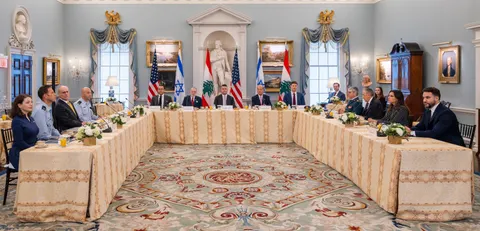
«Historic». The word was found in almost all speeches delivered Thursday evening (overnight in Lebanon) in Washington, on the sidelines of the second round of direct talks between Lebanon and Israel, under American patronage. These talks were held this time at the White House and no longer at the State Department, and what's more, in the presence of the American president himself, Donald Trump, which gave a whole new dimension to the event. Lebanon was once again represented by its ambassador Nada Moawad. In addition to Israel's ambassador to Washington, Yechiel Leiter, several American politicians were present: Vice President JD Vance, Secretary of State Marco Rubio, US Ambassador to Lebanon Michel Issa (of Lebanese origin), US Ambassador to Israel, Mike Huckabee. The main demands conveyed by the Lebanese ambassador, as expected, were the extension of the 60-day ceasefire, the cessation of house demolitions, and the end of Israeli aggressions in the south of the country. It was Donald Trump himself who announced the extension of the ceasefire on his social network Truth Social , writing that the new deadline is «THREE WEEKS», in capital letters to emphasize that it is an achievement. Three weeks then (instead of the expected 60 days), starting from Sunday, which should have been the deadline for the ceasefire that came into effect on April 16 at midnight. Statements were particularly enthusiastic after the meeting, ranging from JD Vance's «major historic moment» to Marco Rubio's comments on «two countries that want to be at peace». Michel Issa thanked Donald Trump for «a historic moment that brings two countries closer that have never been side by side». The same for Nada Moawad who thanked Donald Trump for making this event «a historic moment» by his presence, hoping that with his support, Lebanon could regain its greatness. Accusations against Hezbollah were not lacking, particularly from Mike Huckabee, for whom the problem «is not Lebanon, not Israel, but Hezbollah». Marco Rubio insisted that Lebanon and Israel are «both victims of the same terrorist organization». Donald Trump himself promised that the United States would continue to «protect Lebanon against Hezbollah», assuring that the Iranian sponsor should stop financing its proxy in Lebanon. The novelty, Thursday evening, is that the American president announced that the cessation of this financing (Iranian to Hezbollah) is an «essential» condition in the conclusion of an agreement on the other negotiating table, that between Iran and the United States. Beyond this new round of negotiations, Donald Trump again showed optimism about the conclusion of an agreement between Lebanon and Israel «as early as this year». He mentioned the need for a meeting between Lebanese President Joseph Aoun and Israeli Prime Minister Benjamin Netanyahu at the White House «in the coming weeks», an eventuality that the former continues to rule out for obvious reasons linked to internal Lebanese dissensions and the abuses committed by the Israeli army in Lebanese territory, as well as the uncertainty about the outcome of these negotiations, many believing that such a meeting should take place after a possible agreement and not beforehand. On the ground in South Lebanon, fighting continues at the same pace despite the ceasefire and its extension, as if the two belligerents were unconcerned by peace efforts. The night from Thursday to Friday and the day of Friday were particularly agitated and deadly in the South. While Israel continues its systematic demolition of houses in villages and its bombings, Hezbollah intensified its operations against northern Israel and troop gatherings in the South, making it a point of honor to multiply communiqués on its operations at the same time as the negotiations it rejects were taking place in Washington. The rhetoric has not calmed down either, as Hezbollah bloc leader Mohammad Raad called on the state to withdraw from negotiations that, according to him, only serve to cover Israeli aggressions, while MP Ali Fayad from the same bloc decreed that the ceasefire is meaningless given continuous Israeli aggressions. Aoun at the European summit in Cyprus The other political news this Friday is the participation of the Lebanese president in the European summit taking place in Cyprus. A summit that also brings together other Arab leaders, notably Egyptian President Abdel Fattah el-Sissi, Syrian President Ahmad el-Chareh, alongside the leaders of the Twenty-Seven. The explosive situation in Lebanon and negotiations with Israel were on the agenda. A notable statement was that of Kaja Kallas, EU High Representative for Foreign Affairs, who mentioned a discussion about the possibility of deploying European forces when the mission of the United Nations Interim Force in Lebanon (UNIFIL) ends in December 2026, believing that the Lebanese army would need support to disarm Hezbollah and extend its sovereignty over the country. The President of the European Council, for his part, promised «support for Lebanon with a view to disarming Hezbollah». President Aoun's discussions included French President Emmanuel Macron and Italian Prime Minister Giorgia Meloni. He declared that «Lebanon is negotiating on its own behalf» and «refuses to be a card in anyone's hands». He added that the country «is at a crossroads and the choices it will make will impact regional stability». Joseph Aoun also considered that «this stage is not just a test, it is also an opportunity». In other words, he reaffirmed the negotiation process and the state's monopoly on weapons, receiving clear support for his approach. Araghchi in Pakistan Regarding negotiations between the United States and Iran, which have been blocked since Wednesday when President Trump extended the ceasefire indefinitely, the development this Friday was the announcement of Iranian Foreign Minister Abbas Araghchi's visit to Islamabad. In the afternoon, Pakistan announced that a new American delegation was expected the same day. However, shortly after, a Pakistani official told the Saudi channel al-Hadath that «Araghchi specified that his trip to Islamabad has the sole objective of talks with his Pakistani counterparts, not negotiations with the American side». Pakistani officials nevertheless expect a «breakthrough» in negotiations following this visit, according to the same channel. However, a return to the negotiating table remains more uncertain than ever. Meanwhile, tension remains palpable on the ground and the sounds of war are heard. According to Axios, Iran has reportedly planted additional mines in the Strait of Hormuz. US Secretary of War Pete Hegseth warned that the United States «still has its hand on the trigger». Another sign of a possible escalation is the deployment of more than 4,000 American soldiers to the region, according to the Washington Post. What scenario should be expected in the near future? An escalation or a still improbable deal? Israeli Defense Minister Israel Katz, for his part, has no doubt: he declared Friday that Israel is awaiting the American green light for a new attack against Iran, which would be «decisive».

USA-Iran: A frozen power struggle against a backdrop of Iranian division
By
LevantTime .
Published
Apr 23, 2026 - 23:57

All attention is focused on Washington, where the second round of direct talks between Lebanon and Israel, at ambassadorial level, is taking place at 11 PM Beirut time, while the conflict between Iran and the United States remains stuck in this grey zone of tensions into which it has slipped. A grey zone that can, however, at any moment tip towards escalation or appeasement, if mediators, particularly Pakistan, manage to find an acceptable agreement formula for both parties. For Lebanon, the stakes are considerably higher and revolve around two short-term and long-term objectives: in the short term, it is about obtaining, in a first phase, an extension of the ceasefire. Subsequently – which will be more complicated as long as Hezbollah is not disarmed – it is about obtaining a halt to Israeli acts of violence in the south of the country where Tel Aviv's soldiers continue to build a buffer zone through destruction, as well as a potential withdrawal of these forces, and the release of Lebanese prisoners held in Israel. It is around these elements that discussions will take place at the White House and no longer at the State Department, according to the Axios website, where Lebanon's ambassador, Nada Moawad, is to demand, on instructions from Beirut, an extension of the ceasefire that came into effect last Thursday and whose duration is only ten days. She was also to demand that, during this truce, the Israeli army suspend its targeting of homes, hospital and educational establishments, places of worship, and journalists. Secretary of State Marco Rubio will be present at the meeting, alongside the Lebanese and Israeli ambassadors who are expected to be received by President Trump. In the long term, the Lebanese authorities hope to conclude an arrangement with Israel, which may be called a peace agreement or something else – it is still too early to say – whose main purpose is to shield the country from new wars. By initiating direct dialogue with Israel, the government is taking a path certainly fraught with pitfalls but one that is essential to free the country from the state of dependence on Iran into which Hezbollah had plunged it. For once, the Lebanese government has room for maneuver, allowing it to act solely in the interest of the Lebanese, without being forced, under the impetus of Hezbollah and its allies, to prioritize the strategic calculations of various parties. It is moreover from this sole perspective that the Hezbollah outcry against the ongoing diplomatic process must be approached. Its success will mark the end of the satellite state and the emergence of a sovereign state, if the government sees its sovereignist initiative through and holds firm against the obstacles that the pro-Iranian axis will undoubtedly place in its path. Apparently designated as the group's spokesperson, Hezbollah MP Hassan Fadlallah held another press conference on Thursday to warn against the resumption of direct talks with Israel. In addition to the usual thinly veiled threats, he played on emotions in his speech, dwelling on the admittedly cowardly and condemnable targeting of journalist Amal Khalil, killed on Wednesday in an Israeli strike on el-Tiri, in the Bint Jbeil district. His remarks, like those of his leader, Naim Kassem, tend to distort reality to claim the role of hypothetical savior in a catastrophic situation for which their organization is solely responsible and, above all, to defend the pseudo-legitimacy of an abnormal state they wish to perpetuate. They primarily highlight the gap between two logics: one that seeks to keep Lebanon prisoner of cross-border strategic interests, Hezbollah having sufficiently demonstrated that it obeys only orders from Tehran, and the other, led by the Lebanese government, which consists of taking the necessary initiatives and measures to protect Lebanese citizens from the dangers to which Hezbollah exposes them. In this context, President Joseph Aoun reaffirmed, during the Council of Ministers on Thursday, his willingness to travel to Washington for discussions with President Donald Trump concerning the Lebanese-Israeli dossier, emphasizing the importance of this meeting for future events, particularly for the reconstruction of Lebanon. He did not comment on Mr. Trump's remarks who had announced his desire to invite his Lebanese counterpart and Israeli Prime Minister Benjamin Netanyahu for discussions in Washington, but on his X account, the Presidency of the Republic indicated that Joseph Aoun 'never considered contact with Netanyahu'. In this process of re-establishing Lebanese sovereignty, Lebanon is supported by the majority of Lebanese and by the Arab and international community. Saudi Arabia, which is closely following the dialogue between Beirut and Tel Aviv and remains concerned about a revitalization of Lebanon, has dispatched an emissary to the Lebanese capital. The Advisor to the Saudi Minister of Foreign Affairs, Prince Yazid bin Farhan, held a series of discussions with officials, including the Speaker of Parliament, Nabih Berry, an ally of Hezbollah. During his talks, the Saudi envoy emphasized the need for the implementation of the Taif Agreement, which among other things provides for the disarmament of all militias, and sounded out his Lebanese hosts regarding the dialogue with Israel. Qalibaf's resignation? This is taking place to the rhythm of exchanges of fire between Israel and Hezbollah, which uses this nebulous 'resistance' to launch not rockets, but drones, against northern Israel. In the area delimited by this famous Yellow Line, a fictitious demarcation supposed to mark the limits of the Israeli army's operational zone, it is as if the war has not stopped. The Israeli army, however, operated outside this zone on Thursday evening, targeting a car on the Choukine road (Nabatiyeh district), killing three individuals. On the side of Iran and the United States, the impression is that not much is happening for the moment, as the two adversaries seem to observe each other from a distance, and defy each other to see who will yield first. The only information that broke this routine of pressures is that of a possible resignation of the Iranian Parliament Speaker Mohammad Qalibaf from his position as head of the negotiating delegation. It was reported by Israeli media and has not yet been confirmed by official Iranian sources. If it proves to be true, Qalibaf's resignation will have above all demonstrated the extent of divisions within the Iranian establishment. For now, the standoff between Tehran and Washington still revolves around the Strait of Hormuz, controlled by the Islamic Republic, and the American blockade of Iranian ports. Iran announced that it has begun collecting transit fees from cargo ships it allows to cross the strait, while Donald Trump announced he had ordered the US Navy to target minelayers. «The first revenues from Strait of Hormuz transit fees have been deposited into the Central Bank's account,» said Hamidreza Hajibabaei, Vice-President of the Iranian Parliament, according to Tasnim news agency. At the same time, the Pasdaran announced that they had taken control of two cargo ships in the Sea of Oman, in what appears to be a reaction to the requisition, by the US Navy, of an Iranian commercial vessel. On his Truth Social network, Donald Trump affirmed having ordered the navy to «shoot down any boats, no matter how small (...) that are laying mines» in the Strait of Hormuz. «Our minesweeper boats are clearing the strait right now. I order here that this activity continues, but at triple its current level,» he added. It remains to be seen how long this logic of calibrated pressure followed by Iran and the United States will last. Are they awaiting any breakthrough in efforts to resume discussions in Islamabad? If both agree to prioritize diplomacy in their power struggle over nuclear and ballistic weapons issues and, on the Iranian side, Lebanon - which Washington rejects - they give the impression of having a less clear vision on the outcome of a resumption of military operations. Only Israel, which regularly claims to have its finger on the trigger, seems to have a clear idea on the subject. Israeli Defense Minister Israel Saar affirmed on Thursday that Tel Aviv «is only awaiting the American green light to eliminate the Khamenei dynasty and bring Iran back to the Stone Age».

The evolution of the conflict linked to the outcome of the internal struggle in Iran

While total uncertainty continues to reign over the evolution of the conflict between the United States and the Islamic Republic of Iran, direct talks between Lebanon and Israel resume this Thursday, April 23, in Washington, in the afternoon (Levant time), under the aegis of the Department of State. An authorized local source indicated on Wednesday that the Lebanese delegation will demand the extension of the ceasefire in the South for a period of one month. The discussions could also focus, in parallel, on the practical organization (calendar, meeting venue, etc.) and the agenda for the upcoming bilateral negotiations. Regarding military operations and the situation on the ground, the French presidency indicated on Wednesday afternoon that a second French UNIFIL peacekeeper died from injuries sustained last Saturday when Hezbollah militiamen fired on a French patrol of the UN force. One of the peacekeepers was killed instantly. The toll of this ambush therefore stands at two killed and two wounded among the French soldiers. On a completely different note, the Israeli army perpetrated a new aggression against journalists on Wednesday by bombing an area of the town of El-Tire (Bint Jbeil district) where the two colleagues Amale Khalil and Zeinab Faraj were located. Zeinab Faraj, lightly wounded, was evacuated by the Lebanese Red Cross following steps taken by President Joseph Aoun, Prime Minister Nawaf Salam (from Paris), and Minister of Information Paul Morcos. As for Amale Khalil, her lifeless body was found under the rubble of a house destroyed by the Israeli bombing. Furthermore, an Israeli drone carried out an attack against the locality of Yohmor where four people were wounded. An Israeli soldier punished for desecrating a cross On a completely different note, an American NGO The Good Samaritan delivered food and humanitarian aid to the inhabitants of Christian villages located near the Lebanese-Israeli border. This same NGO had tried to deliver this aid from Lebanon, but it had been prevented by Hezbollah. It was therefore forced to provide the aid in question from Israel due to the precarious situation of these Christian villages which were visited on Wednesday by the Apostolic Nuncio in Beirut. In this context, it should be noted that the Israeli soldier who desecrated a cross in a Christian village in the South was punished by his command and sentenced to one month in prison. Prime Minister Benjamin Netanyahu and the Israeli army command strongly condemned the incident and the Israeli unit present in the sector was tasked with restoring the cross to its place. Divergences between the poles of the Iranian regime Regionally, the armed conflict between the United States and Iran continues to live at the pace of a series of ceasefires punctuated by deadlines, ultimatums, and recurring threats that mark President Donald Trump's daily stances. Once is not customary: the new ceasefire extended on Tuesday evening by the White House chief is not associated with a precise deadline. This 'vagueness' (yet another one...) does not mean that the truce is unlimited but implies, on the contrary, that President Trump reserves the right to break it at the moment he deems opportune. According to some information, Washington would have also informed Israel that the current truce will expire next Sunday, if no progress is recorded in American-Iranian talks by then. American circles in Washington are optimistic about an Iranian breakthrough, giving the impression that the US Administration seems to be 'imploring,' in a way, the Iranian regime to endorse a way out of the crisis, even though it is Tehran that is supposed to be in a position of weakness. A detail to note in this regard: according to some online media, hundreds of military transport planes are currently transporting and unloading ammunition in Israel, and this airlift should end... next Sunday. In any case, this heavy uncertainty characterizing the evolution of the conflict could be explained by the deep divergences confirmed within the Iranian regime. The divide opposes the hardline represented by the Revolutionary Guards (the Pasdaran) and the so-called 'moderate' current which brings together official political leaders in charge of negotiations with the Americans. This explains why Iranian negotiators were unable to travel to Islamabad for the 2 e round of negotiations, which was scheduled for Tuesday. The outcome of this internal fracture will determine the future of the conflict and undoubtedly the fate of the entire Levant region.

US-Iran Talks: Tehran Granted a Reprieve
By
LevantTime .
Published
Apr 21, 2026 - 23:43

President Donald Trump announced on Tuesday the extension of the ceasefire with Iran, without setting a new deadline, in order to give Tehran more time to negotiate. He nevertheless said he intended to maintain the blockade of Iranian ports, to the dismay of the Islamic Republic. Writing on his Truth Social platform, the U.S. president said he had decided to “extend the truce until Iran presents a proposal and talks are concluded, one way or another.” He said the decision had been taken in response to what he described as “deep divisions within the Iranian government” and at the request of Pakistan, the main mediator. He also said he had “ordered U.S. armed forces to maintain the naval blockade.” Tehran, which had made the lifting of the blockade a condition for attending the Islamabad talks, did not immediately comment on the extension. According to the semi-official Tasnim news agency, it would respond “at a later stage.” The announcement came as Washington and Tehran remained at odds over when the truce expires, with the United States pointing to Wednesday evening, Washington time, while Iran said it would end at midnight GMT on Tuesday. It brought to a close a day marked by a steady stream of conflicting reports, punctuated by threats and counterthreats between Washington and Tehran, as the Islamic Republic maintained strategic ambiguity over its intentions. Pakistan said Tuesday evening that it was still “awaiting an official response from Iran confirming whether a delegation will attend the Islamabad peace talks,” according to Information Minister Attaullah Tarar. In a post on X, he added that a decision was “essential,” just hours before the truce is due to expire. The spokesman for Iran’s Foreign Ministry, Ismael Baqaei, said Tehran has yet to decide, citing “contradictory messages and unacceptable actions by the United States.” In the absence of a clear response from Iran, the American delegation has also held back off on traveling to Islamabad. Vice President JD Vance, who is expected to lead it, was presiding over meetings at the White House on Tuesday evening. Is Tehran intent on keeping the suspense until the very end? Is it seeking to exert maximum pressure on President Donald Trump, under strain at home and seen as eager to strike a deal quickly – one that would avert a resumption of the war as early as Thursday? The Islamic Republic continues to send mixed signals. While insisting it is ready to negotiate an agreement with the United States, it says it is staying away from the Islamabad talks, arguing that American conditions are excessive and impossible to meet. Yet the very nature of negotiations between adversaries is to set the bar high – very high – so that each side can preserve its core interests when concessions are eventually made. In this case, that dynamic reflects Washington’s position of strength vis-à-vis an Iran battered by the war, which is nonetheless attempting to impose its own terms and playing for high stakes in the hope of forcing Donald Trump to accept them. Iran had made the lifting of the U.S.-imposed blockade on its ports a condition for resuming dialogue. Tehran “refuses to negotiate under threat,” the spokesman for the Iranian Foreign Ministry reiterated on Tuesday. He added that the country would retaliate “more forcefully than in the past” if attacked again, indirectly responding to President Trump, who had threatened renewed strikes once the deadline for the truce expires. According to the Tasnim news agency, Tehran has “well prepared” over the past two weeks for such a scenario and would have “surprises in store for the Americans.” The seizure by the U.S. Navy in the Sea of Oman of an Iranian vessel under sanctions – which Tehran considers a war crime and a violation of the ceasefire – risks further complicating the situation, particularly if Donald Trump decides not to extend the truce, as he suggested in an interview with CNBC. Hezbollah Ceasefire Violation The U.S. president, who has accused Iran of numerous ceasefire violations and reiterated that the United States is in a “very strong position,” remains confident he will secure a “great deal.” “I think they have no choice,” he told CNBC, referring to Iranian leaders. Iran, however, still has several levers at its disposal, including the reactivation of its “support fronts.” It is in this context of confrontation with the United States that Hezbollah’s first rocket since the ten-day ceasefire between Lebanon and Israel – which came into effect overnight from Thursday to Friday – should be understood. On Tuesday evening, the Israeli army said Hezbollah had fired on its troops stationed along the southern border, while a drone was launched toward kibbutzim in northern Israel. It denounced a “clear violation of the ceasefire,” which comes at a sensitive moment as Lebanon prepares to resume direct talks with Israel on Thursday in Washington, while the Lebanese government has also reiterated its intention to extend state authority over the entire territory and has defended the holding of direct negotiations with Tel Aviv. This dual message was delivered by Prime Minister Nawaf Salam at a meeting of EU foreign ministers in Luxembourg and later at the Élysée Palace, where he was received by French President Emmanuel Macron. In Luxembourg, Mr. Salam said Lebanon had made this choice to bring an end to the war into which Hezbollah had dragged it and to restore its sovereignty. “It is the result of national responsibility,” he insisted, stressing that the ultimate goal is to reach a lasting solution to the conflict with Israel. The prime minister also reiterated the state’s determination to put an end to illegal weapons. The decision was welcomed by President Macron, who said it was “necessary for Hezbollah to stop acting in the place of the Lebanese state,” during a joint press conference with his Lebanese guest. Mr. Salam said Lebanon’s decision to engage in dialogue with Tel Aviv was irreversible. He stressed that the authorities would not be intimidated by Hezbollah, “with whom we do not seek confrontation.” These messages were echoed by President Joseph Aoun in Beirut, who said that by engaging in direct negotiations with Israel, “Lebanon is not renouncing its sovereignty, but seeking to resolve its major problems.” It remains to be seen whether Hezbollah, which has stepped up threats against Lebanese leaders, will seek to derail the resumption of talks by resuming attacks on Israel. The group, whose paramilitary activities have been banned by the Lebanese government, released a video on Tuesday announcing the resumption of “resistance” operations, under the evocative title: “The return of Israel’s nightmare: the effective weapons of the resistance.” This renewed posture could, however, seal its fate in light of Israeli threats. Israeli Defense Minister Israel Katz reiterated on Tuesday that Tel Aviv’s objective is to destroy Hezbollah. Speaking at a ceremony marking Israel’s “Day of Remembrance for Fallen Soldiers and Victims of Terrorism,” he also repeated threats to eliminate the group’s leader, Naim Qassem.