

Shockwaves in Private Education: Iconic Collège de Nazareth at Risk of Closure
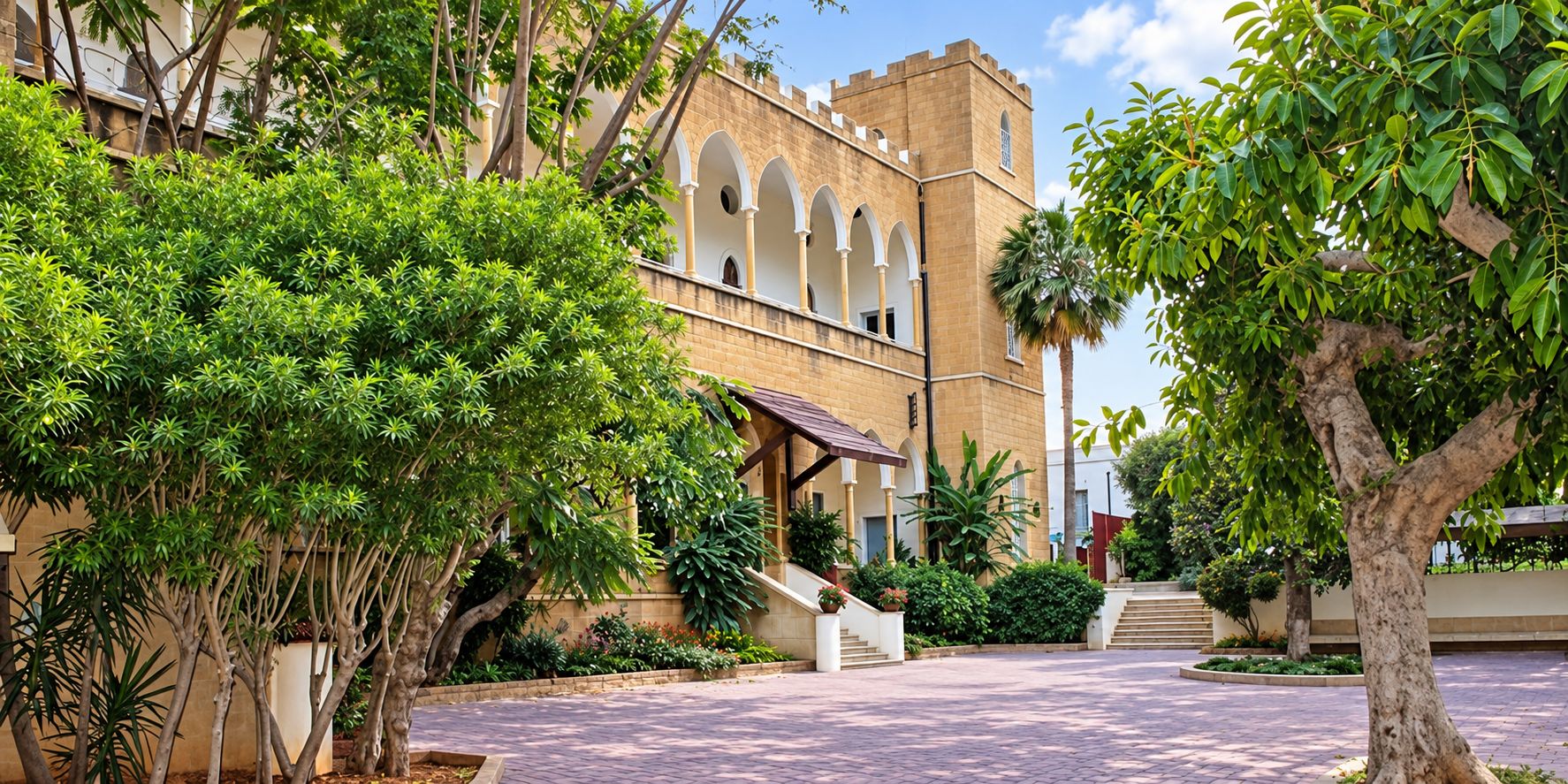

The deep crisis in Lebanon’s private education sector has continued to worsen at an exponential rate for several years. It has been further exacerbated by the economic and financial collapse of 2019, which has yet to be overcome.
This crisis is severely affecting school owners and teachers alike and, by extension, parents. Catholic schools, however—particularly those run by foreign religious orders—face another major challenge of an entirely different nature: the increasingly acute lack of new vocations within the various orders, not only in Lebanon but especially in Western countries. This is having an alarming impact on schools that have sometimes been operating in Lebanon for more than a century.
Against this backdrop, a devastating development emerged a few days ago—one that should be seen as a serious warning sign—causing fear and dismay throughout the Catholic education community. Levant Time has learned from several reliable and mutually corroborating sources that the iconic Collège Notre-Dame de Nazareth in Achrafieh is at risk of disappearing—with everything it represents—or, at the very least, of having its identity “disfigured” by a proposed transfer to a Lebanese religious order.
According to information obtained by Levant Time, the decision to sell the Achrafieh school was made by the Rome-based international leadership of the Sisters of Nazareth. The reason given is that the worldwide Congregation of Nazareth now has fewer than 25 sisters, and custom dictates that when a religious order has fewer than 25 members worldwide, it should merge with another order. Hence, according to as-yet unconfirmed reports, the Antonine monks may be seriously considering purchasing the school.
The proposed transfer has been denounced by the six Sisters of Nazareth based in Lebanon. The strongest reactions quickly came from teachers, parents, and alumni, who called for a large protest gathering at 11 a.m. on Saturday, September 19, at the Achrafieh school. Ahead of the gathering, the teachers’, parents’, and alumni committees sent a joint letter to the Mother Superior of the international congregation, who divides her time between Paris and Rome, emphasizing their unwavering commitment to the school, its continued existence, its identity, its history, and its educational values.
The congregation has been present in Lebanon since 1868
The fierce opposition to the sale of the Achrafieh school is certainly not directed in any way against the potential buyers. Rather, it reflects a deep attachment to an iconic institution with a 153-year history, traditions, heritage, and record of educational excellence. The Sisters of Nazareth established themselves in Lebanon in 1868; the international congregation was founded in France in 1822.
Upon arriving in Lebanon in 1868, the sisters were hosted in Beirut by the Freige family. The Achrafieh school began its first academic year in 1873. This predominantly French-speaking institution is accredited by the French Ministry of Education and has provided high-quality academic instruction for 153 years, grounded in Christian and humanist values that have earned the school its strong reputation and shaped the country’s youth for more than a century and a half. It is this history and these traditions, values, distinctive education, and exceptional educational mission that are now at stake.
What is the position of the Vatican and the state?
Alongside this attachment to the emblematic and historic character of Nazareth College in Achrafieh, several crucial questions remain unanswered on a number of fronts. What, then, will become of the school in Kfarzeina, in the Zghorta region, which is also run by the Sisters of Nazareth? And what about the Feytroun convent and the Aïn Alak retirement home, which belong to the congregation? Are these institutions included in a broad sale operation, assuming it is ultimately finalized?
More immediately important is the position of the Vatican and the Lebanese state. Would the Holy See accept the disappearance of a Catholic educational institution with a 153-year history in education and schooling, at a time when the Christian presence in Lebanon is facing numerous challenges on several fronts? Above all, what is the position of the Lebanese state? How long will it continue to bury its head in the sand in the face of the profound crisis that private education in Lebanon has been grappling with for many years?
The severe ordeal currently facing the Congregation of the Sisters of Nazareth in Lebanon should serve as a serious wake-up call for both the Vatican and the Lebanese state. To a large extent, what is at stake is the distinctive character and pluralism that set Lebanon apart in this part of the world…