
شعار Levant Time

المقالات

صورة للأخبار
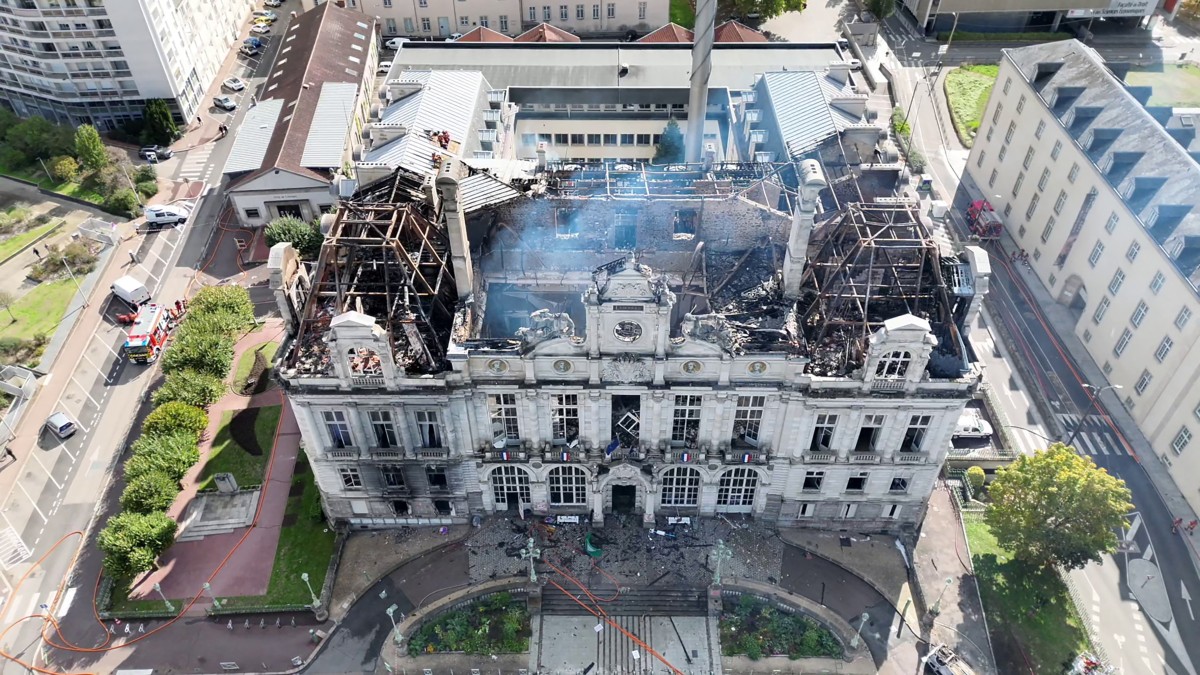
The ICRC convoy carrying the released civilians left the area occupied by Israel in southern Lebanon and traveled to the point marking the start of the zone controlled by the Lebanese authorities. (AFP)
Today's Essential
صورة المؤلف
بقلم LevantTime .
نُشر Sep 5, 2026 - 00:55
The International Committee of the Red Cross (ICRC) announced on Friday that it had transferred four more people released by Israel to Lebanon, a day after the release of a first civilian. They are three Lebanese nationals and two Syrians, according to the ICRC. This is the first time such an operation has taken place since negotiations between Lebanon and Israel began in April under US auspices. During the last round of talks in August, Beirut had requested the release of a first group of its nationals captured by Israel in southern Lebanon, where Israel is at war with the pro-Iranian Hezbollah. Their relatives estimate their number at around thirty, including fighters from the Islamist movement. In a statement, Lebanese President Joseph Aoun thanked the United States and the ICRC, saying the release "confirmed the soundness of the position" taken by Lebanon, which is engaged in negotiations with Israel that Hezbollah rejects. On Thursday, the United States praised "the government of Israel and the government of Lebanon for demonstrating good faith through these initial steps," expressing hope that this would "serve as a foundation for broader discussions on other civilian matters." The two countries are set to hold another round of negotiations in September, though the date has not yet been set. According to the Israeli prime minister's office, Thursday's announcement "follows efforts by Israel and Lebanon to locate and repatriate the remains of Jewish community leaders who were kidnapped and killed in Lebanon" between 1984 and 1986. Israeli strikes intensify On the ground, Israeli strikes killed three people and wounded 23 others on Friday in southern and eastern Lebanon. Israel stepped up its strikes in the region on Friday, after announcing Thursday evening that it had taken control of the Ali Taher mountain ridge, which had served as a strategic position for the pro-Iranian Hezbollah and overlooks Nabatiyeh, among other areas. The army will now reinforce its positions there in order to "prevent the enemy from retaking the area," said Israeli Defense Minister Israel Katz. A strike also hit the Tyre region, particularly the village of Rmadiyé, according to the National News Agency (NNA). For Trump, the war in Iran is "small potatoes" Regarding the war in Iran, US President Donald Trump sought on Friday to downplay its impact on the United States ahead of the crucial midterm elections. "A lot of people aren't calling it a war. I call it a military conflict, because it's small potatoes for us. It's not a big deal. We did Venezuela, and we did that," he told reporters in the Oval Office when asked about his vice president, JD Vance, who had said the day before that he didn't want to call the conflict a war. With fuel prices surging because of the war and threatening to cost Donald Trump's Republicans their majority in Congress in November's midterm elections, his administration is working to downplay the scale of the conflict. According to the president, the United States is carrying out "targeted strikes," insisting that it is "not currently engaged in fighting." He also claimed that the United States controlled the Strait of Hormuz and had wiped out Iran's armed forces. "What we've accomplished is remarkable. We took control of Venezuela, and we've essentially taken control of Iran," he said.
Homage
صورة المؤلف
بقلم Michel Hajji Georgiou - نُشر Sep 4, 2026 - 23:28
صورة للأخبار
What remains of Hassan Rifai is the image of a respected, composed jurist, an authority on administrative and constitutional law, arguing in a calm, quavering voice as he pointed out the deviations and failings of politicians in relation to the parliamentary democratic system and the Constitution. And yet, the former MP and minister, who died on September 3, 2025, was also a man in revolt. A dissenter. Even at one hundred. Especially at one hundred! He had been one as a child, haranguing crowds in Baalbeck against the Mandate, and remained one throughout his career as a lawyer and parliamentarian. At one hundred, utterly disillusioned with the Republic and its buccaneers, his quiet anger had not subsided. “Lebanon is an impossible country!” he told the author of these lines in an interview conducted a few years before his death and never published. But make no mistake. Hassan Rifai was neither a nihilist nor someone who rejected everything outright. He had fought all his life for a certain idea of Lebanon. More specifically, for Greater Lebanon, united and plural. And he appreciated the Lebanese experience for what it was worth, including all that was positive in it. But human beings had disappointed him. And yet it was precisely the human being he was seeking. He never found that person on the Lebanese public stage. At least not in the service of the Republic. Rifai was a man of law, always elegant, irreproachable, everything one would expect of a man of his moral and intellectual stature. But he was also uncompromising. Merciless, even. No doubt his attachment to his country and its democratic system had led him to acknowledge only one loyalty: a certain code of values and a certain idea of the Republic. That was why he was critical of every mistake and every abuse, beginning with those committed by his own political friends. He spared no one. Neither communities nor clans, neither religious leaders, he was secular himself, and certainly not political officials. No one escaped his scrutiny, and Rifai took a certain pleasure in dismantling the myths and received ideas that portrayed this or that president of the Republic or prime minister as an exceptional leader. His yardstick was objective: the consistency of actions with democratic principles. As a result, no one truly found favor in his eyes. The conclusion was devastating: none of the country’s leaders, throughout its history, had genuinely respected Lebanese parliamentary democracy. None. That did not mean he placed everyone on the same footing. He had enough critical distance to recognize the qualities and shortcomings of each. He liked to quote Léon Duguit: “Constitutional law has no safeguard other than the good faith of those who apply it.” He had almost made it his republican credo. And his verdict was merciless: that good faith, quite simply, he had not found. Too many politicians, and not enough statesmen. And above all, a great deal of lying and hypocrisy. One day, a senior political figure advised him: “Do not build roads for people. Otherwise they will stop coming to you.” Despite the respect he had for this political ally, the remark left him bewildered and shocked. It contained an entire conception of power: never permanently solve the problem of those one claims to represent, because once their need disappears, so does the very reason for their dependence. The project of the state was thus postponed indefinitely. Or, at the very least, whenever good people did exist, the system prevented them from reaching positions of responsibility. Rifai was a rebel, yes, but one armed with the rigor and precision of a master craftsman of administrative and constitutional law. That was undoubtedly what set him apart within Lebanon’s political milieu. He was rebellious enough, in any event, to pay a price for it. In August 1982, he survived an assassination attempt after opposing the Israeli diktat. At Taif in 1989, he was almost cast out for having immediately discerned the existing flaws and the traps added to the constitutional reforms. From 1992 onward, under the Syrian occupation, he endured political ostracism for opposing the security apparatus underpinning Syrian tutelage and Rafic Hariri’s policies. But he was fair. He could oppose political confessionalism while acknowledging that abolishing it at the present stage would be disastrous for Lebanon, and that a system of majority rule based purely on numbers would once and for all toll the death knell of the Lebanese formula and of the Christian presence in Lebanon. He could agree that Christians had been wronged by the constitutional reforms of Taif, Sunnis too, he maintained, while at the same time recalling the excesses committed in the exercise of power by presidents of the Republic between 1943 and 1990, and warning against a nostalgic return to those practices under the refrain of “Christian rights.” A drift toward a presidential or semi-presidential system would, in his view, endanger Christians. The importance of the parliamentary system inherited from the French Third Republic lay precisely in the fact that the president of the Republic was not politically accountable to the Chamber of Deputies. That placed him, according to Rifai, in a privileged position. Above the fray, he could steer the ship of the Republic safely into port without becoming bogged down in struggles for power. That moral responsibility to preserve the Constitution and the Republic was, in his eyes, far more important than any political responsibility. But the principal parties concerned still had to be persuaded of that. Rifai could recognize the importance of administrative decentralization while refusing to allow that demand to become an ideological slogan concealing separatist ambitions. In this regard, he recalled that Beirut and Mount Lebanon had been favored in the construction of Greater Lebanon, while the peripheral regions, particularly his own, Baalbeck, had been neglected. That had contributed to weakening Lebanese national sentiment, which ultimately depended on well-being grounded in respect for human dignity. Commitment to citizenship presupposed that everyone be treated equally in terms of development. Without equality among citizens, sovereignty could only falter. That, indeed, was the meaning of his first speech in Parliament in 1968. The events that followed gave that warning a singular gravity. Economic, social and territorial imbalances contributed to fueling the demands of the left and of part of the Muslim street in a country already strained by sectarian tensions, foreign interference and the growing power of armed organizations. They thus contributed to the gradual weakening of the state, before the war, successive occupations and the emergence of para-state structures. Ultimately, Hassan Rifai embodies something of that Lebanese model of the cosmopolitan, complex personality who stands outside communal and partisan trenches, enjoys almost unanimous respect, especially beyond political circles, yet is consulted within those same circles only when needed and for self-interested reasons. Lebanon does not like minds that are too independent and too unruly, even if its system still contains cracks through which such people can exist and make themselves heard. They are tolerated, but they must remain on the margins. The survival of the state of zaamat and the state of jamaat depends on it: a system that invariably prefers turning to foreign patrons rather than to people capable of generating, proposing and implementing solutions from within. Lebanon’s political system and its protagonists detest the notion of responsibility, which they find profoundly anxiety-inducing, and prefer dependence or, worse still, servility. Yet Rifai repeatedly said, once again quoting Léon Duguit: “Where responsibility lies, there lies power.” Should it then come as any surprise that in Lebanon, where responsibility is nowhere to be found, power is nowhere to be found either? Or, more precisely, that it is always elsewhere?
Analyze
صورة المؤلف
بقلم Jad Akhawi - نُشر Sep 4, 2026 - 15:00
صورة للأخبار
The battle of Ali al-Taher was not merely a military confrontation over a strategic hill in southern Lebanon. Despite its limited size, the site became a point where military, political, and regional calculations converged, exposing one of the core issues at the heart of Lebanon’s ongoing conflict: who controls the territory, who holds the weapons, and who decides on war and peace? What is most striking is not only Israel’s entry into the site, but Hezbollah’s insistence on refusing to hand it over to the Lebanese Army, even though the Army is the only legitimate institution supposed to assume responsibility for Lebanese territory, particularly in border areas directly tied to the country’s security and sovereignty. Why Did Hezbollah refuse? Because handing Ali al-Taher over to the Army would not have been understood as a limited measure on the ground. It would have carried a political meaning extending far beyond the hill itself. Such a move would have amounted to a de facto recognition of the Lebanese state’s authority over security and military decisions in the South, and of the principle that no other armed force can act as though it exercises effective authority on the ground. The site therefore became a test of state authority, rather than merely an advanced military position. Who Killed the fighters? This remains the most obscure episode in the account of the battle. The Israeli version speaks of fighters being killed and others fleeing, while independent information about how many people were present at the site, the nature of their mission, and what ultimately happened to them remains incomplete. The conflicting accounts also raise numerous questions that cannot be resolved through military statements alone. And this is not merely an operational detail: Were most of the fighters killed inside the site? Did they manage to withdraw through tunnels and passageways? Or had they been evacuated before the Israeli operation began? Each of these scenarios carries a different significance. If the fighters remained until the final moments, that would mean the site witnessed a direct confrontation that ended in clear Israeli military superiority. If, on the other hand, they were evacuated beforehand, the questions would concern who made that decision, why it was taken, and whether the evacuation formed part of a broader understanding or was simply a precautionary military measure. And if it were established that a significant number of them had left before Israeli forces entered the site, the central questions would then be: how did they leave, who facilitated their departure, and did it take place with the knowledge of local or international actors? At this stage, there is insufficient public evidence to determine which of these scenarios is correct. But the absence of information does not make these questions any less important. On the contrary, it deepens the uncertainty surrounding what occurred in the hours preceding the capture of the site. What About the U.S. Ambassador’s Visit to Israel? The timing deserves attention. The escalation around Ali al-Taher coincided with U.S. diplomatic moves involving Israel, while reports emerged of discussions concerning the site and the possibility that it might eventually be handed over to the Lebanese Army. This does not necessarily mean that the decision was made outside Lebanon, nor that a fully developed agreement was reached between Washington, Tel Aviv, and Beirut. But it does suggest that the site is no longer being viewed as a purely local military issue. There is no basis for asserting that the U.S. ambassador’s visit was part of a secret deal concerning Ali al-Taher. Nor can it be stated with certainty that everything that happened resulted from a prior understanding among the parties involved. What is clear, however, is that Washington views the future of the site as part of a broader file involving the ceasefire, the stabilization of the border, the prevention of any military presence outside the authority of the Lebanese state, and efforts to ensure that border areas do not become permanent platforms for confrontation. Ali al-Taher thus becomes part of negotiations that extend far beyond its geography. The site may be small on the map, but it is connected to major questions concerning arrangements in the South, the role of the Lebanese Army, the future of weapons outside state control, and the limits of Israeli influence in the region. The Paradox That Embarrassed Hezbollah The central political paradox is that Hezbollah refused to hand the hill over to the Lebanese Army, yet ultimately failed to retain it. If the Israeli operation were to end with the withdrawal of Israeli forces and the handover of the site to the Lebanese Army, the outcome would be very different from the situation Hezbollah sought to impose or preserve: Hezbollah refused to hand the site over to the state, Israel forced it out, and the state then returned to assume responsibility. In other words, Hezbollah refused to establish the Army’s authority voluntarily, but may find itself confronted with a reality that establishes that authority by other means. This is what makes the situation politically embarrassing, because the final outcome may appear to have achieved indirectly what Hezbollah refused to do directly. This raises an obvious question: why was handing the site over to the Army not considered the least costly option for Lebanon? Such a move could have been presented as a strengthening of the state’s role, a means of protecting the South, and a way of preventing Israel from using Hezbollah’s presence as a pretext to remain on the ground or advance further. The refusal to hand the site over to the Army instead kept it within the zone of confrontation and allowed Israel to present its operation as a response to a military presence outside state authority. Ali al-Taher Encapsulates Lebanon’s Problem The issue goes far beyond this hill. Lebanon cannot recover its sovereignty as long as two military authorities coexist: that of the Army and that of weapons outside state control. Nor can it ask the international community to respect its borders while military decision-making within those borders remains divided between state institutions and an armed organization possessing capabilities independent of them. At the same time, Lebanon cannot demand that Israel withdraw from its territory while security decisions concerning that same territory remain the subject of an internal dispute. As long as weapons remain outside state control, the Israeli argument will persist, and the South will remain exposed to further rounds of escalation. Sovereignty cannot be shared. Either the Lebanese Army is the sole military authority, or Lebanon will remain an open arena for regional conflicts in which Iranian, Israeli, and American calculations intersect, while the state and society pay the price of confrontation. This is why the real question after Ali al-Taher is not: Who won the hill? But rather: Who will control it once the battle is over? If the answer is the Lebanese Army, Ali al-Taher could mark the beginning of a transition in the South from the logic of “resistance” to the logic of state responsibility. It could constitute a first step toward redefining national security so that defending the borders becomes the responsibility of state institutions rather than that of any party acting independently. If Israel remains, however, Lebanon will once again have lost part of its sovereignty, regardless of the narrative each side puts forward to justify what happened. In either case, one essential truth remains: Hezbollah cannot substitute itself for the state, and Israel cannot serve as the guarantor of its sovereignty. Lebanese sovereignty can only be restored by the Lebanese state, protected by its Army, and upheld by a clear political decision that puts an end to the duality of arms and authority.
المزيد من المقالات
ترتيب حسب: الأحدثالأقدم
Hassan Rifai, the Wise Rebel
بقلم
Michel Hajji Georgiou
نُشر

What remains of Hassan Rifai is the image of a respected, composed jurist, an authority on administrative and constitutional law, arguing in a calm, quavering voice as he pointed out the deviations and failings of politicians in relation to the parliamentary democratic system and the Constitution. And yet, the former MP and minister, who died on September 3, 2025, was also a man in revolt. A dissenter. Even at one hundred. Especially at one hundred! He had been one as a child, haranguing crowds in Baalbeck against the Mandate, and remained one throughout his career as a lawyer and parliamentarian. At one hundred, utterly disillusioned with the Republic and its buccaneers, his quiet anger had not subsided. “Lebanon is an impossible country!” he told the author of these lines in an interview conducted a few years before his death and never published. But make no mistake. Hassan Rifai was neither a nihilist nor someone who rejected everything outright. He had fought all his life for a certain idea of Lebanon. More specifically, for Greater Lebanon, united and plural. And he appreciated the Lebanese experience for what it was worth, including all that was positive in it. But human beings had disappointed him. And yet it was precisely the human being he was seeking. He never found that person on the Lebanese public stage. At least not in the service of the Republic. Rifai was a man of law, always elegant, irreproachable, everything one would expect of a man of his moral and intellectual stature. But he was also uncompromising. Merciless, even. No doubt his attachment to his country and its democratic system had led him to acknowledge only one loyalty: a certain code of values and a certain idea of the Republic. That was why he was critical of every mistake and every abuse, beginning with those committed by his own political friends. He spared no one. Neither communities nor clans, neither religious leaders, he was secular himself, and certainly not political officials. No one escaped his scrutiny, and Rifai took a certain pleasure in dismantling the myths and received ideas that portrayed this or that president of the Republic or prime minister as an exceptional leader. His yardstick was objective: the consistency of actions with democratic principles. As a result, no one truly found favor in his eyes. The conclusion was devastating: none of the country’s leaders, throughout its history, had genuinely respected Lebanese parliamentary democracy. None. That did not mean he placed everyone on the same footing. He had enough critical distance to recognize the qualities and shortcomings of each. He liked to quote Léon Duguit: “Constitutional law has no safeguard other than the good faith of those who apply it.” He had almost made it his republican credo. And his verdict was merciless: that good faith, quite simply, he had not found. Too many politicians, and not enough statesmen. And above all, a great deal of lying and hypocrisy. One day, a senior political figure advised him: “Do not build roads for people. Otherwise they will stop coming to you.” Despite the respect he had for this political ally, the remark left him bewildered and shocked. It contained an entire conception of power: never permanently solve the problem of those one claims to represent, because once their need disappears, so does the very reason for their dependence. The project of the state was thus postponed indefinitely. Or, at the very least, whenever good people did exist, the system prevented them from reaching positions of responsibility. Rifai was a rebel, yes, but one armed with the rigor and precision of a master craftsman of administrative and constitutional law. That was undoubtedly what set him apart within Lebanon’s political milieu. He was rebellious enough, in any event, to pay a price for it. In August 1982, he survived an assassination attempt after opposing the Israeli diktat. At Taif in 1989, he was almost cast out for having immediately discerned the existing flaws and the traps added to the constitutional reforms. From 1992 onward, under the Syrian occupation, he endured political ostracism for opposing the security apparatus underpinning Syrian tutelage and Rafic Hariri’s policies. But he was fair. He could oppose political confessionalism while acknowledging that abolishing it at the present stage would be disastrous for Lebanon, and that a system of majority rule based purely on numbers would once and for all toll the death knell of the Lebanese formula and of the Christian presence in Lebanon. He could agree that Christians had been wronged by the constitutional reforms of Taif, Sunnis too, he maintained, while at the same time recalling the excesses committed in the exercise of power by presidents of the Republic between 1943 and 1990, and warning against a nostalgic return to those practices under the refrain of “Christian rights.” A drift toward a presidential or semi-presidential system would, in his view, endanger Christians. The importance of the parliamentary system inherited from the French Third Republic lay precisely in the fact that the president of the Republic was not politically accountable to the Chamber of Deputies. That placed him, according to Rifai, in a privileged position. Above the fray, he could steer the ship of the Republic safely into port without becoming bogged down in struggles for power. That moral responsibility to preserve the Constitution and the Republic was, in his eyes, far more important than any political responsibility. But the principal parties concerned still had to be persuaded of that. Rifai could recognize the importance of administrative decentralization while refusing to allow that demand to become an ideological slogan concealing separatist ambitions. In this regard, he recalled that Beirut and Mount Lebanon had been favored in the construction of Greater Lebanon, while the peripheral regions, particularly his own, Baalbeck, had been neglected. That had contributed to weakening Lebanese national sentiment, which ultimately depended on well-being grounded in respect for human dignity. Commitment to citizenship presupposed that everyone be treated equally in terms of development. Without equality among citizens, sovereignty could only falter. That, indeed, was the meaning of his first speech in Parliament in 1968. The events that followed gave that warning a singular gravity. Economic, social and territorial imbalances contributed to fueling the demands of the left and of part of the Muslim street in a country already strained by sectarian tensions, foreign interference and the growing power of armed organizations. They thus contributed to the gradual weakening of the state, before the war, successive occupations and the emergence of para-state structures. Ultimately, Hassan Rifai embodies something of that Lebanese model of the cosmopolitan, complex personality who stands outside communal and partisan trenches, enjoys almost unanimous respect, especially beyond political circles, yet is consulted within those same circles only when needed and for self-interested reasons. Lebanon does not like minds that are too independent and too unruly, even if its system still contains cracks through which such people can exist and make themselves heard. They are tolerated, but they must remain on the margins. The survival of the state of zaamat and the state of jamaat depends on it: a system that invariably prefers turning to foreign patrons rather than to people capable of generating, proposing and implementing solutions from within. Lebanon’s political system and its protagonists detest the notion of responsibility, which they find profoundly anxiety-inducing, and prefer dependence or, worse still, servility. Yet Rifai repeatedly said, once again quoting Léon Duguit: “Where responsibility lies, there lies power.” Should it then come as any surprise that in Lebanon, where responsibility is nowhere to be found, power is nowhere to be found either? Or, more precisely, that it is always elsewhere?

Ali al-Taher: Why Did Hezbollah Refuse to Hand the Hill Over to the Army?

The battle of Ali al-Taher was not merely a military confrontation over a strategic hill in southern Lebanon. Despite its limited size, the site became a point where military, political, and regional calculations converged, exposing one of the core issues at the heart of Lebanon’s ongoing conflict: who controls the territory, who holds the weapons, and who decides on war and peace? What is most striking is not only Israel’s entry into the site, but Hezbollah’s insistence on refusing to hand it over to the Lebanese Army, even though the Army is the only legitimate institution supposed to assume responsibility for Lebanese territory, particularly in border areas directly tied to the country’s security and sovereignty. Why Did Hezbollah refuse? Because handing Ali al-Taher over to the Army would not have been understood as a limited measure on the ground. It would have carried a political meaning extending far beyond the hill itself. Such a move would have amounted to a de facto recognition of the Lebanese state’s authority over security and military decisions in the South, and of the principle that no other armed force can act as though it exercises effective authority on the ground. The site therefore became a test of state authority, rather than merely an advanced military position. Who Killed the fighters? This remains the most obscure episode in the account of the battle. The Israeli version speaks of fighters being killed and others fleeing, while independent information about how many people were present at the site, the nature of their mission, and what ultimately happened to them remains incomplete. The conflicting accounts also raise numerous questions that cannot be resolved through military statements alone. And this is not merely an operational detail: Were most of the fighters killed inside the site? Did they manage to withdraw through tunnels and passageways? Or had they been evacuated before the Israeli operation began? Each of these scenarios carries a different significance. If the fighters remained until the final moments, that would mean the site witnessed a direct confrontation that ended in clear Israeli military superiority. If, on the other hand, they were evacuated beforehand, the questions would concern who made that decision, why it was taken, and whether the evacuation formed part of a broader understanding or was simply a precautionary military measure. And if it were established that a significant number of them had left before Israeli forces entered the site, the central questions would then be: how did they leave, who facilitated their departure, and did it take place with the knowledge of local or international actors? At this stage, there is insufficient public evidence to determine which of these scenarios is correct. But the absence of information does not make these questions any less important. On the contrary, it deepens the uncertainty surrounding what occurred in the hours preceding the capture of the site. What About the U.S. Ambassador’s Visit to Israel? The timing deserves attention. The escalation around Ali al-Taher coincided with U.S. diplomatic moves involving Israel, while reports emerged of discussions concerning the site and the possibility that it might eventually be handed over to the Lebanese Army. This does not necessarily mean that the decision was made outside Lebanon, nor that a fully developed agreement was reached between Washington, Tel Aviv, and Beirut. But it does suggest that the site is no longer being viewed as a purely local military issue. There is no basis for asserting that the U.S. ambassador’s visit was part of a secret deal concerning Ali al-Taher. Nor can it be stated with certainty that everything that happened resulted from a prior understanding among the parties involved. What is clear, however, is that Washington views the future of the site as part of a broader file involving the ceasefire, the stabilization of the border, the prevention of any military presence outside the authority of the Lebanese state, and efforts to ensure that border areas do not become permanent platforms for confrontation. Ali al-Taher thus becomes part of negotiations that extend far beyond its geography. The site may be small on the map, but it is connected to major questions concerning arrangements in the South, the role of the Lebanese Army, the future of weapons outside state control, and the limits of Israeli influence in the region. The Paradox That Embarrassed Hezbollah The central political paradox is that Hezbollah refused to hand the hill over to the Lebanese Army, yet ultimately failed to retain it. If the Israeli operation were to end with the withdrawal of Israeli forces and the handover of the site to the Lebanese Army, the outcome would be very different from the situation Hezbollah sought to impose or preserve: Hezbollah refused to hand the site over to the state, Israel forced it out, and the state then returned to assume responsibility. In other words, Hezbollah refused to establish the Army’s authority voluntarily, but may find itself confronted with a reality that establishes that authority by other means. This is what makes the situation politically embarrassing, because the final outcome may appear to have achieved indirectly what Hezbollah refused to do directly. This raises an obvious question: why was handing the site over to the Army not considered the least costly option for Lebanon? Such a move could have been presented as a strengthening of the state’s role, a means of protecting the South, and a way of preventing Israel from using Hezbollah’s presence as a pretext to remain on the ground or advance further. The refusal to hand the site over to the Army instead kept it within the zone of confrontation and allowed Israel to present its operation as a response to a military presence outside state authority. Ali al-Taher Encapsulates Lebanon’s Problem The issue goes far beyond this hill. Lebanon cannot recover its sovereignty as long as two military authorities coexist: that of the Army and that of weapons outside state control. Nor can it ask the international community to respect its borders while military decision-making within those borders remains divided between state institutions and an armed organization possessing capabilities independent of them. At the same time, Lebanon cannot demand that Israel withdraw from its territory while security decisions concerning that same territory remain the subject of an internal dispute. As long as weapons remain outside state control, the Israeli argument will persist, and the South will remain exposed to further rounds of escalation. Sovereignty cannot be shared. Either the Lebanese Army is the sole military authority, or Lebanon will remain an open arena for regional conflicts in which Iranian, Israeli, and American calculations intersect, while the state and society pay the price of confrontation. This is why the real question after Ali al-Taher is not: Who won the hill? But rather: Who will control it once the battle is over? If the answer is the Lebanese Army, Ali al-Taher could mark the beginning of a transition in the South from the logic of “resistance” to the logic of state responsibility. It could constitute a first step toward redefining national security so that defending the borders becomes the responsibility of state institutions rather than that of any party acting independently. If Israel remains, however, Lebanon will once again have lost part of its sovereignty, regardless of the narrative each side puts forward to justify what happened. In either case, one essential truth remains: Hezbollah cannot substitute itself for the state, and Israel cannot serve as the guarantor of its sovereignty. Lebanese sovereignty can only be restored by the Lebanese state, protected by its Army, and upheld by a clear political decision that puts an end to the duality of arms and authority.

Israel Claims Control of Ali al-Taher
بقلم
LevantTime .
نُشر

The Israeli military announced Thursday that it had "completed the clearing of two Hezbollah underground infrastructures on the Ali al-Taher ridge" in southern Lebanon, stating that "its forces are now working to neutralize them." Quoted by the Jerusalem Post and on its X account, the Israeli military specified that "the forces of the 36th Division have operated in the area over recent weeks and have taken operational control of the ridge, both above and below ground. During the operation, the area was cleared of Hezbollah fighters who had been deployed there — some were killed while others fled." Sources also indicated that no Iranian personnel were found in the tunnels, despite experts claiming that at least a dozen members of the Islamic Revolutionary Guard Corps were entrenched there alongside Hezbollah fighters. The Post reports that, according to the military, these infrastructures were built over a period of approximately twenty years and were planned and financed by Iran. Illustration generated from the topographic relief of the Ali al-Taher region. Additionally, according to information revealed by Reuters, Iran had warned the United States against an Israeli strike on the Ali al-Taher site. This underscores how deeply Tehran remains involved in the front opened by Hezbollah, its ally, against Israel since March 2. Israel releases five Lebanese nationals, holds three others Thursday began with an unusual Israeli operation, carried out relatively far from the occupied zone, in the village of Houla, in Hasbaya, in the south of the country. Israeli troops infiltrated the village and detained three of its residents after surrounding several homes and preventing their occupants from evacuating, according to the National News Agency. The detainees were taken into Israeli territory, according to witnesses cited by the agency. This latest Israeli violation — added to the multiple explosions triggered Thursday by its military at various points across the south — did not overshadow the day's other surprise: Israel's announcement of the release of five Lebanese prisoners held in its jails, all arrested either during the current conflict, which began March 2, or the previous one in 2023–2024. One young man was indeed released Thursday and handed over to the Lebanese army at the Naqoura border crossing. According to the local outlet al-Modon , the release of four other Lebanese nationals was reportedly postponed to Friday. "I wouldn't call it a war" Regarding the conflict with Iran, U.S. Vice President JD Vance said Thursday that the hostilities — which are stirring discontent among a segment of American voters ahead of important midterm elections — did not constitute "a war," while also asserting that passage through the Strait of Hormuz had "almost" returned to normal. While, according to the Wall Street Journal , President Donald Trump is reportedly considering simply declaring the conflict over, the Vice President sought to downplay the hostilities during a press conference at the White House. "I wouldn't call it a war. Right now, there is no exchange of fire," he said, even as the United States has struck Iranian targets twice in recent days. One of those strikes, which Iran has vowed to avenge, killed four people at a wedding. "Iranian state media has not really reported reliably on what has happened in this conflict so far, so I am extremely skeptical about that," JD Vance said in response to a question about the strike, adding that the United States was nonetheless conducting "a thorough investigation." "We have great control over the Strait of Hormuz. We are moving 30 to 40 ships through per night," Donald Trump assured in an interview with British conservative channel GB News, broadcast on Thursday. Finally, the ultimate sign that the war in the Middle East is far from over: according to the Wall Street Journal , the U.S. Department of Defense has quietly extended the deployment of 50,000 troops stationed in the region. Iranian strikes on Kuwait and the UAE On the ground, the Islamic Revolutionary Guard Corps announced that, during the night from Wednesday to Thursday, they carried out strikes against "American targets" in Kuwait and the United Arab Emirates. In a statement, the Pasdaran claimed to have targeted "using missiles and drones, the satellite communication systems, equipment depots, and fighter jet hangars of the American military at Ahmad al-Jaber Air Base in Kuwait." In the United Arab Emirates, it was the American radar systems at al-Minhad Air Base that were targeted.

Bankrupt Hezbollah Seeks Cover
بقلم
Khairallah Khairallah
نُشر

Hezbollah’s search for Christian political cover for its weapons and for its rejection of direct negotiations with Israel speaks volumes about the depth of the crisis facing a party that is, in essence, little more than a sectarian militia serving Iran’s Revolutionary Guards. The Hezbollah we once knew, with all its power, its arsenal and its financial resources, is gone. In reality, a party that once believed it could project power far beyond Lebanon, in Syria, Yemen and, at one point, Bahrain, to name only a few examples, has gone bankrupt. Nothing illustrates that bankruptcy more clearly than its decision to reopen old account books, beginning with its relationship with the Aounist Current and Michel Aoun, whose overriding ambition was to reach the presidency of the Republic at any cost. Only a bankrupt merchant goes back through old ledgers in the belief that there are still debts to collect. Hezbollah seems not to realize that the Aounist Current, now led by MP Gebran Bassil, is every bit as bankrupt as it is. Bassil and others like him have little choice but to try to restore their standing by distancing themselves from Hezbollah’s weapons, both to placate what remains of their Christian constituency and to insist that the Lebanese Army alone should have a monopoly on arms. Since when has the Aounist Current shown such devotion to the Lebanese Army?! For ten years, beginning with the signing of the Mar Mikhaël agreement with Hassan Nasrallah in February 2006, Michel Aoun was put through a succession of tests by Hezbollah. He passed every one of them. That included justifying the killing by a Hezbollah member of Lebanese Air Force officer Samer Hanna simply because Hanna had flown a helicopter into an area of South Lebanon controlled by the party. Aoun went so far as to justify the killing of a Lebanese officer flying over Lebanese territory by asking: “What was he doing there?” One bankrupt force is now being asked to lend legitimacy to another. A meeting between a Hezbollah delegation and an Aounist delegation will achieve nothing. Nor will Hezbollah’s efforts to court other political forces in order to justify retaining an arsenal that serves Iran and its expansionist project in the region. That project collapsed in Syria before beginning to collapse in Iran itself, which is now fighting a war over the future of its own regime, the Islamic Republic. The Iranian regime has lost touch with the transformations that have reshaped both the region and the world since October 7, 2023, when Hamas launched Operation “Al-Aqsa Flood” against Israeli communities around Gaza. After October 7, Israel changed. The region changed. Iran refused to. What is remarkable is that Hezbollah is still looking for political cover for its weapons while South Lebanon is enduring a genuine tragedy. That tragedy has brought back an occupation that ended in 2000, with Israel destroying around seventy villages and displacing more than one million people. None of this appears to matter to Hezbollah. Its overriding concern is to manufacture a domestic justification for keeping its weapons. A party beholden to Iran considers preserving its arsenal more important than ending the occupation. It knows that its very existence depends on those weapons, which have never been anything more than an instrument for subjugating Lebanese citizens and the Lebanese state and placing both under Iranian tutelage. Who in Lebanon is still willing to legitimize sectarian militia weapons whose most immediate consequence is the continuation of Israeli occupation? The Aounist Current is clearly no longer a viable source of such cover. It has already extracted from Hezbollah and its arsenal what it wanted: Michel Aoun’s accession to Baabda Palace. That leaves Hezbollah with one remaining card: Speaker Nabih Berri. One might have expected him to mark the disappearance of Imam Musa al-Sadr in a rather different fashion, rather than deliver a speech wholly out of step with the political realities of Lebanon and the region. Berri spoke as though Lebanon were still living in the 1980s. In 1983, the Syrian regime under Hafez al-Assad played a decisive role in torpedoing the May 17 Agreement. Yet under today’s balance of power, Lebanon is unlikely to secure anything better. Even so, Berri’s position should not be dismissed. He appears to have his own reasons for refusing to confront Lebanon’s reality, ignoring what is actually happening on the ground in South Lebanon and accommodating Iran to the greatest possible extent. Does the leader of the Amal Movement, who provides Hezbollah with substantial political cover, understand the implications of what he is doing, when he could instead confront the realities of Lebanon and South Lebanon rather than evade them? Between an Aounist Current reduced to threadbare political cover and Nabih Berri’s attempt to project the image of a cohesive Shiite community in which no meaningful distinction exists between Amal and Hezbollah, one fundamental question remains: who will end the Israeli occupation, and at what price? One thing is certain: Hezbollah’s weapons now threaten South Lebanon itself, and perhaps Lebanon as a whole, whatever political cover the party may still secure from forces that are themselves in need of cover.

The Importance of Dream and Speech Among the Wayuu (2/2)

The Wayuu are a transborder Indigenous nation inhabiting the region stretching between the Guajira Peninsula, at the northernmost tip of Colombia, and part of Venezuela’s Caribbean coast. The Wayuu take pride in their title as a “people never conquered.” What follows is an account of a journey across the desert undertaken alongside them during Easter 2026, offering an opportunity to explore certain aspects of their philosophy of travel. In the second part of this chronicle on the Wayuu people, other aspects of the journey allow us to glimpse some essential features of Wayuu beliefs, presented here through observations on the importance they attach to dreams, on the one hand, and to the spoken word, on the other. A report from Colombia’s La Guajira. Beyond the physical territory, embodied by the clan and anchored in the cemetery, another realm complements the first and is no less essential to the Wayuu spirit: that of dreams. For the Wayuu, a dream is a revelatory vision. It is another form of consciousness that announces events to come, indicates which path to follow, conveys a message, or explains waking reality. Indeed, any Wayuu person who is reasonably familiar with the language and culture will quite naturally ask, upon waking, by way of greeting those they first encounter after getting out of bed: Jamaya pulapüin? — “What did you dream?” The suy, or chinchorro, the traditional hammocks. (Wikimedia Commons) At the northernmost tip of La Guajira, in the sanctuary known as Talüwayüüpana, I spent a night sleeping in a suy , or chinchorro , the traditional hammock, alongside Paola and around fifteen other people who had invited me to attend a ritual. At sunrise, as everyone awoke naturally with the first rays of light, they began telling one another about their dreams before going to see the mayor , the elderly keeper of knowledge who was part of our group and who interpreted each dream individually. “*Ajá*… I saw a little girl in my dream,” one of those attending the ritual told the sabedor . “She was standing in front of me, in that direction, toward the sea, toward where the sun had set. She turned around and began to run. I followed her and tried to catch up with her. That was my dream.” After a moment’s reflection, the elder replied: “She was probably showing you a water source. There are many forgotten springs around here, for your herd.” “And the girl?” “Many spirits are present in this region.” What stands out in this dream is the role played by the little girl. The corollary of the dream is the spirit. The presence of the spirits of the dead or of Nature lies behind most significant dreams, along with certain signs they leave behind. Dreams are the realm of communication par excellence with these other elements of reality. The sacrifice of goats The ritual I was fortunate enough to attend was, in a sense, the waking counterpart of the dream, allowing communication with the spirits in another way. These spirits include Nature — a category that exists for us largely because of its opposition to Culture, whereas for the Wayuu the distinction between the two is far less clear-cut. A sabedora and a sabedor first gathered us to witness the sacrifice of several goats. While one man held the animals by the horns, the elder quickly thrust his knife into their throats and withdrew it. The animal was then released, spilling its blood as it made its final run before collapsing a few seconds later. Juya, the principal god of rain, was satisfied by this red flow. Once night had fallen, with the full moon as our only source of light, the female keeper of knowledge gathered us in a circle and performed a limpieza on each of us: a purification involving sprays of chinrrinchi spat from the mouth and prayers accompanied by strokes of plants. Finally came the traditional sacred dance of the yonna , during which the woman wears facial paint and a large red veil, the color of the vermilion cardinal bird, a symbol of La Guajira. (Wikimedia Commons) She dances while pursuing a man who hops backward in the opposite direction. Their steps imitate Nature: clouds, partridges, doves, horses. Although this dance has become a folkloric symbol for tourists willing to pay handsomely to see it, it is in fact a courtship dance and remains essential to any sacred event involving communication with the spirits and the Earth. In truth, most dreams are rarely interpreted as happy omens. The Wayuu who seeks meaning in a dream often appears worried. Sleep frequently takes the form of a warning — foretelling an illness, for instance, or preparing someone for difficult weather conditions — or serves as protection against a malevolent spirit. One final feature, revealing the intertwining of the sacred, the spirit world and dreams among the Wayuu, also recalls their attitude toward departure and travel. At the end of the ritual, early in the morning, as we prepared to leave on our poor 150cc motorcycle to face the sandy, arid roads of the desert, I was about to turn around and give one last farewell wave to the gathering. But a woman who was also leaving and was walking just behind me spoke firmly: “Don’t turn around. When you leave, you must never look back.” The putchipuü and the art of the spoken word What might be called Wayuu customary law — or, more accurately, the set of rules and roles shaping their unwritten normative system — is fascinating. So fascinating, in fact, that UNESCO inscribed it on its list of Intangible Cultural Heritage of Humanity in 2010. The central figure in this system is the putchipuü , or palabrero : literally, the one who holds the word. He is not appointed in the strict sense; his prestige is unanimously recognized by his clan and the community. His principal qualities are twofold. First, he knows the history, meaning, traditions and customs of the Wayuu. Second, he must possess a naturally thoughtful and peaceful disposition, enabling him to maintain wise detachment during conflicts — something that requires a calm temperament and a great ability to listen. The title of putchipuü is not hereditary, although there are lineages of these messengers of the spoken word. A putchipuü often becomes one after growing up learning from and observing the attitudes of his predecessor, who may well be a close relative. Take Neimer. Around thirty years old, he is remarkably knowledgeable about Wayuu traditions for a member of the younger generation. He is pursuing a master’s degree in “Mother Earth,” an Indigenous studies program at the University of Antioquia, which gives him an even deeper understanding of the “Wayuu spirit.” Neimer has all the makings of a future putchipuü , and not without reason: since childhood he has followed in the footsteps of his father, a famous palabrero respected throughout Upper Guajira. It was thanks to Neimer, in fact, that I was able to attend the ritual held at the Stone of Destiny. After nightfall, once the first sacrifice had been completed, Paola and Neimer told me to come closer. Around the circular track drawn in the sand for the sacred Yonna dance, the participants gathered in a circle. One by one, everyone introduced themselves, giving their name, their clan and the reason for their presence. This was followed by a long opening speech from the putchipuü — the same elder who would interpret the dreams the following morning. With Paola translating simultaneously, I could nevertheless sense the beautiful rhetorical forms characteristic of Wayuu eloquence and the rhythm of the jayeechi . For the putchipuü , this messenger, is a master of one of the cardinal values of Wayuu culture: the spoken word. The Wayuu banner. (Wikimedia Commons) During this solemn little gathering, punctuated by curls of smoke rising from the shared tabacos , our orator addressed a range of subjects, always illustrated by exemplary stories: what it means to be Wayuu, recalling the creation of the world according to their cosmology; the subject of love, recounting an unhappy episode from his youth and the conflict between two clans that followed; and finally, by way of an epilogue to the story, the importance of resolving disputes. The putchipuü ended his speech with one of the most remarkable and subtle manifestations of Wayuu eloquence: a jayeechi . It is an improvised — and therefore ephemeral — song-poem marking a particular moment, such as a gathering, a funeral vigil or a wedding. The jayeechi can also become a duel: a form of poetic jousting not unlike the Lebanese zajal . From this anecdote about heartbreak, and particularly from the emphasis placed on the inter-family conflict that resulted, one can discern the most essential role of the putchipuü , mentioned at the beginning of this section: that of master of Wayuu “customary law,” endowed with the ability to bring peace to conflicts. In his narrative and his jayeechi , our palabrero certainly evokes the moving memory of his personal experience as a Wayuu Majnun regretting his unattainable Layla. Yet what emerges most clearly from the moral of this shared memory is the tragedy of seeing two families — and therefore two clans — tear one another apart and descend into confrontation. For the Wayuu, the ultimate tragedy is the unraveling of bonds. The solution in times of crisis is to find common ground through compensation or reparation from one party to another. Proof of the primacy of the spoken word in Wayuu culture can be found in the expression locals use when threatening someone with being brought before the community’s customary law: Cuidao que te voy a mandar la palabra — “Watch out, or I’ll send you the Word!” But the role of the putchipuü is not that of a judge. In a sense, the Wayuu have no judges. His function is that of an “ambassador,” whose task is to ease tensions and find a compromise. When one clan has a grievance against another, the putchipuü of each side, acting as official representatives, speak on behalf of those gathered to deliberate. This is not an improvised discussion; there are unwritten rules and sanctions. An ordinary theft, for example, requires financial or material compensation worth four times the value of the stolen property, even if that property is returned. It is important to understand that in such a judgment there is not merely an accuser and an accused, and once a decision has been reached, a victim and an offender. The honor of the entire clan is at stake. Several family members therefore accompany the accused, and if wrongdoing is acknowledged, the offender must also repair the damage done to the honor of his clan. It is a form of retributive and restorative justice that has received international recognition. Epilogue: Time passes, memory remains During the Easter season, in April, the land is cracked and dry. “You should come back around Christmas. Everything is greener in La Guajira.” Once a year, the rains flood large parts of the region. To ask someone’s age in Wayuunaiki, one says ¿Jeera puuyase? , which literally means, “How many rains have you seen?” — because heavy rains come only during a single period each year. I realized that I had not seen a single ancient tomb, monument or old family relic among the Wayuu. The rain, like the years, erases their memories. Rain is passing time made visible, a reminder of the ephemeral: footprints in the sand, the passage of human beings. It washes the land, the blood of sacrifices, and drowns tears. For the Wayuu, it eventually washes away even their dreams and their graves. What remains are the stories — oral, of course. And this oral memory is astonishing. While visiting the lush mountains of Macuíra National Park, one of Paola’s uncles accompanied me to the Dunes of Aleewolu’u, nestled in the foothills of the mountain range. My guide told me: “At the time when the Spaniards arrived, the Arhuacos lived near the sea. Their territory was the coast, because they were fishermen, while the mountains and the desert belonged to the Wayuu. But the Arhuacos fled the destruction of their villages by the invaders. “They came here, to Macuíra, and our grandfathers say that this dune began to form at that time. The Arhuacos lived here for a while, and the Wayuu, although they did not particularly like outsiders entering their territory, welcomed them for some time. “The Arhuacos stayed long enough to bury their dead on this land. One day, their wise man had a dream in which he was told to take his people to the Sierra Nevada, for that was where their territory lay. They still live there today.” And this story, passed down orally from one generation to the next, has left traces. Fragments of Arhuaco pottery, some of them funerary, have been found by the Wayuu of Macuíra, and I have seen photographs of them. As for the Arhuacos, they make an annual pilgrimage to Macuíra to perform a ritual from the top of the dunes, praying for the spirits of their dead who remained on this land and commemorating the hospitality shown to them by the Wayuu. An oral memory that has endured for centuries. Orality, the spoken word: this is the power of Wayuu memory. The written word is something to be wary of. One evening, seeing me taking notes about the journey, Paola corrected a few Wayuunaiki mistakes in my notebook. Then, with her characteristic mischievous smile, she said: “You see, the spoken word is better. You should never believe what is written.”

/