

Videos
Society
'%3e%3cpath%20d='M29%2034.583C29%2031.4004%2027.7884%2028.3482%2025.6317%2026.0977C23.4751%2023.8473%2020.55%2022.583%2017.5%2022.583C14.45%2022.583%2011.5249%2023.8473%209.36827%2026.0977C7.2116%2028.3482%206%2031.4004%206%2034.583'%20fill='%23083D77'%20fill-opacity='0.12'/%3e%3cpath%20d='M17.5%2022.583C21.6421%2022.583%2025%2019.2251%2025%2015.083C25%2010.9409%2021.6421%207.58301%2017.5%207.58301C13.3579%207.58301%2010%2010.9409%2010%2015.083C10%2019.2251%2013.3579%2022.583%2017.5%2022.583Z'%20fill='%23083D77'%20fill-opacity='0.12'/%3e%3c/g%3e%3c/svg%3e)
By LevantTime . - Published Sep 19, 2026 - 20:26
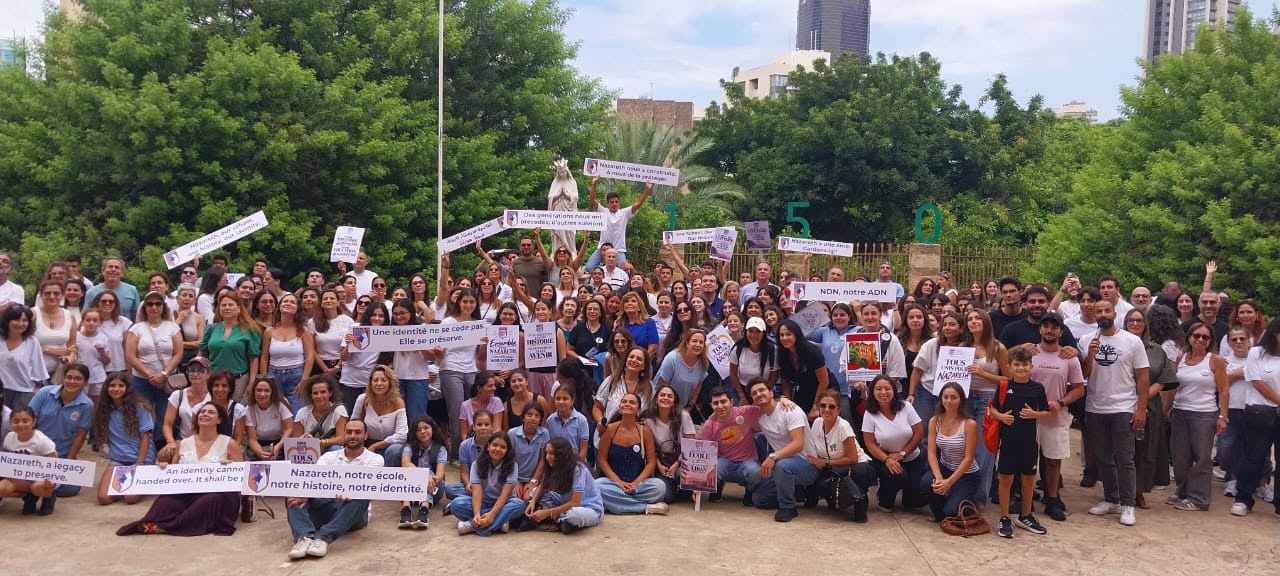
They came out in force—teachers, parents, alumni and students of Collège Notre Dame de Nazareth (NDN)—to proclaim loud and clear their attachment to the identity, distinctive character, history, heritage and predominantly French-language educational system of a school that has stood for more than a century and a half—153 years—on the heights of Achrafieh, a neighborhood that, like the school, has withstood decades of hardships and existential crises. Gathered in large numbers in a warm, convivial atmosphere, they filled the iconic Courtyard of the Virgin from end to end, chanting slogans and holding signs declaring that “NDN is in our DNA,” “Our history is not for sale,” “Nazareth is a legacy to preserve,” and “Nazareth has a soul—let us preserve it.” Levant Time was the first media outlet to report information from reliable sources about plans to transfer ownership of the Achrafieh school—and likely also the Kfarzeina school in Zgharta, the Feytroun convent in Kesrouan and the Aïn Alak retirement home in North Metn—to a Lebanese religious congregation. Unconfirmed reports have named the Antonine monks as potential buyers. The proposed transfer was put forward by the Superior General of the international Congregation of the Sisters of Nazareth, based in Rome. It sparked an outcry among teachers, parents, alumni and even students. Their stance does not reflect hostility toward any potential buyers, but rather a determination—clearly demonstrated at Saturday’s gathering in the Courtyard of the Virgin—to preserve the historical heritage, identity and values championed by the school for a century and a half. It must be acknowledged that every religious congregation and every school has its own distinctive character, identity, history and educational traditions. Lebanon’s pluralistic calling and very reason for being demand that this diversity and complementarity—a source of richness—be preserved, particularly in private education. In this context, over the course of its 153-year history, Collège Notre Dame de Nazareth has become a beacon of the French-speaking world and a center of education grounded in Christian virtues. The need to preserve this distinctive character was the central message of the speeches delivered at Saturday’s gathering by Nazareth alumnae representatives Nada Chaoul, Reine Riachi and Paola Rebeiz, as well as by delegates representing parents and students currently enrolled at the school. The statement issued at the end of the sit-in said unequivocally that, “whatever legal form” the proposed transfer might take, and regardless of “how this change is presented or what name it is given,” the teachers, parents, alumni and students gathered in the Courtyard of the Virgin affirmed their determination to fight the “disfigurement” of an institution whose history, shaped by successive hardships and wars, has become intertwined over the years with that of the iconic Achrafieh neighborhood.
03:30s
Reportage
By Maxime Pluvinet - Published Aug 30, 2026 - 13:32
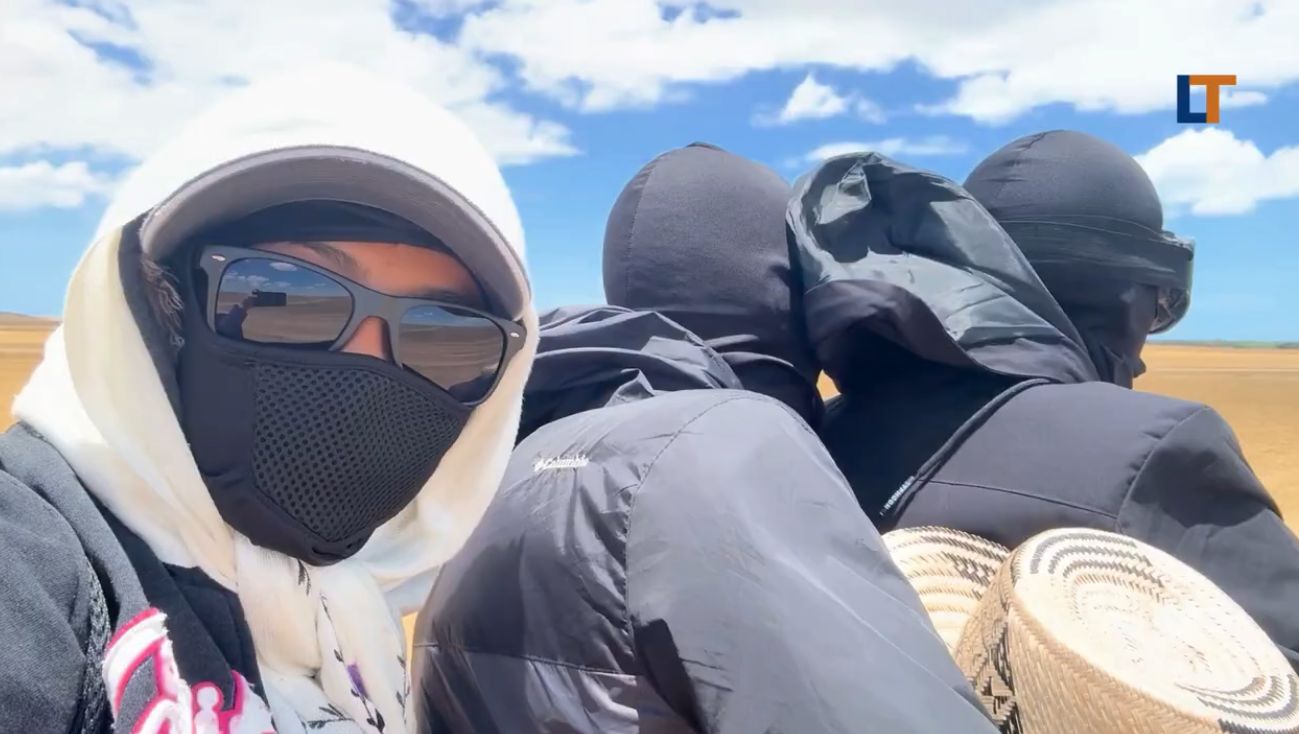
The Wayuu are a cross-border indigenous nation inhabiting the region spanning the La Guajira Peninsula, at the northernmost tip of Colombia, and part of Venezuela's Caribbean coast. The Wayuu take great pride in their title as the "never conquered people." What follows is an account of a desert crossing made alongside them during Easter 2026 — an opportunity to share certain aspects of their philosophy of travel. Many people in Colombia are quick to label the Wayuu a "very closed" people. By that they mean a culture that is deeply resistant to the arrival of outsiders on the community's ancestral territory. Their highly traditional customs are said to defy, in an archaic and violent way, the progressive advances of modern law. "You'll see," a Spanish colleague who had visited Wayuu territory told me,"I've never seen people so rough and violent — people who practice an eye for an eye and put children to work in absolute poverty at roadside checkpoints." This kind of remark carries an implicit indictment of the "noble savage" myth: don't expect to find in the Wayuu the original goodness of humankind. But then, who ever said we should aspire to find a perfect model when it comes to human societies? I had a privileged connection with Paola, from the Uliana clan — a Wayuu psychologist and educator. After two years of regular exchanges during which she taught me the basics of Wayuunaiki, Paola urged me to come and discover her homeland of La Guajira.Terechija pia püntapa yamüin, "I'll be waiting for you here", she had told me. A short stay came together, and through Paola's friendship and guidance, it allowed me to glimpse certain features of the mindset and psychology — if such terms can even apply here — of a people long referred to asguajiro in Spanish colonial chronicles. I am neither an anthropologist, nor a psychologist, nor a historian; yet I will try, by drawing directly on the words of the Wayuu themselves, to share certain aspects of their culture that deserve to be better known — at a time when ideas around identity, memory, territory, and justice seem to be set in stone. These are notions that, in various parts of the world, are fueling a very real necropolitics. A people open to the world? The Wayuu are the first to proudly claim their title as a people "never subjugated" by the Spanish during the Conquest. And the chronicles of the era do indeed describe them as "savages," "scoundrels," and "rebels" on the fringes of the new imperial order — terms that, in the colonial pen, were used to designate those who had wounded the hidalgo honor of the conquistadors by resisting them. Paola's family. "The alijunas (here, the Spanish) could do nothing against us", Paola told me as we crossed the desert on motorcycles alongside her brother Joheinner, "they came, but we were armed with fearsome poisoned arrows." She also told me, later on:"The Wayuu, and the Uliana in particular, are known for their friendliness and generosity. But if they feel threatened, they become aggressive." One might therefore assume that cultural contact and intermingling among the Wayuu were almost nonexistent, thanks to their formidable warrior qualities. Moreover, the newcomers of the 16th and 17th centuries struggled to penetrate the arid landscape of this Caribbean refuge that the La Guajira Peninsula represented. As a result, after the arrival of the Europeans, the Wayuu drew a clear line between themselves and the Other — or rather, all others. Even the name they call themselves, Wayuu, means "the People" or "the Human Beings," a deeply human tradition well described by Claude Lévi-Strauss in his reflections on barbarism. Paola explained to me:«In the Wayuunaiki language, the term alijuna means 'one who strikes hard.' It was originally applied only to the conquistadors because of their violence. Today, it simply refers to all non-Wayuu people: other First Nations, Afro-descendants, other mestizo Colombians, tourists, foreigners — everyone who is not Wayuu.» Based solely on colonial accounts, the Wayuu might give the impression of being completely cut off from world affairs and particularly insular. Yet this apparent parochialism doesn't capture their true reality. Nothing is more foreign to the Wayuu than the idea of permanence. Diplomatic sophistication The Wayuu travel — and they travel far. For centuries, they were semi-nomadic, moving between the northern and southern parts of their peninsula according to the seasons and the resources each region had to offer. Likewise, after adopting a certain model of cattle herding, they constantly sought out greener pastures for their modest herds through small-scale transhumance. One explanation for their tenacious resistance to Spanish colonization attempts was their technical adaptation through contact with other Europeans: the domestication of the horse and mastery of firearms — conditions that, according to Finnish historian Pekka Hämäläinen, similarly enabled a degree of independence among the Comanches in what is now the United States. The Wayuu owed this technological mastery, which other peoples on the continent so sorely lacked, to their diplomatic acumen. As Wayuu anthropologist Weidler Guerra Curvelo has analyzed, from the 17th century onward they built strong networks of commercial and political alliances with the English, the French, and above all the Dutch — who were at the time sworn enemies of Spain. The Wayuu understood the political rivalries of their era. They traded as far afield as Jamaica, then under British control. In the 18th century, the Wayuu cacique Antonio Paredes — who would lead one of the most significant Wayuu uprisings in 1769 — sailed to the Caribbean island of Curaçao, then under Dutch rule. He returned triumphant, having signed a trade agreement. But the Wayuu concept of travel did not end with the independence of the Latin American states that would become Colombia and Venezuela over the course of the 19th century. Today, the Wayuu proudly embrace the nickname pueblo sin fronteras, or 'people without borders.' The boundary between Colombia and Venezuela does nothing to diminish the autonomy of Wayuu territory, which straddles both states. This transnational dimension, guaranteed by the constitutions on either side of the imaginary line drawn in the sand, is made tangible through citizenship rights: many Wayuu people hold dual nationality — both Venezuelan and Colombian. The Wayuu regularly cross back and forth across the border — for a wedding, a funeral, to buy a motorcycle, or to attend a second funeral wake, a Wayuu tradition in which, at the end of the mourning period, the deceased is exhumed so that their remains can be cleaned and given a final resting place. Consider how much time these compelling traditions required before modern communications: news of a given celebration had to be sent out months in advance so that everyone involved could gather at a set location. The Wayuu travel, then, and they travel far to stay connected with relatives scattered across clans and territories. The losers of the marijuana boom But this freedom of movement has had its downsides: the Wayuu came out of the bonanza marimbera, the golden age of marijuana trafficking in the 1970s and 1980s, during which they were used to move goods through the border's gray zone. Violence raged, and paramilitary actors from the Colombian conflict—as well as Venezuelan mob figures—made them pay dearly for their presence. A tragedy remarkably explored in the film Pájaros de Verano (Birds of Passage, 2018), which Paola recommended to me. The Wayuu travel primarily for work. Rural exodus has hit Wayuu youth hard in recent years. First, to the capital, Bogotá. «Motoshonosü tain chajachinpa Samatchipa! «I had completely forgotten you were in Bogotá!», Paola told me. She didn't hesitate to move there alone for five years to study in the city, nicknamed Samatchipa—"Cold Place"—in Wayuunaiki. On the Venezuelan side, many have migrated in recent years to escape the harsh living conditions imposed by American sanctions. Sometimes the road leads to exile: many Wayuu have found themselves on routes toward the United States, fleeing—for political or economic reasons—the chaos and repression that defined Chavista Venezuela. The northern tip of the La Guajira Peninsula. Not only did the Wayuu travel, but part of the world came to them, effectively integrating them into a "global consciousness" shaped by migration and outside political forces. La Guajira was, like so many other parts of Latin America, a destination for enslaved populations. Their descendants, along with internal Colombian migrants, make up a well-established Afro-descendant community in the region, found even in remote villages such as the corregimiento of Nazareth, nestled in the lush Sierra de la Macuíra—a true oasis and Paola's place of origin. Muslim and Arab migrations In Lower Guajira, Arab and Muslim migrations continue to shape the landscape, notably in the city of Maicao, which is home to the largest mosque in Colombia. The Wayuu are familiar with the term mezquita, mosque, and refer to all Muslim populations in the area—who are in fact more South Asian than Middle Eastern—by the term árabes, the Arabs. The Wayuu have also embraced various religious denominations, though none has managed to supersede the clan, giving rise to a certain syncretism. The arrival of the Capuchins—barefoot friars—nearly 120 years ago resulted in a Catholic majority. This is true of Nazareth, which Paola took me to visit, where one of the region's largest and oldest educational institutions stands: the Indigenous Boarding School, founded in 1911 by Fray Crispín de la Palma. Some communities, ranging from a few dozen to a few hundred inhabitants, have adopted one of the evangelical denominations; Jehovah's Witnesses can even be found among them. This has not prevented the Wayuu, to this day, from practicing ancient cultural rites. Dreams, animal sacrifices, dances, sabedores, rituals, and the old gods all still have their place—at a time when other peoples in similar circumstances have completely abandoned certain traditions. The Colombian imagination readily cites Wayuu endogamy as evidence of their supposed "closeness" to outsiders. Yet this endogamy is quite relative. For a little under a century and a half, contact between the Wayuu and what is called "mainstream society" (meaning: non-Wayuu) has intensified. Today, between one-third and just under half of the total population of the Colombian department of La Guajira is Wayuu. In ports and trade, particularly around the towns and villages of the Colombian Lower Guajira and the coastal region of Maracaibo in Venezuela, countless relationships — with outcomes ranging from happy to tragic — quickly gave rise to a de facto mixing of peoples. Evidence of this, according to my guide Paola, is the obvious difference in features and complexions among the Wayuu, especially between those from the Upper Guajira and their neighbors to the south. And it is far from uncommon, on the streets of Riohacha, Uribia, or Maicao, to see couples made up of one Wayuu person and one alijuna. Rather than creating a sense of identity loss among the Wayuu, this reality goes hand in hand with the observation that, in a society built around clan ties, such mixing does not disrupt the transmission of culture and language. Those are threatened by other factors, which we will return to later. But then, one might ask: if this openness extends to every level — territory, marriage, family — and if language, customs, or even ethnic background don't necessarily define what it means to be Wayuu, how do they manage to maintain such a strong sense of shared identity and cohesion? How, in the end, do they identify with such remarkable ease who is Wayuu and who is not? Because a Wayuu is defined, above all, by their clan. A territory defined by its dead But what exactly is the clan for the Wayuu? It is a sense of belonging to a territory. And among the Wayuu, territory is defined by its dead. A Wayuu is Wayuu because they know where to return: the land where their ancestors are buried. Territory, for them, is not the political construction bounded by borders born of conflict and the assertion of power, as it is for Western states as described by historian Norbert Elias. Clan, family, territory are nothing other than references to those who are no longer here: the land is governed by the memory of the departed. Territory is where the cemetery lies, where each clan first settled over the long course of time, and it is defined by the pastures and water sources that mark the landscape surrounding that cemetery. Paola told me: "You find Wayuu people everywhere anyway!" Her mother Francisca, pouring me coffee and handing me an arepa, added: "Oh, absolutely! In the United States, in Europe, everywhere!" Paola continued in an almost epic tone, turning to the subject of the dead: "But the Wayuu always returns to their territory. If they die out there, their clan and family will go to the ends of the earth to bring them back and bury them here, on their land. The territory is defined by the cemeteries, the water sources, and other landmarks." Does this contradict the idea that an outsider, an alijuna, can perfectly integrate into a Wayuu clan that has not been ethnically homogeneous for generations? Not at all: a quick glance at mixed couples almost invariably reveals a Wayuu woman living with an alijuna man. Wayuu culture is matrilineal (but not matriarchal — Paola was insistent on that point), and the ashipa, the clan that matters, is the mother's group. As a result, the man — whether Wayuu or alijuna — will almost always go to live on his wife's territory, and it is her family's cemetery that determines the clan, the territory, and the inheritance tied to it. A warm welcome to those who come from elsewhere — their children's graves will ultimately rest where their Wayuu mother first drew breath. "It's perfectly normal, look." Paola gestured with a glance toward her cousin's husband, who was visibly white.Paola m’indiquait d’un regard le mari de sa cousine, visiblement blanc. «He's a paisa, from the Medellín region. Many paisas have come to La Guajira. He married my cousin, and look at their daughter — she speaks wayuunaiki, she is wayuu, but she looks very different from me, different hair, chinitos. He's the one who came to live on his wife's territory. A Wayuu can build his own home anywhere on his territory. You know we don't need a title deed? It's her territory. Being married to her, he can make use of it.» At the beginning of this reflection on the openness of the Wayuu people, I argued that nothing is more foreign to them than the idea of permanence. This is because the outcome of this perpetual movement is return — a return to the land of one's ancestors. But to return, one must first leave! And wander the world. Before coming back, whether dead or alive. I give the last word to the master of wayuu speech, Livio Simón Suárez, the poet from Nazareth, whose house Paola pointed out to me as we passed by. His verses, written in Spanish, beautifully capture the hope of the wayuu Ulysses, poised between departure and return: «Los caminos de mi tierra están tristes por tu partida. Wayuu regresa pronto que tus caminos te esperan para besar tus cuarteados pies» (Your departure saddens the paths of my land, Wayuu! Come home soon, for the roads are waiting to kiss your cracked and weary feet.)
00:20s
Society
By Vanessa Kallas - Published Aug 29, 2026 - 14:41
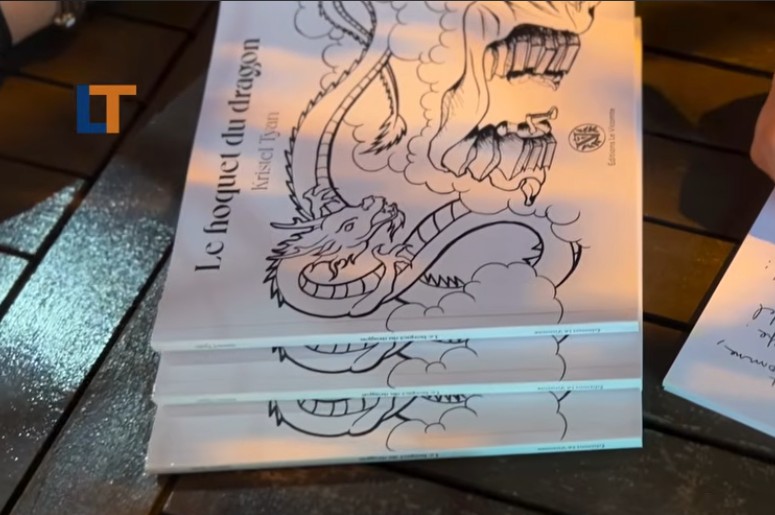
"When I hear the booms far away, I tell myself it isn't war. It's a giant dragon who has the hiccups. He must be enormous, hidden behind the mountains, or in a cave, or maybe in the sky." - The Dragon’s Hiccup The Lebanese have carried the weight of a devastating war for the past three years, and even when they try to ignore it for a fleeting moment, reminders are waiting: buzzing sounds in the sky, short conversations with neighbors, or even an unexpected question from a child. The last one is the hardest to ignore. Children are by nature inquisitive. They ask questions that adults are afraid to answer, and when they don't get a response that satisfies them, they are left alone to search for answers. But how do you explain an act of violence to an innocent child? Nicolas, 6, wanted to understand the cause behind the loud booms in Beirut, and his imagination transported him to a world where dragons have hiccups so loud they can be heard across an entire city. Instead of dismissing her son's imagination as most adults would, Kristel Tyan, an educator and storyteller, cultivated it to ease the weight of the war. Her son's interpretation and creativity inspired her to write Le Hoquet du Dragon (The Dragon's Hiccup), an illustrated book about the reality of war through the eyes of a child. "During the war, I held on to every question my son asked me, and I started writing a text," she says. "I didn't want to publish it at first, but my friends and family thought it was a story worth sharing, and so I decided to make it a collective experience rather than a personal one." Tyan explains the central ideas of the book: "This book carries two messages. The first is our attachment to Beirut, which I talk about a lot with my children. Second, it’s about the importance of listening as adults to our children, and not always the other way around." When Words Become Music As if this book couldn't get more creative, Tyan insisted on blending storytelling with live music and art to immerse the audience in the story. At La Cave du Cheikh, a charming spot nestled in Bikfaya, Tyan read the book to a live audience. Accompanying her was educator and musician Karim Dahdah, who sang excerpts from the book, while artist David Der-Yeghiayan painted on a canvas, inspired by the audience’s interpretation of war. Tyan believes this approach could help children reignite the joy of reading, a habit that has become rare: "With the pressure we're living under in Lebanon and around the world, we've forgotten the bond we have with books. Through this event, we want to send a message: don't forget to take refuge in the imagination of a book, because it could save you." Dahdah's voice and soft tunes on the guitar blended with the atmosphere, creating a soothing experience despite the themes of war. "I love mixing music with education," he says. "At the end of a lesson, I encourage my students to write a song together about the lesson or a certain theme, so we can learn it together in song." For Dahdah, interaction matters most for young readers. "Children need an experience, not just a book. If we can connect the act of reading to something more memorable and experimental, it suddenly becomes much more interesting. It gives the audience a say in it as well." Painting the Story Various illustrations from the book were also showcased in a slideshow. They were all drawn by David Der-Yeghiayan, a tattoo artist who specializes in surrealism. Symbolism is a central aspect of this book, represented mainly through toys and animals. In one illustration, the dragon — an allegory of war — roams in the sky. To hide from it, children build a refuge from rocks and blankets. In another, a snail wishes upon a star to become a slug, freeing itself from the burden of carrying its "home," or worries. The designs, similar to those of Saint-Exupéry’s The Little Prince, are simple yet symbolic, the right balance for both adults and children to enjoy. During the event, Der-Yeghiayan was inspired by the music and the guests' testimonies to paint a figure holding a canvas with a heart and a cedar in the middle. "My art expresses ideas through symbolism,” says Der-Yeghiayan. “Everything in our life means something, and that expression comes about through different visuals and images. For the book, I had to adapt the way I usually express my ideas and make it less elaborate and more minimal, especially since I only used black and white." However, creating these illustrations meant unlearning something first. "Seeing the events through the innocent eyes of a child meant I needed to go back to when I was a child and how I experienced the war in Lebanon." Publishing the Book The evening was staged at La Cave du Cheikh, which Joelle Ayache-Gemayel runs with her husband, Gabriel, and which is closely tied to Le Vicomte, the publishing house behind the book. The format, she argues, is a response to a habit that has been lost. "Today it's clear that children don't read anymore, almost not at all. Organizing an event with theater, song, and music certainly makes you want to read the book." By the end of the night, guests were transported to simpler times where imagination and creativity could slay the strongest dragons. At one point in the book, Nicolas asks his mother: "Mom, will you take me one day to see bubble houses? (…) Those houses look like soap bubbles. (…) I'd love to live in a bubble. Why does a bubble always have to burst?" Children's thoughts and imagination are like bubbles floating in their minds. Dismissing them means slowly popping those bubbles. Answer your children's questions so that they can resist the hiccups of the world. After all, we were once children with minds full of bubbles — of dreams. "Along the way, we forget to dream, to imagine," Tyan concludes. "And the most beautiful lesson my child gave me is to never stop dreaming. That remains the solution."
02:52s
Reportage
By Maxime Pluvinet - Published Aug 22, 2026 - 16:22

The oil price surge triggered by the war between the United States, Israel, and Iran is further strengthening Guyana's position as home to the world's fastest-growing economy, thanks to its massive offshore reserves. But beneath this spectacular prosperity lies a major challenge: translating oil revenues into sustainable development for its entire population. Even before the military escalation in the Middle East, Guyana was undergoing an unprecedented economic transformation. This small Caribbean state—a former British colony with fewer than one million inhabitants—was long considered one of the poorest in South America. Yet within just a few years, Georgetown has emerged as one of the world's new oil giants. The war between the United States, Israel, and Iran, which has severely disrupted international energy markets, has only heightened the strategic importance of this small nation. With estimated reserves of 11 billion barrels and direct access to the Atlantic Ocean—far from sensitive maritime chokepoints such as the Strait of Hormuz—Guyana now stands out as a stable supplier in a world hungry for energy security. However, this new windfall is fueling a growing debate about how the billions of dollars in oil revenues should be invested to avoid the mistakes made by other hydrocarbon-dependent nations. Oil Boom The development of Guyana's oil sector is one of the fastest success stories in the industry's recent history. Led by a consortium headed by ExxonMobil, it has pushed production to more than 900,000 barrels per day in just seven years—a milestone that offshore projects typically take far longer to reach. The economic impact has been dramatic. Since commercial production began in 2019, the country's GDP has more than quadrupled, reaching nearly $27.5 billion in 2024. In the capital, Georgetown, the signs of this newfound wealth are everywhere: modern office buildings, upscale hotels, new residential neighborhoods, and a proliferation of oil industry-related services. The rise in crude prices driven by the Middle East conflict could accelerate this momentum even further. According to several estimates, if prices hold around $100 per barrel through the end of the year, Guyana's oil revenues could surge by nearly 70% compared to the previous year. The country is also poised to benefit from a substantial increase in its share of oil revenues. Until now, a large portion of production went back to the consortium to recover its exploration and development costs. But those investments could be fully recouped as early as this year, which would allow the Guyanese state to claim a much larger share of the profits generated by the oil fields. Heading Toward Dutch Disease? Yet this meteoric prosperity comes with well-known risks. The example of neighboring Venezuela serves as a cautionary tale about the dangers of excessive dependence on oil revenues and exposure to boom-and-bust crude price cycles—symptoms of the economic phenomenon known as "Dutch disease." To guard against this, Guyana established a sovereign wealth fund in 2019 designed to receive all oil revenues and gradually channel them into development projects. It is worth noting, however, that Guyana holds two advantages over its Venezuelan neighbor: brand-new infrastructure, as well as a much lighter grade of crude compared to Venezuela's extra-heavy oil. The government is also stressing the need to diversify the economy and ensure that more of the population benefits from the fruits of this growth. Despite impressive GDP figures, oil, gas, and related activities now account for more than three-quarters of the national economy. Some areas of infrastructure still lag significantly behind, with recurring power outages, inadequate sanitation networks, and a rising cost of living. To address these concerns, the authorities are gradually tightening local content rules. Oil companies are required to use Guyanese suppliers in several sectors, including catering, transportation, and medical services. Local entrepreneurs hope that broadening these requirements will drive the creation of skilled jobs and foster a more diversified business ecosystem. But criticism remains. Some business leaders point to practices that allow foreign groups to indirectly benefit from quotas reserved for local players. Others note that inflation driven by the oil boom is eating into some of the expected gains for households and small businesses. The paradox is particularly striking in the energy sector: although Guyana has become a net oil exporter, it still imports refined fuels and is therefore exposed to rising prices at the pump. For President Irfaan Ali, the challenge now lies in managing the expectations of a population that is confronted daily with headlines about extraordinary wealth. For while oil is profoundly transforming the country, the true measure of success will rest on Guyana's ability to convert this historic windfall into lasting improvements in living standards — in a country long plagued by corruption and communal divisions, primarily between Indo-Guyanese and Afro-Guyanese communities. Even if geopolitical tensions ease and crude prices fall back, the country already appears to have secured a new standing on the global energy map. The question that remains is whether this prosperity can benefit all citizens and outlast the inevitable end of the oil cycle.
s
Business Life
By Vanessa Kallas - Published Aug 20, 2026 - 00:20
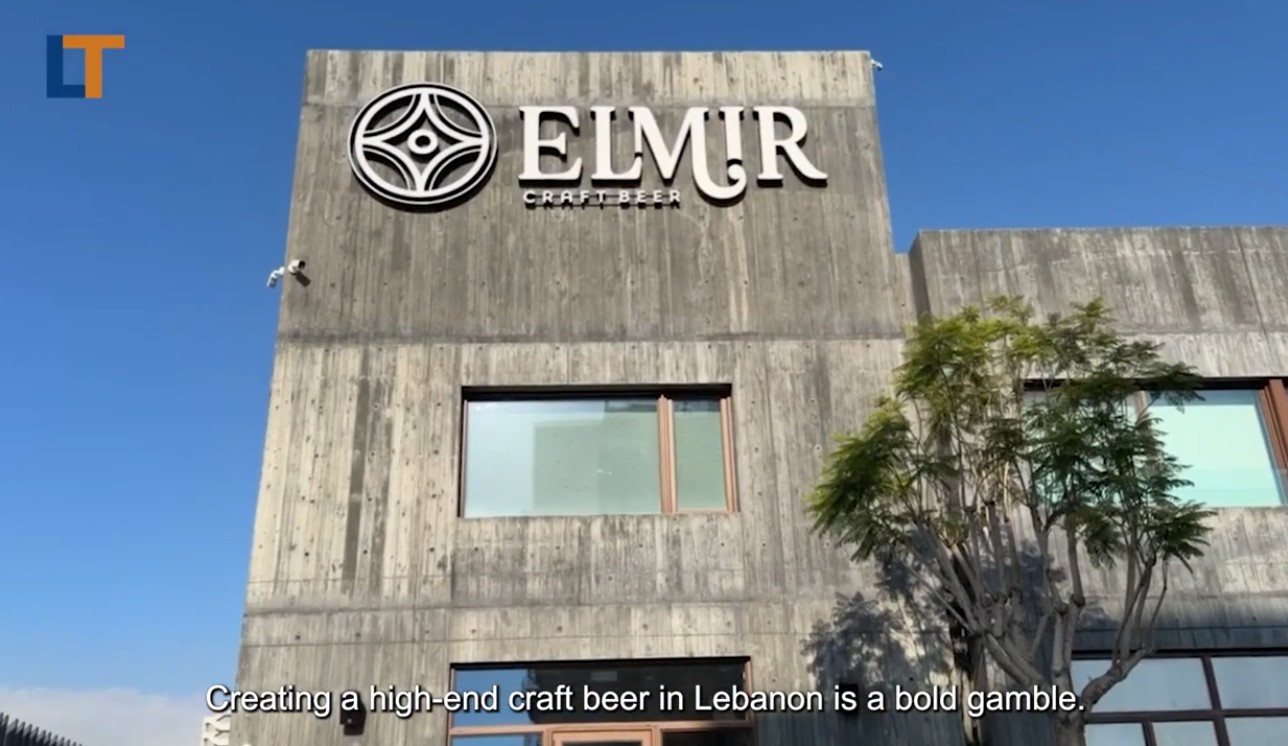
In a country at war, or caught in a cycle of chronic crises, resilience becomes a necessity, allowing the population to overcome the hardships of the moment. This resilience can manifest on a military and security level, but it can also — and perhaps more importantly — take the form of cultural, social, and above all, economic resistance. With the aim of making a modest contribution to this kind of "economic resistance," Levant Time is launching a new section called "Business Life." Our goal is to provide media visibility to companies that are growing or launching new projects despite the ongoing war and simmering crisis. Where growth isn't possible, we also aim to show the public what measures companies are taking to cope with the many challenges they face, as they work to weather the economic stagnation gripping the country. Brewing a premium craft beer in a country that has endured two wars in three years and one of the worst economic crises in its history — that is the bet placed by theElmirbrewery. A bet that, at first glance, seems to swim against the current of an economy bled dry, yet one that speaks to a side of Lebanese entrepreneurial resilience. A fragile economy, but one that is stabilizing Since 2019, Lebanon's GDP has lost nearly 40% of its value, and the pound more than 98%. After a contraction of 7.1% in 2024, real GDP is expected to grow by 3.5% in 2025 and then 4.0% in 2026, supported by the stabilization of the exchange rate since August 2023 and a slowdown in inflation. The pound has settled on the parallel market at around 89,500–90,000 LBP to the dollar, while the banking sector remains paralyzed and the economy continues to rely heavily on diaspora remittances, which account for approximately 16% of GDP. It is in this context that companies like Elmir choose not to scale back, but instead to bet on quality and the premium segment — a wager on consumer confidence and medium-term export potential. A beer crafted for the exceptional Founded in 2018,Elmiris part of a wave of microbreweries that have emerged in Lebanon in recent years — a young and dynamic sector driven by consumers seeking something new after decades of near-total domination by industriallager. For CEO Noel Abi Nader, what sets Elmirapart starts with the sourcing of its ingredients: "Elmir is a craft beer made with the finest products we can find," he explains.The malt comes from the German malthouse Weyermann — one of the best, if not the best, malthouses in the world — while the hops are imported "refrigerated by air from the four corners of the globe." Even the bottle follows this preservation-first philosophy: dark glass made in Germany, designed to block out light, "the enemy of beer." But while the ingredients are sourced from the world's finest suppliers, the soul of these beers is unmistakably Lebanese. Beyond the quality of the raw materials, it is the creativity behind the brewing that truly sets Elmirapart: original recipes conceived and developed in Lebanon, drawing inspiration from the country's terroir and flavors.This local expertise transforms exceptional ingredients into beers with a singular character — impossible to confuse with the standardized products flooding the market. Another defining trait of the brand is its commitment to naturalness. Elmiris among the very few breweries to produce a 100% natural beer, with no preservatives or additives whatsoever. It is a demanding choice that requires total control over the production and preservation chain — and it helps explain the meticulous attention to every detail, right down to the dark glass bottles. Behind the production, the team takes pride in a scientific approach: a PhD in microbiology, a chemistry doctoral candidate specializing in brewing and distillation, and two agronomical engineers holding master's degrees in food technology oversee every step of the process. "It's the quality of the ingredients and the quality of the team that makes the beer," sums up Noel Abi Nader. Choosing the premium segment If Elmir is not yet available at every retail outlet in the country, that's no coincidence. "We're positioned in the premium segment," the CEO explains. "We won't be everywhere — just in premium networks, whether that's retail or F&B." A deliberate positioning for a brand that already claims the title of market leader in craft beer in Lebanon. But turning that leadership into profitability remains a significant challenge. "We've had two wars in less than three years, with a shrinking economy and a middle class that continues to shrink," acknowledges Noel Abi Nader — a candid assessment that echoes the country's broader macroeconomic indicators. Unwavering international recognition It is perhaps on the international stage that Elmir's ambitions find their most resounding validation. In just a few years, the brewery has amassed no fewer than 18 international awards, earned at some of the industry's most prestigious competitions — primarily the World Beer Awards and the Brussels Beer Challenge — where its beers were judged blind against the world's finest. The crowning achievement: a Best Beer in the World title in the Sour Salty Beer category, won in 2024. A rare honor for a Lebanese brewery, putting the country's craft expertise firmly on the global beer map. These accolades are more than just trophies — they form one of the cornerstones of the brand's identity and a powerful argument for its export ambitions. With this track record, Elmir can now claim a title few can dispute: Lebanon's most award-winning beer. Local market first, exports next For now, exporting is not the stated priority. "We're focused on rolling out across Lebanon at the moment," says the CEO, while acknowledging that Gulf countries are among the next targets. Elmir is already present in Tokyo and the Maldives — demanding markets where its international accolades serve as a valuable calling card. A cultural living space Another distinctive feature of the site: a piano stands on the ground floor, right among the brewing tanks. "It softens the cold, industrial feel of the factory," explains Noel Abi Nader, who plans to host intimate classical, blues, and rock concerts there, for audiences of no more than a hundred. These events were originally planned for March 2026 but have been pushed back to October due to the security situation. "It's part of Elmir's contribution to the local cultural scene," he notes. A symbol of resilience Through Elmir, an entire generation of Lebanese businesses continues to invest and set its sights on international markets despite an uncertain environment. As the country faces post-conflict reconstruction needs exceeding $11 billion for 2025–2026, initiatives like this serve as a reminder that Lebanon's economic revival will also depend on its entrepreneurs' ability to turn constraints into standards and crises into opportunities. (Article written as part of the series "La Vie des Entreprises," episode dedicated to the Elmir brewery.)
01:52s
Culture
By Fabienne Touma - Published Jul 9, 2026 - 14:12
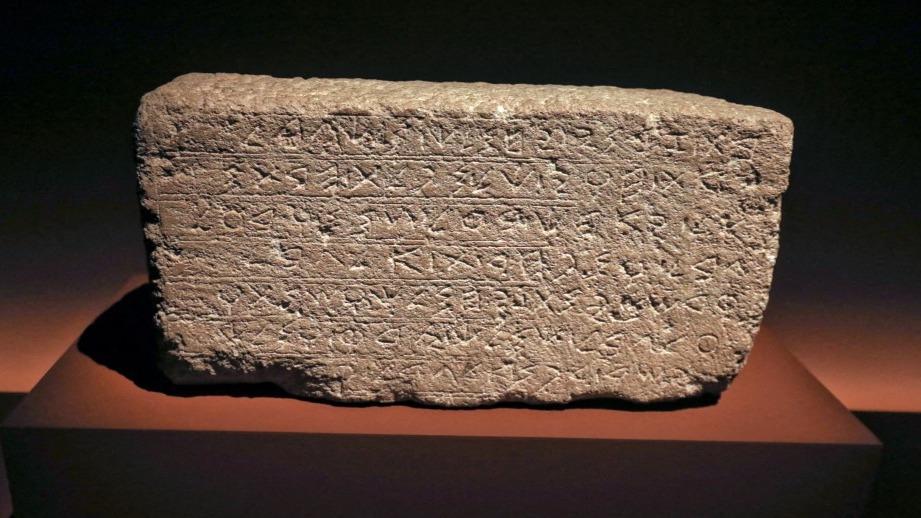
At a time when conflicts are destabilizing cultural balances and directly threatening the treasures of the past, some exhibitions go beyond the purely artistic realm to become genuine acts of cultural resistance. That is precisely the case with the exhibition "Byblos, Millennial City of Lebanon," on display until August 23, 2026, at the Institut du monde arabe (IMA) in Paris. Featuring nearly 400 objects, it traces the ancient history of Byblos, one of the oldest ports in the world, while remaining firmly rooted in current events and the conflict that continues to affect Lebanon and the Middle East today. For the exhibition has also, in spite of itself, been shaped by war. What impact did the war have on this project, both in its organization and its scenography? The latter notably featured a particularly striking element: the inscription "Artwork blocked by the war." Why that choice? Was it a deliberate decision to stir emotion in visitors? An act of resistance in the face of current events? Or something else entirely? Furthermore, what new discoveries have been made about this ancient city? Have those discoveries called into question certain historical assumptions about it? And what remains to be uncovered? These are among the questions we explored with Agnès Carayon, exhibitions curator at the Institut du monde arabe, (see the interview in the attached video). Owning the absence of works blocked by the war Originally scheduled for 2024, the exhibition "Byblos, Millennial City of Lebanon" had to be postponed due to the conflict in the Levant region, which prevented the transport of many works from Lebanon. Two years on, despite an still-unstable situation, it has been relaunched — yet some pieces remain stranded there. Rather than concealing this reality, the organizers embrace it fully. Missing works are flagged throughout the exhibition with the note "artworks blocked by the war," making the direct effects of the conflict on the circulation of heritage visible, and lending immeasurable value to both the works on display and those that are absent. By owning these absences, the exhibition takes on an entirely different dimension, presenting a dual narrative: one of a millennia-old memory, and one of a heritage rendered fragile and halted by contemporary realities. Maintaining such an exhibition under these conditions goes far beyond the traditional scope of a museum. It is an affirmation that culture can endure despite war — that it can continue to circulate and transmit knowledge. "Byblos, Millennial City of Lebanon" thus takes the form of an act of cultural resistance, reminding us that preserving heritage is today, more than ever, a vital imperative. A journey through 9,000 years of history The exhibition immerses visitors in a city that has been inhabited for nearly 9,000 years — a major crossroads of Mediterranean civilizations and the world's first great international seaport. Byblos maintained close ties with Egypt, Mesopotamia, and the Aegean world, playing a key role in the spread of the Phoenician alphabet. Royal treasures, gold jewelry, ceremonial objects, and recent archaeological finds all bear witness to the richness and far-reaching influence of this civilization. This exploration is extended through a cultural program of lectures, screenings, and discussions that delve deeper into the historical and contemporary issues surrounding Lebanon and its heritage. In keeping with the exhibition, ARTE is also broadcasting the documentary Lebanon: Secrets of the Kingdom of Byblosby Philippe Aractingi, available until October 9, 2026, on arte.tv, extending the journey of discovery beyond the museum's walls. The exhibition is on view until August 23, 2026. For more information, visit: https://www.imarabe.org/fr/agenda/expositions-musee/byblos-cite-millenaire-du-liban
03:41s