
Levant Time logo

Articles

News feature image
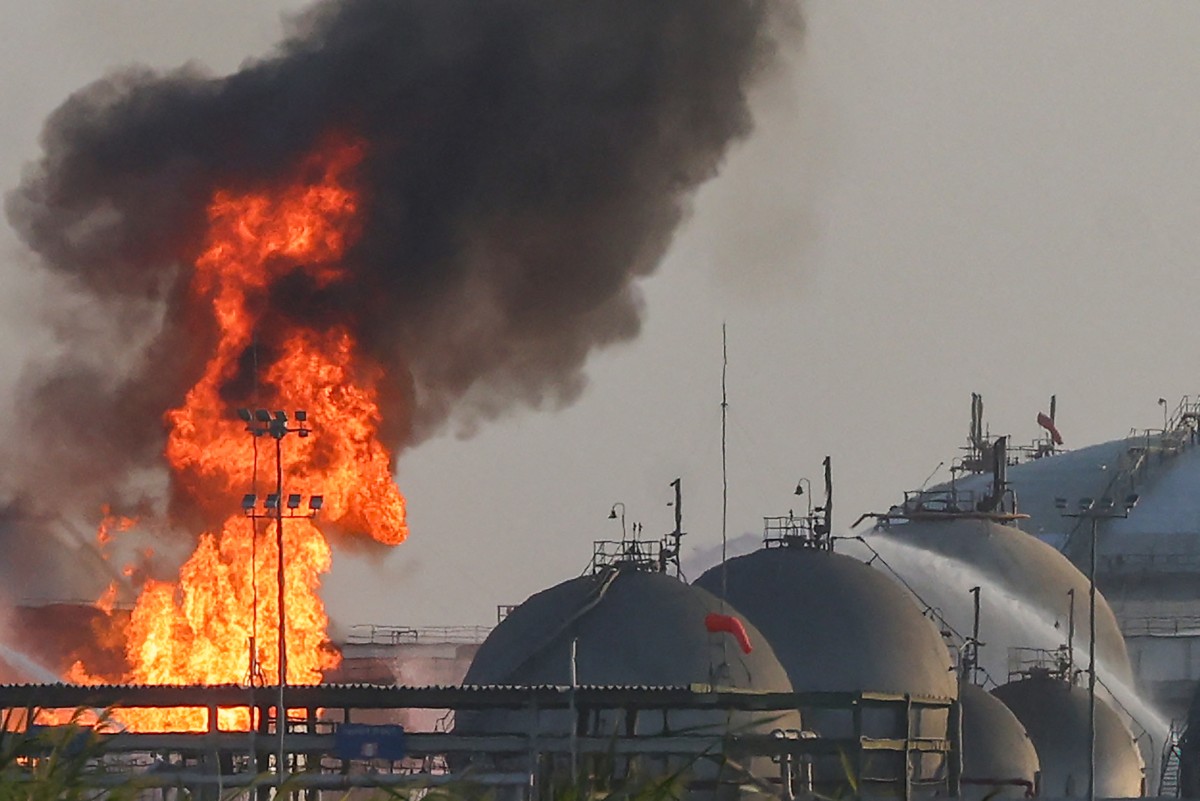
The pro-Iranian Houthi militias targeted Aramco oil facilities in Saudi Arabia last week. (AFP)
Weekly essentials
Author portrait
By LevantTime .
Published Oct 11, 2026 - 20:22
While the U.S.-Iran front remains more or less calm, two troubling signs marked the past week: the escalation on the Yemeni front and the seizure in Lebanon of a truck carrying explosives being transported by Hezbollah militiamen, which has raised fears of further suspected assassinations ordered by their Iranian patron. With Israel’s legislative elections approaching on October 27, and as the war in the Middle East weighs increasingly heavily on the U.S. midterm elections due to take place in early November, violence persists in the region—openly or covertly—on several fronts. Apart from occasional attacks on oil tankers in the Strait of Hormuz, the most worrying signs emerged elsewhere this week: in Saudi Arabia, where Houthi attacks are becoming increasingly deadly, and in Lebanon, where the arrest of pro-Iranian Hezbollah militiamen in possession of half a ton of explosives has revived fears of political assassinations.
Study
Author portrait
By Saoud Al-Mawla - Published Oct 11, 2026 - 15:12
News feature image
Photo MOHAMMED HUWAIS/AFP
VI. The War Against Iran (February-June 2026): the “Limited Intervention” A Late and Symbolic Entry On February 28, 2026, the United States and Israel attacked Iran. Very quickly, Tehran largely closed the Strait of Hormuz, reducing Gulf exports to a trickle. Many expected the Houthis to open a second front at Bab el-Mandeb. They did not. Their involvement was cautious, gradual and late: it was not until March 28, one month after the war began, that they fired their first missiles toward Israel, as though they had waited for the moment when their entry would have the greatest impact. Their operations were limited to missile and drone launches toward Israel. Their military effect was modest, given the distance and the effectiveness of Israeli air defenses. Above all, they avoided high-impact fronts: no campaign against shipping in the Red Sea, no strikes against the Gulf monarchies or regional energy infrastructure. The media dimension compensated for this: each launch sustained the image of a “resistance” force loyal to the Axis. These launches were suspended with the Islamabad Memorandum, concluded in June between Washington and Tehran.
Opinion
Author portrait
By Youssef Mouawad - Published Oct 11, 2026 - 12:53
News feature image
In the current Syrian context, a fundamental question arises with particular urgency: who called for the return of the Golan? Who else could it be but Syrian President Ahmed al-Charaa? But why on earth did the Syrian president reopen the Golan “cold case” when he had so many other priorities to deal with? In his view as a former jihadist, appealing to world opinion at the UN General Assembly meeting on September 23 was not merely a reminder of the Israeli-Syrian dispute dating back to June 1967. So what got into him, when in an interview the previous day he had stressed that direct Israeli-Syrian negotiations had taken place under U.S. auspices and that the two sides had reached 90% of a security agreement? (1)
More Articles
Sort By: NewestOldest
The Houthis in Yemen: From Saada to Bab el-Mandeb (4/4)

VI. The War Against Iran (February-June 2026): the “Limited Intervention” A Late and Symbolic Entry On February 28, 2026, the United States and Israel attacked Iran. Very quickly, Tehran largely closed the Strait of Hormuz, reducing Gulf exports to a trickle. Many expected the Houthis to open a second front at Bab el-Mandeb. They did not. Their involvement was cautious, gradual and late: it was not until March 28, one month after the war began, that they fired their first missiles toward Israel, as though they had waited for the moment when their entry would have the greatest impact. Their operations were limited to missile and drone launches toward Israel. Their military effect was modest, given the distance and the effectiveness of Israeli air defenses. Above all, they avoided high-impact fronts: no campaign against shipping in the Red Sea, no strikes against the Gulf monarchies or regional energy infrastructure. The media dimension compensated for this: each launch sustained the image of a “resistance” force loyal to the Axis. These launches were suspended with the Islamabad Memorandum, concluded in June between Washington and Tehran.

Who, then, claimed the annexed Golan?
By
Youssef Mouawad
Published

In the current Syrian context, a fundamental question arises with particular urgency: who called for the return of the Golan? Who else could it be but Syrian President Ahmed al-Charaa? But why on earth did the Syrian president reopen the Golan “cold case” when he had so many other priorities to deal with? In his view as a former jihadist, appealing to world opinion at the UN General Assembly meeting on September 23 was not merely a reminder of the Israeli-Syrian dispute dating back to June 1967. So what got into him, when in an interview the previous day he had stressed that direct Israeli-Syrian negotiations had taken place under U.S. auspices and that the two sides had reached 90% of a security agreement? (1)

Eva Gonzalès: Subtle Freedom Through the Brush

The Petit Palais is devoting its first major retrospective to Eva Gonzalès, running from September 15 through January 24, bringing together nearly one hundred paintings, pastels, and prints. The only official pupil of Édouard Manet, and a contemporary of Berthe Morisot and Mary Cassatt without ever truly belonging to the Impressionist group, she was above all a woman who forged her own path in a 19th century that offered few such opportunities to artists of her sex. Exceptionally well curated, the exhibition is also moving: behind the pupil, the model, the wife, and the mother, it reveals, work by work, a painter claiming her freedom.

"Yemen Dawn": A Turning Point with Lasting Consequences (1)

From “Operation Decisive Storm” to “Yemen Dawn” The distance between “Decisive Storm” and “Yemen Dawn” is not merely eleven years of war in Yemen. It is a political and strategic gulf that encapsulates accumulated failures, shifts in the balance of power, and changes in Yemen’s position within the regional conflict, culminating in a moment when the security of the Red Sea and the Bab el-Mandeb Strait has become an integral part of the calculations surrounding the war and its possible outcomes. When Saudi Arabia launched Operation Decisive Storm in March 2015, its stated objective was to restore internationally recognized authority and halt the Houthi advance following their takeover of Sanaa and their push toward Aden. The intervention appeared to be an attempt to prevent the collapse of a political and security arrangement that Riyadh considered essential to protecting its southern borders and preventing Yemen from becoming a base of hostile influence on the kingdom’s southern flank.

The Conflict in Yemen: Geopolitical and Strategic Considerations

I. Executive Summary The collapse of the 2022 truce transformed the Yemeni conflict into a high-intensity conventional war. The launch of “Operation Dawn of Yemen” by the internationally recognized Yemeni government and its allied forces, backed by Riyadh, aims to break the dual threat posed by the Iranian-backed Houthi militia: to the Bab el-Mandeb–Red Sea maritime corridor, and to oil infrastructure in Yemen itself (Ma’rib) and Saudi Arabia. The conflict now revolves around three major dynamics: securing the western flank (Yemen’s Red Sea coast), strangling urban centers (Taiz), and the direct internationalization of the conflict through the activation of third-party military alliances (Turkey, Pakistan).

/