

Israeli Incursion North of the Litani, a “Message” Ahead of Washington Talks
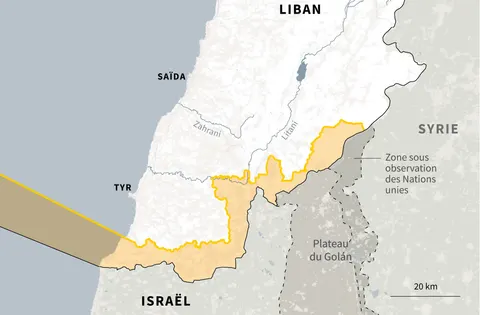


As political circles await clearer indications of President Donald Trump’s true intentions regarding the trajectory of the standoff with the Islamic Republic – following Washington’s outright rejection of Tehran’s response to the latest American “peace” proposals (though what kind of “peace” is actually being discussed remains an open question) – attention on Tuesday, May 12, turned to reports of an Israeli incursion north of the Litani River, the first such move in the current context.
Since the disastrous war launched by Hezbollah in July 2006 – for what many viewed as purely Iranian considerations – every international and regional initiative, negotiation and security arrangement had focused on stabilizing the area south of the Litani. United Nations Resolution 1701, as well as the ceasefire brokered in November 2024 following yet another self-destructive war initiated by Hezbollah, centered on ending all militia presence within that clearly delineated southern zone.
Following the third frenzied – and no less self-destructive – war launched by the pro-Iranian party on March 2, 2026, ostensibly in retaliation for the death of the Islamic Republic’s Supreme Leader, Ali Khamenei, Israel immediately signaled its intentions, stressing its determination to establish a buffer zone in that same area south of the Litani River. The high-profile announcement of an Israeli military incursion north of the river, along with the establishment of a permanent position on the outskirts of the town of Zawtar al-Sharqiyeh, marks, in many respects, a “break” with the entire international diplomatic and security process governing southern Lebanon since August 2006, when the United Nations Security Council adopted Resolution 1701. Tel Aviv also reported clashes in the area with Hezbollah militants, fighting that it said lasted three days.
The significance of the disclosure of this major development lies in its timing: it comes on the eve of the third round of direct talks between Lebanon and Israel, scheduled for Thursday, May 14, in Washington under the auspices of the Trump administration, and in the presence of former ambassador Simon Karam – a participation that lends a new political dimension to the bilateral discussions.
The message directed at the Lebanese authorities appears clear: if no tangible progress is made toward the disarmament of Hezbollah’s militia, as stipulated by Resolution 1701 and the November 2024 ceasefire agreement, the Israeli army will not limit its operations to the area south of the Litani, as initially indicated, but will not hesitate to expand its campaign by crossing the river northward. Israeli political leaders in Tel Aviv have, in fact, raised that possibility explicitly. Some sources have even gone so far as to suggest that the Israeli military could advance as far as the Zahrani River, south of Saida.
The Jewish state could justify such an escalation of its military operations in southern Lebanon by citing the renewed attacks carried out by the pro-Iranian party against northern Israel. As recently as Tuesday evening, several explosive-laden drones launched from southern Lebanon crashed inside Israeli territory near the border, wounding a number of soldiers.
The Regional Dimension
As tensions rise on the Lebanese front, uncertainty continues to surround developments on the Iranian front. The explosive issue is expected to feature prominently during President Donald Trump’s visit to China later this week, as Beijing maintains close ties with the Islamic Republic. Speaking on the matter Tuesday, the White House chief said he had no intention of acting “rashly” regarding Iran, stressing the importance of the naval blockade imposed on Iranian ports. At the same time, however, the American president made clear that he is under no illusion about what he described as Tehran’s delaying tactics. The remark echoed previous statements by Mr. Trump, who has repeatedly argued that the time has come to put an end to what he describes as the Islamic Republic’s long record of deadly and destabilizing aggression against Western nations and Middle Eastern states alike. Iran, the president said earlier this week, has been “leading us on for 47 years.”
France Avoids a State of Emergency but Prepares for the Worst
A Nobel Peace Prize to Save International Law in Peril
A Lebanese-Iranian Meeting in New York, but Several Political Messages
“No State Can Have Two Armies and Two Decision-Making Authorities,” Salam Says in New York
Trump Pulls Back at the Last Minute From Strikes on the Houthis
Más de Michel Touma
Ver todo


Más en Today's Essential
Ver todo


Lo último de Levant Time
Ver todo


