

Israel’s political deadlock and its consequences for Lebanon

A comparison of analyses by Arab, American, French and Israeli experts reveals a well-established consensus: the deadlock over forming a new government following Israel’s parliamentary elections will not lead to de-escalation in Lebanon, but rather to continued military pressure and a diplomatic quagmire for Beirut.
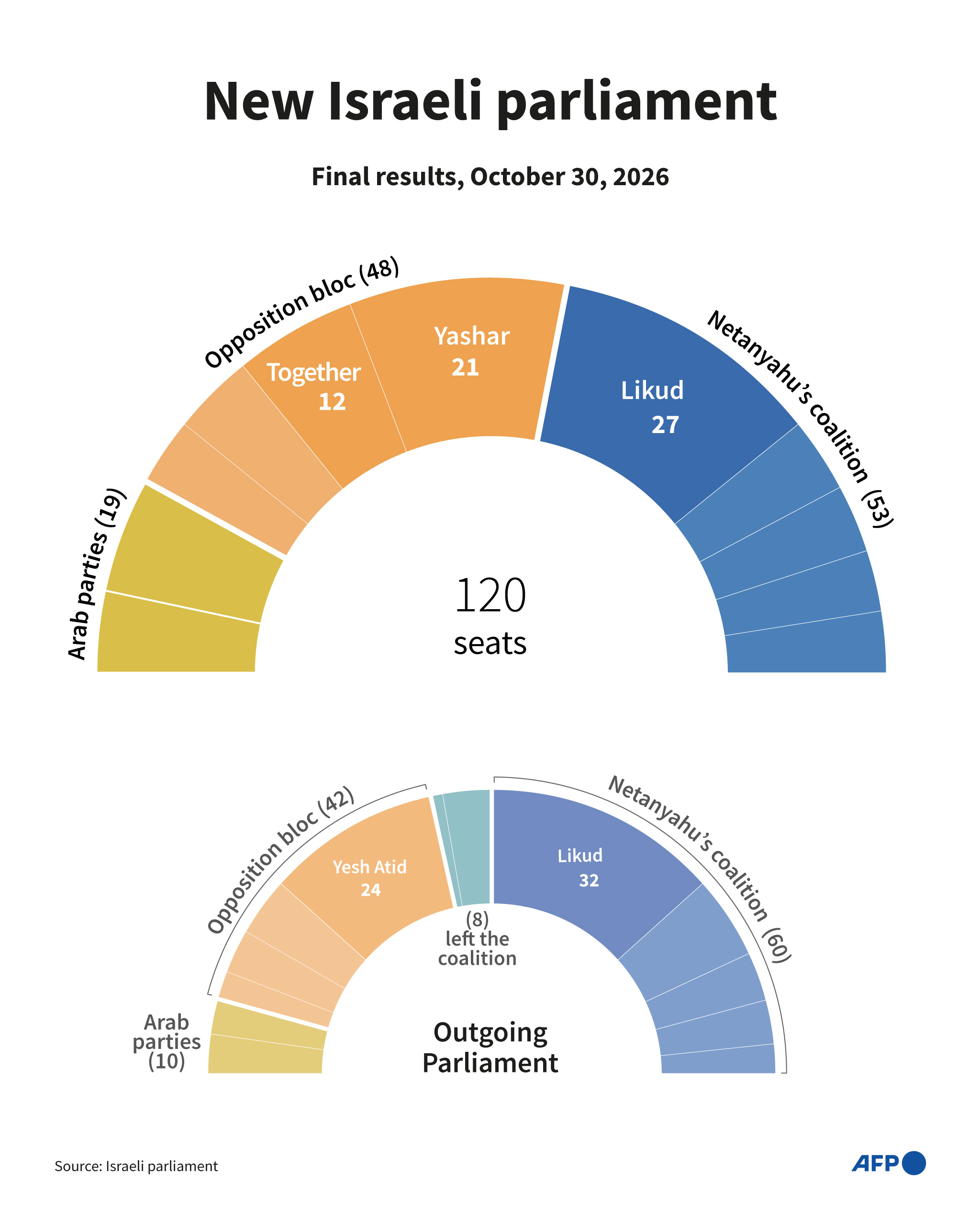
Commentators emphasize that Israel’s fundamental strategic objectives regarding Lebanon transcend domestic political divisions. A continuation of the political status quo in Israel would keep Benjamin Netanyahu in office as caretaker prime minister, which would entail an intensification of Israeli military operations in southern Lebanon to project an image of resolve and intransigence during negotiations to form a governing coalition.
Moreover, institutional paralysis in Israel would freeze implementation of the trilateral Lebanese-American-Israeli framework agreement of June 26, 2026, leaving Lebanon in a precarious diplomatic vacuum—unless, by some miracle, the Lebanese government takes action, however small the steps, to disarm Hezbollah. Otherwise, the Israeli army’s withdrawal would remain on hold pending the formation of a government in Israel, clarity on President Donald Trump’s room for maneuver after the midterm elections, and developments in the crisis between Washington and Tehran.
It is worth recalling here that an Israeli government led by Gadi Eisenkot, the former chief of staff of the Israel Defense Forces, would do nothing to change Israel’s strategy in Lebanon. Eisenkot himself devised the “Dahiyeh doctrine,” which advocates responding to Hezbollah operations with overwhelming, disproportionate force. In practice, this doctrine involves strikes on civilian infrastructure in Lebanon to deter the pro-Iranian party and pressure the Lebanese government. Eisenkot, no less than Netanyahu, embodies an uncompromising stance toward Hezbollah, which is unanimously regarded in Israel as an existential threat.
In Tel Aviv’s think tank circles, the debate is no longer about whether to maintain a buffer zone in southern Lebanon, but about how to consolidate this new fait accompli. The Israeli army is already developing long-term logistical infrastructure there, seen as leverage to enforce the complete demilitarization of the border region and ensure the security of residents of northern Israel.
Meanwhile, the systematic destruction of border villages continues. Once the next governing coalition is formed, whether led by Netanyahu or Eisenkot, it would seek to establish its legitimacy through another show of force.
In the meantime, Hezbollah’s ideologues and those of the axis of resistance will interpret the Israeli deadlock as evidence of a deep internal crisis, as they have since October 7, 2023—and indeed for the past forty years. In their eyes, this interpretation justifies Hezbollah’s categorical rejection of any concessions or calls for disarmament.
Unless it suddenly awakens to the situation, the Lebanese government will continue to offer rhetoric rather than action. In short, far from paving the way for a negotiated solution, the Israeli election results and the paralysis of those in power in Beirut condemn Lebanon to remain hostage to Tel Aviv’s political maneuvering, Iran’s Islamic Revolutionary Guard Corps, and instability in the Middle East.
At Bab el-Mandeb, It Is Other People’s Blood That Flows
When Slander Passes for Defending Depositors
From Galerie Semaan to Galeries Lafayette… What Kind of Islam Are We Presenting to the World?
From the Clash of Civilizations to the Security of Humanity
Who, then, claimed the annexed Golan?
Más de Khalil Helou
Ver todo


Más en Opinion
Ver todo


Lo último de Levant Time
Ver todo


