

The Red Sea and the Horn of Africa: the cases of Sudan and Ethiopia (2/6)


Since April 2023, the conflict between the Sudanese Armed Forces (SAF), commanded by General Abdel Fattah al-Burhan, and the Rapid Support Forces (RSF), led by General Mohamed Hamdan Dagalo, known as “Hemedti,” has plunged Sudan into a destructive spiral.
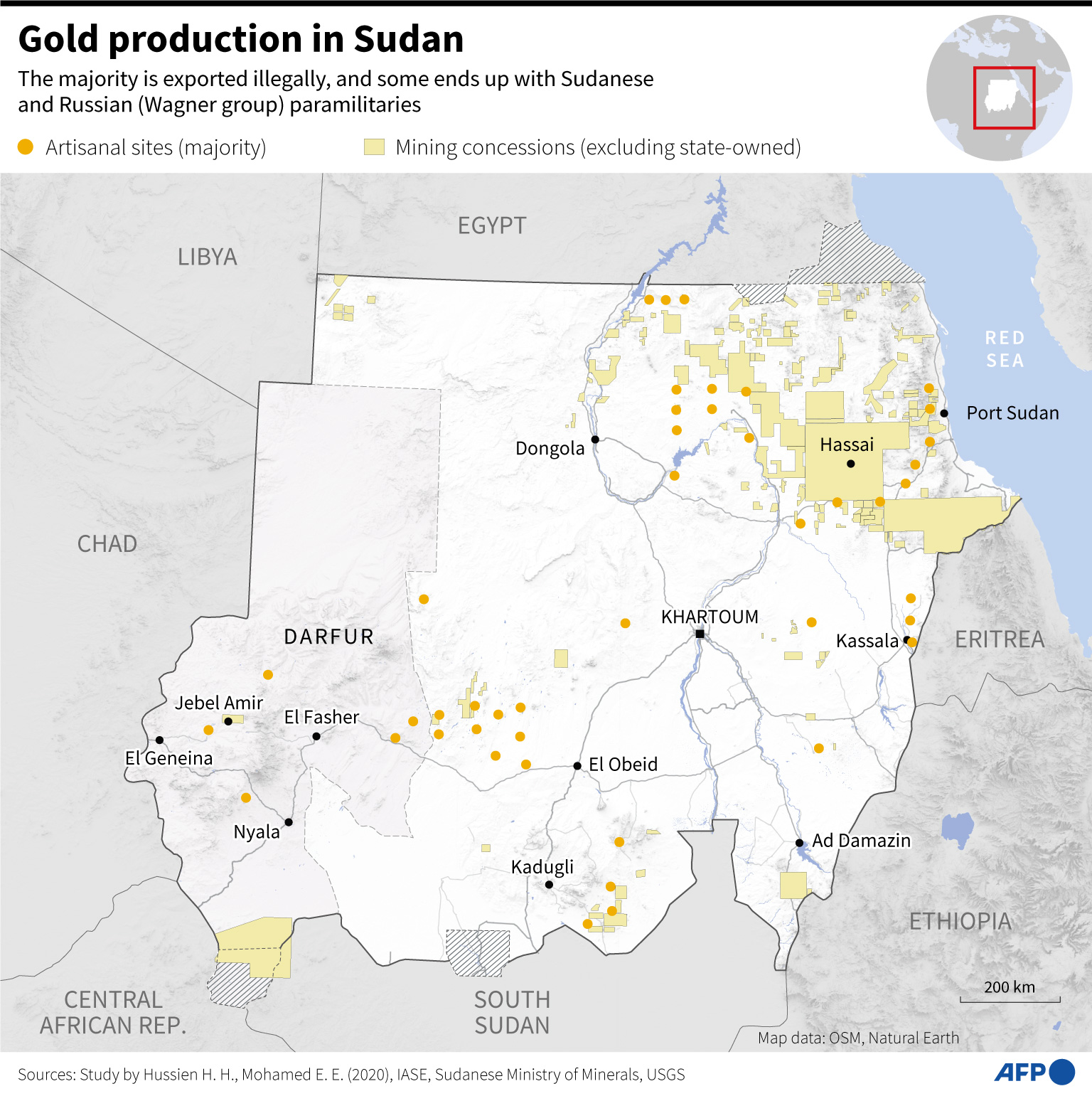
By October 2026, this civil war had become the world's worst humanitarian crisis. The country's strategic position, where the Red Sea meets the Nile Basin, combined with its vital mineral resources, particularly gold, makes it a major geopolitical linchpin.
The prolonged collapse of state institutions threatens stability across the Horn of Africa and the Sahel, intensifying international security concerns.
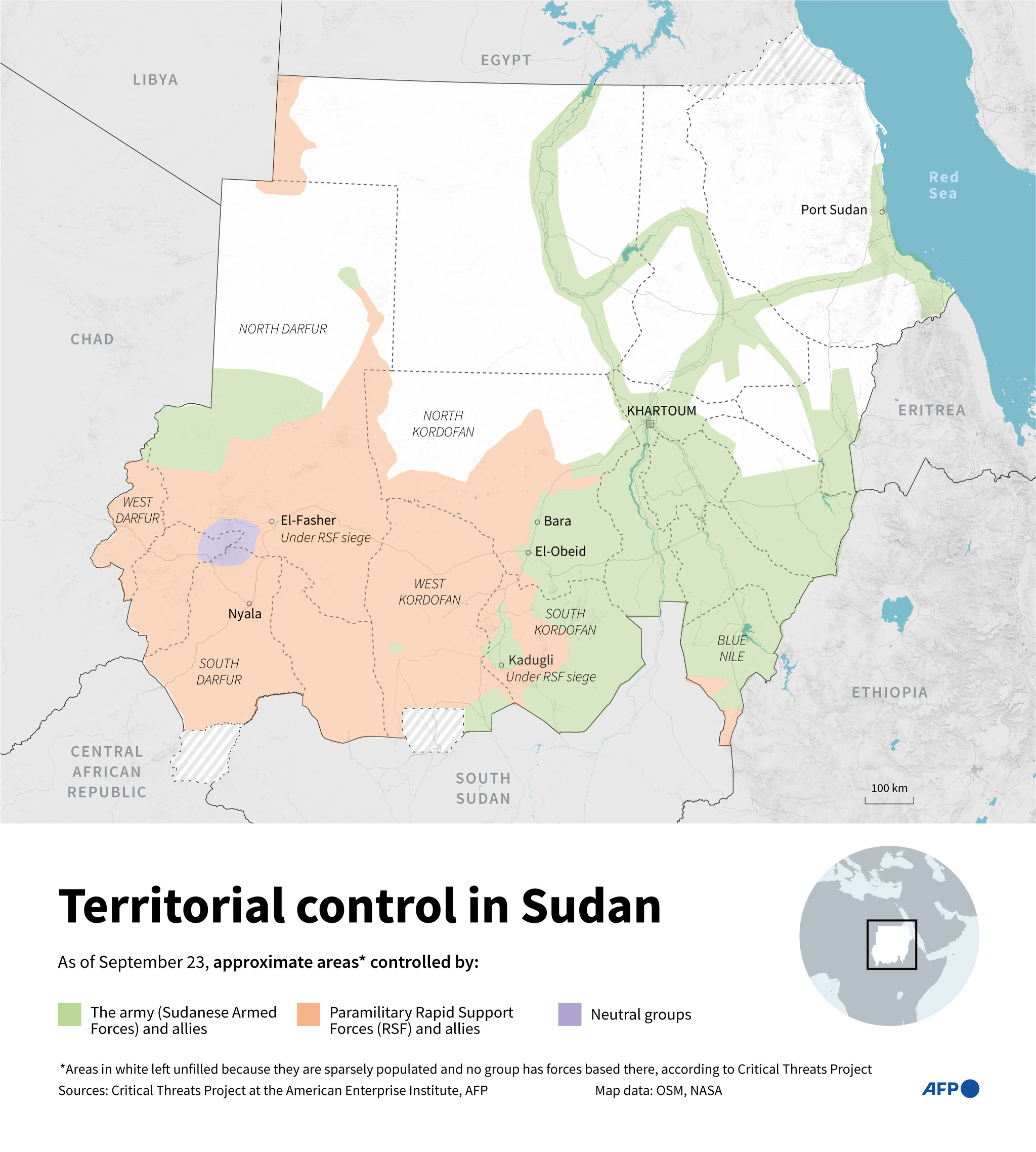
Regional dynamics remain complex. Egypt continues to prioritize restoring the authority of Sudan's state institutions through its support for the SAF.
Saudi Arabia balances security concerns involving the SAF with ongoing, though often unsuccessful, mediation efforts aimed at stabilizing the country.
Meanwhile, the United Arab Emirates continues to face repeated accusations, raised in various reports by experts and international observers, that it provides logistical support to the RSF—allegations Abu Dhabi firmly denies.
As the war drags on, Washington has repositioned itself as a key mediator. Trump put Massad Boulos, his senior adviser for Africa and the Middle East, in charge of the issue. Boulos launched shuttle diplomacy between Cairo, Riyadh, Abu Dhabi and Port Sudan.
This initiative, built around the “Quad” (the United States, Saudi Arabia, the United Arab Emirates and Egypt), sought a humanitarian truce followed by a transition to civilian rule. But it has yet to deliver results.
This geopolitical analysis must not obscure the dire reality on the ground. As of October 2026, the human toll is staggering: more than 33 million Sudanese people, roughly 65% of the population, depend on emergency humanitarian aid.
Famine threatens vast swathes of the country, while displacement, both within Sudan and across its borders, has reached levels not seen since the start of the century.
Reducing the conflict to a mere geopolitical confrontation between foreign backers would obscure the direct responsibility of the warring parties, the central role of a war economy built around illicit gold extraction, and the local, sometimes ethnic, dynamics driving Sudan's territorial fragmentation.
The country's future hinges on whether local actors can prioritize a way out of the crisis over an elusive military victory.
Ethiopia, Eritrea and Somalia
As of October 2026, the Horn of Africa presents a deeply interconnected security landscape, in which Ethiopia's ambitions to secure access to the sea and the internal instability affecting both Ethiopia itself and Somalia reinforce one another, threatening the regional balance.
Ethiopia is Africa's second-most populous country, but it has been landlocked since Eritrea gained independence in 1993. Its dependence on a single corridor—Djibouti—remains a structural constraint.
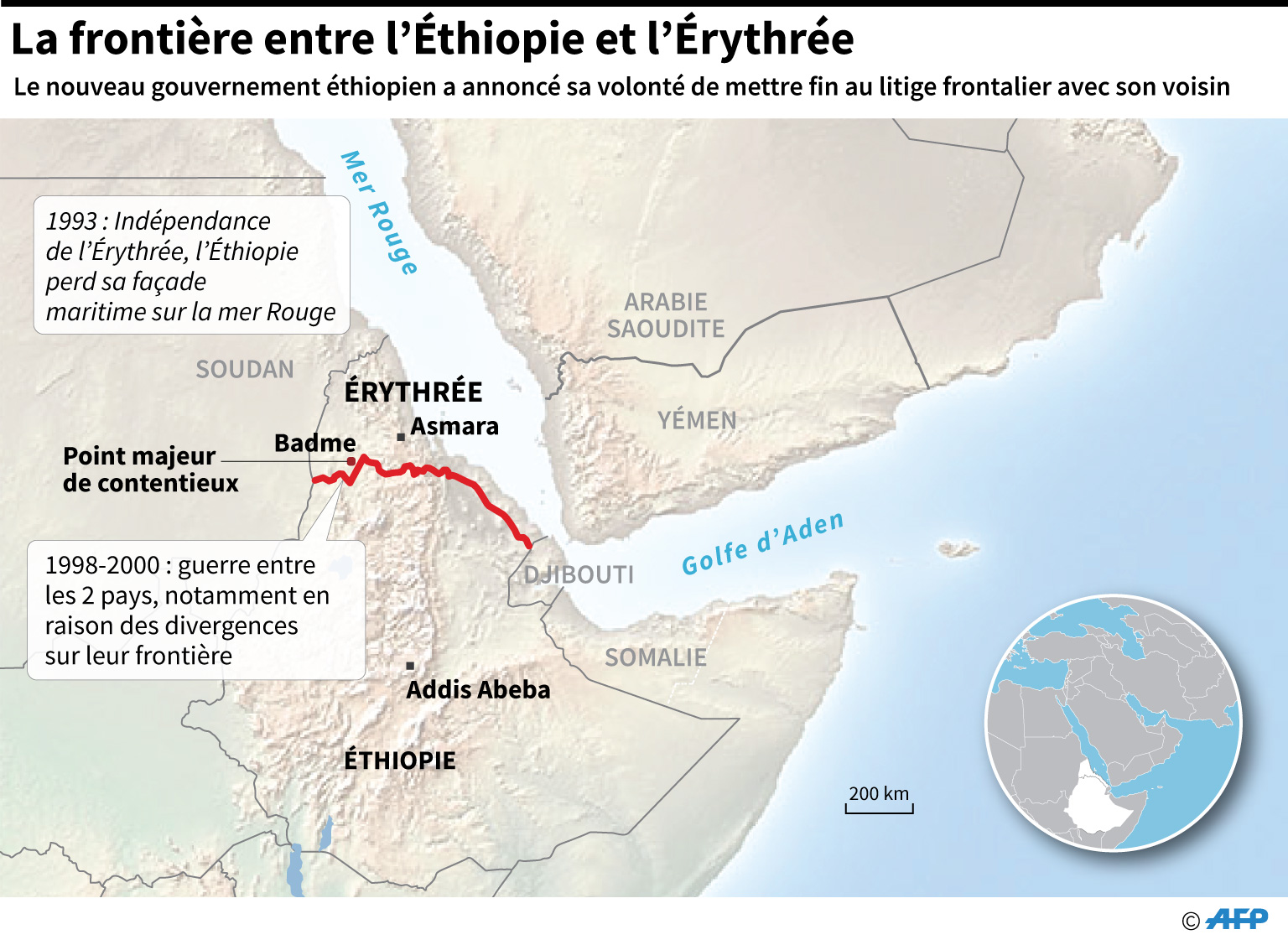
The Djibouti corridor is now Ethiopia's main economic artery, carrying more than 95% of its foreign trade.
Linked by rail and road to Djibouti's state-of-the-art terminals, this vital route ensures the flow of most Ethiopian imports of fuel, industrial raw materials and consumer goods, and is essential to its agricultural exports.
But concentrating trade flows through a single gateway is as much a political weakness as a logistical strength: it exposes Addis Ababa to high transit costs, overstretched infrastructure and, above all, dependence on a single partner.
It is precisely this vulnerability that has led the Ethiopian government to actively seek alternative routes.
Ethiopia’s memorandum of understanding with Somaliland
Against this backdrop, Addis Ababa signed a memorandum of understanding with Somaliland as early as January 2024 to secure access to the port of Berbera.
Somaliland is a self-declared state in the Horn of Africa that broke away from Somalia in 1991 and borders the Gulf of Aden. Although it functions as an independent democratic republic, with its own currency, military and relatively robust electoral institutions, it remains internationally unrecognized.
Its political stability contrasts with the persistent fragmentation of the rest of Somalia, and it is precisely this contrast that fuels its claims to sovereignty.
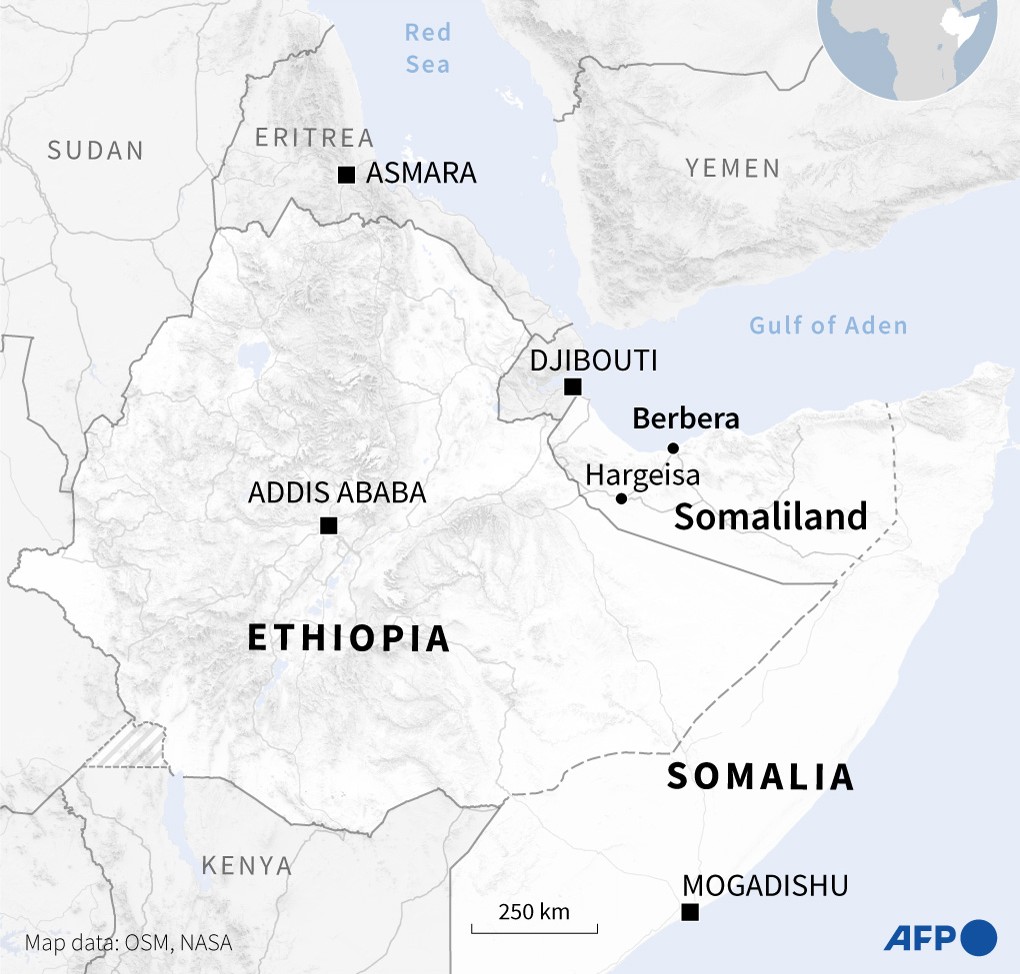
The port of Berbera is central to this ambition. Located on the Gulf of Aden, close to the Bab el-Mandeb Strait, it is a strategic maritime hub for the region. Modernized by the Emirati operator DP World, this deep-water port offers landlocked Ethiopia a viable outlet to the sea, supported by a rapidly expanding road-based logistics corridor into the continent’s interior. For Addis Ababa, it offers an opportunity to diversify its access to the sea and reduce its structural vulnerability.
But what Ethiopia sees as an economic imperative was viewed by Mogadishu as an intolerable violation of its territorial integrity. By effectively recognizing an entity that Somalia regards as a breakaway province, Ethiopia turned a port-access issue into an explosive diplomatic crisis, bringing into sharp focus a clash between two irreconcilable priorities: overcoming landlocked isolation on one side, and sovereignty on the other. This initial tension would set the stage for the regional realignments that followed.
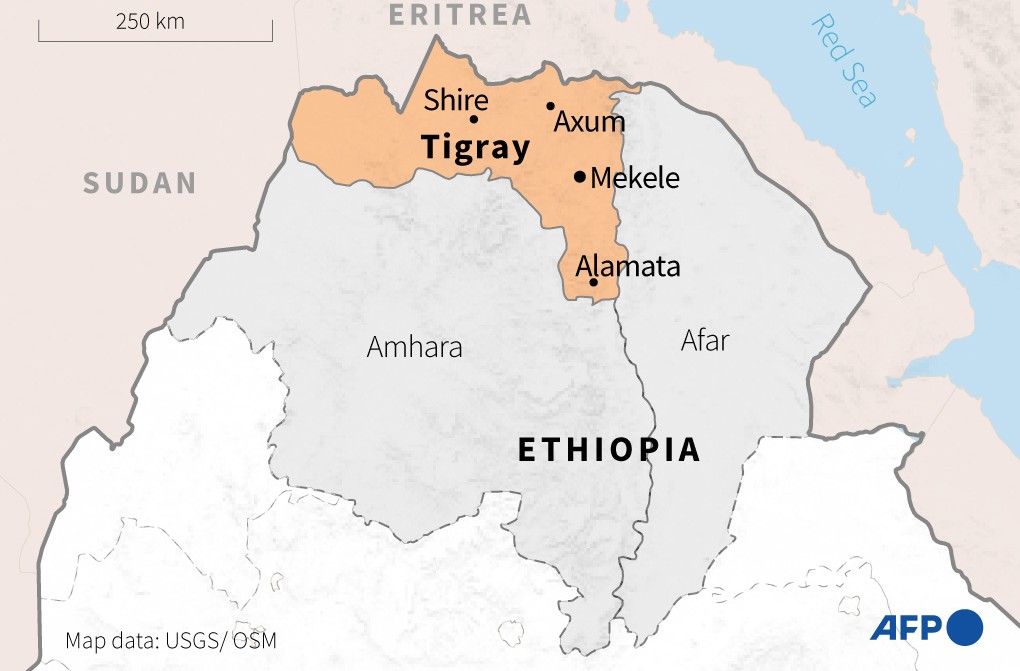
This rivalry over access to the sea is exacerbated by the sharp deterioration in Ethiopia’s domestic situation. Since September 2026, the 2022 peace agreement has collapsed with the resumption of hostilities in the Tigray region. The TPLF (1) and its local allies launched a major offensive against the central government, triggering a swift counteroffensive by the Ethiopian army, which recaptured strategic cities such as Mekelle.
The conflict immediately took on a regional dimension, with Ethiopia and Eritrea trading accusations of interference as border tensions raised fears of all-out war.
The situation is made even more dangerous by its entanglement with the conflict in Sudan, where reports indicate that the SAF is providing logistical support to Tigrayan forces, while Addis Ababa is accused of supporting the RSF, creating a dangerous vicious cycle of mutual destabilization.
Washington views the conflicts in Somalia, Ethiopia and Sudan as an interconnected set of security challenges that must be addressed together.
Within this framework, Massaad Boulos is working to bring the tensions over Ethiopia’s access to the sea and the Tigray conflict into a broad stabilization process, seeking to link these issues to the fragile humanitarian truces negotiated in Port Sudan. However, this mediation has its limits, and earlier initiatives have met with limited success.
For its part, faced with the sharp deterioration in Ethiopian-Eritrean relations, Turkey is trying to reconcile Ethiopia’s need for access to the sea with respect for Somali sovereignty. The intertwining of these tensions shows that port infrastructure issues can no longer be separated from the conflicts destabilizing the entire Horn of Africa, where local vulnerabilities overlap with the competing interests of regional and international powers.
(to be continued)
(1) The TPLF (Tigray People's Liberation Front) is an Ethiopian political party and former guerrilla movement. It dominated Ethiopia's ruling coalition from 1991 to 2018. In late 2020, tensions between the TPLF and the central government sparked the bloody Tigray War, which ended with a peace agreement in 2022.
The Red Sea and the Horn of Africa: The Shifting Balance of Power in the Middle East (1/6)
Hezbollah-Israel: An Endless War in Whose Interests? (20)
The Trump-Xi Summit: Between Pragmatism and Necessity
The Conflict in Yemen: Geopolitical and Strategic Considerations
Yemen: The Mecca Pact Moves from Theory to Military Action
More from Khalil Helou
View All


More in Strategia
View All


Latest from Levant Time
View All


