

Iran and its 5000 Secret Networks Fueling its War Machine
Vance sends a letter to the former Revolutionary Guards leader to revive talks


A Reuters investigation has uncovered thousands of entities used by Tehran to fund and import equipment, including for its missile and drone programs.
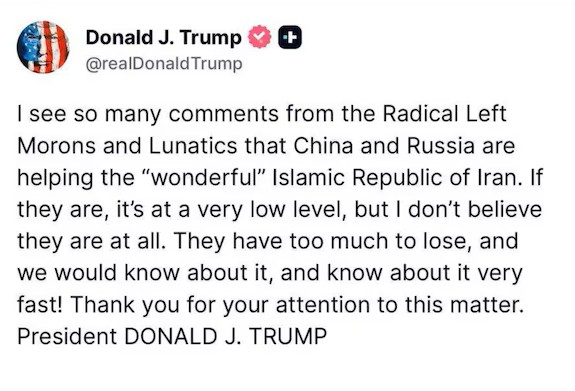
In this message posted on Truth Social on October 12, 2026, US President Donald Trump denied that China or Russia were helping Iran's war effort. But import data and documents uncovered by Reuters show that the Iranian military imported equipment shipped by cargo vessel from Russia across the Caspian Sea, by air from China and by truck from Central Asia.
By circumventing Western sanctions and the US naval blockade, Iran has reportedly built a military procurement system on a previously unsuspected scale. In an investigation based on banking, customs and trade documents, the news agency Reuters reveals the existence of more than 5,000 entities that enable the Islamic Republic to continue buying goods abroad, even during the war.
These entities have names beginning with “MOD,” for Ministry of Defense, followed by a number. According to Reuters, they share the address of Iran's Ministry of Defense and Armed Forces Logistics in Tehran. Although officially registered on the symbolic date of February 11, 1979, many were reportedly actually set up in 2013, when international sanctions were weighing heavily on Iran's economy.
An Israeli-American firm
The investigation, conducted with the Israeli-American firm 240 Analytics, shows how the system works. Proxies and shell companies based abroad use proceeds from clandestine oil sales, among other sources, to buy equipment. Funds are generally not transferred directly to Iran: according to data analyzed by Reuters, 97% of the shipments examined were paid for without cross-border currency transfers, reducing the risk of detection.
One entity stands out in particular: MOD 346428. It alone reportedly imported $2.3 billion worth of military equipment between January 2025 and June 2026. The goods listed include chemicals that could be used to manufacture propellants, aircraft components, electronic equipment and heavy vehicles that could serve as mobile launchers.
Reuters reports, among other shipments, the arrival of 886 metric tons of chemicals at the port of Bandar Abbas in early 2025, recorded as originating in China. A devastating explosion there killed at least 70 people in April 2025. While witness accounts suggest that perchlorate ignited, the agency says it could not establish that the latest shipment it examined caused the disaster.
Russia and China: dangerous ties
The network also reportedly facilitated the import of hundreds of Iveco trucks and thousands of Toyota vehicles, including some models that can be adapted for military use. According to Reuters, MOD 346428 imported 435 Iveco trucks between January 2025 and June 2026. The Italian manufacturer says it has not authorized sales to prohibited destinations and does not control re-exports by third parties. Toyota, for its part, says it has no business operations in Iran.
The war that began on February 28 did not halt these flows. Despite an initial drop in purchases, recorded military imports rebounded to $77 million in May, according to Reuters. The identified routes cross the Caspian Sea from Russia, pass through Central Asia by road and use air links with China. The documents also list deliveries recorded as originating in European Union countries and the United Arab Emirates. However, the declared origin of the goods does not establish involvement by the governments concerned.
The ramifications extend beyond arms. According to Reuters, some organizations have ties to the “bonyads,” powerful economic foundations close to the ruling establishment, and to Revolutionary Guard officials. The accounts of 91 entities reportedly include telephone numbers also linked to members of the force in the records of Bank Sepah (the Persian name for the Guards).
One of the most striking findings is a blind spot in sanctions: Reuters found no evidence that these numbered organizations had individually been placed on Western sanctions lists. The news agency nevertheless notes that several goods are dual-use and that some customs descriptions could not be independently verified. China rejects any attempt to implicate it; the Iranian authorities contacted did not respond.
Vance contacts one of the regime’s chief henchmen
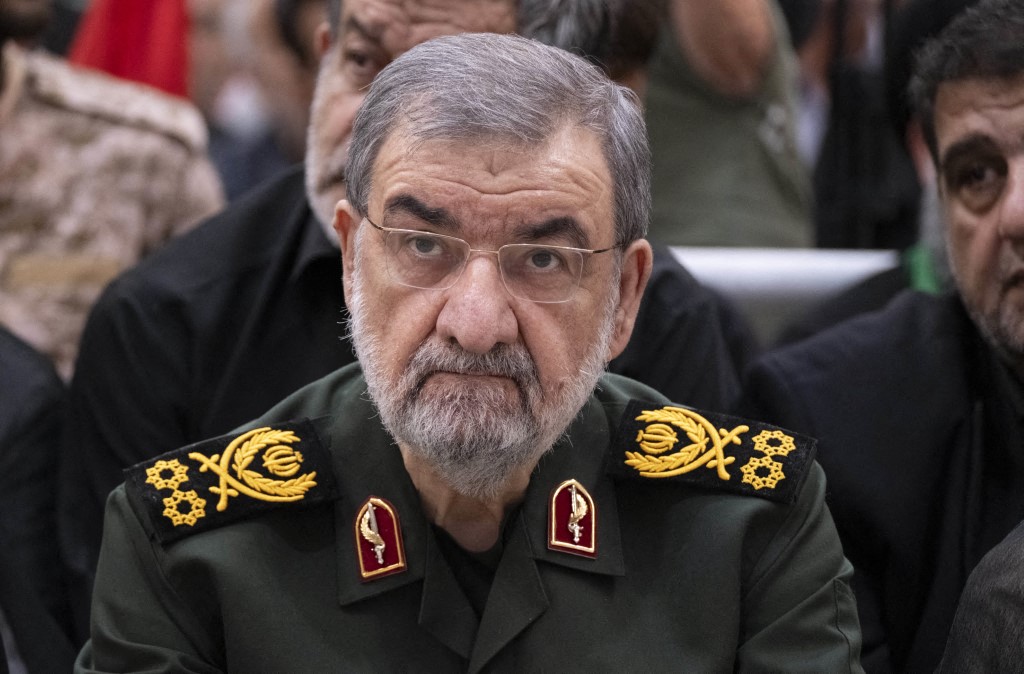
Mohsen Rezaei led the Revolutionary Guards for 16 years.
Separately, The Wall Street Journal reported that U.S. Vice President JD Vance sent a letter to Mohsen Rezaei, secretary of Iran’s Supreme National Security Council, in an attempt to revive negotiations with Tehran and avert further U.S. strikes.
The choice of interlocutor is particularly sensitive because Rezaei, who commanded the Revolutionary Guards for sixteen years, is a hard-line figure in the Iranian regime with a controversial past. During the Iran–Iraq War, he led particularly deadly offensives that drew harsh criticism.
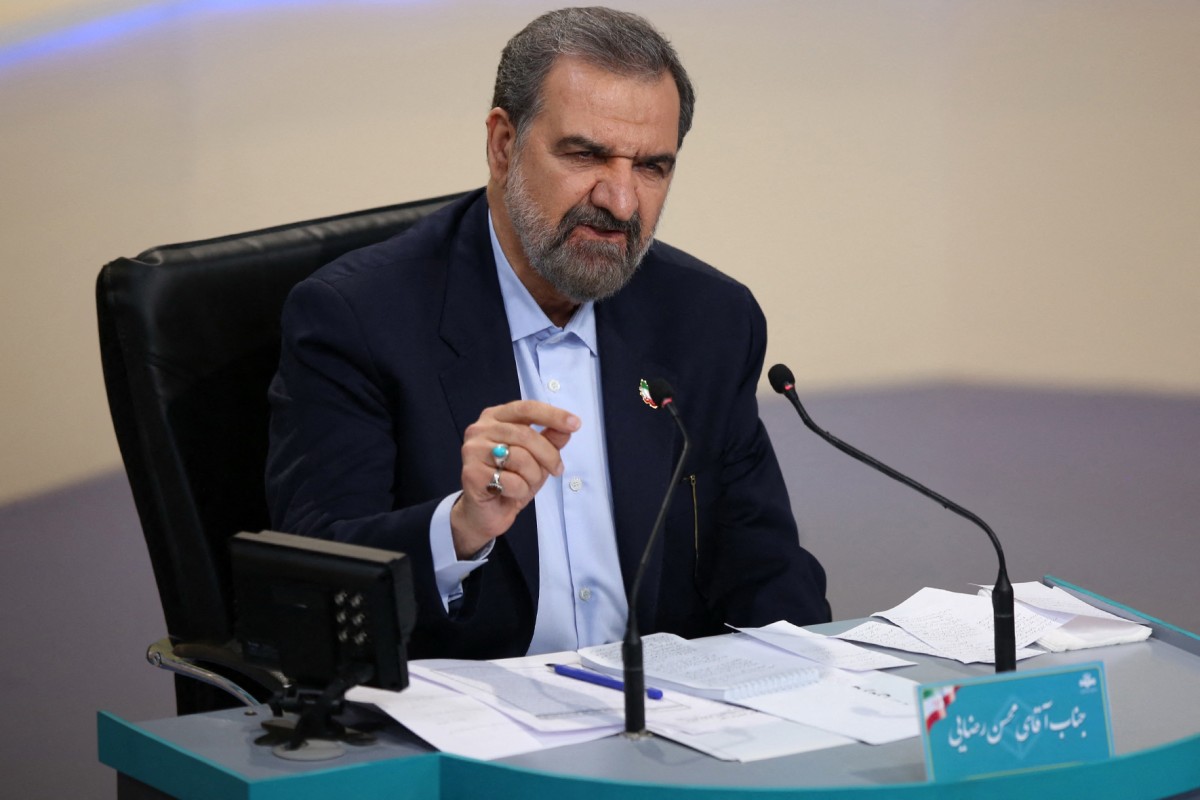
Rezaei is also wanted by Argentine authorities over his alleged role in the 1994 bombing of the AMIA Jewish community center in Buenos Aires, which killed 85 people. He is the subject of an Interpol Red Notice but has not been convicted in the case.
More recently, he threatened to strike the United Arab Emirates as well as data centers and internet cables in the region.
According to The Wall Street Journal, Vance’s outreach is not yet focused on a peace agreement, but on a possible framework for negotiations. Tehran confirmed on Thursday that it had received the letter but had not replied.
A source quoted by the newspaper says the initiative was undertaken at Donald Trump’s direction. Trump, however, maintains that he merely approved an effort that, he says, concerned the delivery of medical supplies.
These exchanges come as Washington threatens to resume strikes against Iran after the U.S. midterm elections on November 3. On Sunday, however, Rezaei hosted Saudi, Pakistani and Turkish security officials in Tehran to discuss regional de-escalation.
Levant Time, with Reuters reporting by Gavin Finch, Maggie Michael, Allison Martell and Marine Delrue; The Wall Street Journal and AFP.
More from LevantTime .
View All


Latest from Levant Time
View All


