



For Iran’s mullahs, Houthi blood is merely Yemeni blood—Arab blood, if you like! In their eyes, it is other people’s blood, just like the blood Hezbollah sheds in Lebanon. They treat it as something expendable or disposable. And indeed, their proxies, whether Lebanese or Yemeni, are always ready to sacrifice themselves for the greater glory of wilayat al-faqih.
Always ready, always willing to answer the call to martyrdom—a call that only those masters of ceremonies, the ayatollahs of Tehran or Qom, are entitled to issue!
For they are the ones who lit the fuse both at Bab el-Mandeb and along the Lebanese-Israeli border. Ever since Ruhollah Khomeini came to power in Iran, their aggressive policy has been to identify fault lines in neighboring countries, infiltrate them, and sow the discord that breeds civil war.
Like Nasser at one point, and like Gaddafi, they relentlessly export their insurgency to Arab countries to carve out a role for themselves and impose themselves as arbiters on the regional stage.
This policy of subversion recalls the Cold War era, when communist activism stirred the peoples of Latin America to rise up against their leaders, who were accused of being in Washington’s pay.
The iconic image of Che Guevara remains vivid in the minds of those who lived through those turbulent years before the fall of the Berlin Wall.
Yet even then, a distinction had to be drawn between Moscow’s strategy and Havana’s. The Soviet Politburo did not rely solely on armed uprisings. Far from it: when circumstances called for it, it readily prioritized state-to-state relations and provided political and financial support to local communist parties in their democratic struggle for power.
Fidel Castro, by contrast, made a point of supporting any guerrilla organization that would destabilize the regimes in power.
In his view, armed revolution had to be exported throughout the Americas and as far as Africa, even at the risk of irritating his more measured allies in Moscow!
What lies behind the animosity?
Castro counted on the knee-jerk anti-Americanism of the impoverished peoples of the Global South and their age-old resentment of gringos. Similarly, the mullahs banked on the centuries-old animosity between Saudis and Yemenis stemming from a border dispute.
It is worth recalling that, in the aftermath of the First World War, the Ottoman Empire withdrew from the territories it controlled in the Arabian Peninsula, and new countries began to take shape.
Modernity demanded it: drawing borders along Western lines was the order of the day.
The largely tribal conflicts that had prevailed until then took on nationalist forms. In reality, however, only the slogans and banners had changed; the new conflicts were merely reincarnations of old feuds.
In 1934, with Ibn Saud at the helm, a conflict broke out between the Wahhabi monarchy and the Zaydi imamate. It ended with the signing of a treaty in Taif that awarded the three disputed regions of Asir, Najran, and Jizan to the fledgling Saudi kingdom.
The border issue would subsequently resurface several times, however, and Yemen’s reunification did not resolve it. Incidents, clashes, and cross-border incursions continued.
The Treaty of Jeddah in 2000, however, brought the hostilities to an end and definitively demarcated the ill-defined and disputed areas. Yet even though the borders were now internationally recognized, memories of former territorial claims would continue to fuel Yemeni nationalist sentiment.
This was where the Iranians would step in: they would graft their “Islamic revolution” onto the demands of local tribes, and Iranian agents would exploit a dispute that could have been resolved diplomatically under the auspices of the Arab League to advance their own cause.
Reawakening old demons
For the ayatollahs, those architects of subversion, nothing could be easier than adding fuel to the fire and reawakening the old demons of discord.
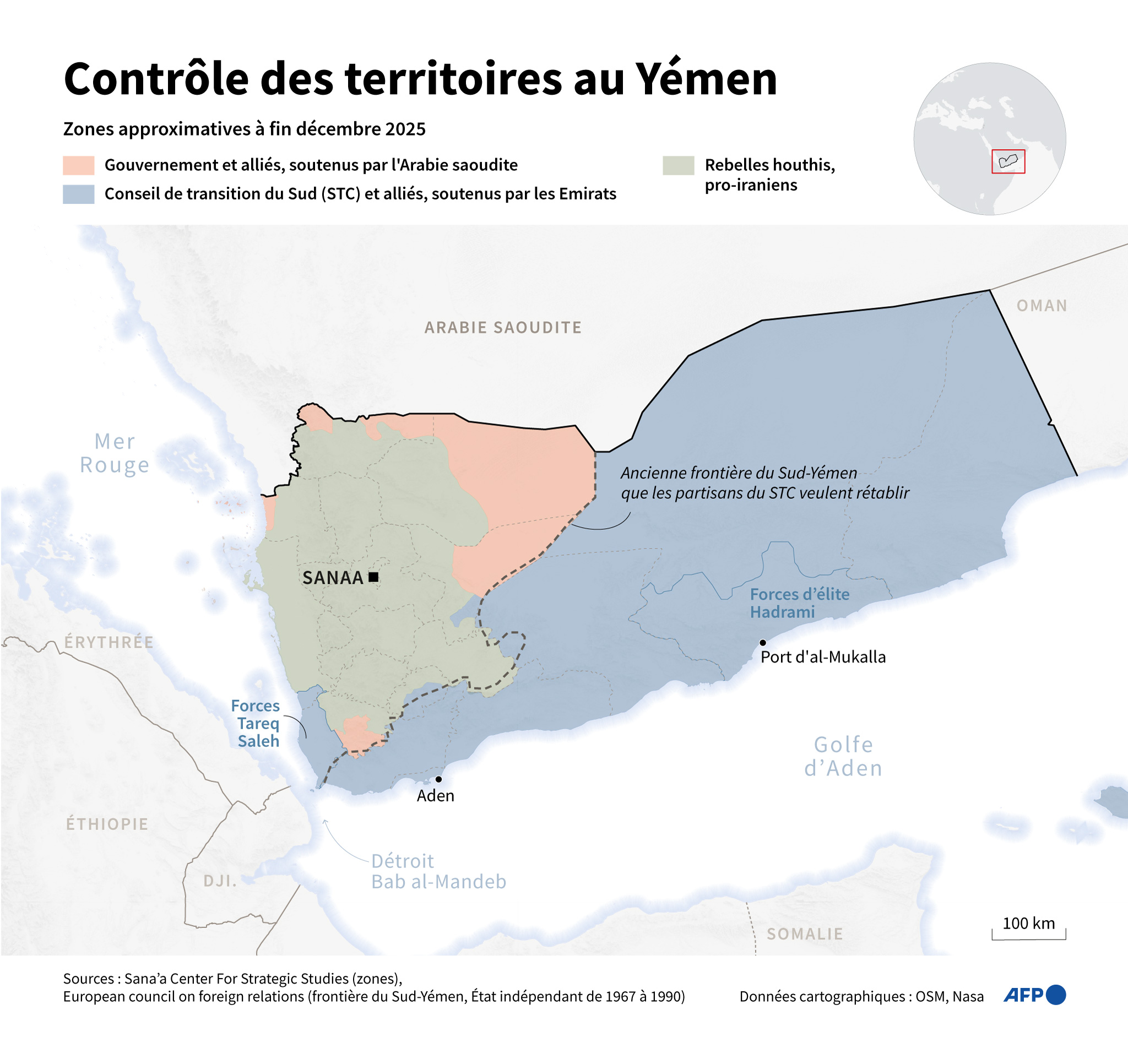
But here is the problem: a conflict at the entrance to the Red Sea is more dangerous than a civil conflict in Darfur or even a simmering war in southern Lebanon. Such a conflict can immediately take on an international dimension, disrupt shipping and trade, and threaten Europe's supply lines. The Houthis have become a kind of “Hezbollah of the southern Arabian Peninsula”—a local force capable not only of holding Saudi Arabia, a far richer and more powerful state, at bay, but even of defying capitals such as London, Paris and Madrid.
And let's be frank: how hesitant those capitals have been, and how slow to respond forcefully and decisively!
When you think about it, this whole mess stems from Iranian instigation: Iran provides the Houthis with financial backing, military training, and missiles and drones to launch stealthy, long-range strikes.
What a sorry spectacle: an Arab world that, from the Mediterranean to the Persian Gulf and the Red Sea, is held hostage by firebrand mullahs!
When Slander Passes for Defending Depositors
From Galerie Semaan to Galeries Lafayette… What Kind of Islam Are We Presenting to the World?
From the Clash of Civilizations to the Security of Humanity
Who, then, claimed the annexed Golan?
Lebanon: Is Neutrality the Next Project?
More from Youssef Mouawad
View All


More in Opinion
View All


Latest from Levant Time
View All


