

We Do Not Want a Lebanese Hashd al-Shaabi
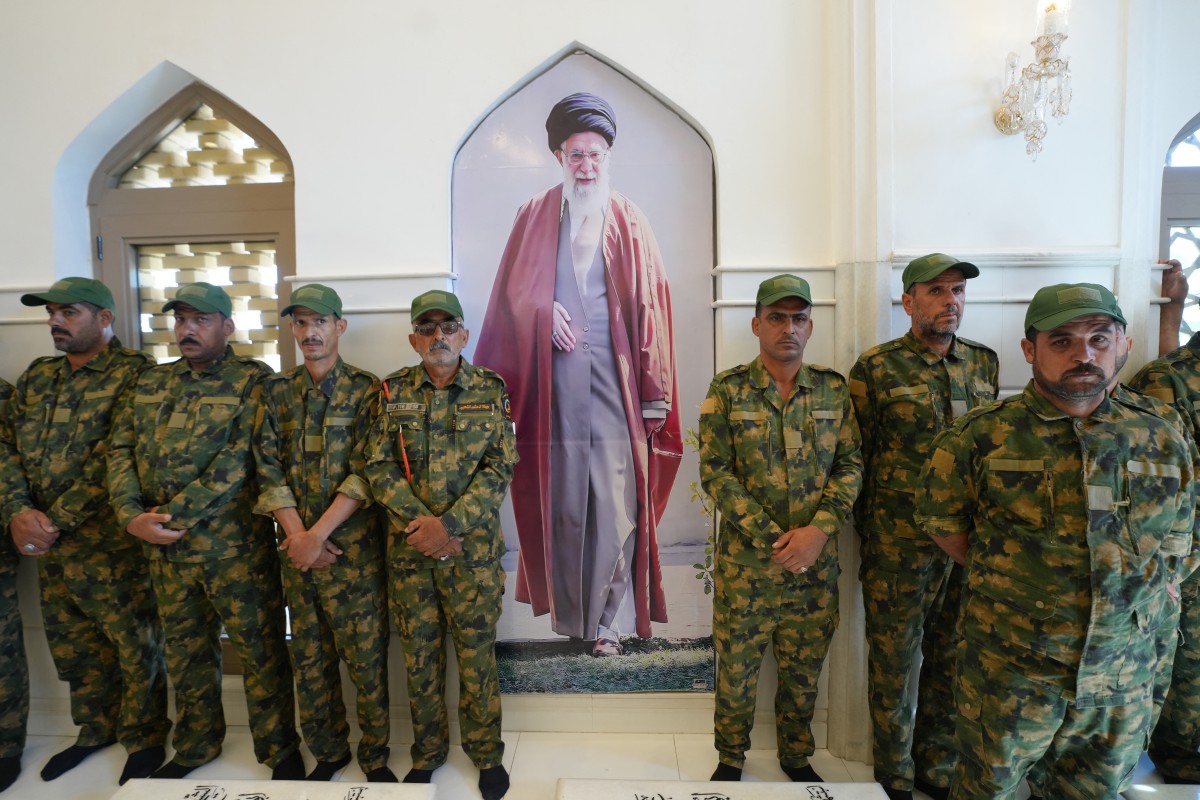
The Hashd al-Shaabi emerged under circumstances different from Lebanon’s, at a moment of severe security collapse as ISIS expanded in 2014. It would therefore be wrong to draw a simplistic equivalence between the Hashd and Hezbollah.
But the Iraqi experience offers an extremely important lesson about the idea of integrating armed organizations into the state.
In 2016, the Iraqi parliament recognized the Hashd as an independent military formation within the armed forces and linked to the commander-in-chief. In theory, this was supposed to place armed forces under the authority and command of the state. But specialized studies found that many networks and factions retained their own leaderships, interests, and political and economic ties, and that the formal framework was not sufficient to produce a unified chain of command and loyalty.
What is striking is that the problem remains unresolved to this day. In June 2026, a recent Chatham House analysis described Baghdad’s continuing challenge as how to impose effective authority over armed groups operating, to varying degrees, outside the government’s direct command, some of them linked to Iran. It reached a point of great importance for Lebanon: formal integration does not necessarily mean that actual loyalty and authority are transferred to the state.
And that is exactly what we must not do in Lebanon.
The Army Is Not a Place to Recycle Hezbollah
If we are demanding a monopoly on arms because we want one army, one military decision, and one constitutional authority, how can we achieve that by bringing an organized military body into the army?
What would we have solved?
I do not want a Hezbollah fighter to become a soldier in the Lebanese Army through a collective political decision while the same networks, the same former leaderships, and the same military doctrine remain behind him.
I do not want special units for southerners or for “resistance” fighters.
I do not want quotas in the army in exchange for handing over missiles.
I do not want party ranks to become legal military ranks.
And I do not want us, years from now, to discover that we did not end the duality of arms, but simply put it on the state payroll.
This is not restoring the state.
It is legalizing the problem.
The Fighter Is One Thing, the Organization Another
But rejecting integration does not mean telling tens of thousands of people: hand over your weapons and fend for yourselves.
Here, a clear distinction must be made between ending the military organization and dealing with the human being who was part of it.
The Lebanese fighter must return to society, not move from a party army into the Lebanese Army.
That requires a major and serious project for the transition to civilian life.
There are fighters who have spent twenty or thirty years in military activity. Some have no other profession. Behind them are families, children, and financial obligations. Ignoring this reality does not build a state. It may instead create a new social and security crisis.
That is why we should consider a national fund, with Arab and international support, to bring these people back into the civilian economy: vocational training, low-interest loans, small businesses, opportunities in agriculture, industry, and technology, and education for those who wish to continue their studies.
Above all, there is an enormous undertaking: the reconstruction of southern Lebanon.
Instead of remaining a fighter waiting for the next war, why should someone from the South not become part of rebuilding his village, his home, and the economy of his region?
We are talking about rebuilding homes, roads, schools, hospitals, water, electricity, and telecommunications networks, reclaiming land, reviving agriculture, and getting small businesses back to work.
In other words, the transition from weapons to civilian life can also be a transition from a war economy to a reconstruction economy.
No Military Privileges
As for anyone who wishes in the future to join the Lebanese Army, there is only one path.
He must apply as a Lebanese citizen.
He must undergo the same requirements, the same entrance examinations, and the same vetting as any other young Lebanese citizen, with even stricter scrutiny than usual.
As an individual, not as a faction.
As a citizen, not as a party representative.
And without any prior agreement on numbers, ranks, units, or quotas.
Because the military institution is not another table for power-sharing.
The State Does Not “Replace Hezbollah”
Even the common expression that the state should “replace Hezbollah” needs to be corrected.
The state does not replace Hezbollah.
The state reclaims its place.
When it builds a school in southern Lebanon, it is not replacing a party institution. It is fulfilling its duty.
When it treats a patient, it is not replacing a healthcare institution affiliated with a party. It is performing a public function.
When it compensates someone whose home has been destroyed, this is not the price of handing over weapons. It is the citizen’s right vis-à-vis the state.
And when the army deploys along the border, it is not replacing the “resistance.” It is exercising a sovereign function that should have belonged to it from the outset.
That is the fundamental difference.
We do not want a state that inherits Hezbollah.
We want a state that reclaims what belongs to it.
Let Us Not Repeat Iraq
The problem with the Iraqi model was not simply the presence of former fighters within state institutions, but the fact that armed networks were able to become part of the state structure without necessarily losing their political and organizational autonomy. Chatham House documented how networks linked to the Hashd, after the war against ISIS, became influential security, political, and economic forces within the state itself.
Lebanon cannot withstand a similar experience.
We have an army.
We have security forces.
We have a constitution.
What is required is not some ingenious formula for reconciling the army and Hezbollah, but the simplest rule on which any normal state is built:
One army. One command. One monopoly on arms. And one decision of war and peace.
As for Hezbollah, if it continues to exist, it should continue as a civilian political party like all other Lebanese parties, without a military wing or a parallel security apparatus.
As for the fighters, we should neither throw them into the street nor turn them into an army within the army.
We should reintegrate them into society.
Open the doors of work, production, and education to them.
Help them move from carrying weapons to building their future and the future of their regions.
There is an enormous difference between reintegrating the individual into society and integrating the organization into the state.
The first is a national necessity.
The second may be the fastest way to turn Lebanon into another version of the Iraqi experience.
We do not want a Lebanese Hashd al-Shaabi.
We want the era of the militia to end, not for the militia to enter the state and simply change its uniform.