

Lebanon: Is Neutrality the Next Project?
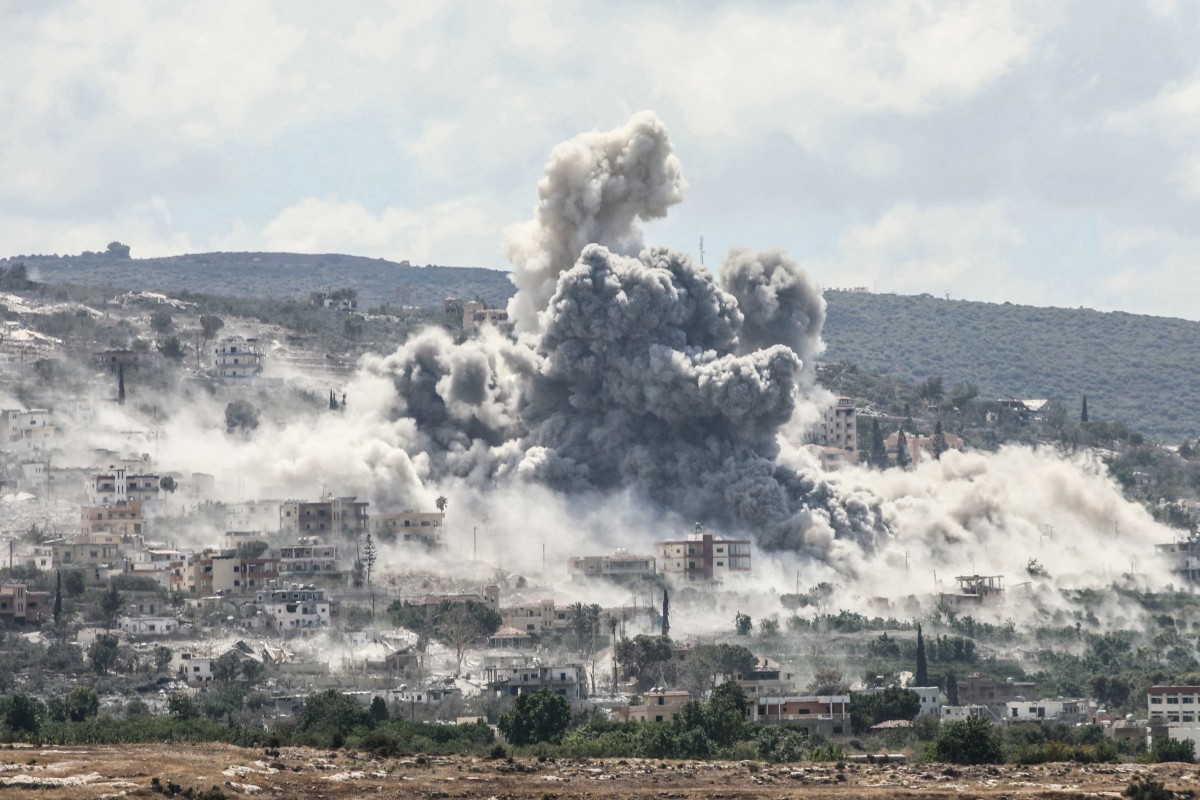
A bulldozer does not debate politics.
When it enters a village, it does not ask who supported the war and who opposed it. It does not distinguish between the home of a supporter and that of an opponent. It tears down walls, uproots trees, alters the features of the land, then leaves people facing the simplest and harshest question:
Do we rebuild only to wait for the next war?
This is the question from which any serious discussion about Lebanon’s future should begin.
For many years, we discussed neutrality as though it were an academic idea, or the demand of one Lebanese camp against another. Some saw it as a withdrawal from the Arab-Israeli conflict, while others regarded it as an attempt to detach Lebanon from its surroundings. At times, it was treated as though it were a sectarian project impossible to implement.
But after everything that has happened, perhaps we need to pose the question again from an entirely different starting point.
Not: do we like neutrality?
But: can Lebanon withstand another war?
The South Can No Longer Be Subjected to Experiments
Anyone visiting the South needs no lecture in geopolitics.
It is enough to see a destroyed house.
Land torn up by bulldozers.
A family waiting to return.
A village trying to work out what remains of it.
There, the discussion about the region’s rival alignments becomes entirely different.
Because, in the end, people do not live inside political statements. People want a home that is not destroyed every ten years, land they can cultivate, a school their children can attend, and a road that does not suddenly turn into a front line.
After every war, we promise the people of the South reconstruction.
But perhaps the real question is no longer: how do we rebuild?
Rather: how do we prevent destruction from happening again?
This is where the debate over neutrality begins.
Fifty Years as a Battleground
Lebanon has not been far removed from the region’s wars for decades.
Palestinian weapons entered the Lebanese equation.
Then came the civil war.
Then the Israeli occupation.
Then Syrian tutelage.
Then the rise of Hezbollah and the weapons linked to the conflict with Israel and to Iran’s regional strategy.
Circumstances and alliances changed, but one thing did not:
Lebanon remained a battleground.
Every force had, in its own eyes, a convincing explanation for its presence on this land.
At every stage, we were told that weapons were a temporary necessity.
With every war, we were told that it was exceptional.
But the exception lasted half a century.
Perhaps, then, the problem no longer lies only in the identity of those carrying weapons, but in our acceptance of the idea that Lebanon’s regional function is to remain an open battleground.
What if we said to everyone: enough?
The neutrality Lebanon needs is not the neutrality of the weak.
It does not mean placing Israel, Iran, Syria and the Arab countries in the same position, nor does it mean giving up Lebanon’s rights or its land.
Nor does it mean giving up Palestine, our Arab identity or our political positions.
The neutrality in question is simpler than that:
Lebanon should enter no war except in defence of Lebanon, and only by a decision of the Lebanese state.
To say to Israel: our borders are not open to your attacks.
To Iran: Lebanon is not part of your regional military system.
To Syria: the time when Lebanon could be used as an extension of your policies is over.
To the Arab countries and the West: we are friends and partners, but Lebanon is no one’s base.
Is this impossible?
Perhaps it is extremely difficult.
But is what we have been living through for fifty years any more rational?
Neutrality Begins with the State
There is one fact from which there is no escape.
Lebanon cannot be neutral unless the state has authority over decisions of war and peace.
And it makes no sense to ask the world to respect Lebanon’s neutrality while an armed force inside Lebanon is able to make a military decision outside state institutions.
This is not an issue directed against a community.
It concerns the very definition of the state.
The Taif Agreement stipulated the extension of state sovereignty over the entirety of Lebanese territory through its own forces, the dissolution of militias and the handover of their weapons to the state, as well as the strengthening of the armed forces to defend the country.
So we do not need to dismantle Taif in order to discuss neutrality.
On the contrary.
Perhaps we need to implement Taif in order for neutrality to become possible.
One state.
One army.
One decision of war and peace.
And What About Israel?
This is where the real knot lies.
Critics will say, with good reason: how can Lebanon be neutral when Israel attacks its territory?
This is a question that cannot be brushed aside.
Neutrality does not mean depriving Lebanon of the ability to defend itself. Neutral Switzerland has an army. Neutral states do not relinquish their borders or sovereignty.
But the Lebanese experience requires something more.
Lebanese neutrality, if it is ever adopted, cannot be a unilateral declaration.
It must be part of clear international arrangements that guarantee Lebanon’s borders, sovereignty and security, and tie respect for neutrality to genuine international commitments.
In other words, the Lebanese cannot simply be asked to say, “We will not fight,” and then be left alone in the face of any attack.
The equation must be reciprocal:
Lebanon must not serve as a military platform against others, and others must neither use Lebanese territory nor attack it.
We Have a Foundation to Build On
The idea is not without Lebanese precedents.
The 2012 Baabda Declaration called for Lebanon to be kept out of regional and international conflicts and rival alignments, and the Lebanese state formally referred the declaration to the United Nations.
The Security Council later reiterated its call on the Lebanese parties to implement an effective policy of dissociation from external conflicts, specifically invoking the Baabda Declaration.
But the Baabda Declaration remained a declaration.
That is the lesson.
This time, if the Lebanese choose to discuss neutrality, it should not become yet another political statement to be placed in a drawer.
What is needed is to think about an international status for Lebanon built on three interconnected pillars:
The exclusive control of arms and military force by the Lebanese state.
A commitment by Lebanon not to enter regional military conflicts or alignments except in defence of its own territory.
And an international and regional guarantee for the respect of its sovereignty and borders, and against its use as a battleground by any party.
And Shiites Should Be the First to Discuss Neutrality
Perhaps this is the most sensitive point.
Neutrality is sometimes presented as though it were a project directed against Shiites or against Hezbollah.
That is a major political mistake.
Let us ask a different question:
Who paid the highest price in the last war and in the destruction of the South?
Who lost their home?
Who was displaced?
Who lost their land, their harvest or their livelihood?
Who today lives with the anxiety of returning to a village that could once again become a front line at the first regional explosion?
The people of the South are the first to have the right to discuss a different future.
That is why the debate over neutrality must not take place over the heads of Shiites, but with their participation.
The transition from protecting the community through arms to protecting citizens through the state is not a loss for Shiites.
The real test is whether the state is genuinely capable of protecting the people of the South as it protects Beirut, Tripoli, Jounieh and Zahle.
Because a state that asks the citizen to give up party-based protection must provide genuine national protection in return.
We Are Not Switzerland
Some will say: Lebanon is not Switzerland.
True.
But Switzerland, too, was not born neutral because its geography was easy or because Europe was peaceful.
In international practice, neutrality is not merely a matter of political morality. It is a choice grounded in interests, balances, and legal, diplomatic and defence arrangements.
Lebanon needs its own model.
We can call it neutrality.
We can call it neutralisation.
We can call it permanent dissociation from conflicts between rival alignments.
The name matters less than the substance:
That the Lebanese should never again pay the price of a war they did not decide.
A Project Worth Discussing
Perhaps this should become one of Lebanon’s projects for the next phase:
Lebanon as a neutral state under an international guarantee.
Not a decision imposed by one camp on another.
Not a project against Hezbollah.
Not the victory of one alignment over another.
But a historic Lebanese settlement declaring that the experience of Lebanon as a battleground is over.
Hezbollah itself, along with all Lebanese political forces, should be part of this discussion, because the transition from a phase in which weapons remain outside state control to one in which the state alone controls them cannot succeed if it turns into a project of revenge or humiliation against a community or a group.
What is needed is not for one Lebanese to defeat another.
What is needed is for the state to defeat the logic of the battleground.
What Is Left for Us to Try?
We tried war.
We tried militias.
We tried occupation.
We tried tutelage.
We tried regional alignments.
We tried deterrence.
We tried the “balance of terror.”
And we tried reconstruction after every round.
Each time, the Lebanese paid the price.
Perhaps the time has come to try something we have never truly tried:
To live in a normal state.
A state that does not ask its children to die for regional maps.
A state whose villages do not become messages exchanged between the region’s capitals.
A state in which the army is the army, the borders are the borders, and war is a national decision, not a regional one.
After all this destruction, after the homes that were blown up, the land torn up by bulldozers, and the people who were displaced, perhaps the question is no longer:
Can Lebanon be neutral?
The harsher question is:
If we reject neutrality, what is the alternative?
Do we rebuild the South once again, plant the trees once again, repair the homes once again, then wait for the next war?
Or do we dare, for once, to change the equation itself?
Lebanon has tried being a battleground for half a century.
Perhaps it is time for it to try being a homeland.