

“Save Your White Penny for a Black Day”…
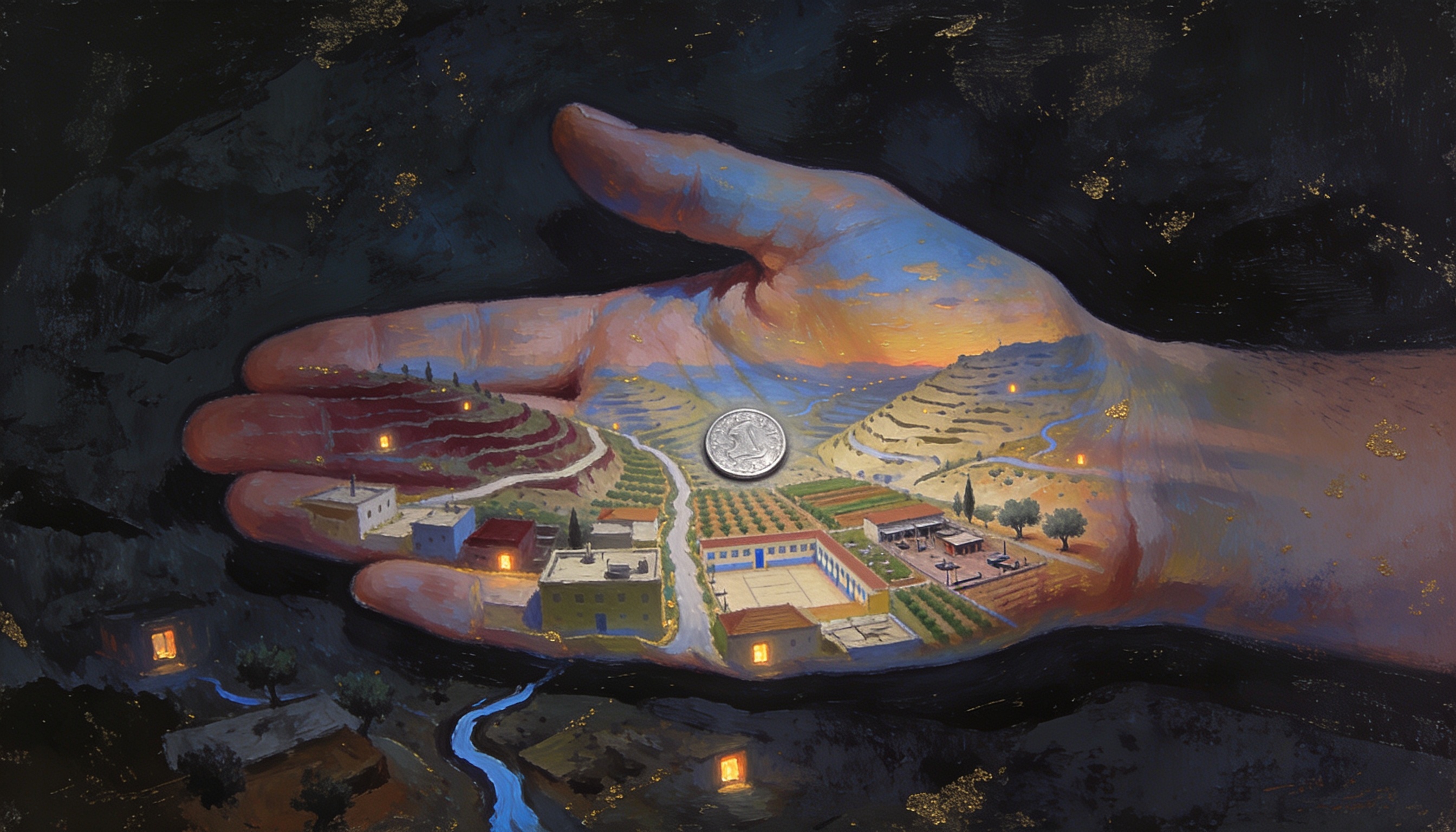

It was a phrase my late mother used to repeat to us from the beginning of the Lebanese Civil War, more than fifty years ago. To her, it was not merely financial advice, but the expression of an early awareness of danger and of the need to prepare for difficult days. She had also known the tragedy of famine through the stories passed down by her father, whose two brothers had emigrated in search of a livelihood and remained out of contact for a long time, while he stayed behind to care for his parents…
At the same time, my mother was influenced by Raymond Eddé’s reformist ideas and by his concerns over Israel’s expansionist ambitions. She would particularly recall his warning in 1969 against signing the Cairo Agreement, fearing that it could provide Israel with a pretext to expand its occupation of southern Lebanon, within the broader framework of what he saw as Israel’s long-standing expansionist ambitions.
I recall these episodes today not to return to the tragedies of the past, but because Lebanon is once again living through a decisive moment, and because some lessons from the past must not be forgotten.
The most important thing we can do today is to prevent our profound disagreements from turning into another war among Lebanese. We must preserve our unity and civil peace, exercise restraint in our political and media discourse, and reject incitement, accusations of treason and revenge, no matter how deep our differences may be…
But unity is not merely a slogan. It must have a practical expression.
First, we must declare a state of social emergency to protect the population: provide food, medicine and shelter for the displaced, support the most vulnerable families, and coordinate efforts among the state, municipalities, associations and the private sector, so that fear does not turn into a new tragedy defined by famine and emigration…
Second, we must preserve what remains of our economy: support small businesses, farmers and producers, protect jobs, keep schools, universities, hospitals and factories operating, and encourage Lebanese at home and abroad to keep the economic cycle alive.
Third, we must prevent the greatest loss of all: the emigration of the Lebanese themselves. Lebanon paid a heavy price in the past when wars, famine and collapse drove large numbers of its young people, workers and intellectuals to leave. To this day, we continue to pay the price of that human haemorrhage.
Today, therefore, our “white penny” is not just money. It is the Lebanese people, their unity, their work, their schools, their farms, their businesses, their savings and their confidence in the future of their country.
This is where the responsibility of the state begins: to be present, to protect its citizens, to regain their trust, and to put forward a clear plan for economic and social resilience, followed by reconstruction and recovery.
Politically, there is no salvation for Lebanon except through internal dialogue and an agreement among the Lebanese on what can safeguard state sovereignty, the independence of national decision-making and the security of all regions, far from any logic of domination or exclusion. What we, as Lebanese, agree upon must form the basis of our strength in any negotiation over the future of Lebanon and its territory.
Our history has taught us that Lebanon pays many times over for its divisions. In these dark days, we may not be able to decide everything that happens around us, but we can decide how we face it as Lebanese.
And if we must indeed “save our white penny for our black day,” then today let us preserve what is more precious than money: our unity, our faith in Lebanon and our ability to rebuild it.