

But Who Are These Houthis Threatening Freedom of Navigation?
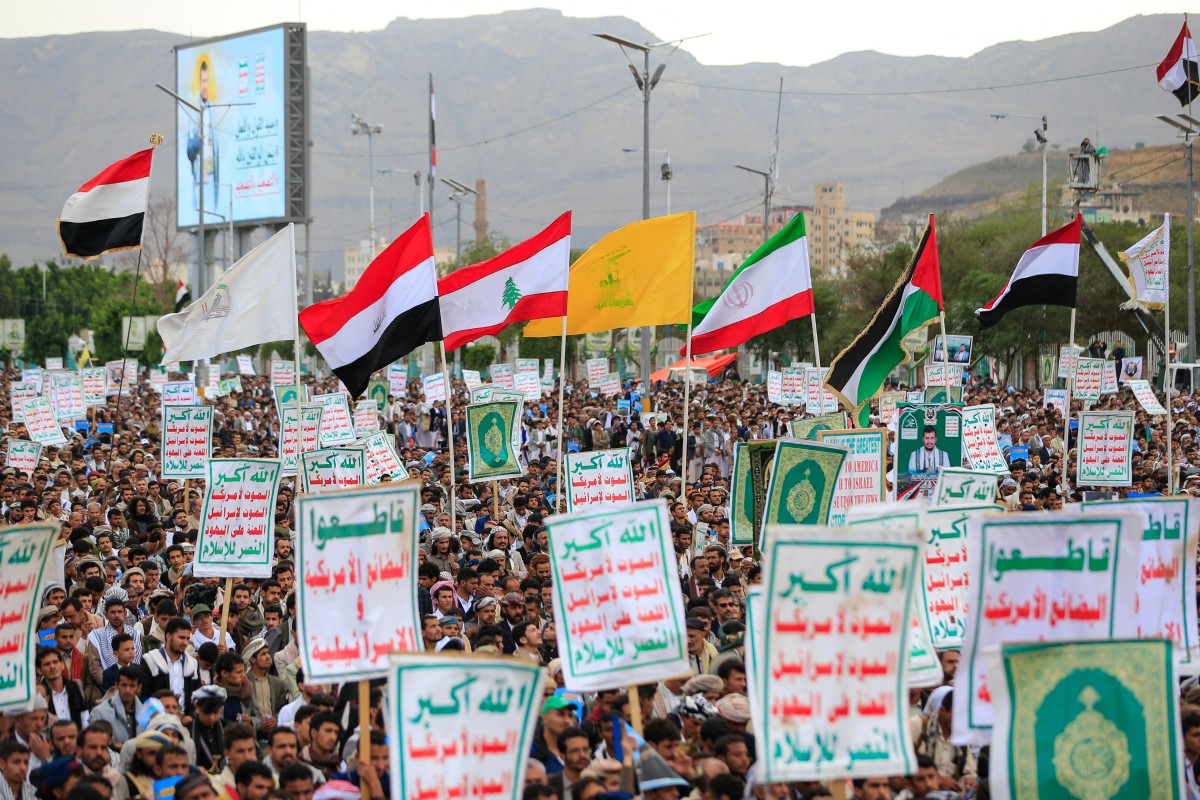

But “who are these Zulus, who are these remarkable people who inflict defeats on our generals, who convert our bishops ...?” This exclamation by Disraeli, the British Prime Minister, could be echoed by the European nations that, with winter approaching, fear the closure of Bab el-Mandeb!
Let us recall that in January 1879, when the British Empire under Victoria had achieved global supremacy, its troops were being massacred in South Africa by primitive tribes. European imperialism took a blow, the British cabinet could not get over it, and Western nations could quietly laugh at the misadventure that tarnished the luster of Her Gracious Majesty!
Are we not experiencing the same situation today, now that the Houthis, a fanatical people, are able to disrupt maritime traffic at the entrance to the Red Sea? And Europe, in all its splendor, wonders whether it might run short of fuel when the cold seasons eventually arrive.
A legal issue and military intervention
The “civilized nations” had retreated into their “ comfort zone ,” sheltered by international treaties guaranteeing free navigation through gulfs and straits.
They believed they could enjoy their rights without fear of disruption. And then the Houthis enter the scene and claim the right to dictate their terms to the countries of the Northern Hemisphere.
Having seized the Yemeni coastline along the Red Sea, these rebels established control over the strategic Bab el-Mandeb Strait, which links Europe to Asia via the Suez Canal.
At once, a wave of panic began to sweep through certain circles: on September 24, 80 countries called on the UN for the “full and immediate restoration of the rights and principles of navigation.”
At the same time, President Emmanuel Macron announced that he would deploy “military resources—that is, soldiers, radar systems, and defense systems—to protect” the Saudi terminal at Yanbu. This crude oil export site on the Red Sea had been targeted by Yemeni rebels.
The panic and rush to prepare for battle can be explained by the following figures: before the Houthis took control, 8.7% of total global maritime trade volume and 13% of global seaborne crude oil trade passed through Bab el-Mandeb.
Khuruj, the doctrine that makes all the difference
At this particular moment in history, the Houthis, who belong to the Zaydi branch of Shia Islam, have risen to such a level that they have become the West’s preferred interlocutors.
Hence the value of recalling some of their distinctive features. Their imamate, abolished in the 1960s, was never merely hereditary. It could be bestowed on any descendant of Fatima who was qualified—that is, just, learned, and courageous. Moreover, its holder is required to act as a “redresser of wrongs.” He must abide by a decisive rule: khuruj, namely uprising or intifada against injustice.
In theory, this doctrine is the basis of all political legitimacy, even though over time its strictness as a principle has gradually weakened. Yet it is precisely what gave the Zaydi movement its extraordinarily activist character and set it against the Twelver model, which, until Khomeini, embraced quietism and the messianic expectation of the hidden imam.
Thus Abdul-Malik al-Houthi, the current leader of Ansar Allah, is de facto the imam. Is he not “present, visible, and fighting”? He will remain so as long as he leads his people in battle—and preferably from victory to victory!
The thirst for revenge
For the Houthis, those tough cookies, have their work cut out for them: they have scores to settle with the House of Saud, which has subjected them to so many “injustices.” From 2015 to 2019, did it not form a coalition and carry out thousands of airstrikes against their positions?
Having been the aggressor a few years ago, Mohammed bin Salman is now on the defensive. Unable to rely on President Donald Trump, he has found support from President Macron, who nevertheless made clear that he did not want to “involve” France in a conflict between Riyadh and the pro-Iranian rebels.
Nevertheless, the crown prince is somewhat isolated, and these supposed allies have backed away from their commitments. The members of the Mecca Alliance—Turkey and Pakistan—do not appear ready to intervene militarily to support him in this ordeal, even though their pact is purely defensive and Bin Salman is the one under attack.
Is the Saudi capital counting on Tel Aviv to get itself out of trouble? That is not so unlikely now that taboos have fallen, and that last September 28 Israeli Prime Minister Benjamin Netanyahu secretly traveled to the United Arab Emirates to meet Mohammed bin Zayed*.
Can one imagine a similar private meeting in Saudi Arabia, if only by imitation?
*The process is already underway: between September 7 and 13, contact was made in Germany between American, Israeli, and Saudi officials via U.S. CENTCOM.