

What Game Are the United States Playing? What Is the Use of the Mecca Alliance?
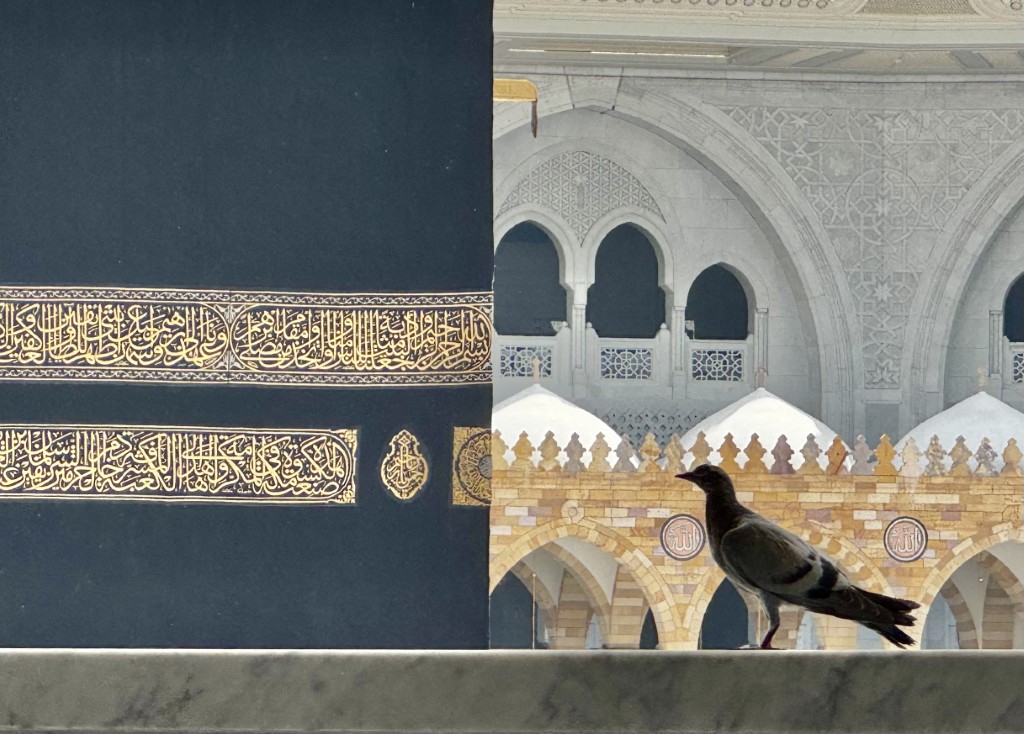

As the fighting continued in Hormuz, two military axes emerged in plain view of Washington, embodying two geostrategic approaches destined to compete with each other. What is more, this was happening across an area stretching from the Arabian Sea to the eastern Mediterranean—a region still regarded as the United States’ backyard, if not its exclusive preserve. Indeed, the missile and drone defense agreement concluded between Israel and Greece on September 2 appears to be a replica of the joint defense alliance signed in Mecca on August 7 by Turkey, Saudi Arabia, and Pakistan. Thus, in theory at least, we now have “two security poles facing each other without forming two entirely separate blocs.”
Does this mean that the regional powers mentioned above, which historically developed under the American security umbrella, must now consider providing for their own security? In other words, is the United States disengaging from the region? That is hard to believe when US aircraft carriers continue to patrol these warm waters and the naval blockade of the Persian Gulf remains in place, punctuated by targeted strikes.
Geostrategic balances and the American “retreat”
From the fall of the Berlin Wall until 2001, we lived in a unipolar world dominated by an all-powerful America. But beginning in 2008, with the financial crisis and the setbacks in Afghanistan and Iraq, the landscape began to change, and the prevailing US equation was scaled back.
This marked the beginning of a period of American retreat. It was all the more significant because the meteoric rise of China and Moscow’s resurgence—with Russia embarking on an aggressive policy along its western borders—already had to be taken into account.
It was within this context of competition among major powers that Washington, no longer omnipotent, sought to promote the Abraham Accords (2020–2021), intended to normalize relations between Israel and any Arab states willing to participate. The objective—or rather, the strategic rationale—was to bolster the regional balance against Iran.
But who was going to risk implementing these accords, which some described as unnatural, when Washington was losing its luster and struggling to restore its imperial order in the Persian Gulf and, more recently, in the Gulf of Aden?
It makes no sense!
The rule is that you do not change commanders-in-chief at the height of a battle. Yet here we are, in the midst of the Hormuz conflict, with US foreign policy changing course and the Pax Americana it underwrites shifting “from an order based on American primacy to an American architecture of balance among the powers.” It is not that the United States wants to relinquish the top position, but it no longer wants to bear the cost alone. In another theater of operations—Europe—Donald Trump had made this perfectly clear to his partners, the NATO member states: if they wanted to benefit from US protection, they would have to start paying their share (1).
Better still, Washington would no longer require all its partners to be allied with one another. If Israel and Greece were to stand on one side, and Turkey, Saudi Arabia, and Pakistan on the other, it would not make an issue of it.
But once again, what prompted Donald Trump to embark on this perilous course when he is in an uncomfortable position in the Persian Gulf and bogged down in a war in which a decisive victory remains beyond his grasp—despite the enormous resources deployed?
The Judeo-Christian Axis and the Sunni NATO
The Americans allowed the Mecca alliance to take shape, but did they actually approve of it? The three signatory countries showed a degree of independence from Washington; their attempt to assert themselves, however, may cost them dearly. Thus, when the Houthis began their triumphant advance toward Bab el-Mandeb, Mohammed bin Salman called on Donald Trump for help. But Trump made it clear that U.S. forces would not intervene to bail him out, even though they would continue to provide him with intelligence. Intent on preserving his room for maneuver, the occupant of the White House was not about to commit his troops to a second front. Moreover, this negative stance by the Americans was intended to make the crown prince pay for his desire for strategic autonomy. In short, let the Saudis take charge of their own security! Otherwise, what would be the point of this Mecca alliance, modeled on a Sunni NATO?
In reality, however, the deck was stacked: a “new strategic architecture for the Middle East and the Eastern Mediterranean” could not be established while leaving out Egypt and... Israel. So perhaps it is not too soon to say that Riyadh will turn to Tel Aviv (2), especially since the United Arab Emirates has just extricated itself from the situation and “turned the page on its war” with Iran.
The nagging question is: has the time come to revive the Abraham Accords?
Nothing has been decided, however, but one thing is certain: the Sunni NATO framework does not appear to be as operational as the Judeo-Christian axis (3). The appropriate conclusions simply need to be drawn.
1—In Europe, Ukraine has provided a stark illustration of a new strategic order set in motion by Washington.
2—Initial contact through the U.S. CENTCOM was reported in Germany last week, and a meeting between American, Israeli, and Saudi officials was even said to have taken place to determine what measures should be implemented to support Riyadh.
3—Namely, the alliance between Israel and Greece, and certainly the Republic of Cyprus.