

Hezbollah-Israel: An Endless War in Whose Interests? (12)
Fifteen Years Under the Iron Grip

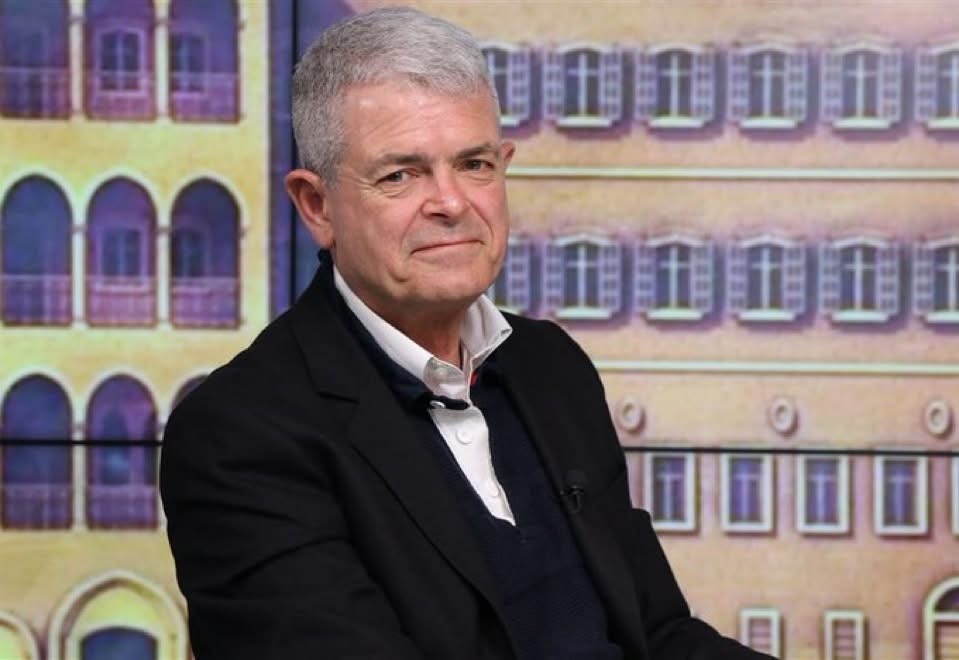
This series of articles is intended to shed light on the current situation through the lens of the past, far removed from passionate, ideological or romantic narratives that overlook the underlying realities. It is up to the reader to draw the appropriate conclusions.
The previous eleven instalments revisited the events surrounding Hezbollah’s rise to power, from the Taif Agreement to the severely incomplete implementation of U.N. Security Council Resolution 1701 in 2006.
From the very first Israeli withdrawal in May 2000, Lebanese President Emile Lahoud (1998-2007) and Hezbollah Secretary-General Hassan Nasrallah reached a fundamental understanding: the Lebanese state would legitimize Hezbollah, and in return, the movement would formally commit to respecting the country’s institutions and refrain from using its weapons in domestic political disputes. It would later become clear that the pledge was not only short-lived – it collapsed on May 7, 2008, when Hezbollah seized Beirut by force – but that its arsenal had, all along, exerted decisive influence over national decision-making.
Militarily, the Lahoud-Nasrallah understanding translated into close coordination between the pro-Iranian party and the upper echelons of Lebanon’s security apparatus, where Lahoud loyalists, along with officials approved by Hezbollah and/or its ally, the Amal Movement, occupied key positions.
Control of the Army
Following the Syrian invasion of October 13, 1990, and the occupation of the presidential palace and the Lebanese Ministry of Defense by Assad regime forces, the Lebanese Army was subjected to a systematic purge and a campaign of repression orchestrated by the Lebanese-Syrian security apparatus. The objective was to crush any resistance to the Syrian occupation within the military. On the day of the invasion alone, more than 100 Lebanese soldiers were summarily executed, dozens more were humiliated and captured, and around 20 senior officers were transferred to Syrian prisons.
The following years (1991-1992) were marked by the army’s forced restructuring. Officers and noncommissioned officers suspected of hostility toward Damascus or loyalty to the sovereigntist opposition were relentlessly targeted, summoned by Lebanese and Syrian intelligence services, terrorized, forced into retirement, or brought before the Military Tribunal on charges of “undermining relations with a brotherly state.”
Many of these military personnel were held incommunicado at the Ministry of Defense in Yarzeh or in Syrian detention centers in Lebanon, such as the one in Anjar. They were subjected to systematic torture and ultimately joined the ranks of the hundreds of Lebanese missing persons held in Syrian prisons.
From his appointment as commander of the Lebanese Army in 1990 to his accession to the presidency in 1998, Émile Lahoud maintained decisive influence within the military, where he enjoyed the loyalty and support of senior officers occupying key positions. As president, he had the authority to sign their promotion decrees and continued to wield considerable influence over their assignments to these key positions.
Alongside officers loyal to Lahoud, others were under the influence of Nabih Berri, leader of the Amal Movement, speaker of Parliament, and a Hezbollah ally, as well as other Syrian-aligned politicians. It was during this period that the army’s sovereigntist ethos – one of its defining characteristics since Lebanon’s independence – began to erode. It was gradually replaced by a culture that accepted shared sovereignty with the Syrian occupation army, then officially described as a “sister” army, and with Hezbollah. Although this new culture encountered resistance within the ranks, it prevailed for more than two decades.
The Decapitation and Marginalization of Sovereigntists (1990-2005)
From 1990 onward, sovereigntist politicians were entirely sidelined from the political process and excluded from appointments to state institutions. The electoral system introduced in 1992, imposed by the Syrians, along with intimidation tactics, forced them either to submit or to withdraw from political life. At the same time, following the 1992 parliamentary elections, Hezbollah entered Parliament with 12 seats, while the sovereigntist camp was completely absent.
An intimidation campaign began with the assassination of Dany Chamoun, leader of the National Liberal Party, just days after the Syrian invasion in October 1990. It was followed by the forced exile of General Michel Aoun in 1991, who at the time opposed both the Syrian occupation and illegal militias, including Hezbollah, before aligning himself, fifteen years later, with the pro-Iranian militia. Former president Amine Gemayel (1982-1988) had already voluntarily gone into exile in France after the end of his term.
Between 1990 and 2005, the Lebanese-Syrian security apparatus systematically suffocated the anti-Syrian opposition through successive waves of persecution under the presidencies of Elias Hraoui (1989-1998) and Emile Lahoud (1998-2007). This period of repression was marked by several defining events, including the abduction of Kataëb Party political bureau member Boutros Khawand on September 15, 1992, followed by the unresolved bombing of Our Lady of Deliverance Church in Zouk Mikael on February 27, 1994, which killed 11 people. The attack provided an immediate pretext for the pro-Syrian government to dissolve the Lebanese Forces and arrest its leader, Samir Geagea, on April 21, 1994. He was later sentenced to life imprisonment and spent more than 11 years in prison.
A few days later, on April 27, 1994, terrorism struck the Kataëb Party’s political bureau in Saifi, killing one of its officials, Tony Baaklini. Meanwhile, student movements affiliated with the Free Patriotic Movement (FPM, founded by Michel Aoun), the Lebanese Forces, the National Liberal Party, and the Kataëb Party were subjected to repeated mass arrests. These culminated on Thursday, August 7, 2001, when more than 250 sovereigntist activists were violently detained following the historic Chouf reconciliation between Maronite Patriarch Nasrallah Sfeir, then a symbol of anti-Syrian resistance, and Walid Joumblatt, leader of the Progressive Socialist Party (PSP).
This campaign of political repression also included the forced closure of the MTV television station in 2002 and the harassment of journalists such as Gebran Tueni.
The Assassination of Rafic Hariri and the Syrian Withdrawal
Following the assassination of Rafic Hariri on February 14, 2005, and the subsequent Cedar Revolution, Damascus withdrew its troops on April 28, 2005. This paved the way for Michel Aoun’s return from exile fifteen days later, on May 7, 2005, followed by Samir Geagea’s release under an amnesty in July 2005. President Amine Gemayel, for his part, had returned as early as 2000.
The State-Hezbollah Division of Sovereignty
Despite the Cedar Revolution and the Syrian withdrawal in 2005, followed by Israel’s second withdrawal in 2006 in accordance with U.N. Security Council Resolution 1701, President Lahoud continued to oversee intelligence-sharing between Lebanese security services and the pro-Iranian militia. The primary objective was to delineate the Lebanese Army’s operational areas, effectively giving Hezbollah free rein to operate in southern Lebanon, Beirut’s southern suburbs, and the North Bekaa, while securing the pro-Iranian party’s supply lines from Syria. This coordination also aimed to track down Israeli espionage networks.
Read more on this topic:
Hezbollah-Israel: An Endless War in Whose Interests? (11)
Hezbollah-Israel, an endless war in whose interest? (10)
Hezbollah-Israel: An Endless War in Whose Interests? (9)
Hezbollah-Israel, an endless war serving whose interests? (8)
Hezbollah-Israel, an endless war serving whose interests? (7)
Hezbollah-Israel, an endless war serving whose interests? (6)
Hezbollah-Israel, an endless war serving whose interests? (5)
Hezbollah-Israel, an endless war serving whose interests? (4)
Hezbollah-Israel, an endless war serving whose interests? (3)
Hezbollah-Israel, an endless war serving whose interests? (2)
Hezbollah-Israel, an endless war serving whose interests? (1)
Hezbollah-Israel: An Endless War in Whose Interests? (20)
The Trump-Xi Summit: Between Pragmatism and Necessity
The Conflict in Yemen: Geopolitical and Strategic Considerations
Yemen: The Mecca Pact Moves from Theory to Military Action
Hezbollah-Israel: An Endless War in Whose Interests? (19)
More from Khalil Helou
View All


More in Strategia
View All


Latest from Levant Time
View All


