

Mecca Pact: Anatomy of the Islamabad–Riyadh–Ankara Axis (4/4)
Turkish power and its limits
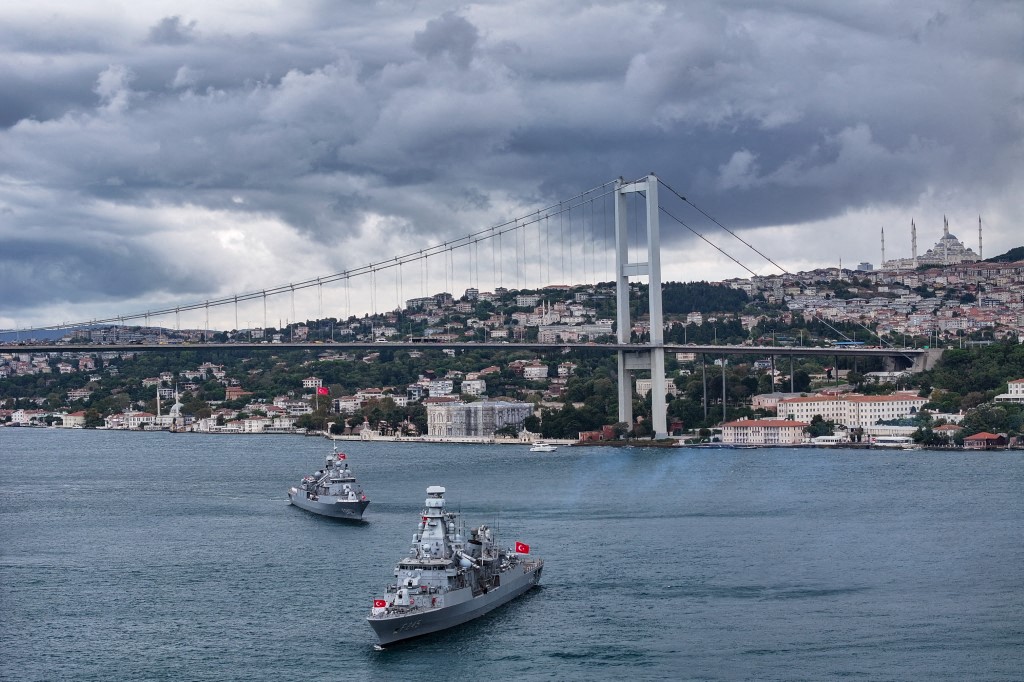
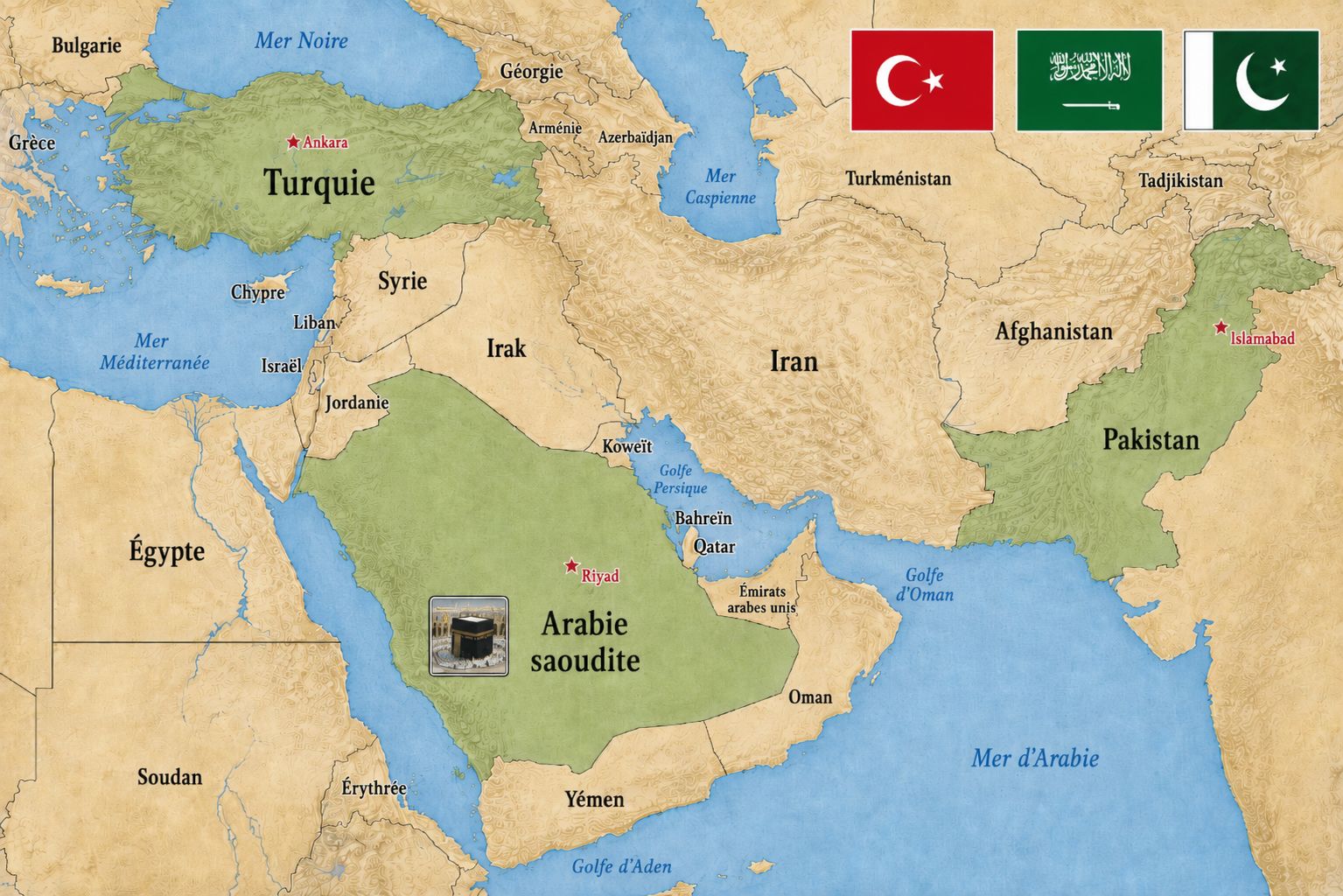
This fourth and final article in the series examines Turkey’s strategic role in the Mecca Pact, with a focus on the strength of its military industries. It also outlines the specific motivations of Saudi Arabia (strategic autonomy), Turkey (expanding its influence), and Pakistan (economic support).
Turkey has officially stated that it strongly condemns Houthi attacks on Saudi Arabia, affirming its unwavering support for the Kingdom. At the same time, it is using its geopolitical clout to ease tensions between Iran and Saudi Arabia, and between Iran and Iraq, from where the drones that targeted Saudi Arabia’s East-West pipeline were launched. Finally, Ankara is seeking to persuade Tehran, with which it has significant economic ties, to pressure the Houthis to stop firing on Saudi territory.
Turkey’s potential role
A widely held view among observers is that Turkish technological expertise and defense industry capabilities could one day be integrated with Saudi and Pakistani industries to develop joint weapons programs and maximize the interoperability of their armed forces. However, this prospect remains dependent on the political and strategic will of decision-makers in Islamabad, Riyadh, and Ankara, as their responses to the Houthi offensive in Yemen have shown.
Turkey could emerge as one of this alliance’s technological driving forces thanks to its rapidly expanding defense industry, which comprises more than 3,000 manufacturers, 350 of which generate significant revenue. They supply the Turkish military with more than 80% of its equipment. State-owned and private-sector giants Baykar, TAI (Turkish Aerospace Industries), and Aselsan could provide the Mecca alliance with essential cutting-edge weaponry.
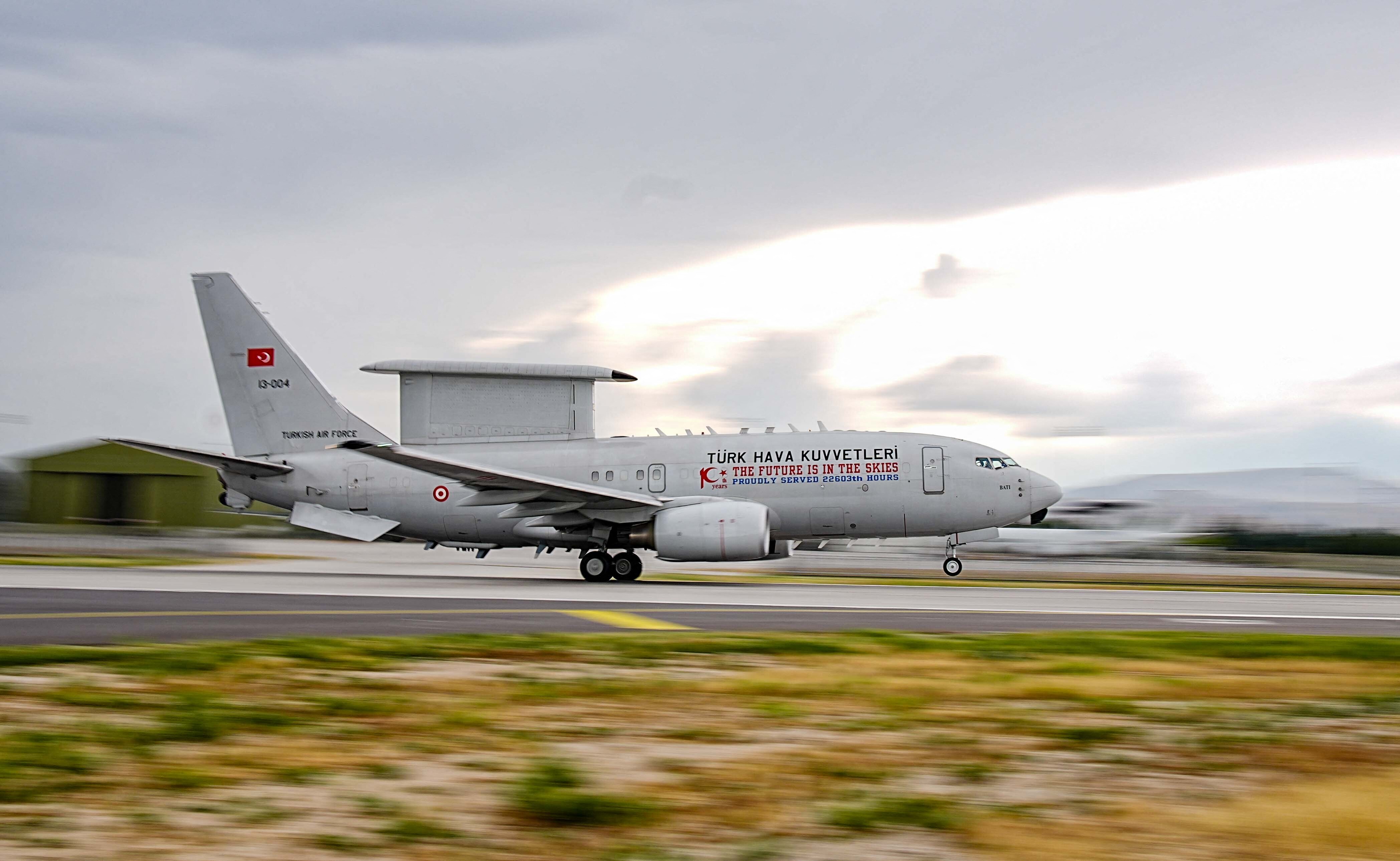
A Turkish Boeing 737 AEW&C “Peace Eagle,” a modern AWACS system.
These sovereign technologies, combined with the strength of the Turkish military—the second largest in NATO—and the highly standardized command procedures of Turkish officers, give Turkey a unique modern capability in battlefield management engineering that the other two partners lack. These strengths can transform militaries traditionally dependent on the West into autonomous, interconnected forces.
Turkish power projection and the management of multiple theaters of operation
Moreover, Turkey has demonstrated its power-projection capabilities through the growing deployment of its forces. In Cyprus, Ankara’s substantial military presence in the northern part of the island (the Turkish Republic of Northern Cyprus, or TRNC) illustrates its ability to safeguard its maritime and gas interests in the Eastern Mediterranean. More strategically significant is the Tareq bin Ziyad air and land military base in Qatar, in the heart of the Gulf, which has hosted the Qatar-Turkey Combined Joint Force Command since 2015.
This facility mainly hosts permanent Turkish ground forces, with occasional air deployments or exercises. In practice, it would allow Turkey to project its ground and air forces directly to Riyadh’s doorstep, offering the option of an immediate buffer force with Iran. This base represents Turkey’s first permanent military presence in the Gulf region since the fall of the Ottoman Empire.
Finally, Turkish warships are stationed almost permanently at Qatar’s Um El Houl naval base south of Doha, just a short distance from Saudi Arabia. These protective arrangements are supplemented by Turkish deployments in Syria and Iraq, as well as naval deployments in the Red Sea and off the Horn of Africa. Taken together, they confirm the Turkish military’s maturity in simultaneously managing complex overseas theaters.
The Turkish K-SWARM system and technological autonomy
Ankara could make its domestically produced K-SWARM drone system, jointly developed with Italy, available to the alliance. In June 2026, Baykar and Italian giant Leonardo formalized the creation of a joint venture to oversee the K-SWARM program. This system is based on the Manned-Unmanned Teaming (MUM-T) concept, whereby a crewed aircraft, such as the Turkish-made M-346 light fighter or the future fifth-generation KAAN fighter, also produced in Turkey by TAI, directly controls in flight a swarm of autonomous combat drones, including exclusively Turkish-made stealth supersonic drones (Kizilelma) or the K2 kamikaze drone.
Even in the absence of crewed fighter aircraft, stealth supersonic drones can serve as mission leaders thanks to artificial intelligence. The main advantage of the K-SWARM system, if it were made available to the Mecca Pact, would be to expand the military capabilities of deployed forces at a lower cost than a fleet composed solely of crewed aircraft. Operations would thus become more flexible and persistent, while also becoming harder for an adversary to counter.
Baykar, a major player in the global drone industry
The example of the K-SWARM system illustrates how the BAYKAR aerospace industries that manufacture it have become a major player in the global drone industry. Entirely privately owned, the company funds its own research and development and reports an industrial self-sufficiency rate of 93%, limiting its dependence on foreign suppliers.
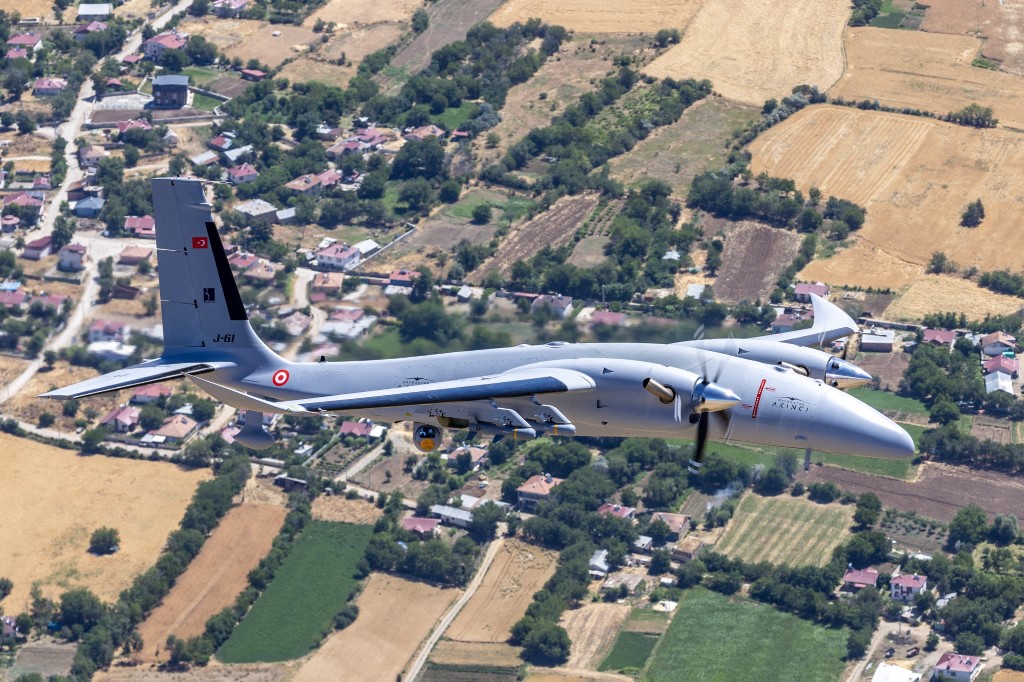
The Bayraktar AKINCI.
Generating most of its revenue from exports, it markets its systems in more than thirty countries. Its flagship model was the Bayraktar TB2, which distinguished itself in Ukraine and Azerbaijan. It is now complemented by the Bayraktar AKINCI, a twin-engine aircraft adopted by Saudi Arabia and the United Arab Emirates, and the TB3, a naval drone with folding wings that was integrated in 2025 to operate from assault ships.
Finally, at the SAHA 2026 exhibition, Baykar unveiled the Mizrak, a loitering munition with a range of more than 1,000 kilometers, designed to saturate enemy defenses in the most dense electronic warfare environments. Through this expansion of its capabilities, BAYKAR is reshaping 21st-century air combat doctrine while maintaining a consistent technological edge.
The large-scale integration of Bayraktar TB2, Akıncı, and Kizilelma combat drones, combined with the KAAN fighter—whose first deliveries to the Turkish military are scheduled for 2029—and the Hisar air-defense systems, with short- and medium-range versions, would give the Mecca Pact technological superiority and a high-precision strike capability across operational theaters.
The motivations of each alliance signatory
The emergence of the Mecca Pact, beyond the convergence of pragmatic interests among Saudi Arabia, Turkey, and Pakistan, also reflects the individual calculations of each of its signatories.
For Saudi Arabia, this pact is the cornerstone of its pursuit of strategic autonomy, following a realization of the limits of U.S. deterrence against asymmetric threats from Iran, the Houthis, and Iraqi pro-Iranian militias, which possess drone and missile technologies. By anchoring itself in this alliance, Riyadh seeks to reduce its exclusive dependence on Washington for its defense.
For its part, Turkey sees this as part of a broader effort to expand Ankara’s influence and fill the vacuum created by Iran’s weakening. Ankara aims to strengthen its network of strategic alliances, stretching from Qatar to Libya and encompassing Cyprus, a reshaping Syria, and Iraq. Moreover, the pact secures vast markets for Turkey’s advanced technologies. Finally, Turkey is becoming increasingly assertive in the Islamic world.
For Pakistan, the pact is a vital means of escaping growing diplomatic isolation and stabilizing a crisis-stricken economy. Shehbaz Sharif’s government has chosen to monetize Pakistan’s military capital. In return, Islamabad receives an essential financial lifeline from Riyadh.