

Escalation in Yemen: A Strategic Challenge for Riyadh
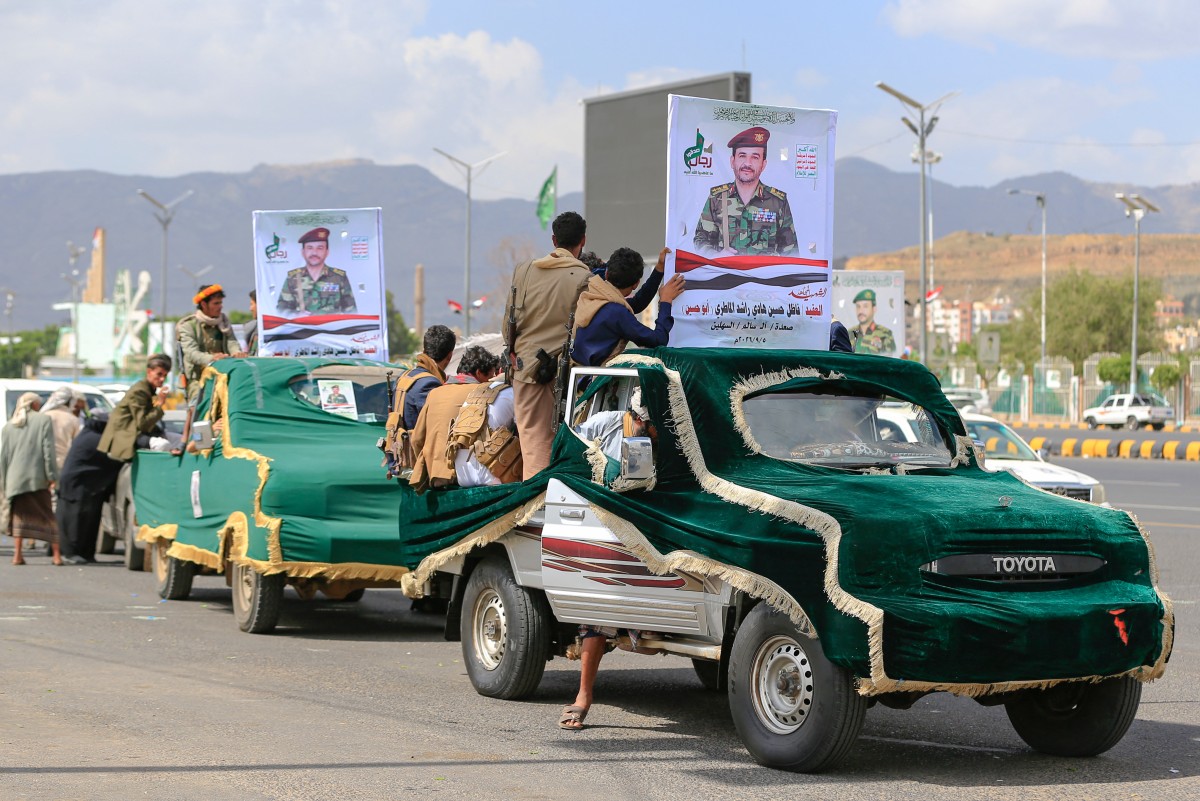

The conflict between Saudi Arabia and Yemen’s Houthi rebels exposes a persistent strategic weakness in the Arab world.
Iran is exploiting this crisis to disrupt maritime traffic in the Red Sea, strengthen its position at the negotiating table with the United States, and retain leverage over the global economy.
For their part, the Houthis are doing everything they can to consolidate their power in Yemen and strengthen their position ahead of any future settlement.
Meanwhile, Washington is pursuing its broader strategy (1) of focusing more heavily on the Americas while leaving allied regional actors to shoulder greater responsibility for managing crises in the Middle East.
Could these actors manage without U.S. support?
The geopolitical implications of the lightning Houthi offensive
Between September 3 and 14, the Houthis’ lightning offensive in Yemen marked a major geopolitical turning point in the Red Sea, as they seized four highly strategic islands: Mayyun Island (also known as Perim), located in the heart of the Bab el-Mandeb Strait and dividing it into two shipping lanes, as well as the islands of Zuqar, Greater Hanish, and Lesser Hanish, which control the southern entrance to the Red Sea and the route leading to the Suez Canal.
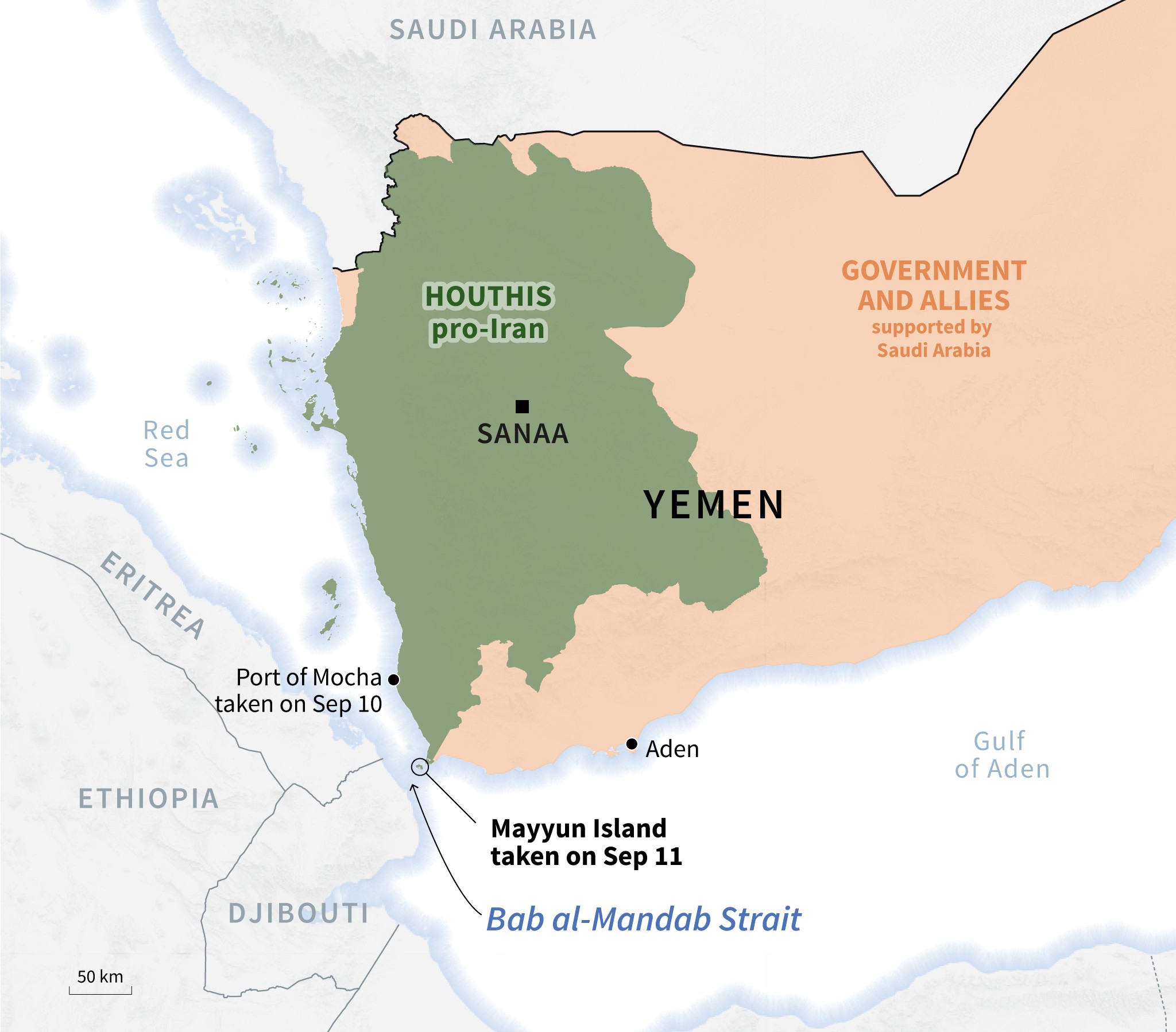
Combined with the capture of the mainland port city of Mocha and its airport (2), as well as the city of Dhubab, control of these island positions now allows the Houthis to dominate Yemen’s entire western coastline.
This new configuration gives them and their Iranian ally direct blocking power over the Bab el-Mandeb–Red Sea–Suez Canal corridor, through which roughly 10% of international trade and energy shipments pass.
In addition, pro-Iranian militias based in Iraq attacked Saudi Arabia’s East-West Petroline pipeline (3) with drones on September 10 and 11, forcing Saudi Arabia to suspend its operations temporarily as a precaution.
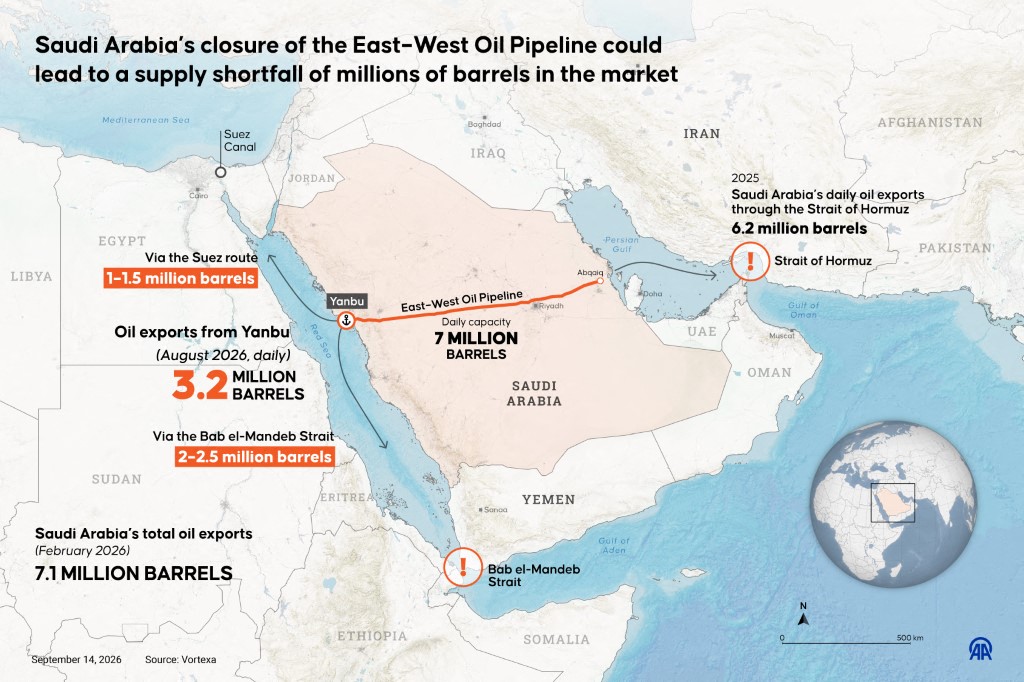
This militarization of the international shipping route presents the Saudi kingdom with a major strategic dilemma. Designed to safeguard crude oil exports by bypassing the Strait of Hormuz, which is continually threatened by Iran, Petroline carries oil from eastern Saudi Arabia to Yanbu in the west, where it terminates in the heart of a maritime area indirectly threatened by Iran.
The Houthis have posed a problem for Saudi Arabia for nearly twenty years. After they seized Sana’a in September 2014, Riyadh—feeling threatened by pro-Iranian militias to the north in Iraq and Syria, and then to the south following the fall of Sana’a—launched its military intervention in Yemen in March 2015.
However, seven years of fighting failed to dislodge the Houthis either from Sana’a or from their strongholds along the Saudi border. A UN-brokered ceasefire froze the conflict in April 2022.
Despite a few skirmishes, the agreement largely held until the recent resumption of the war, which is once again putting Saudi Arabia’s capabilities to the test.
The U.S. stance
On September 12 in Dublin, Donald Trump pointed to Tehran’s role in the attack on Petroline, which was carried out by pro-Iranian militias in Iraq.
In doing so, he distinguished the interests of the mullahs’ regime from those of the Houthis themselves. According to him, the Houthis had contacted him and were not seeking a confrontation with the United States. Trump also said that their dispute with Riyadh could be resolved and that they were allowing most ships to pass through Bab el-Mandeb.
Washington therefore wants to regard the Houthis as an autonomous actor rather than simply as Iranian proxies, and it wants the renewed war to remain confined to Yemen, avoid spreading across the region, and be resolved independently of the conflict between Washington and Tehran.
In return, the Houthis effectively want to consolidate their power in Yemen by eliminating the Saudi-backed government.
Divisions within the anti-Houthi camp
Before the brief two-week blitz, the Houthis already controlled Yemen’s most geopolitically strategic areas: the northwestern coast, the capital, Sanaa, and the major port of Hodeidah. Their opponents were divided between the internationally recognized, Saudi-backed government and the UAE-backed Southern Transitional Council (STC) (4).
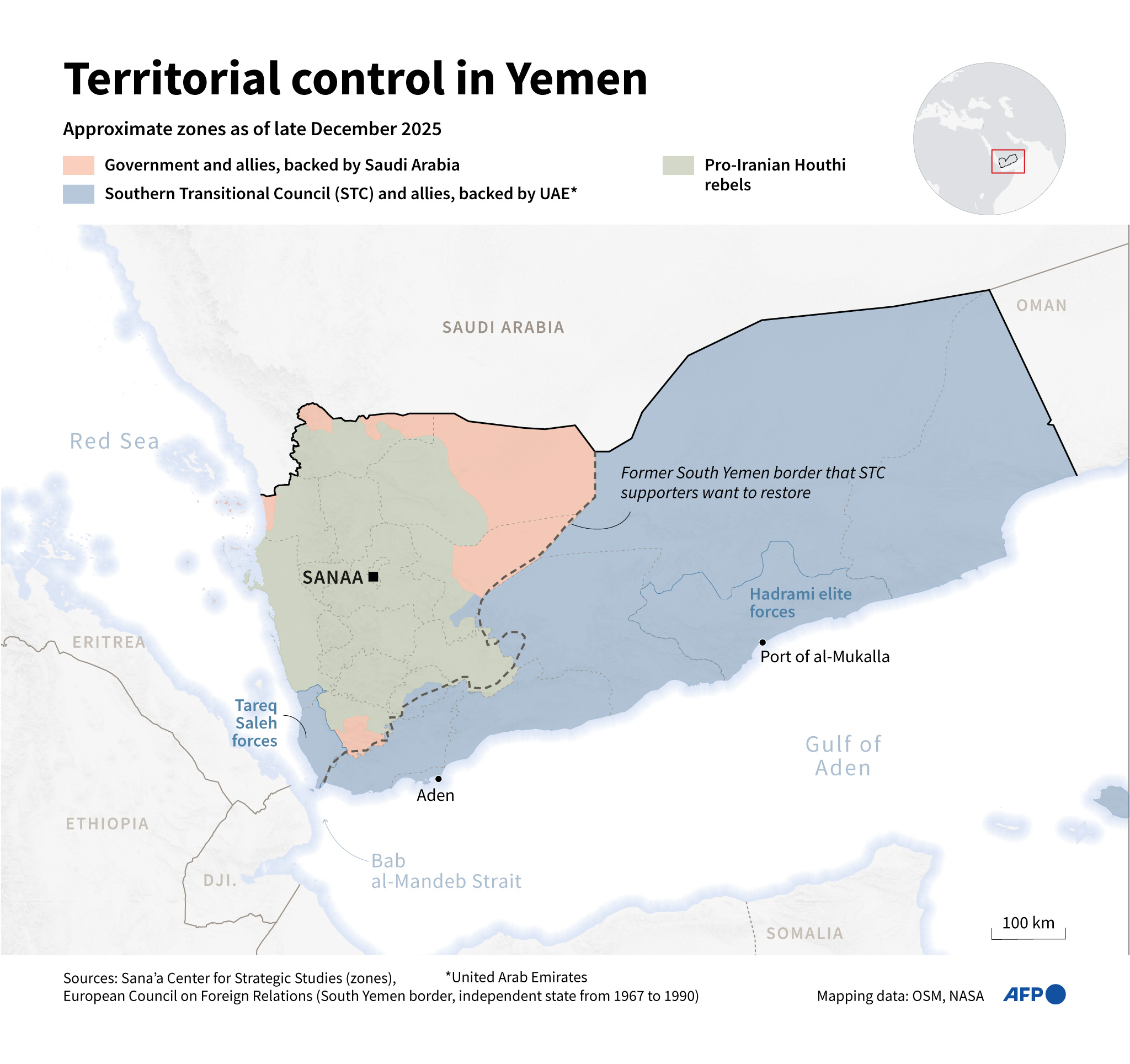
The rivalry between the Saudi kingdom and the UAE escalated into clashes when the STC launched an offensive against Riyadh-aligned factions in eastern Yemen in December 2025.
A Saudi air counteroffensive followed in January 2026 in support of the Yemeni government based in Aden. It resulted in Aden falling to Riyadh-backed forces, the dissolution of the STC, and the removal of UAE influence from Yemen.
This weakened the anti-Houthi camp and created an opportunity for Iran’s Yemeni allies to strengthen their position.
The Houthis’ emergence as a regional force since 2023
Hamas’s October 7, 2023 attacks on Israel gave the Houthis an opportunity to confront the Jewish state and disrupt shipping in the Red Sea in the name of solidarity with the Palestinians. This campaign demonstrated their ability to operate beyond Yemen’s borders.
Washington and London responded with Operation Rough Rider, a 52-day air campaign launched in March 2025 that struck more than 1,000 Houthi targets.
Following the May 2025 ceasefire, the Houthis stopped disrupting international shipping and regrouped and reorganized before resuming their recent operations.
However, when the United States and Israel went to war with Iran in 2026, the Houthis largely stayed out of the conflict. This confirmed that they cooperated with Tehran when it served their interests, but had no intention of becoming merely an Iranian proxy.
What can be expected?
For Saudi Arabia, combating the Houthis is a priority: they are right on its southern border, they could stir up Saudi Zaydi Shiites across the border, and they serve as a proxy for Iran.
Moreover, as in 2014, Riyadh feels threatened from Iraq and by Iran across the Gulf, not to mention the closure of the Strait of Hormuz and the disruption of oil supplies to the port of Yanbu via the Petroline pipeline.
Despite its considerable military investments, Saudi Arabia has failed to impose a military solution. It must therefore now combine military means, economic pressure, the mobilization of its allies in the Mecca Pact—which is itself being put to the test—and a diplomatic strategy.
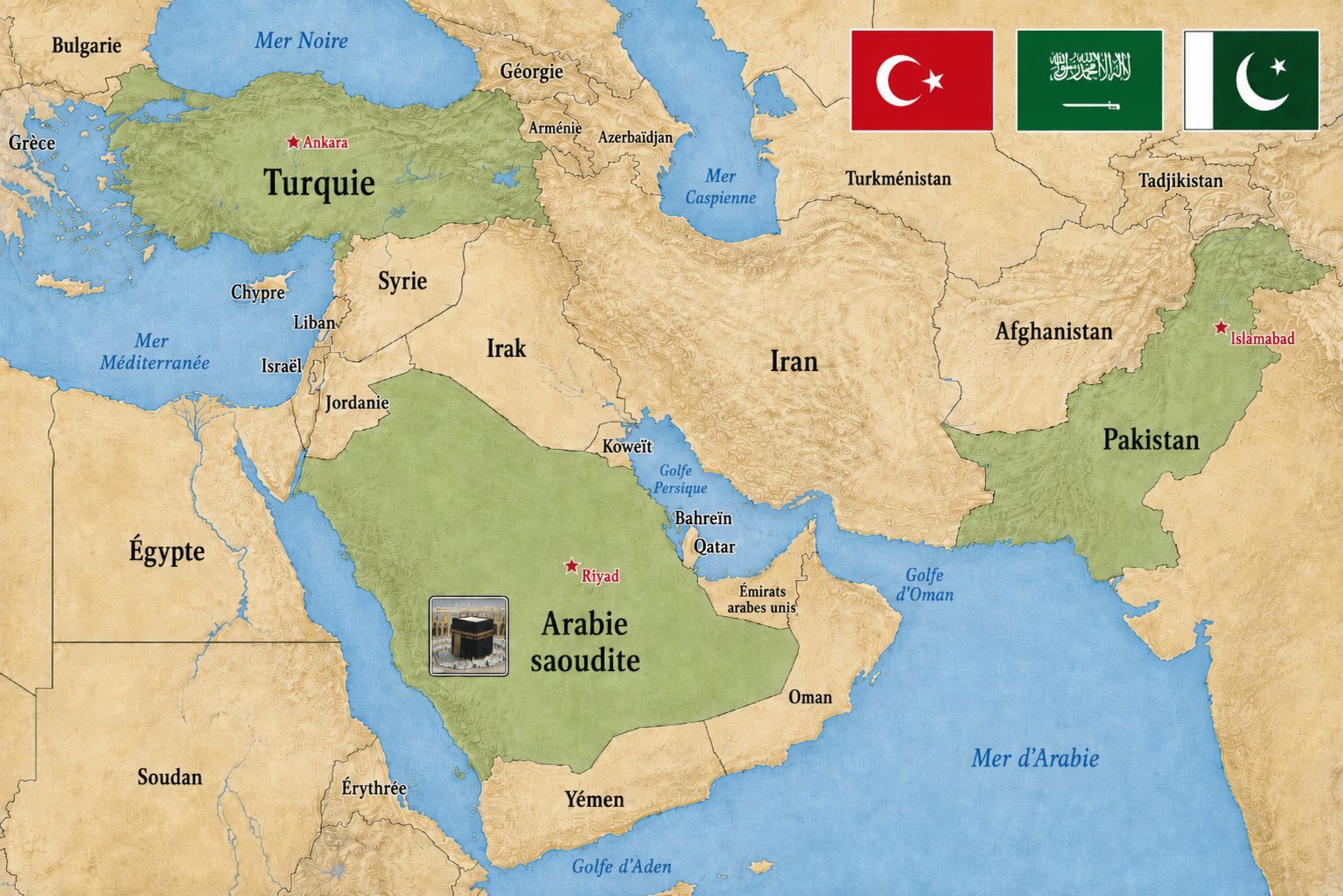
Such a process would, however, be lengthy and uncertain. It can be concluded that Washington’s influence remains a major factor in resolving any conflict in the region, even though the United States is trying to delegate the management of Middle Eastern conflicts to its allies, whom it is pressuring to reach agreements within the framework of the Abraham Accords.
Although Riyadh has tried to diversify its alliances and strengthen its relations with the major powers so that it can rely more on itself and less on the United States, it will once again have to persuade Washington to tip the balance in its favor.
(1) The “U.S. National Security Strategy” announced in November 2025 is based on the “America First” principle and on an almost complete return to the Monroe Doctrine of the early 19th century, which states that the United States views foreign intervention in the Americas unfavorably and refrains from intervening militarily in world affairs.
(2) Mocha Airport is an important logistics hub that the Houthis can use to resupply their forces along Yemen's western coast, which they have just brought entirely under their control.
(3) Saudi Arabia's East-West Pipeline, also known as Petroline, is a major energy artery linking the main oil fields of Abqaiq in the east, near the Persian Gulf, to the port terminal of Yanbu on the Red Sea. Stretching approximately 1,200 kilometers across the Arabian Peninsula, this highly strategic infrastructure allows the Kingdom to ship its oil directly to Western markets. By providing a direct alternative route, the pipeline secures Saudi energy flows by bypassing the Strait of Hormuz, which is subject to an Iranian blockade.
(4) The Southern Transitional Council is calling for Aden in the south and Hadramout in eastern Yemen to secede. These provinces were part of what was formerly South Yemen, which was forcibly unified with North Yemen in May 1990 to form a single country, Yemen.