

Hezbollah-Israel: An Endless War in Whose Interests? (17)
Outcome of the Saudi-Syrian axis, or S-S: Hariri in Damascus against his will
This series of articles offers a clearer understanding of the current situation in Lebanon through the lens of the past, steering clear of impassioned, ideological, or romantic narratives that overlook the realities on the ground. Readers are free to draw their own conclusions. The previous sixteen installments revisited the events surrounding Hezbollah’s rise to power, from the Taif Agreement through the first half of President Michel Sleiman’s term. (See the previous 16 installments)
Saudi Arabia’s outreach to Syria took the form of two visits to Damascus by newly appointed Prime Minister Saad Hariri. The first took place on December 19, 2009, at the personal request of Saudi King Abdullah, for talks with Bashar al-Assad. Supporters of the Future Movement, led by the prime minister, viewed the visit as a major political sacrifice. Hariri’s second visit to Damascus took place six months later, on July 18, 2010. This time, he was accompanied by 17 ministers to sign bilateral cooperation agreements.
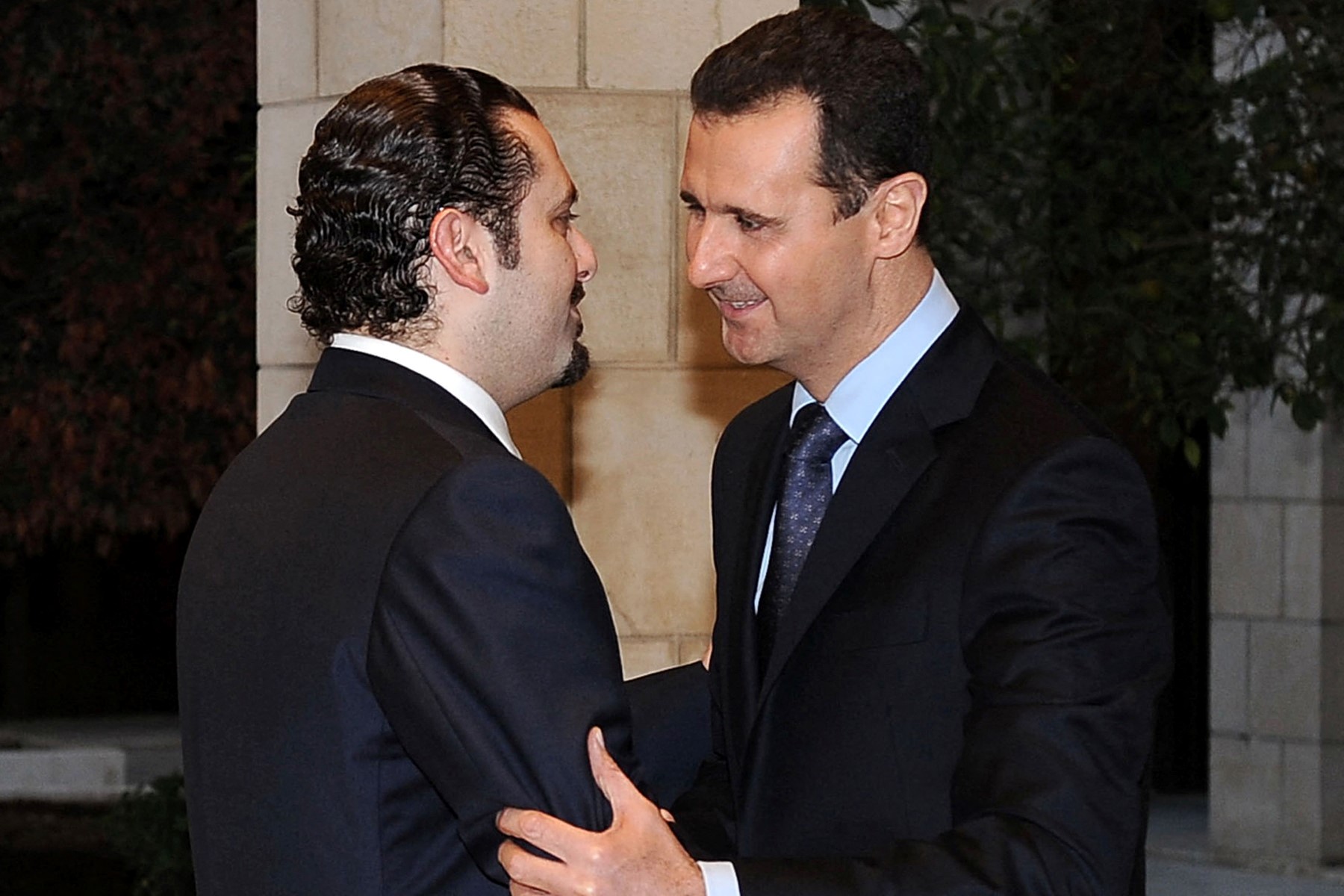
Saad Hariri had to bow to the dictates of realpolitik and warmly greet the man behind the 2005 assassination of his father, Rafic... (AFP)
In coordination with President Michel Sleiman, Hariri sought to rebalance relations with Syria and move away from a relationship based on tutelage toward state-to-state relations (1). However, these agreements quickly became a dead letter when the Syrian civil war erupted less than a year later.
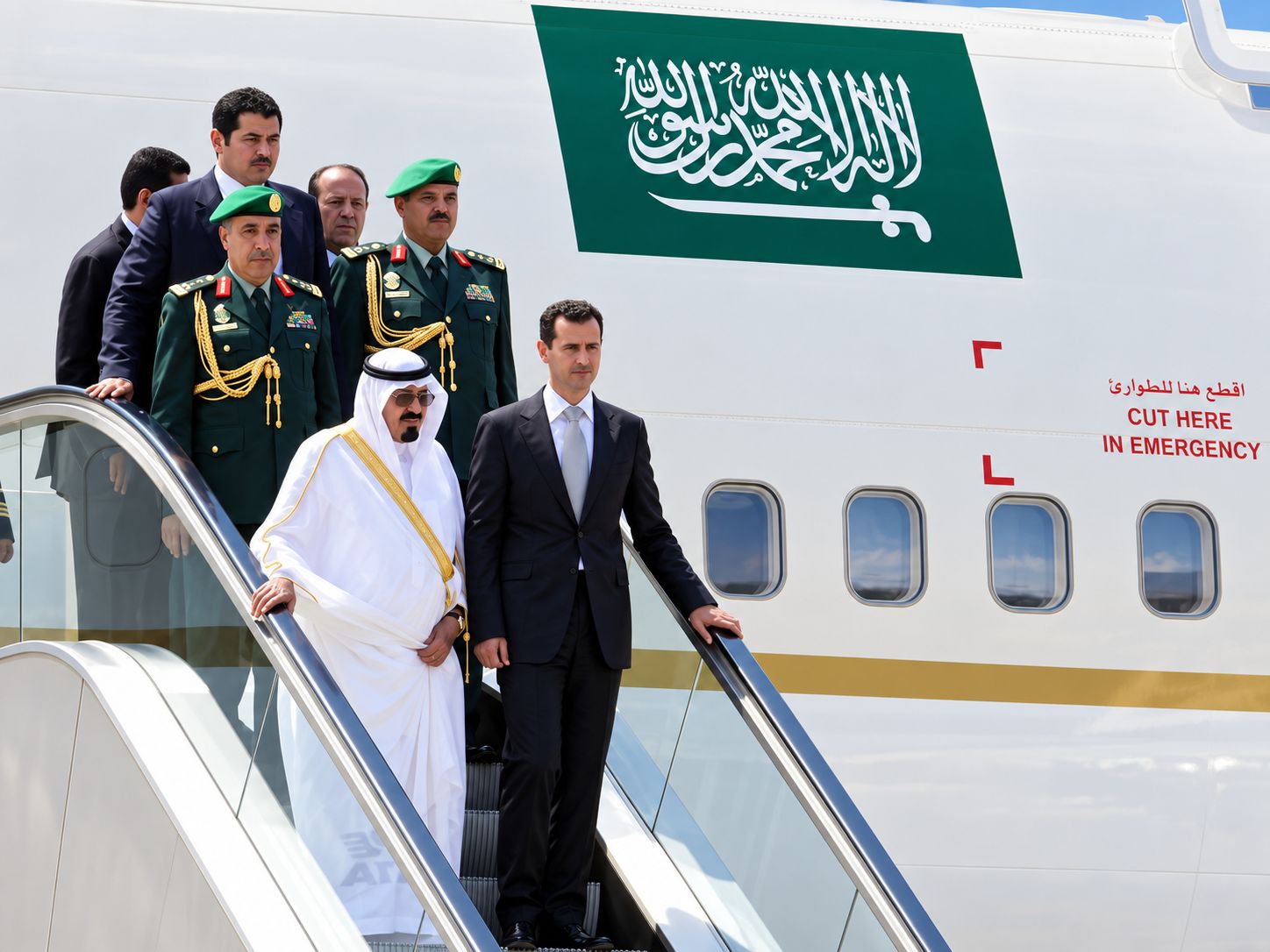
The high point of the normalization between Riyadh and Damascus came on July 30, 2010, when Saudi King Abdullah bin Abdulaziz and Bashar al-Assad landed in Beirut aboard the same plane and were welcomed by President Michel Sleiman and Saad Hariri.
A Saudi-Syrian-Lebanese tripartite summit followed in Baabda that same day, with Iran having encouraged Assad to attend. The summit’s primary aim was to contain the political shock waves from the Special Tribunal for Lebanon’s imminent findings, which were expected to accuse Hezbollah members of assassinating former Prime Minister Rafic Hariri on February 14, 2005.
Doha and Riyadh aligned in Lebanon
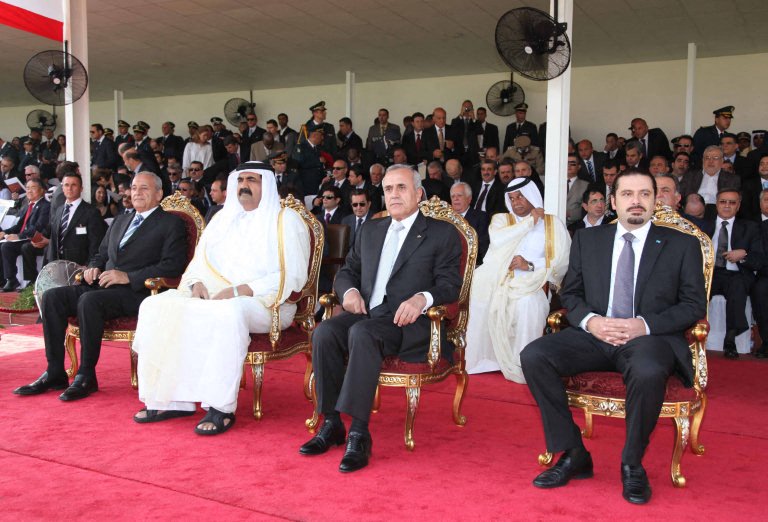
Two days after the Baabda tripartite summit—more precisely, on August 1, 2010, Lebanese Army Day—the Emir of Qatar made an exceptional appearance alongside President Michel Sleiman at the sword-presentation ceremony for the cadets of the Fayadieh Military Academy upon their commissioning as second lieutenants.
This historic event took place during the Qatari ruler’s three-day official visit to Lebanon, coinciding with King Abdullah’s visit. Beyond military protocol, it confirmed Qatar’s support for President Sleiman, adding to Saudi backing for him, the consolidation of the compromise between the March 8 and March 14 camps, and the rapprochement between Hariri and Assad.
However, Arab pragmatism toward Hezbollah and Iran in Lebanon began to erode in 2011 as the Arab Spring spread to Syria and Hezbollah intervened militarily on the side of the Assad regime.
Hezbollah becomes the cornerstone of the “Axis of Resistance”
The period between the May 2008 show of force in Beirut and the outbreak of the Syrian uprising in the spring of 2011 marked a pivotal historical phase for Hezbollah.
In three years, the pro-Iranian armed party underwent a profound transformation, consolidating its political hegemony in Lebanon while quietly building an essential logistical infrastructure in Syria.
This transition was not merely a rise in power, but a process of institutionalization that transformed the “Party of God” into an indispensable regional actor and the linchpin of the Damascus-Tehran axis.
This process began in the aftermath of the 2006 war, during which Hezbollah proved that it was already a major military strike force. After the events of May 7, 2008, it reached a major turning point: no longer content with its firepower, it began imposing its political will at the heart of the Lebanese state and asserting its determination to protect its military autonomy.
From the Institutionalization of the Veto to a Bloodless Coup
This escalating approach culminated in January 2011. At the time, the Hague-based Special Tribunal for Lebanon (STL) was preparing to issue its first indictments in connection with the 2005 assassination of former Prime Minister Rafic Hariri.
Hezbollah, fearing that the international court would implicate members of its militia, had pressured Saad Hariri to officially disavow the tribunal and sever all financial and judicial ties with the STL.
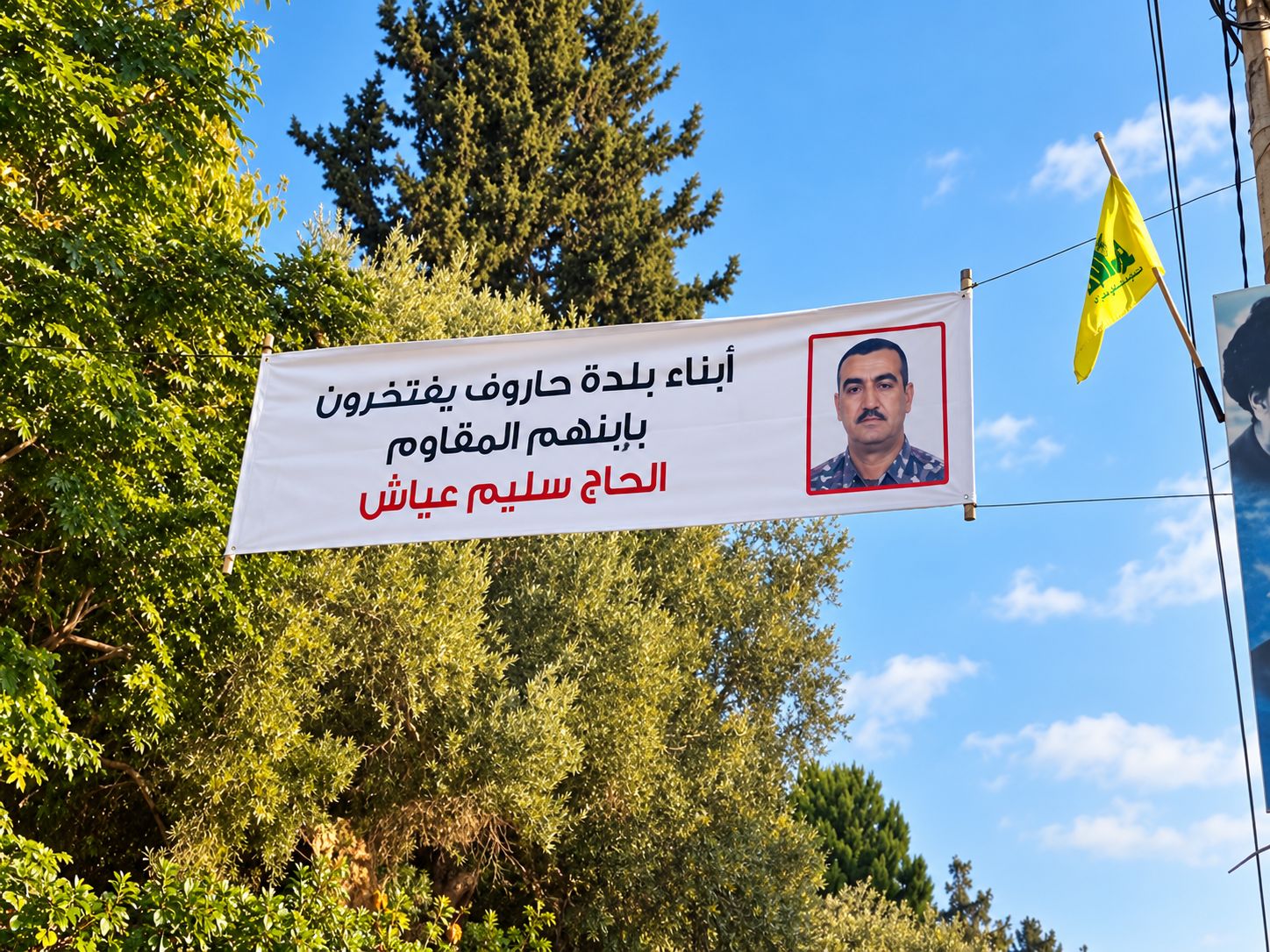
In Harouf, southern Lebanon, the home village of Salim Ayyash—the main person convicted by the STL for Rafic Hariri's assassination—his portrait is proudly displayed in public as a sign of “recognition”: those were the days when Hezbollah held absolute sway over the country…
Faced with Saad Hariri's steadfast refusal to yield on this issue, the Hezbollah camp decided to bring down the cabinet by having more than one-third of its ministers resign.
The resignation was orchestrated from Rabieh, Michel Aoun's residence and headquarters, on January 12, 2011. The choice of location was highly symbolic. Hezbollah thus placed its Maronite ally front and center, using him and all its other allies as a line of defense.
In return, Michel Aoun calculated that he was moving one step closer to becoming the next president of the Republic, following the same path taken by Emile Lahoud between 1992 and 2007.
From Rabieh, a total of eleven of the 30 serving ministers announced their resignations simultaneously. They included ministers from Hezbollah, the Amal Movement, and Michel Aoun's Free Patriotic Movement, as well as a Shiite minister who had been appointed when the Hariri government was formed as part of a compromise between President Michel Sleiman and Hezbollah.
That minister ultimately moved into the pro-Iranian party's fold.
Under the Lebanese Constitution, this collective resignation automatically brought down the government. As the resignations were being announced in Rabieh, the prime minister was in Washington for a White House meeting with U.S. President Barack Obama.
This “bloodless coup” was intended to underscore the government's powerlessness in the face of Hezbollah's strategy and caught Saad Hariri and his Arab and international backers off guard.
A government vacuum followed and lasted several months, until a new government was formed in June 2011 under Najib Mikati, who was less hostile to Hezbollah than his predecessor and more aligned with the pro-Iranian party's strategic interests.
It was this new government that enabled Hezbollah to take control of public affairs and permanently sideline the STL from the country's priorities.
In summary, between 2000 and 2011, Hezbollah evolved from a developing military organization into an established paramilitary force, then into a party wielding veto power within the government, and finally into a force exercising political and military control over the Lebanese state.
Hezbollah's Military and Security Modernization (2008–2011)
During the three years following the Doha compromise, Hezbollah capitalized on its strong presence in government to invest heavily in electronic counterintelligence and also became a major player in the security sphere.
Its capabilities in this area grew, enabling it to analyze cellular data and secure its fiber-optic network against Israeli intrusions.
It also managed to dismantle several Israeli spy networks and even uncover Western networks in Lebanon. This professionalization of its intelligence apparatus, combined with its political clout, turned Hezbollah into a veritable state within a state.
(to be continued)