

Hezbollah-Israel: An Endless War in Whose Interests? (16)
This series of articles offers a deeper understanding of the current situation in light of the past, steering clear of impassioned, ideological or romanticized narratives that miss the mark on reality. In this context, we leave it to the reader to draw the appropriate conclusions. The previous fifteen installments retraced the events surrounding Hezbollah’s rise to power from the Taif Agreement through to its show of force on May 7, 2008.
The positions of the Gulf Arab states converged toward détente with Iran following Hezbollah’s show of force in Beirut on May 7, 2008, after years of strained relations with Tehran. However, this détente lasted only three years and came to an end following the outbreak of the war in Syria in 2011.
Before 2008, relations between Tehran and Riyadh were characterized by a genuine proxy Cold War. This deep deterioration was initially driven by major changes, beginning with the accusation leveled against the Syrian regime, an ally of Iran, over the assassination of Rafic Hariri in February 2005. Two major developments followed in August 2005: the accession of King Abdullah to the throne in Saudi Arabia and the election of ultra-conservative President Mahmoud Ahmadinejad in Iran. The latter adopted aggressive rhetoric, coupled with the resumption of Iran’s uranium enrichment program.
For Riyadh, the prospect of a Persian nuclear power on the Gulf’s doorstep represented an immediate existential threat. Faced with this threat, the Saudi kingdom aligned itself with the Western position, quietly supporting the tightening of multilateral sanctions against the Islamic Republic. Yet despite this deep-seated mistrust, the two capitals deliberately chose to keep their official channels of communication open. Ahmadinejad visited Riyadh in March 2007, demonstrating a shared desire to avoid a direct military confrontation, which did not prevent proxy conflicts from taking place. Moreover, the historic surge in crude oil prices, which reached $130 a barrel in May 2008, led Iran and Saudi Arabia to adopt diametrically opposed approaches to the crisis. Tehran, constrained by the first Western economic sanctions, called for drastic production cuts to keep prices high. Riyadh, by contrast, increased its production to stabilize the global market, a strategy aimed as much at protecting the global economy as at depriving Tehran of excessive financial revenues.
Regional Proxy Conflicts
Across the various regional conflict theaters, the Riyadh-Tehran rivalry intensified as a result of Iranian expansionism. In Iraq, the sectarian civil war deeply alarmed Saudi Arabia, which watched with growing anxiety as Baghdad came under the control of Shiite militias directly backed by Iran, giving concrete form to the emergence of a “Shiite crescent” stretching from Tehran to Beirut.
Gaza became another major point of friction. The failure of the 2007 Mecca reconciliation agreement, brokered by the Saudis, between Fatah and Hamas, followed by Hamas’s armed takeover of Gaza, financially and militarily supported by Iran, reinforced the perception that the Sunni kingdom was losing geopolitical ground.
In Lebanon, the struggle for influence culminated in the July 2006 war between Israel and Hezbollah. While Saudi Arabia initially condemned the cross-border attack launched by the Shiite movement against Israel, describing it as a “calculated adventure,” Tehran, for its part, capitalized on the conflict to position itself as a champion of the Arab cause – and succeeded in doing so. This perception was tarnished and ultimately came to an end following Hezbollah’s show of force in Beirut on May 7, 2008.
The Legitimation of Hezbollah’s Weapons
Following the Doha Agreement, and with the formation of Fouad Siniora’s second government on July 11, 2008, the word “resistance” appeared for the first time in a public text and, consequently, in government practice, paving the way for an institutional “coexistence,” with the non-state militia’s arsenal thus implicitly protected.
The tripartite formula adopted in the ministerial statement – “army-people-resistance” – served as a means of countering UN Security Council resolutions, particularly Resolutions 1559 and 1701, which called for the disarmament of militias. Hezbollah’s weapons were legitimized, and the March 14 camp’s calls for disarmament were effectively neutralized, since the leading figures within the sovereignty camp had accepted the compromise embodied in the Doha Agreement. Since then, Hezbollah Secretary-General Hassan Nasrallah has repeatedly asserted that his organization’s weapons were an integral part of a national defense strategy, a claim later echoed by his ally Gebrane Bassil, head of the Free Patriotic Movement (FPM).
The formalization of the tripartite formula was confirmed and renewed a year later by the government of Saad Hariri, formed on November 9, 2009. The latter, despite its political opposition to Hezbollah, adopted the same formula in its ministerial statement, thereby sealing the de facto political legitimation of the Shiite movement’s arsenal.
Truce Between the Gulf States and Iran
Qatar, for its part, emerged as a mediator through its Emir, Sheikh Hamad bin Khalifa Al Thani, who personally attended the election of President Michel Sleiman on May 25, 2008, symbolically marking the end of the crisis. This Qatari mediation and sponsorship continued throughout 2008 and 2009. At the same time, Saudi King Abdullah, seeing his Lebanese allies in the March 14 camp weakened by Hezbollah’s May 7, 2008 show of force, officially endorsed the Doha Agreement in order to preserve stability.
The agreement also served as a diplomatic bridge between Qatar, Saudi Arabia and Iran. Doha and Riyadh encouraged direct and indirect contacts with Tehran to freeze the conflict in Lebanon between the March 8 and March 14 coalitions. Under this new logic of realpolitik, Saudi Arabia, seeking to preserve the truce in Lebanon, simultaneously initiated a strategic rapprochement with Damascus, the main conduit for Iranian and Hezbollah interests in the Levant. Thus emerged the Saudi-Syrian axis known as “S-S,” or sin-sin in Arabic, which took shape in the summer of 2010.
Alongside the Saudi kingdom, the other Gulf states sought to move beyond being mere financial backers, as they had been following the 33-day war in 2006, and become major political sponsors of the Lebanese executive, particularly the Michel Sleiman-Fouad Siniora tandem. Their objective was threefold: first, not to leave the field open to exclusive Iranian influence in Lebanon; second, to pursue a conciliatory policy toward Iran; and finally, to act as mediators between the March 8 and March 14 coalitions.
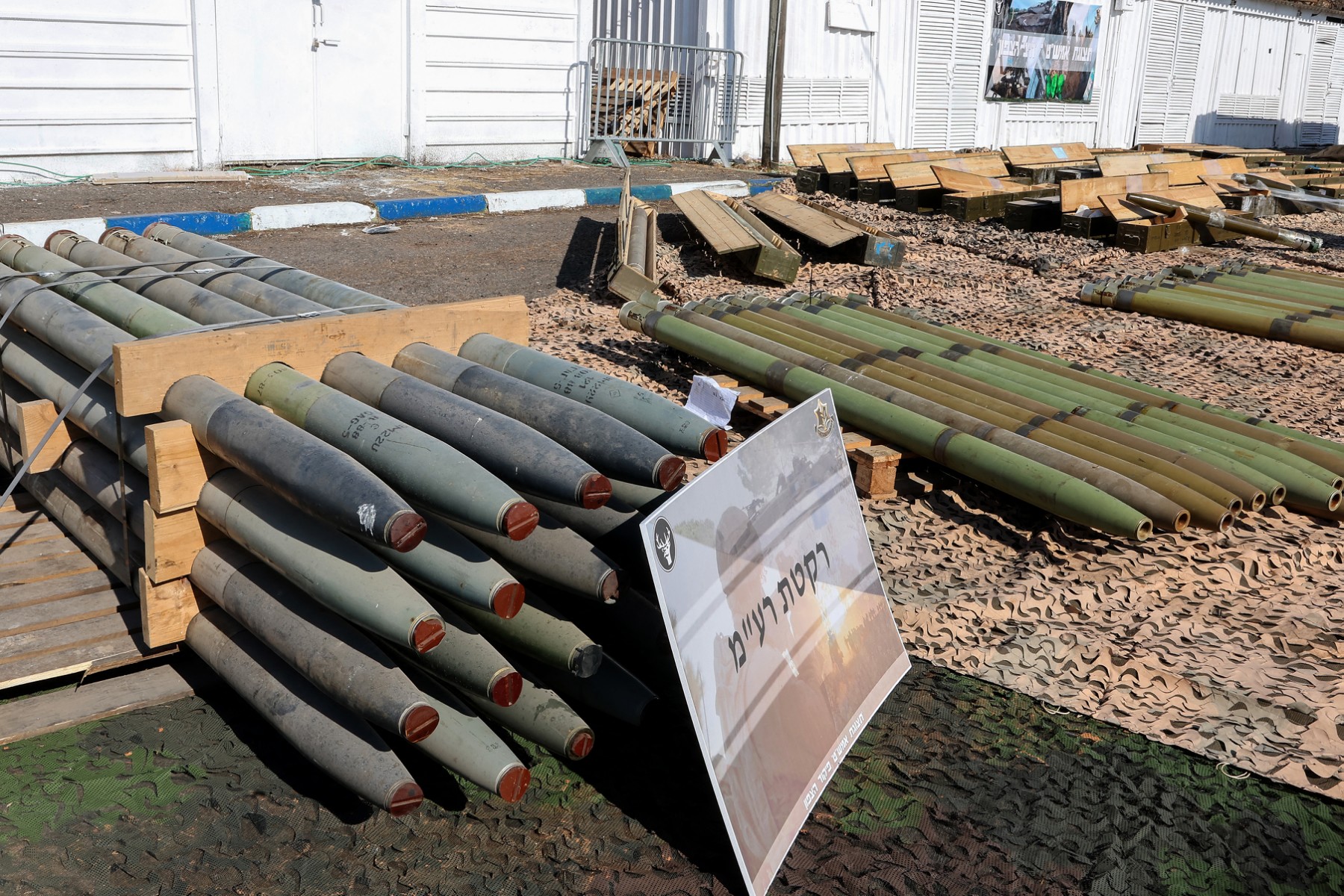
These compromise-based calculations proved misguided, as the Iranians were only seeking to buy time. In reality, Tehran had never stopped openly arming and financing Hezbollah in preparation for the next war with Israel and to strengthen its influence in Lebanon. Finally, the Gulf states once again shored up Lebanon’s banking sector, reinvested in downtown Beirut, and financed the construction of residential and commercial complexes in the capital.
During the summer of 2008, tens of thousands of their nationals returned to Lebanon to spend their holidays, and the country recorded growth of around 10% between 2008 and 2010.