

Nouri al-Maliki: return of a man or regression of a project?

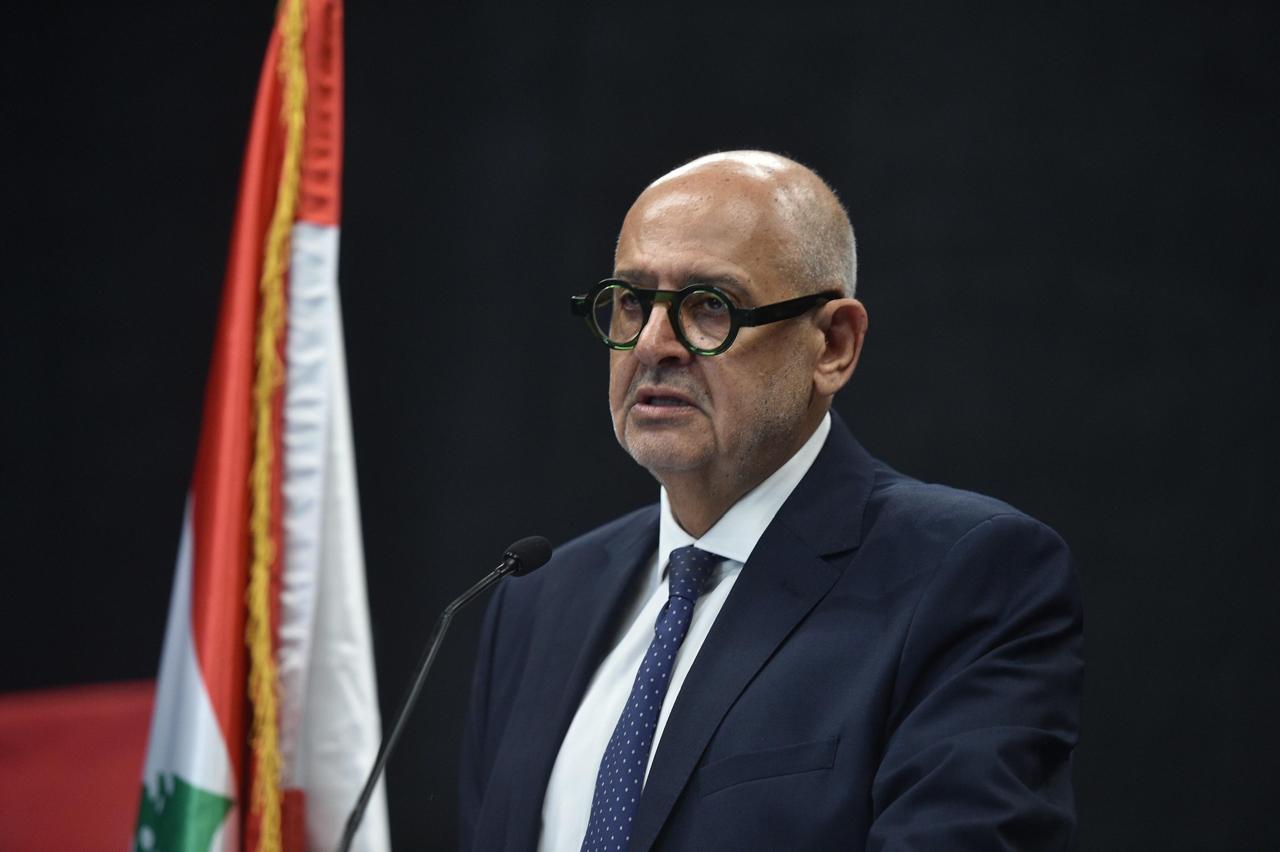
Nouri al-Maliki's return to power — or even to a key position within the Iraqi decision-making center — cannot be perceived as a mere political event, nor as the rehabilitation of a figure from the past. Due to what he embodies and the record of his actions, the man has become the symbol of an exhaustive governance model in its own right, associated with a pivotal phase in Iraq's post-2003 history, with its share of failures, divisions, and structural transformations of the state. Therefore, any eventual reappearance of Mr. al-Maliki effectively means the return of a global political orientation — on domestic, regional, and international levels — with all the repercussions this implies.
Domestically – the return of the 'politicized state'
1. Increased centralization and erosion of balances
During his two terms, between 2006 and 2014, Nouri al-Maliki was associated with the preeminence of executive power over other institutions, under the slogans of 'restoring state authority' and 'fighting terrorism'. In practice, this translated into a gradual politicization of state mechanisms, from justice to security apparatuses, and even public media. This approach emptied the principle of separation of powers of its substance, transforming the state into an instrument serving political authority rather than being a regulatory framework for political authority.
Any prospect of al-Maliki's return is today perceived as the reproduction of this model: rigid centralization, restriction of opposition action, and systematic weakening of any counter-power capable of limiting the executive's grip. In a country with multiple identities like Iraq, this centralization does not produce stability, but accumulates latent tensions.
2. Worsening sectarian divisions
Despite a nationalist discourse displayed at certain stages of his power, al-Maliki's experience was concretely marked by the deterioration of relations between Iraqi components, particularly with Sunnis and Kurds. Policies of exclusion, excessive use of security tools, arrests, and judicial prosecutions largely contributed to undermining trust between the state and large factions of society. These choices were not marginal: they constituted one of the structural factors that led to the explosion of the crisis with the expansion of the 'Islamic State' organization in 2014.
In this context, a return of al-Maliki revives the memory of this stage and opens the way to a resurgence of divisions rather than their resolution, at a time when the national fabric remains fragile.
3. Weakening of the reform process and sabotaging calls for change
The October 2019 protests marked a turning point in Iraqi political consciousness. They expressed a cross-community rejection of the existing governance system and called for a state based on citizenship, a serious fight against corruption, and an end to the logic of sectarian power-sharing and uncontrolled weapons.
In this context, al-Maliki's return is perceived as a diametrically opposed message: the victory of the old system over aspirations for change, and the recycling of the same elite that the street holds responsible for political and economic collapse.
Security-wise – the preponderance of the 'parallel state'
1. Strengthening the influence of armed factions
Nouri al-Maliki is widely regarded as one of the main political covers for the Hashed al-Shaabi and their related factions. During his mandate, no real project was put forward to integrate these forces into state institutions, according to the principle of the monopoly of legitimate violence; on the contrary, the duality of security decision-making was consecrated.
His return would de facto mean the entrenchment of this duality: an official state with limited capacities, facing a parallel armed force with political, security, and economic influence. Such a model does not produce a strong state, but a weakened state surrounded by forces more powerful than itself.
2. Tensions with the military institution
Al-Maliki's past experience highlighted a direct political instrumentalization of the military institution, whether through appointments or the management of security operations. This approach weakened military professionalism and created cross-loyalties within the army. In any scenario of a return to power, the fear is to see this dynamic repeat itself, undermining the idea of a unifying national army, transforming it into a tool in a broader political conflict.
Regionally – the return of the Iranian axis
1. A clear signal of allegiance to Tehran
Al-Maliki is not a circumstantial ally of Iran, but one of the most consistent Iraqi political figures in this strategic choice. His return means, from a regional perspective, the reintegration of Iraq into an advanced position in the Iranian influence project, at a time when the region is trying to redefine its balances. This positioning is not limited to foreign policy: it is reflected internally by the strengthening of forces linked to the Tehran axis to the detriment of the logic of the national state.
2. Potential escalation with the Gulf
Since 2021, Iraq has initiated a gradual opening towards its Arab environment, particularly the Gulf, in an attempt to rebalance its regional relations. Al-Maliki's return threatens this process, both through political discourse and through fait accompli policies, which could lead to a cooling, or even a setback, in Arab relations.
3. Lebanese repercussions
The impact of al-Maliki's return extends beyond Iraq's borders. It offers a renewed model of the 'weak state facing the strong militia', a scheme that forces allied with Iran in Lebanon rely on to justify the retention of weapons outside the state framework. Thus, any consolidation of this model in Baghdad translates into a strengthening of similar rhetoric in Beirut.
Internationally – isolation and pressure
1. Tensions with Washington and the West
Western capitals, starting with Washington, have a negative memory of al-Maliki's experience, whether in terms of governance, security management, or relations with armed factions. His return is not perceived as a positive factor, but as a source of concern, even if it were to be approached pragmatically.
2. Investor concern and decline in confidence
At a time of reconstruction and economic diversification, Iraq needs a stable environment and clear rules. However, the return of the governance model associated with al-Maliki weakens confidence in political and legal stability, which directly affects investments and keeps the economy captive to rent-seeking and corruption.
Return to pre-2014
Ultimately, the return of Nouri al-Maliki — or even the strengthening of his role — is equivalent to Iraq returning to the pre-2014 situation: a less balanced state, a heavier regional influence, weapons outside state control, and a paralyzed reform process. It is not the return of a man, but of a governance model that has demonstrated, through experience, its inability to build an inclusive and effective state.
Between fragile security stability and an accumulation of political tensions, the question remains open: can Iraq bear the cost of repeating the same experience, or does the momentum for change expressed by the protests remain latent, awaiting a new opportunity?
US and Qatari Support Amid Hesitation from Lebanon’s Leadership
Explosives Trafficking: Hezbollah Persists… and Confirms
Hezbollah, the Arsonist Firefighter
Europe Steps in to Help a State Reluctant to Assert Its Authority
Salam Defends his Policies, but Lacks a Clear Plan
Más de Jad Akhawi
Ver todo


Más en Decryption
Ver todo


Lo último de Levant Time
Ver todo


