

The flydubai incident: for Israelis, a threat materialized?
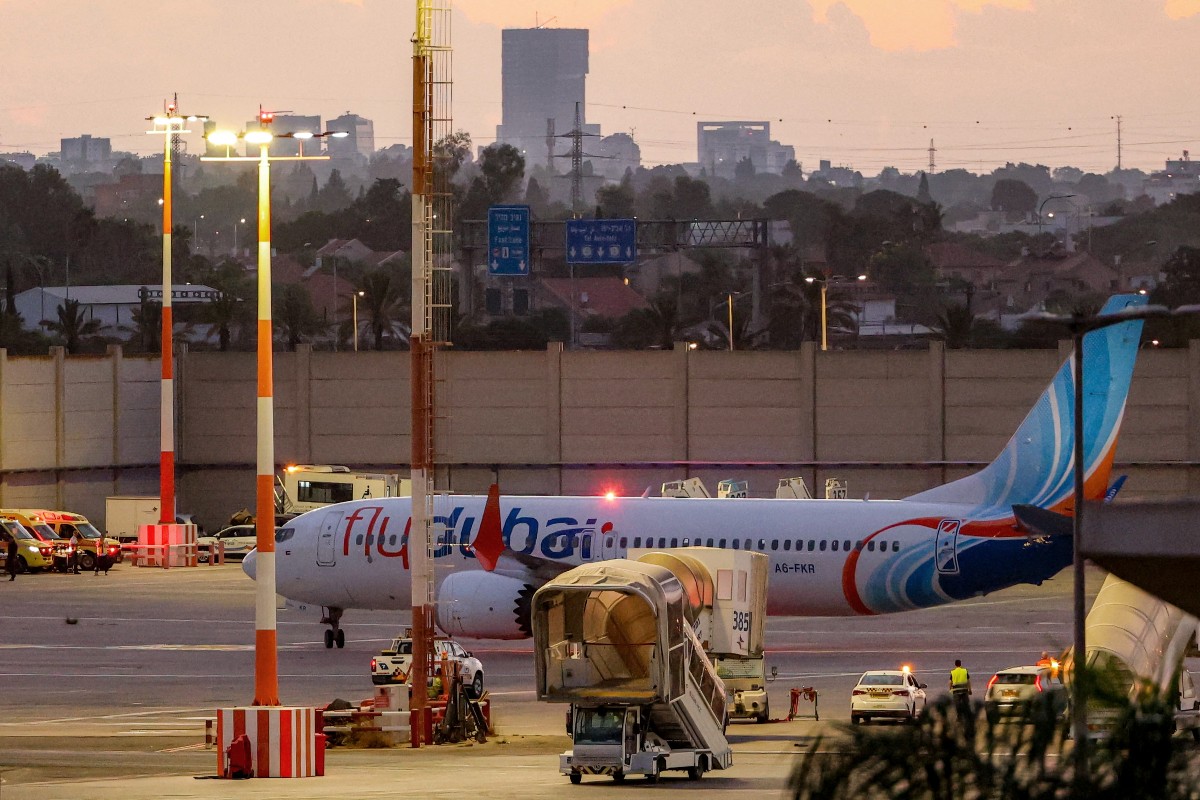

A flight operated by the Emirati airline, carrying 180 Israeli passengers, was forced to make an emergency landing at a Saudi airport after a “fight” between the pilots. Israel’s defense minister denounced a “jihadist terrorist attack.”
An incident aboard a flydubai flight on Wednesday nearly ended in disaster. In fact, the Emirati airline’s aircraft, carrying 180 Israeli passengers, was forced to make an emergency landing at a Saudi airport on Wednesday morning while en route from Dubai to Tel Aviv. According to several Israeli media outlets, the incident stemmed from a “fight” between the pilots, one of whom, the Jerusalem Post reported, citing an Israeli official, allegedly tried to “hijack the plane.” The Israeli official said that “a major disaster was narrowly averted.”
According to details published in the press, one of the pilots appears to have stabbed the other, and passengers helped the crew restrain the attacker. There was great fear aboard the aircraft when it had to rapidly lose a significant amount of altitude. In the end, the plane was able to make an emergency landing at a Saudi airport, and there were no injuries among the passengers or crew, apart from the pilot.
Israeli officials’ reactions show that they understood the full seriousness of the incident. Defense Minister Israel Katz described it as a “jihadist terrorist” incident, recalling that warnings had recently been issued in this regard. “According to our preliminary information, the terrorist had only one intention: to bring down the aircraft with all its passengers on board,” he said, according to Yediot Ahronot. Prime Minister Benjamin Netanyahu was more cautious, describing the incident as “very serious.” Later, he even denied that it was a plane hijacking, according to remarks published by the Lebanese website Janoubia, without confirming the nature of the incident.
According to some press reports, the pilot responsible for attacking his colleague is Omani and is currently being questioned by Saudi authorities.
Also according to Yediot Ahronot, the plane took off only after a routine search conducted by Mossad, Israel’s intelligence service. Despite all these details, the full truth about the nature of the incident has yet to be revealed.
In an attempt to ease tensions following the Israeli statements, the airline issued a statement saying that “at this stage, the causes and motives behind this incident are unknown and remain under official investigation.” It called on “all parties to refrain from premature speculation” until the facts have been established by the authorities.
A murky context
Whether or not it was actually terrorist in nature, the incident comes amid numerous warnings by Israeli officials of possible security threats involving Israelis. “These warnings must be taken seriously by everyone,” Mr. Katz said following Wednesday’s incident.
The regional context is itself highly murky. Israelis have been involved in several wars since Hamas launched its attack on their territory on October 7, 2023, opening the gates of hell on Gaza. Two wars followed in Lebanon after Hezbollah opened fronts in 2023, in the wake of the Gaza war, and in 2026, to support Iran against Israeli-American strikes and avenge the assassination of the Islamic Republic’s supreme leader. Not to mention the war against Iran jointly launched by Israel and the United States, although the U.S. administration later preferred to distance Tel Aviv from the conflict.
Accusations of extreme violence in Gaza have dogged Israelis since the start of the conflict.
The fact that the September 30 incident took place in the United Arab Emirates may not be insignificant. Last Sunday, Israeli Prime Minister Benjamin Netanyahu made a brief, roughly four-hour visit to Abu Dhabi on his way back from the UN General Assembly in New York. There, he met with UAE President Sheikh Mohammed bin Zayed Al Nahyan. The matter was supposed to remain secret, but the media got wind of it. The Israeli prime minister reportedly asked the Emirati head of state to deny having warned him of a possible attack ahead of October 7—a media revelation that his political opponents have recently made extensive use of.
Delegations from several Arab countries were also reportedly present at the meeting, although the Saudis denied being among them. The UAE, it should be recalled, is among the countries that signed the Abraham Accords, effectively formalizing normalization with Israel.
Another important element of context is the proximity of Israel's legislative elections, due to be held on October 27. Mr. Netanyahu recently cited intelligence indicating an increased risk of attacks on Israeli territory ahead of the vote. How will this incident—and thus the materialization of the threat to Israeli civilians in the region, if its terrorist nature is confirmed—affect the election, which had until now appeared set to be very difficult for Mr. Netanyahu?