

The Emerging Geostrategic Shifts in the Gulf
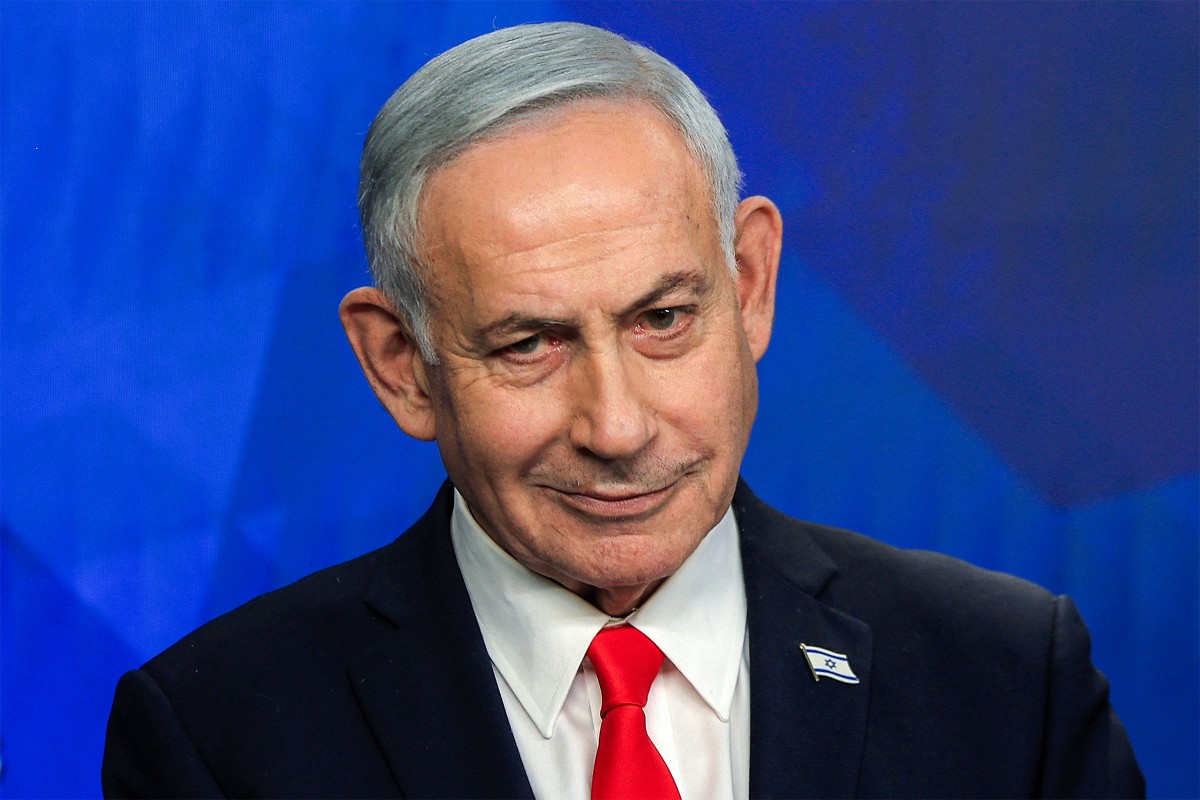
Netanyahu meets MBZ in the... UAE

Shortly before the last U.S. presidential election, JD Vance gave a speech in Washington in which he laid out his vision of what U.S. strategy in the world should look like. In essence, he stressed that Washington should focus its policy on the situation in Asia. In that context, he noted that in other sensitive regions of the world, the U.S. administration should be able to rely on its allies while providing them with the necessary support.
In other words, Mr. Vance argued that in the Middle East, for example, “Israel and the Sunni states” should take responsibility for their own defense by countering Iranian expansionism, with U.S. support. Likewise, Europe should be expected to provide for its own defense while also benefiting from American support.
It is this strategic approach that is gradually being put into place, as illustrated by the Abraham Accords, whose very purpose is to establish cooperation at various levels between Israel and the countries of the region, particularly the Arab countries.
Against this backdrop, a dramatic development that went almost unnoticed late last week gave concrete expression to such a strategy: the surprise, low-profile visit made on Sunday by Israeli Prime Minister Benjamin Netanyahu… to the United Arab Emirates, where he was received by UAE President Sheikh Mohammed bin Zayed. The Emirati news agency stated explicitly that “the two sides discussed bilateral relations between the UAE and Israel and ways to strengthen and develop them”…
In reality, the Israeli prime minister’s visit to the UAE, and the fact that it elicited no notable reaction, should not come as much of a surprise. The two countries have maintained close diplomatic and other ties since the summer of 2020, including economic and technological partnerships. This bilateral cooperation has taken on a highly strategic dimension in Somaliland, a region of Somalia that declared its independence in 1991.
Against the backdrop of the escalation of military operations launched in Yemen by the Iran-backed Houthi militia, this joint Israeli-Emirati presence in Somaliland is clearly of particular importance given the area’s immediate proximity to Yemen and the Bab el-Mandeb Strait, which has been controlled for several days by Tehran’s allies.
Saudi-Emirati Consultations
Does Mr. Netanyahu’s trip to the UAE – the first since the normalization of relations between the two countries – indicate that a new geostrategic reality could be emerging on the regional horizon? The question takes on particular significance in light of another surprise visit made on Tuesday: that of UAE Vice President Mansour bin Zayed to Riyadh, where he held talks with Saudi Defense Minister Prince Khalid bin Salman.
The meeting drew the attention of political circles because it could mark the beginning of a lasting détente between the Saudi kingdom and the UAE, whose relations have been particularly strained, and at times even conflictual, for some time. This thaw is quite plausibly part of the intensive efforts undertaken by Riyadh to shore up its national defense in the face of the offensive launched by the Islamic Republic of Iran against Saudi Arabia through the Houthis in Yemen.
In this regard, the kingdom is seeking to equip itself with several military “instruments”: a French shield against the Houthis (currently at the project stage); the Mecca Tripartite Pact concluded with Türkiye and Pakistan; and an alliance of some dozen countries to ensure freedom of navigation in the Red Sea, not to mention the accelerated development of its military industry. If the détente with the UAE is indeed confirmed by developments on the ground, it would therefore be the logical culmination of the defense strategy initiated by Riyadh since the Houthi offensive.
The Iranian Equation
The other geopolitical factor shaping the current regional context is reflected in the heavy impact of the economic blockade imposed by Washington on the Islamic Republic. Over the past forty-eight hours, the Iranian currency has suffered another drastic plunge, exceeding the critical threshold of 2.5 million rials to the dollar. The efforts undertaken by Qatar in recent days to try to broker a new understanding between Washington and Tehran appear to have come to nothing because of the unacceptable conditions that Iran is seeking to impose on the Trump administration, under the continued hardening of the Revolutionary Guards’ radical faction. The U.S. vice president said in this regard that “Iranian officials opposed the attacks on ships (passing through the Strait of Hormuz), but they failed to convince the radicals on this issue.”
The Pasdaran are thus maintaining their uncompromising position despite the large-scale economic collapse caused by the U.S. blockade. U.S. Treasury Secretary Scott Bessent said Tuesday, in a statement to Fox News, that Iran may still have (at sea) a commercially marketable reserve of 15 million barrels of oil, which should be exported to China and would last for only two weeks. “At the end of those two weeks, Iran will have almost no oil left to export,” Mr. Bessent said.
Faced with this economic collapse, Iranian leaders are issuing threats in all directions: “If our air traffic remains disrupted, it will be disrupted throughout the region”; “If we can no longer export oil, no one else in the region will be able to do so either”… These threats are also directed at U.S. interests around the world, as Secretary of State Marco Rubio said Tuesday, and tend to confirm that the mullahs’ regime in Tehran is indeed in dire straits…