شعار Levant Time
Jad Akhawi

Jad Akhawi

Lebanon: Is Neutrality the Next Project?
بقلم
Jad Akhawi
نُشر
Oct 5, 2026 - 18:01

A bulldozer does not debate politics. When it enters a village, it does not ask who supported the war and who opposed it. It does not distinguish between the home of a supporter and that of an opponent. It tears down walls, uproots trees, alters the features of the land, then leaves people facing the simplest and harshest question: Do we rebuild only to wait for the next war? This is the question from which any serious discussion about Lebanon’s future should begin. For many years, we discussed neutrality as though it were an academic idea, or the demand of one Lebanese camp against another. Some saw it as a withdrawal from the Arab-Israeli conflict, while others regarded it as an attempt to detach Lebanon from its surroundings. At times, it was treated as though it were a sectarian project impossible to implement.
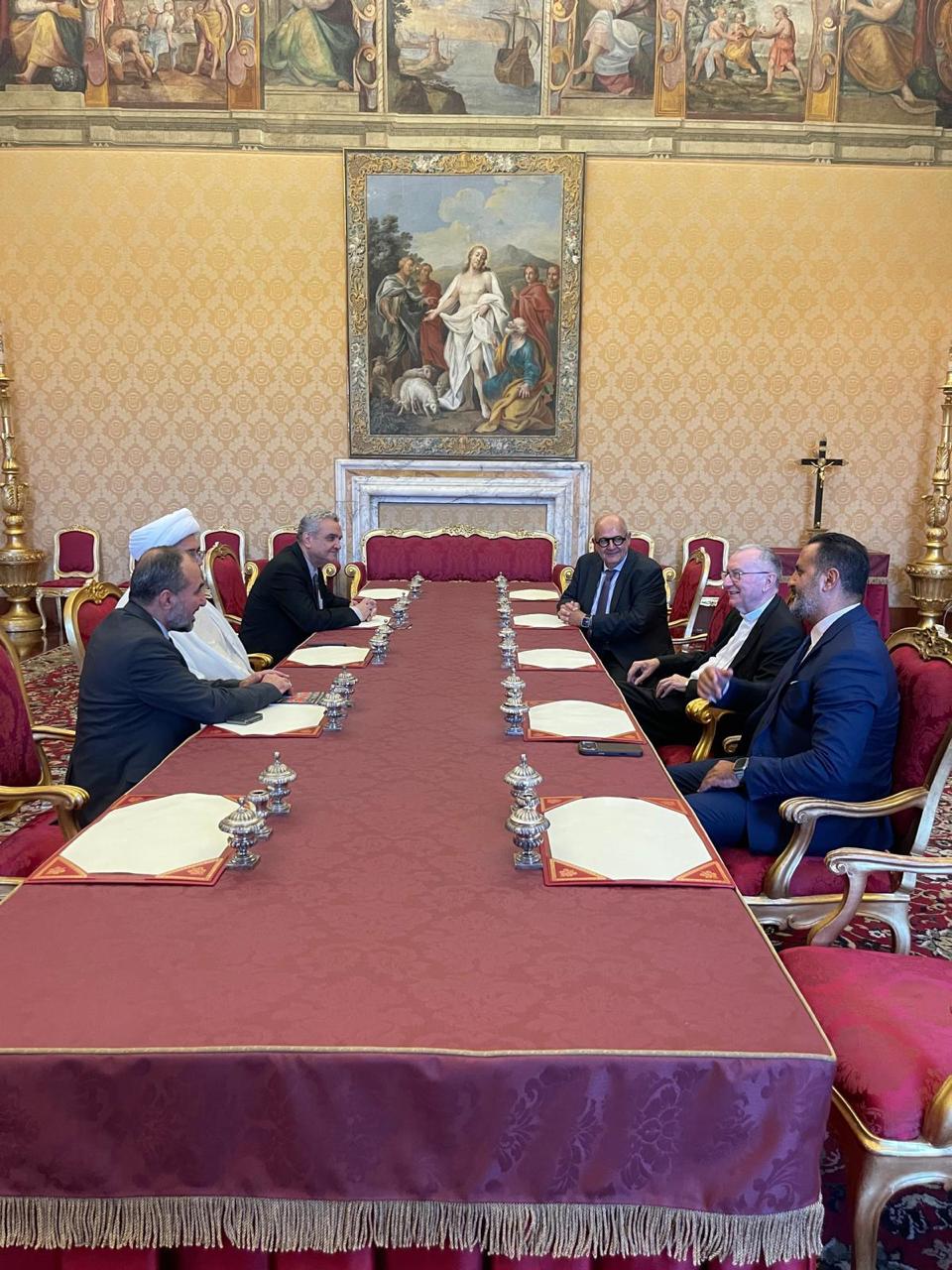
In Search of Lebanon, from Beirut to the Vatican
بقلم
Jad Akhawi
نُشر
Oct 1, 2026 - 00:04

Some journeys end when you return to the airport. Others truly begin only after you come back. Weeks have passed since our visit to Rome, yet many details have stayed with me. It was a short visit, but it made me look at Lebanon from a different distance. Who Opened Rome’s Doors to Us? Behind this visit was an effort that deserves to be acknowledged. Bernard Selwan Khoury and Jessie Karam played a central role in organizing the meetings and opening doors for us in Rome, through a program that was not merely a series of protocol appointments, but an attempt to bring a different Lebanese voice into academic, political and Vatican circles.

We Do Not Want a Lebanese Hashd al-Shaabi
بقلم
Jad Akhawi
نُشر
Sep 27, 2026 - 18:55

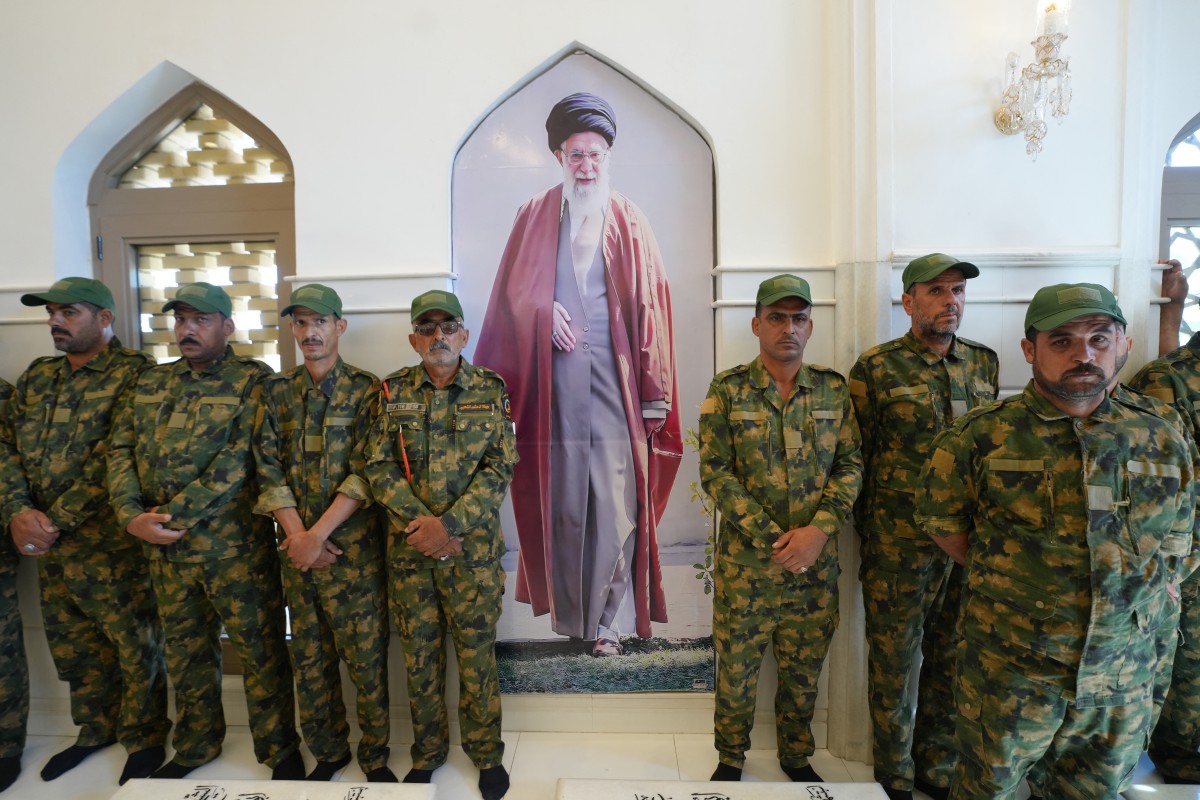
The Hashd al-Shaabi emerged under circumstances different from Lebanon’s, at a moment of severe security collapse as ISIS expanded in 2014. It would therefore be wrong to draw a simplistic equivalence between the Hashd and Hezbollah. But the Iraqi experience offers an extremely important lesson about the idea of integrating armed organizations into the state. In 2016, the Iraqi parliament recognized the Hashd as an independent military formation within the armed forces and linked to the commander-in-chief. In theory, this was supposed to place armed forces under the authority and command of the state. But specialized studies found that many networks and factions retained their own leaderships, interests, and political and economic ties, and that the formal framework was not sufficient to produce a unified chain of command and loyalty.

The Samir Kassir Festival, or the Lebanon Yet to Be Born
بقلم
Jad Akhawi
نُشر
Sep 17, 2026 - 21:05

Every year, when the Beirut Spring Festival organized by the Samir Kassir Foundation begins, I find myself watching the audience before I watch the stage or the screen. Perhaps because, to me, Samir’s name is not simply the name attached to a festival, and because the Samir Kassir Foundation is not simply a cultural institution, I find myself looking for something else in people’s faces: does the Beirut Samir believed in still exist? Are there still people who want culture, debate, art, and freedom? Is the city still capable, amid everything it has endured, of bringing people together around an idea rather than around a leader, a sect, or a fear?

After Ali el-Taher, is Lebanon's map in jeopardy?
بقلم
Jad Akhawi
نُشر
Sep 14, 2026 - 16:09

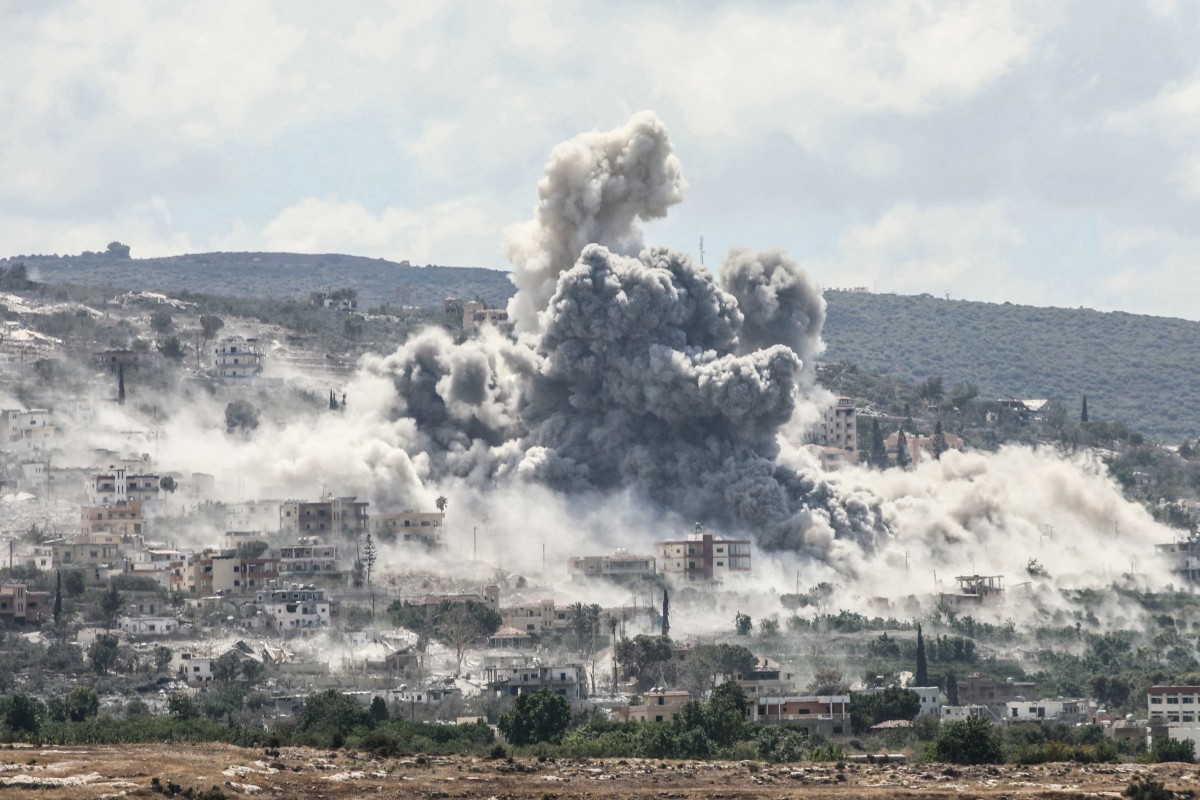
Ali al-Taher is not just a hill whose story is over. It may be the beginning of a new map. After what happened there, the question is no longer where Israel will strike tomorrow, but how far Israel wants to extend the security perimeter it is trying to impose inside Lebanon. Will it stop at the border, or move from Ali al-Taher toward the heights of Iqlim al-Tuffah, al-Rayhan and Jabal Safi, and perhaps farther toward the Bekaa? That is the most dangerous question today. Not because there is evidence that Israel has decided to occupy all these areas. So far, there is no information that would justify such a conclusion. But there is enough to raise the possibility that Israel has moved from a strategy aimed at striking Hezbollah’s capabilities to a broader one: reshaping the military geography the party has built over decades.

Ali al-Taher: Why Did Hezbollah Refuse to Hand the Hill Over to the Army?
بقلم
Jad Akhawi
نُشر
Sep 4, 2026 - 15:00

The battle of Ali al-Taher was not merely a military confrontation over a strategic hill in southern Lebanon. Despite its limited size, the site became a point where military, political, and regional calculations converged, exposing one of the core issues at the heart of Lebanon’s ongoing conflict: who controls the territory, who holds the weapons, and who decides on war and peace? What is most striking is not only Israel’s entry into the site, but Hezbollah’s insistence on refusing to hand it over to the Lebanese Army, even though the Army is the only legitimate institution supposed to assume responsibility for Lebanese territory, particularly in border areas directly tied to the country’s security and sovereignty.

Why Are the Lebanese Afraid of the Word “Peace”?
بقلم
Jad Akhawi
نُشر
Aug 28, 2026 - 12:38

“Blessed are the peacemakers.” Perhaps no phrase better captures what Lebanon needs today than the one Pope Leo XIV carried with him during his visit to Lebanon and made a central message to the Lebanese people. His visit came to a country exhausted by wars, crises, and divisions, placing peace at the heart of Lebanon’s public discourse, not as surrender or concession, but as an act, a responsibility, and a project for the future. Yet Lebanon’s paradox is that we, who have lived through so much war, have sometimes come to fear the very word “peace.” Why? Why must a Lebanese justify calling for peace? And why do some feel that merely using the word can put them in the dock, as though they had relinquished their rights, accepted surrender, sought normalization, or abandoned the cause?

Between the Mecca Alliance and the India–UAE–Israel Axis: Where Does Arab Lebanon Stand?

The Middle East is no longer merely undergoing a realignment of alliances. It appears to be entering a period in which the very concept of regional security is being redefined. After decades in which the Arab system functioned, however tenuously, within common frameworks such as the Arab League and the Gulf Cooperation Council, new security and economic arrangements are now beginning to emerge. They transcend the boundaries of the Arab world, bringing Arab and Muslim states together with regional and international powers on the basis of strategic interests rather than identity alone. It is in this context that what has become known as the “Mecca Agreement,” signed by Saudi Arabia, Türkiye and Pakistan on August 7, 2026, has emerged. It is based on the principle that an attack on any one of the three states is considered an attack on all of them. In its wording, this principle echoes the collective-defense principle enshrined in Article 5 of the North Atlantic Treaty, although it is still far too early to describe it as a fully fledged “Islamic NATO.”

The Middle East in the Midst of Transformation
بقلم
Jad Akhawi
نُشر
Aug 8, 2026 - 18:43

The region stretching from Iraq to Lebanon, Syria and Israel, with the United States in the background, is undergoing a profound transformation in the function of weapons within the state. The broader trajectory points toward a redefinition of the role of armed force, whether through disarmament or its integration into security arrangements that go beyond the traditional concept of the nation-state. This reflects a gradual shift from a logic of hard sovereignty to one of managed security. At the same time, the contours of a new military-strategic bloc are taking shape in the region, where the Saudi and Turkish roles converge and whose influence extends to nuclear-armed Pakistan, against the backdrop of a sensitive Iranian repositioning. This convergence cannot be understood merely as a set of temporary alliances, but rather as part of a broader reengineering of the region, driven by a logic of “new imperial planning,” in which balances are reshaped by linking security, energy and economics within an interconnected network of interests.

Simon Karam... When National Memory Becomes a Negotiating Asset
بقلم
Jad Akhawi
نُشر
Aug 2, 2026 - 20:26

At pivotal moments in history, a nation’s strength is measured not only by its military capabilities, but also by the caliber of those who represent it. High-stakes negotiations are not merely technical discussions about maps or security arrangements. They are a test of a state’s ability to defend its historical narrative while shaping its future. It is in this context that Ambassador Simon Karam stands out as one of the leading figures of Lebanese diplomacy. His authority rests neither on eloquence nor media visibility, but on quiet composure, rigor, and the integrity of a statesman who measures success by what he accomplishes for his country rather than for himself.

/