


An ordinary, austere art installation by French sculptor Sabine Geraudie, erected along the waterfront of Ain al-Mreisseh in Beirut, has provoked angry reactions from activists, content creators and commentators on social media, much to the discomfort of the officials, artists and urban activists who had celebrated its inauguration. Presented as an example of art in public spaces and an expression of artistic ties between Nice and Beirut, the sculpture joins numerous abstract works displayed throughout the capital’s streets and squares, including pieces by the Basbous family, Saloua Raouda Choucair, Nadine Abou Zaki, Pierre Karam and others. Yet none of these works had faced such an outpouring of nihilistic rhetoric, worthy of the theater of the absurd, not far from the old Beirut Theater, which once staged numerous plays by Samuel Beckett and Eugène Ionesco. That theater had itself endured the absurdity of a political and economic world that ultimately forced its closure, depriving the city of a space belonging to its cultural memory and heritage.
A chair, supposedly intended as a cultural symbol, a landmark to inaugurate and pose beside for photographs, has thus attracted extraordinary hostility. With its spare, impoverished form, seemingly balanced on a single leg, it has been perceived as an appropriation of public space amid Lebanon’s political, social and economic crises and its condition of neither war nor peace. It has become an expression of rebellion and a spectacle of the crises and voids of political life, its paradoxes and expectations, the collapse of meaning, time and boundaries, and everything that reproduces circumstances reminiscent of the past. Otherwise, why should a city feel threatened by a visiting chair, one displaced onto its shores?
In this context, the chair can cease to be a mere piece of furniture and become a political and social symbol, raising questions about the relationship between citizens and urban space, and about Beirut’s ability to transform the contradictions of everyday life into a new theatrical scene of satire. Those who look but see nothing before them except the faces of fragmentation, the chairs of despair and the devastation affecting water supplies, electricity, land, the environment, life, peace and stability, everything they perceive as approaching extinction, understand that their world lies hidden behind the idea. They have grown weary of aesthetic values imposed from above, of exercises in social display and applause. They therefore saw no reason to be lenient toward the spectacle. The paradox lies not merely in the fact that a chair has driven people into a frenzy, but in the fact that a city long accustomed to the absurdity of theater, politics, economics and society now regards a chair placed along its coastline as a spectacle capable of unleashing its full anger. This anger extends to an inanimate object that literally stands on one leg, apparently threatened with collapse amid explosions, breakdowns and unstable conditions. It also reflects a sense that moral values have deteriorated to the point of hanging by a thread, one tied to the authorities’ neglect of citizens and their repeated failures.
Yet the chair is still expected to maintain its balance. The sculpture placed before them thus reopens a hidden wound, stirring unfamiliar emotions even as people continue to approach it, as though seeking a way to manage difference and reach an agreement to share their fears. And yet the matter is quite ordinary, involving nothing more than a simple form of visual artistic expression that is in no way brutal, whose poetry lies in the ease with which it conveys the nature of inanimate things and in its relationship to images rather than reality. This becomes confused with another, much harsher material reality, amid a crisis of despair that is anything but decorative, extending into an aesthetic bargain in which the Lebanese have no stake. What is being taken away from their right to the city is merely another aspect of something that exceeds any partial reading, close to their inner artistic vision, within a shared space bringing together different sensibilities. Here the paradox acquires its meaning. It is as though a new act were unfolding in the theater of the absurd of the chair, with those in power dividing up the roles while the citizen waits for an ending that never arrives. This is the social anger of a country where even sectarianism is no longer merely a mechanism for producing impotence and distributing privileges, but stands at the margins of a reality inclined to enter into a very bad bargain.
More painful still, the Lebanese disagree not only about the nature of the chair, but about whether their country still has room for all of them. The same question arose when an art installation appeared in downtown Beirut in the mid-1990s, as the reconstruction project led by Rafik Hariri was gathering momentum and the city was experiencing the contradiction between economic hope and social protest. If that earlier installation provoked anger at the time, recalling it today reveals that the issue extends beyond an artwork or installation and any judgment about its beauty or ugliness. It concerns the Lebanese people’s relationship with their city and the way its public spaces are being reshaped. In the 1990s, opposition to reconstruction was also connected to fears that Beirut would become an investment-driven city at the expense of its memory and residents. Today, the anger surrounding a new installation seems to revive the same question. For whom is the city being redesigned, and who has the right to determine its form?
Placing the two incidents within their respective historical contexts may reveal that what appears to be scattered anger is, at its core, an expression of emptiness and an opportunity to reflect on time, movement, memory and the human relationship with place. The paradox is that a work lacking broad evocative power or any compelling primitive totemic quality, barely offering a window of perception, should ultimately become an object of condemnation and ridicule at a political moment marked by hunger, displacement, failure, exploitation and ambiguous narratives. The inauguration itself, accompanied by a certain amount of commotion and noise, although it could have passed as an ordinary scheduled event, produced consequences reaching far beyond what the eye could see. It was as though the artwork were being judged before being read, or as though society had become incapable of seeing art as an open question rather than a ready-made political position.
Such are the birth pangs of a Beirut that needs to regain its capacity to tolerate ambiguity and distinguish between a work of art, an aesthetic service imposed from above and an aesthetic intervention in its own right. Not everything erected along the seafront constitutes an appropriation of public space. Nor can criticism that makes no attempt to understand a work before condemning it avoid revealing a cultural crisis in which all sense of balance seems to have been lost. The “chair,” symbolizing power and the platform, becomes akin to “structure” and “essence,” representing a form of “cultural alienation” in which genuine value is replaced by a turbulent expressive construction directed against those who govern Lebanon and have violated the law in the name of justice seated upon its own chair. In 1991, the men who came to power after the civil war granted themselves and their allies immunity from prosecution for many crimes committed during the conflict. That law helped secure a fragile peace, but it also deepened sectarian divisions. Thus, when lawmakers passed another amnesty last August, the decision revived painful memories and underscored how extraordinarily difficult it remains to reform Lebanon’s collapsed state. This is what makes those chairs, endlessly recycling their movements in a vacuum, so infuriating.
When Pieter Bruegel the Elder painted Landscape with the Fall of Icarus, he took a familiar story and represented it in an unexpected way. Icarus appears inconspicuously in a corner of the painting, entirely ignored by the peasants working in the neighboring field. Through satire, the work distorts traditional modes of representation. Interpretations of this aesthetic of dissonance will remain political and contradictory, recalling Karl Marx’s dialectic concerning theology or the history of art as instruments that help us endure and confront the present, while establishing a kind of “exteriority” toward it through an original reading of irony. This aesthetic reveals a critique of the illusion of transcendence and invites a thought capable of producing a shock. The key to understanding this effect, as Sedlmayr suggests, lies in the distance the artwork creates, in its liminal dimension for humanity, or more precisely for an intolerant, sarcastic society unable to control or silence its emotions, thereby erasing distance and other people. Visions of escape pursue realities that people claim to transform. The installation “solves nothing,” but shows them “their body in a state of inactivity,” withdrawing out of caution. An artistic instrument that does not disappear into failure.
Who is afraid of the Jews of Lebanon
Collège de Nazareth at Risk of Closure
Harassment, Bullying: Women Are the Prime Targets of AI
The Philippe Chebaya Center for Children with Special Needs: A Beacon Above the Holy Valley
World Cup: Collective Emotions and Identifications in Lebanon
More from Yakzan Takki
View All


More in Society
View All


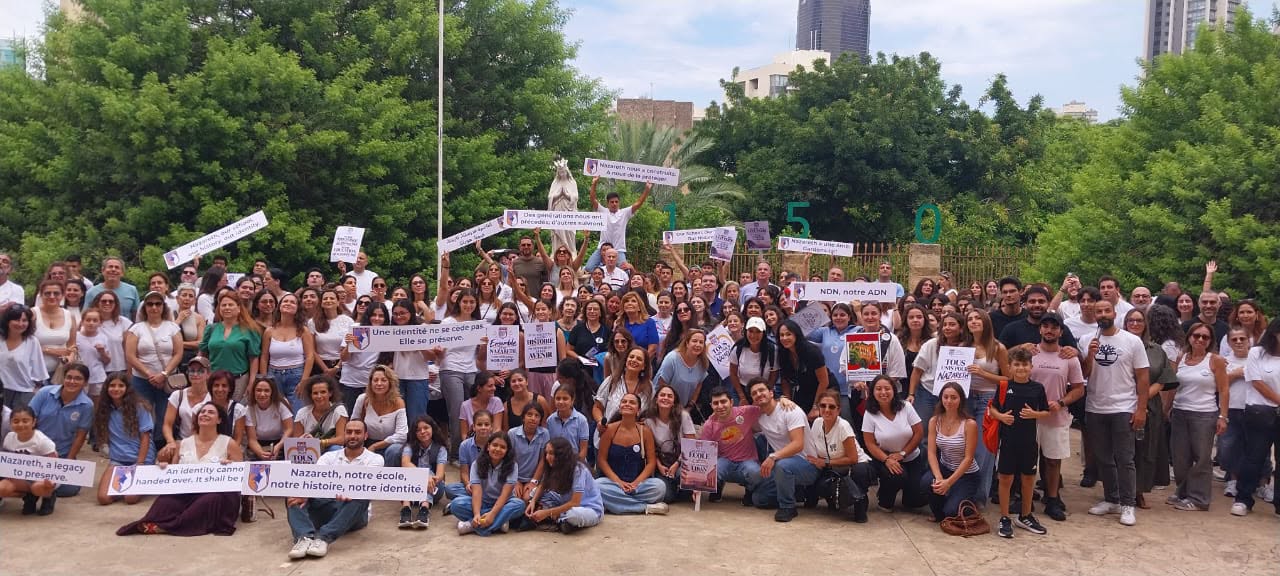

Nazareth's Extended “Family” Stands United Against the Proposed Sale
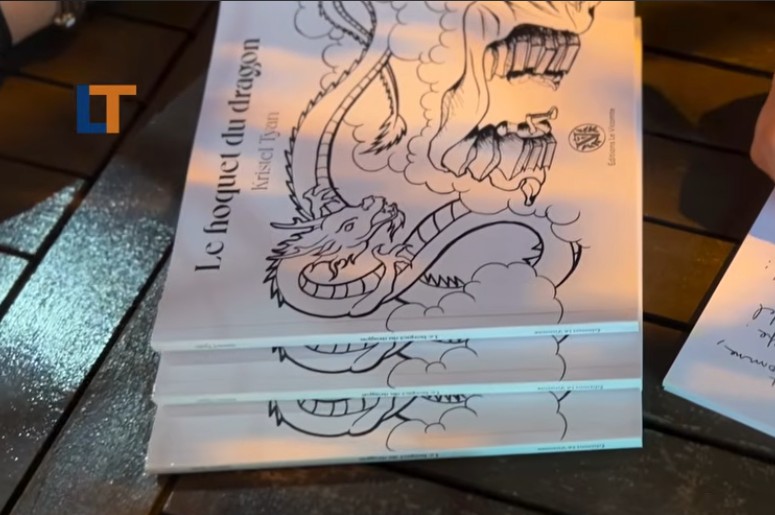
The Dragon’s Hiccup: The War Through The Eyes of a Child
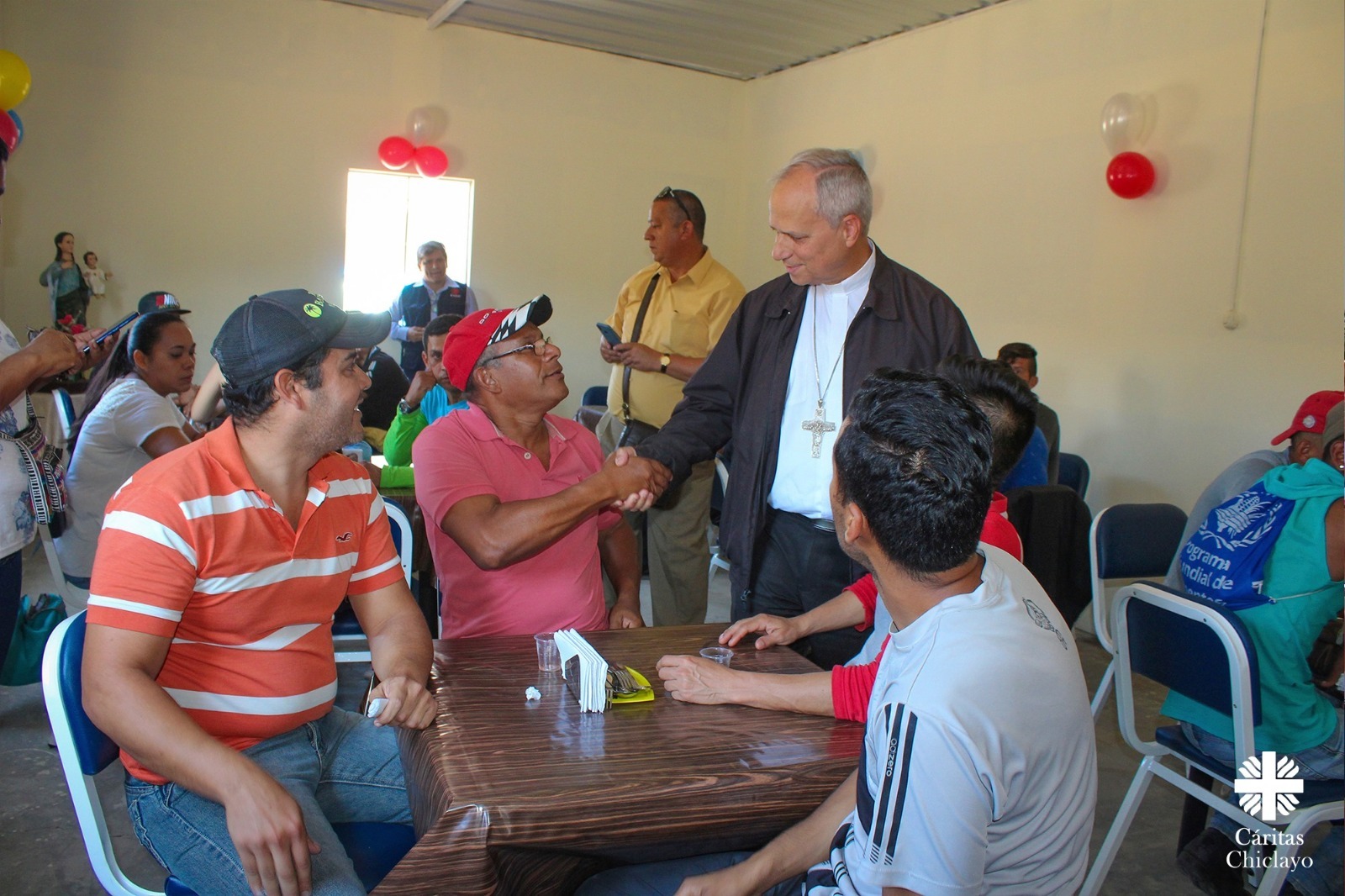
Habemus: Peru, at the heart of Leo XIV's life
Latest from Levant Time
View All


