

Is France Today Rejecting Diversity?

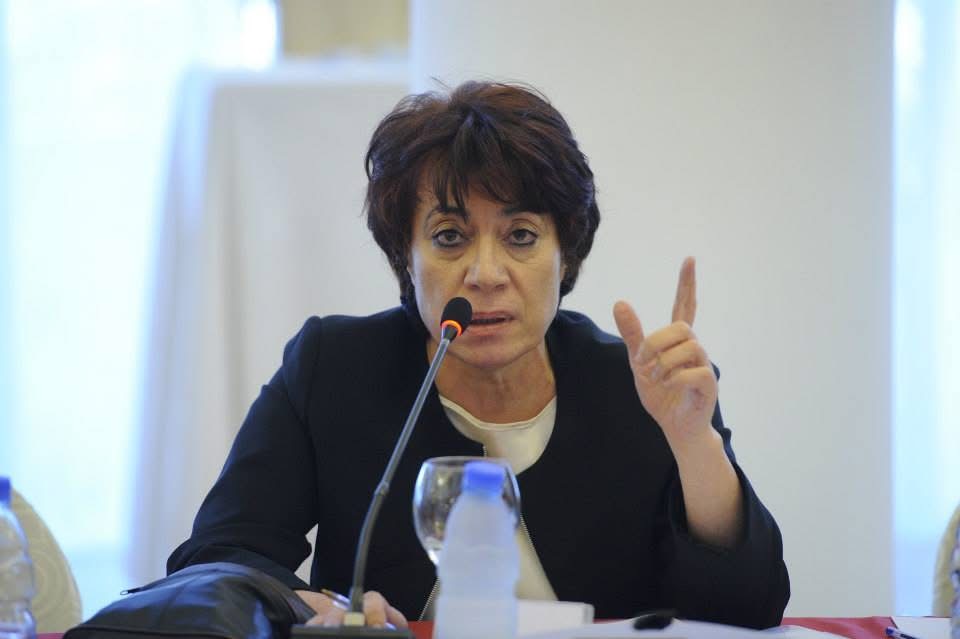
I was struck by a comment made by Alain Bauer* about recent events in France, during an interview in which he addressed a fundamental question: Who is French?
Returning to the origins of the different groups that make up the French population, Bauer described France as a crossroads of successive invasions, migrations, and settlements, a country historically shaped by the intermingling of peoples and tribes. The very name France derives from the Franks, Germanic conquerors who came from Northern Europe and Scandinavia. The French thus bear the name of their conquerors, yet trace their ancestry back to the Gauls in defense of the idea of ethnic purity.
In its very origins, then, French identity is the product of a historical mixture of Gaulish, Roman, and Germanic populations, not of any form of ethnic purity.
When Bauer says that the state created unity, he points to an essential historical reality. The French state was not simply the expression of a homogeneous nation that already existed before it. The state itself was one of the principal forces responsible for bringing that nation into being.
Philip II Augustus, who ruled from 1180 to 1223, played an important role in this process. He laid the foundations of the centralized state. Although its construction would take several centuries, his reign marked a decisive stage in its development.
The transition from the title "King of the Franks" to "King of France" did not happen overnight, nor did France suddenly become a fully consolidated centralized state. The formation of the French state was a long historical process. What matters is that the monarchy gradually extended its authority, established administrative and judicial institutions, and incorporated different territories and populations into a shared political framework. Over time, that framework became the foundation for a broader sense of belonging.
Historically, a "unified" French identity was imposed through a coercive process of assimilation led by the central state, particularly after the French Revolution and during the Third Republic. Regional languages, such as Breton and Occitan, were banned, while a standardized culture, largely shaped by Paris, was imposed.
The mixing of populations, therefore, was not always the result of "natural integration." It was also a form of coexistence regulated by the state's strict laws and centralized power. As this process of cultural assimilation has weakened in recent years, cultural and ethnic distinctions have resurfaced, revealing communities living side by side without achieving complete harmony.
What particularly interested me in Bauer's approach was his understanding of living together as a form of proximity or juxtaposition rather than genuine intermingling. In Lebanon, by contrast, we have turned "living together" into a slogan to which we have implicitly attached the meaning of integration.
Lebanon Is Not a Unique Case
In any event, Bauer's reminder of France's diverse origins helps us recognize that Lebanon is by no means an exception. The mixing of peoples and identities is, in one form or another, part of the origins of every country. France's current problem, then, would lie in its refusal to acknowledge and accept that diversity.
This lends particular significance to a fundamental historical and sociological question now being raised in France: coexistence through juxtaposition, as opposed to the genuine blending of a society's different components.
Despite the profound differences between their historical experiences, France and Lebanon share this challenge.
In political science and sociology, states characterized by religious or ethnic diversity are often examined through models such as "consociational democracy" or "plural societies." While their diverse origins bring France and Lebanon together, what distinguishes them is the way each has chosen to manage that diversity.
France has attempted to deny it through a rigid interpretation of laïcité, or secularism, and a republican ideal that recognizes individuals solely as citizens, without regard to their ethnic or religious backgrounds.
Lebanon, by contrast, has openly acknowledged and institutionalized diversity through its confessional system of power-sharing. It has made diversity one of the foundations of political authority, transforming communities living side by side into a legally recognized and institutionalized arrangement, albeit one that remains vulnerable to crises.
France's Current Crisis: The Refusal to Accept Diversity
Some observers trace the intellectual and political crisis facing France today to the question of identity. Traditional French elites and the political right struggle to move beyond the conception of the "traditional French citizen," assimilated into a shared secular culture, toward an acceptance of France as a multicultural and multiethnic country shaped by successive waves of immigration.
The refusal to acknowledge this new reality fuels continuing confrontations, often presented as efforts to defend the "values of the Republic."
Emmanuel Todd and the History of Family Structures
The writings of Emmanuel Todd on the origins of the French offer further insight. One of the leading figures in anthropology, history, and demography, Todd is known for his distinctive approach to explaining major political events and social transformations by examining traditional family structures and demographic developments, such as literacy rates and infant mortality.
In his book published in the 1980s, L'Invention de la France (The Invention of France), he looks back several centuries to examine how French society took shape through the different family systems that prevailed across the country's regions. His analysis reveals that France is not a single homogeneous entity, but the product of profound regional anthropological diversity.
Todd sought to explain the political and intellectual transformations that occurred in France and, subsequently, across Western Europe over the previous five centuries by relating them to the historical family structures of European societies.
He drew on local studies of family organization in traditional agrarian communities, connecting different family patterns to conceptions of freedom, equality, and authority. He then used these distinctions to explain some of the divergent intellectual and political paths followed by European societies.
What do we mean by family structures?
Todd proposes a classification of historical family systems based on relationships between generations and on attitudes toward equality among children, particularly with regard to inheritance.
The egalitarian nuclear family. Children leave their parents' household to establish independent families, while inheritance is governed by the principle of equality among siblings.
The stem family. One child, usually the eldest son in the historical model described by Todd, holds a privileged position in ensuring family continuity and inherits most of the family's property, while the other children leave the household.
The communitarian family. Several children and their own families remain within a shared household structure, characterized by a greater degree of paternal or collective authority.
For Todd, these arrangements were not merely economic or domestic. He argues that they helped shape enduring conceptions of freedom, equality, and authority.
In an interview published in 2023, Todd explained that the egalitarian nuclear family had historically predominated in the Paris Basin, without extending uniformly across France. He pointed to the presence of the stem family in other regions, particularly the southwest, as well as its varying prevalence in Alsace, the Alpine regions, and Brittany.
This observation is particularly important to our discussion. The France portrayed by the republican state as a unified nation, with a common language and shared political principles, was historically far more diverse than this national image suggests.
The differences were not limited to language, dialect, or religion. They also encompassed family organization, inheritance practices, and relationships between generations, elements that Todd associates with deeply rooted attitudes toward authority and equality.
If we take this hypothesis seriously, the French state was not built upon a homogeneous social foundation, but upon a collection of distinct regional traditions.
This perspective helps explain certain aspects of the centralized state's success, as well as some of the tensions that accompanied its formation.
French institutions helped create a common political language and consolidate citizenship, the rule of law, and public education. Yet they did not necessarily erase all the social and cultural distinctions inherited from the past.
The French state succeeded in unifying the political sphere without eliminating all the historical diversity that existed within it.
This does not mean that Todd considers family structures the sole explanation for every political difference. Rather, his work brings the depth of French diversity into focus and offers ways of understanding certain historical continuities, without reducing France's regions to societies with fixed or immutable characteristics.
Bauer, for his part, raises an important question when he challenges the simplistic image of the Gauls as the ancestors of all French people.
But an even more important question emerges when we move from the issue of origins to that of the state. How did a country made up of populations with different origins, languages, and historical experiences manage to construct a common national identity? And is it still capable of doing so today?
French history shows that the nation did not always exist in its present form and that the construction of the state helped bring together populations that had previously differed in their languages, traditions, and affiliations. Yet this history proves neither that complete assimilation is the only path to unity nor that cultural pluralism inevitably leads to fragmentation.
Nor can today's social unrest be reduced to an identity crisis alone. Education, social justice, purchasing power, and trust in institutions are equally important factors, and in certain circumstances they may intersect with questions of integration.
Bauer's observation that the French bear a name derived from the Franks while learning that their ancestors were the Gauls also reminds us that modern national identities are not precise genealogical records. They are historical narratives formed within institutions and societies that continue to evolve.
This does not mean that such identities are false or fabricated. It means that they are historical constructions, open to evolution and reconsideration.
The problem is not that all French people are not descended from the Gauls. The problem begins when France struggles to offer a definition of citizenship that allows everyone who belongs to it, legally and socially, to feel equally and fully part of its future.
A nation does not need a single father, nor does it require all its children to trace their roots to the same origin.
It needs just institutions, a historical memory unafraid of complexity, and a common project capable of bringing different people together without asking them to erase who they are.
Ultimately, I believe the more meaningful question is not "Who are our true ancestors?" but rather: What makes us, despite our different origins, choose to be citizens of the same state?
And that is a question we, as Lebanese, must now have the courage to ask ourselves.
*Alain Bauer is a French criminologist and professor emeritus of criminology at the Conservatoire national des arts et métiers (CNAM), with expertise in security, crime, and terrorism.
Why Reject Rubio’s Tutelage Only to Give Iran Power of Attorney?
Do We Win if Netanyahu Loses… and Lose if He Wins?
Lula’s “Last Dance” at the Helm of Brazil
Are Things Getting Out of Control Under Capitalism?
Repealing the Israel Boycott Law and Its Demons
More from Mona Fayad
View All


More in Analyze
View All


Latest from Levant Time
View All


