

South Lebanon: "Nawraj" Bets on Development to Stem the Exodus
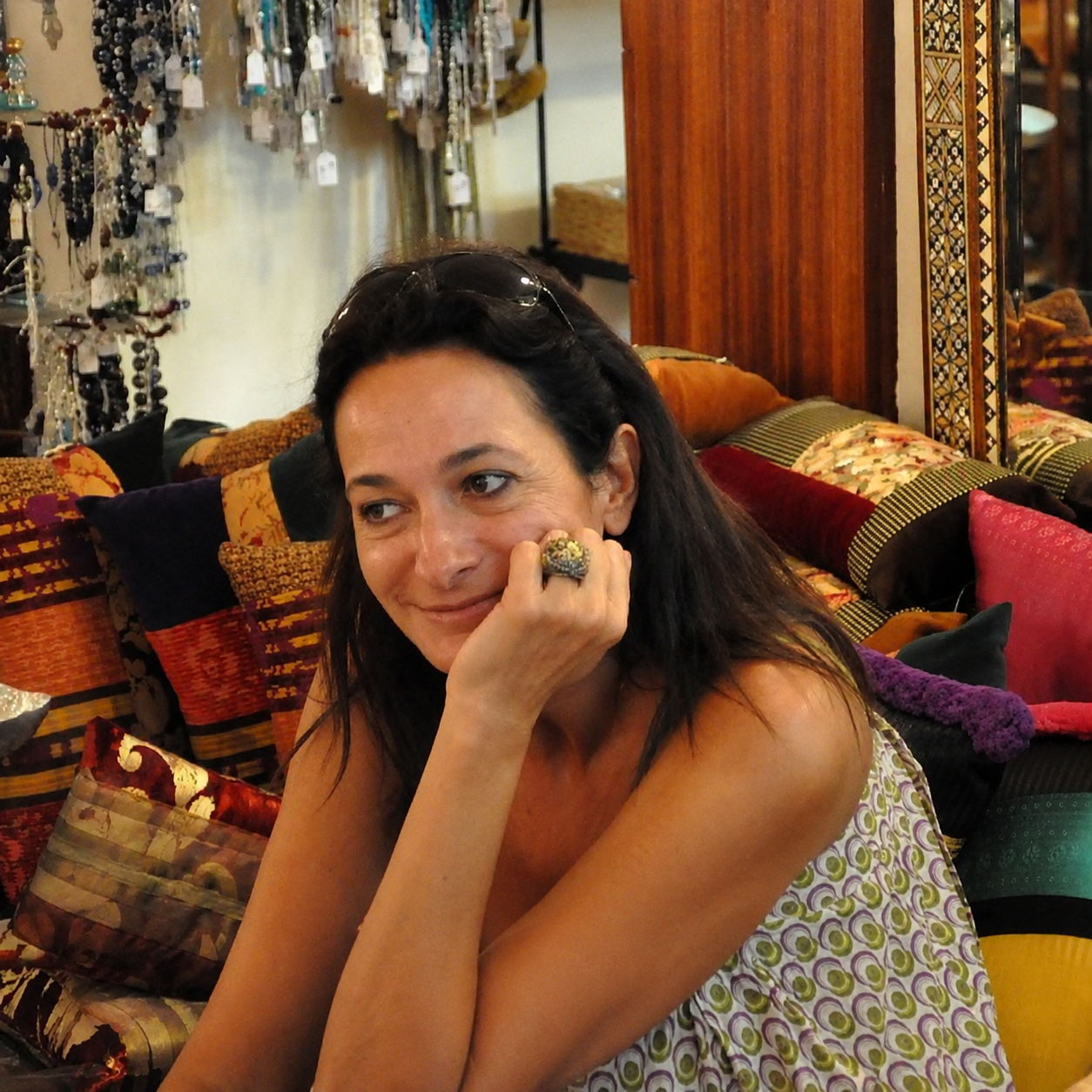
As winter approaches, residents of the villages still inhabited in the war zone in southern Lebanon face isolation, economic hardship and strained services. Through long-term development projects, the NGO Nawraj is helping southerners remain rooted in their land.
The road stretches on, winding endlessly, lined with young pines that do little to obscure the olive groves, with trees ranging from saplings to specimens several centuries old, or the newly planted pine woods. For several years now, efforts to reforest the hills and expand olive cultivation have been evident in this part of southern Lebanon. From Hasbaya to Marjayoun, fields stretch as far as the eye can see. Tarpaulins lie beneath olive trees, where men and women are busy picking the fruit. Others prefer to wait for a few more showers. With a higher water content, the olives will yield better oil when cold-pressed.
Yet behind this apparent normality lies another reality. In the border villages that remain inhabited, the war has upended everything: travel, economic activity, education and access to healthcare. Life there has become a daily struggle.
On this October morning, a small crowd had gathered in the little square in Deir Mimas—a few kilometers from the town of Jdeidet Marjayoun—around Tania Jarawane, head of the municipal council. The village faces the rocky hill crowned by the majestic Beaufort Castle. They were there to welcome the president of the NGO Nawraj, Fouad Abou Nader, who had chosen Deir Mimas as the starting point for a tour that also took in Bourj el-Moulouk, Qlayaa, Marjayoun and Kawkaba. His agenda was to assess residents’ needs ahead of winter and inaugurate a dining venue in Kawkaba, funded entirely by his organization.
This project is part of a range of initiatives undertaken by Nawraj across several sectors, with a focus on the sustainable development needed to stem the exodus from rural areas, particularly among Christians.
At every stop, the same concerns come up in residents’ conversations. They tell their visitor about their fears for the winter and their economic struggles. Nor do they hide their frustration. Many lament the state’s limited presence in the region, where certain essential services need strengthening. Political parties, despite being firmly established in these communities, also come in for criticism.
Hospital care is a particular source of concern. The region’s only two public hospitals, in Marjayoun and Hasbaya, lack the resources to handle complex cases. Patients requiring advanced care must be transferred to Jeb Jannine or Zahle, in the Bekaa Valley—a journey that can take an hour and a half to the former and nearly two hours to the latter.
Compounding these concerns are economic challenges that have become just as daunting as the threats to their safety.
At that time of day, one might have thought the villages on the tour were only just waking up. In reality, economic activity there has been at a standstill for months. The war has forced them into survival mode. The residents’ palpable anxiety comes through in their questions: “How are we going to provide heating oil for residents with fuel prices soaring?” “How will we heat the schools?” “Do you realize that getting to Sidon to deal with our paperwork now takes four hours instead of one because of the detours?”
At no point is leaving even considered. Leaving is not an option for them. Quite the opposite. From the outset of the war in 2024, they chose to stay, and they stand by that decision. Qlayaa, for example, still has nearly 2,000 residents today.
“We are not lazy”
Some families have indeed left, for work, for their children’s education, or because of insecurity and the isolation made worse by road closures and diversions. But the majority have chosen to stay. “We do not want to be isolated. We want to remain connected to the state, and we ask the state to stand by us. We would have liked a gendarmerie station in the village,” says Tania Jarawane. Her tone is calm and firm—that of a woman who knows exactly what she wants and intends to make her voice heard. “We hope the olive harvest will be good, but with winter approaching, the problems are enormous. We need initiatives that will allow villagers to stay. We are not lazy. We need initiatives,” she insists.
Fouad Abou Nader echoes her words. Tania Jarouane’s remarks go to the very heart of the work and purpose of Nawraj, which he founded in 2010. The association’s mission is to promote socioeconomic development in outlying areas by launching and supporting initiatives that can improve local living conditions. Its work spans education, healthcare, employment, agriculture and ecotourism, fostering interaction among the various communities it serves.
When war broke out in Syria, the association stepped in to help communities in Akkar and Qaa, where the conflict had spilled over. The war between Israel and Hezbollah prompted it to step up its work in the Christian villages of southern Lebanon from 2024 onward.
The challenge is to enable residents to stay by establishing economic activities and services as part of a forward-looking approach to development. Several projects are already putting that ambition into practice.
The opening of the Notre-Dame de Haramoun dining venue in Kawkaba fits squarely within this framework. It provides jobs for a small group of residents, but its significance lies in keeping alive the hope of an economic revival in a region that is normally bustling. Fouad Abou Nader emphasized this in his speech, noting that Kawkaba’s new dining venue would serve as a gathering place for all the villages in the area.
This is the first development project launched “under bombardment,” Fouad Abou Nader stressed, explaining that action cannot wait until everything returns to normal. The idea is to launch activities that can last, even in particularly difficult conditions, he tells Levant Time.
The Notre-Dame de Haramoun dining venue is only the first in a series of projects planned with the same goal of socioeconomic resilience. In each village he visits, Fouad Abou Nader outlines the next phase: reviving the cooperative in the border village of Debel, located within the “yellow line,” by rebuilding its cattle herd after many cows were lost during the war, thereby restoring its milk production capacity. It is a particularly important initiative given the uncertainty surrounding the outcome of the military conflict.
A second project by Nawraj, currently in its preparatory phase, could provide a significant economic boost to all the villages in the region. The project involves setting up a factory to produce briquettes from crushed olive pits and other olive-harvest waste as an alternative to wood for heating. The initiative promises both environmental and socioeconomic benefits.
Strong support for schools
For Fouad Abou Nader, the priority is to give residents the resources they need to remain in their villages. “Without you, this land would have lost its identity and ceased to exist,” he told them in Kawkaba, alluding to the tragic fate of nearby communities whose residents have been forced to flee.
Reviving the local economy has thus become just as essential as keeping schools open and hospitals functioning, even at a minimal level. “If the schools close, families will be forced to leave,” residents warn.
To avert this risk, Nawraj was able last year to cover tuition fees for 1,347 pupils whose parents could not afford the full amount, thanks to a fundraising campaign conducted with its Lebanese and international partners. The measure was intended not only to ease the burden on parents who have had no steady income since the war began, but also to enable schools to pay their teachers so that they, too, would not leave.
The same problem has arisen again this year, and Fouad Abou Nader is already considering ways to help the eight private schools, particularly after learning about the difficulties they face. Representatives of two schools described these challenges at length during an expanded meeting at Marjeyoun's municipal headquarters. Sister Hiam Harb, head of the Sisters of the Sacred Hearts school in Marjeyoun, sums up what is at stake in a few words. “We are determined to keep our doors open because life in the region depends on our presence. If we close them, families will be forced to leave as well,” she explains, noting that an “acceptable” number of pupils have returned to school this year. “We are also placing greater emphasis on citizenship to strengthen their attachment to the land,” Sister Hiam Harb adds.
Economic activity, schools and hospitals are three essential pillars for a population that has chosen to “resist” a war imposed on it. Nawraj is fully committed to this effort.
The hospital situation is much more complicated, as it is primarily the state's responsibility. Nevertheless, eager to help within its means, the NGO, which carried out emergency interventions in 16 border villages in southern Lebanon in 2016, is currently exploring two ideas: low-cost insurance exclusively for the region's residents, and safe routes to end the ordeal of four-hour journeys.
The association is working on several fronts to help Lebanese people remain rooted in their land. Its activities are therefore not limited to Christian villages.
Over the past 12 years, it has launched and supported more than 100 projects across Lebanon, paying particular attention to both outlying areas and the poorest urban neighborhoods.
With the same goal in mind, it has established partnerships, including one with the social foundation Farah, with which it has set up a pilot project, Sawa (“together”), to foster Druze-Christian cooperation and “establish intercommunal safety nets based on shared socioeconomic interests.” Sawa envisages development projects, particularly in villages in Chouf, Aley, Baabda, Rachaya and Hasbaya.
The Importance of Dream and Speech Among the Wayuu (2/2)
More from Tilda Abou Rizk
View All




More in Reportage
View All



The Dream and the Tomb: A Journey to the Land of the Wayuu (1/2)
Guyana, the unexpected big winner of the oil shock
The Qadisha Valley Remembers Padre Escobar

Venezuela: Alex Saab Back in U.S. Custody
In the Footsteps of Sélim Abou SJ: Lost Fragments of The Paraná
Latest from Levant Time
View All


