

The Houthis Continue Their Escalation Against Riyadh
Trump: “Something big could happen very soon regarding Iran”
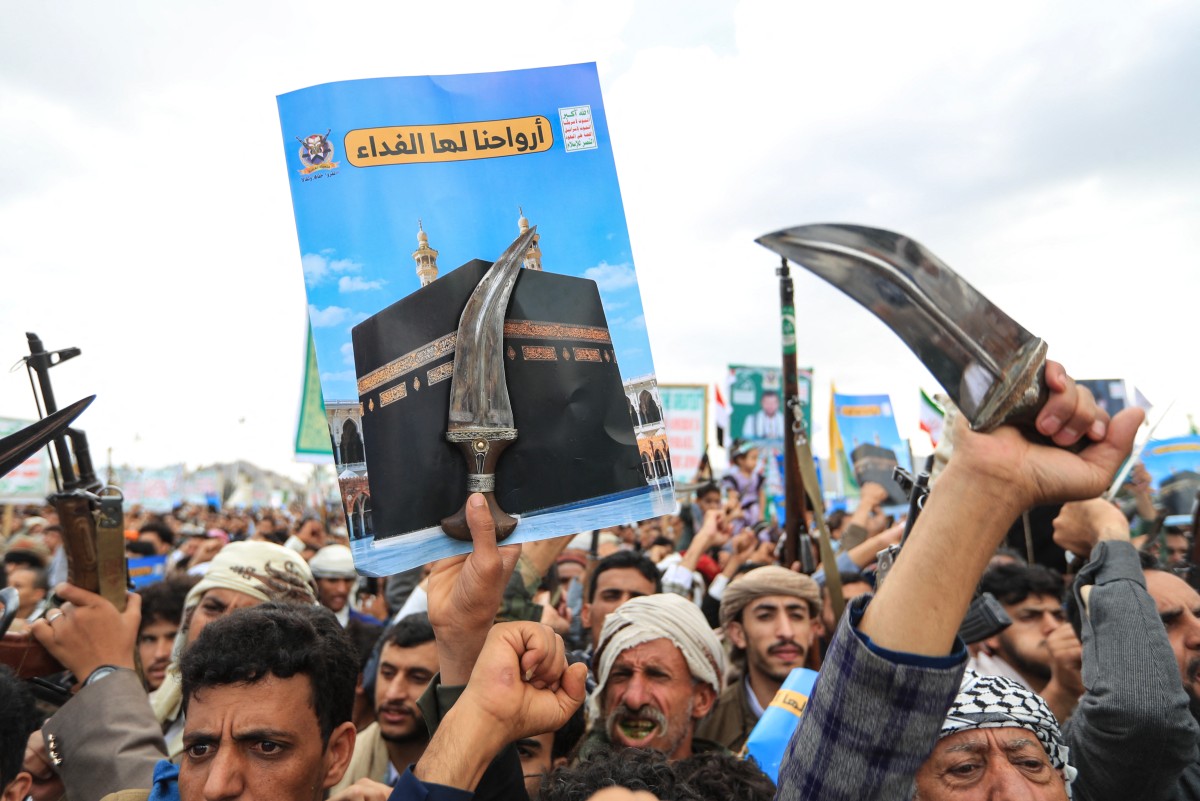

Following drone attacks by the pro-Iranian Yemeni militia on the Saudi capital this weekend, the United States says it fears “a rapid escalation” in the region and issued a warning to its citizens on Sunday. On the Lebanese front, a preparatory meeting in Paris for a conference in support of the Lebanese army produced no conclusive results, at a time when a confrontation with the Israeli army in the south appears to be a worrying sign.
At the end of a week marked above all in the Middle East by the Houthis’ continued escalation against Saudi Arabia, one might think that the Iranian front remained at a standstill. As usual since the conflict began, statements by US President Donald Trump have sent mixed signals about his country’s military or diplomatic intentions.
However, the coming hours may not be so quiet, judging by certain signs, including a call for vigilance issued Sunday by the US State Department. The message urges US citizens in the region to exercise greater caution in light of the possibility of a “rapid escalation” following the Houthi rebels’ attacks on Riyadh, the Saudi capital.
According to AFP, Trump returned early to Washington on Saturday evening, although he had been due to spend the weekend at the presidential retreat at Camp David.
Another worrying sign, reported by the Saudi channel Al Hadath, is that Pentagon staff are no longer leaving the building, as suggested by the well-known “pizza delivery” indicator.
Late Sunday, President Donald Trump said he was “about to make a decision on Iran,” adding that “something big could happen very soon.”
Could the Middle East therefore be on the verge of another escalation after weeks of US hesitation and efforts focused mainly on strangling Iran’s economy through sanctions and the blockade?
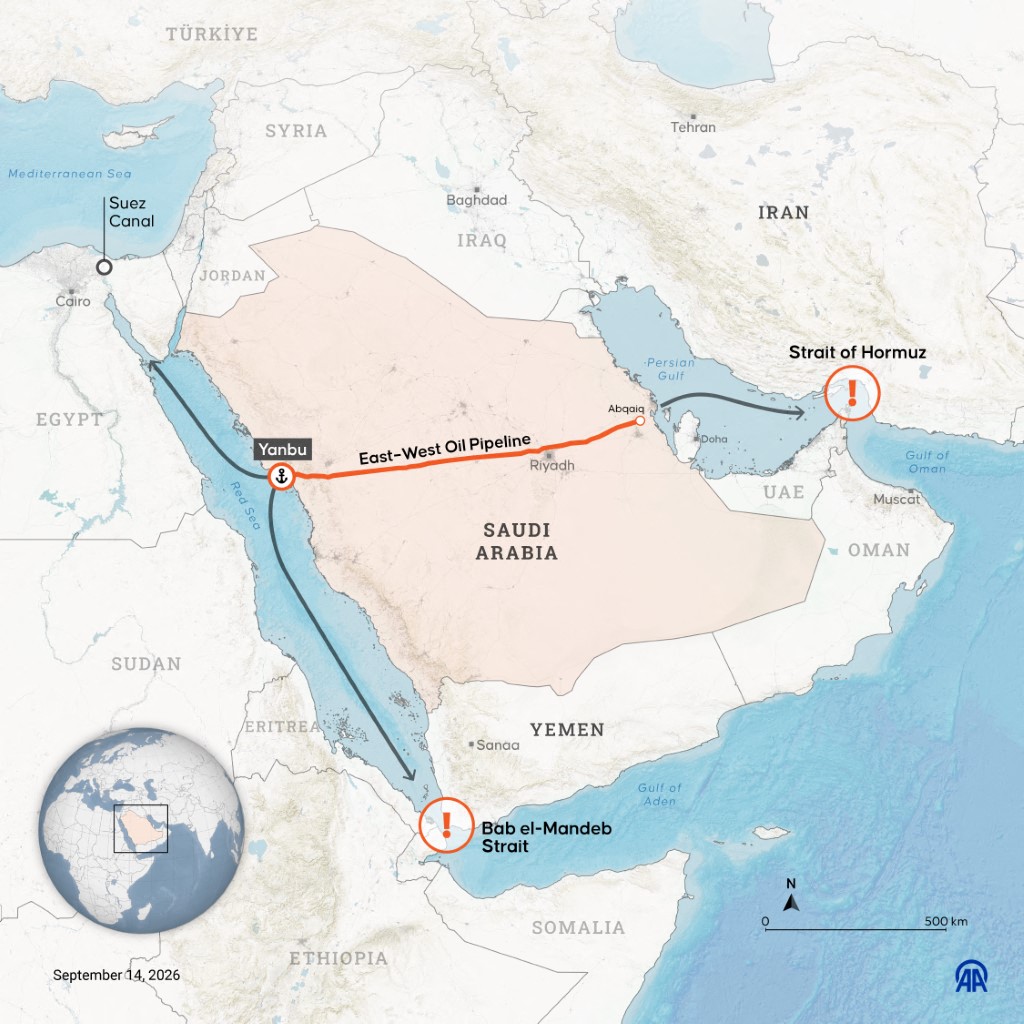
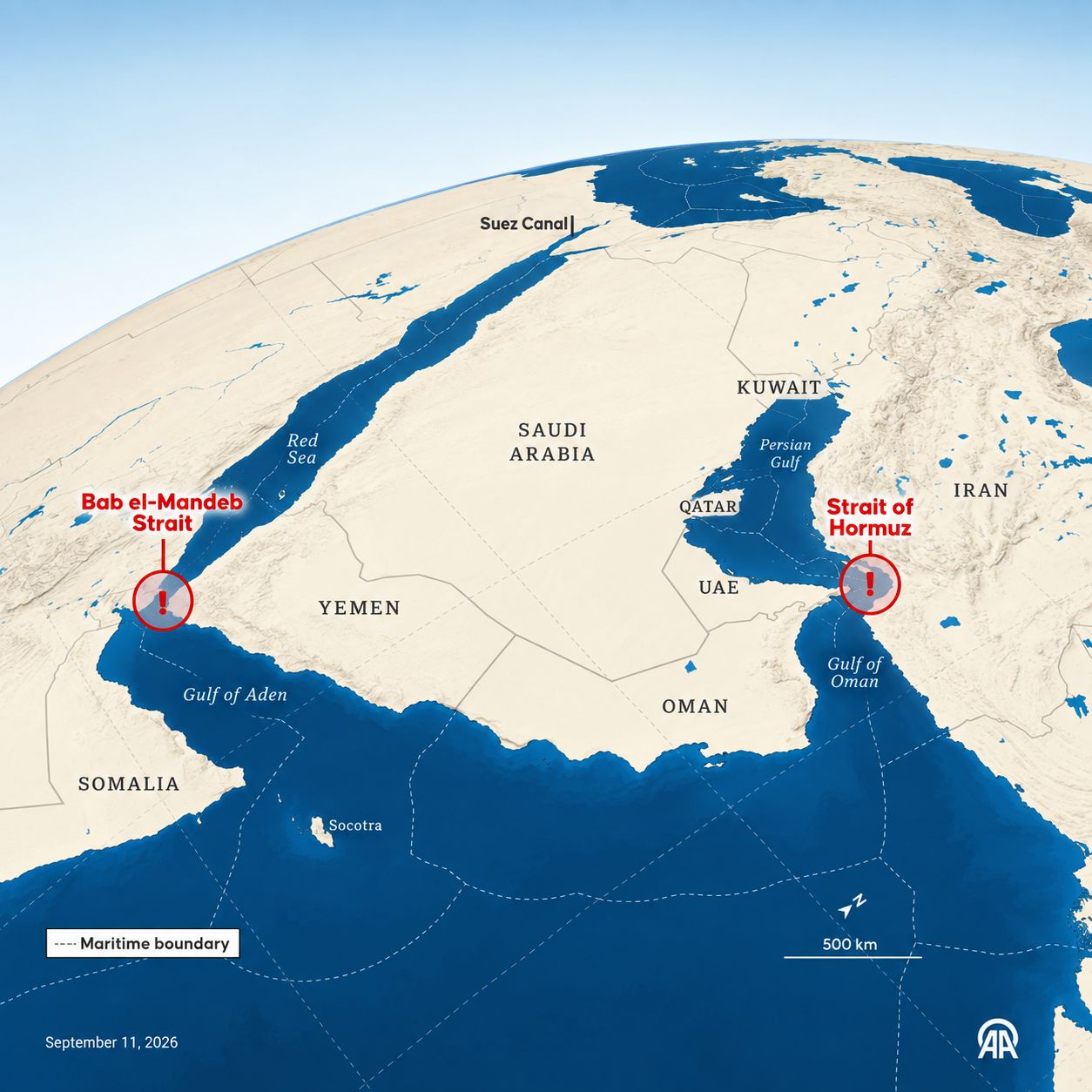
According to observers, the escalation by the pro-Iranian Yemeni militia and its rapid advances toward areas bordering the Bab al-Mandeb Strait on the Red Sea could trigger another regional conflagration.
With the Strait of Hormuz already partially closed following strikes by Iran’s Revolutionary Guards on oil tankers—which continued this week—and the resulting surge in oil prices, tensions around another strategic strait in the region could have even more catastrophic global repercussions.
The Houthis have repeatedly insisted that they intend to target only Saudi oil tankers, but the risk is very real.
And in recent days, they have demonstrated their capacity to cause harm.
A strike on Mecca, Islam’s holiest city, on September 16 sparked outrage not only in Saudi Arabia but also in several Arab and Muslim countries. Another strike, this time near Riyadh airport on Saturday, demonstrated the scale of the escalation.
Pakistan’s diplomatic efforts
How much further could the pro-Iranian militia—the only one still operating at such a high level after Hezbollah was weakened in Lebanon and Hamas in Gaza—go?
Can the US administration risk another surge in oil prices, with a barrel already above $100, just weeks before midterm elections that are expected to be difficult for Trump because of this unpopular war?
In response to the Houthi escalation, this week saw Saudi efforts to rally support against the offensive.
Saudi Crown Prince Mohammed bin Salman was received by Egyptian President Abdel Fattah el-Sisi in Cairo on September 15, with tensions in the Red Sea featuring prominently in their talks. It is worth recalling that Egypt did not join the Mecca mutual defense pact signed last August by Saudi Arabia, Pakistan, and Turkey.
Regarding this agreement, Pakistan worked actively this week to persuade Iran to urge its Yemeni proxy to halt its offensive, apparently without success. On September 18, the Pakistani military pledged to defend Saudi Arabia “both diplomatically and physically” and “to the very end,” to ensure the security of the Kingdom and Islam’s holy sites.
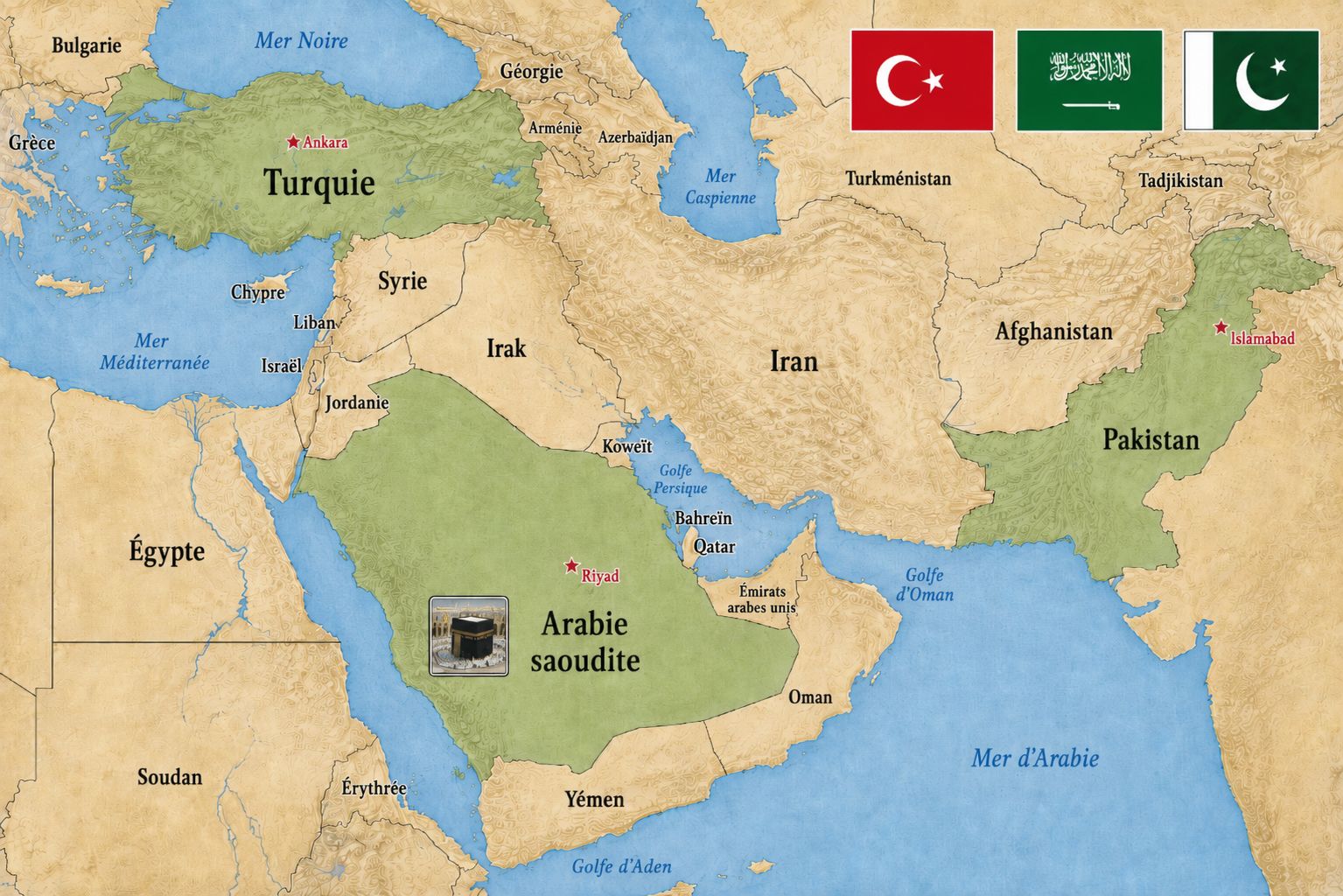
In a more measured statement, Turkey, through its foreign minister, said it was ready to meet Saudi Arabia’s military needs, while refusing to allow Riyadh to be drawn into a proxy conflict between the United States and Iran that could trigger a region-wide war.
And where does Washington stand in all this? On September 18, the United States approved the sale of 48 F-35 stealth fighter jets to Saudi Arabia.
Riyadh warmly welcomed the move, having sought for years to acquire the aircraft despite reservations from Israel, which until now had been the only regional power to possess them. This is yet another example of how the conflict is upending the regional balance of power.
The UN General Assembly
On the regional diplomatic front, the week began with the postponement of a scheduled meeting in Oman between Iran and its Gulf neighbors to discuss arrangements for managing the Strait of Hormuz. The postponement speaks volumes about the state of regional tensions.
With the U.S.-Iranian negotiation process at a standstill, attention is already turning to possible political contacts during the high-level debate of the 81st session of the United Nations General Assembly in New York, from September 22 to 28, 2026.
Donald Trump is scheduled to meet with Gulf leaders on the sidelines of his address.
Iranian President Masoud Pezeshkian will also attend this major global gathering. On this issue, President Trump said Sunday that he would look “favorably” on a meeting with the Iranian president in New York...
The other major event next week will be Chinese President Xi Jinping’s visit to Washington on September 24 for a highly anticipated summit with President Trump. Among the host of issues of interest to the two world leaders, China’s longstanding support for Iran is expected to be on the agenda.
Returning to the UN, Lebanese Prime Minister Nawaf Salam traveled to New York on Saturday. In coordination with Lebanese President Joseph Aoun, Mr. Salam is expected to express Lebanon’s commitment to maintaining a UN force in the south, a proposal opposed by the United States and Israel.
The shape of any future international force in Lebanon appears more uncertain than ever, as the United Nations Interim Force in Lebanon (UNIFIL) prepares to begin withdrawing from the south in late 2026.
The Lebanese army and its failure thus far to disarm militias—particularly Hezbollah—and take control of conflict zones were at the heart of an extensive diplomatic effort this week.
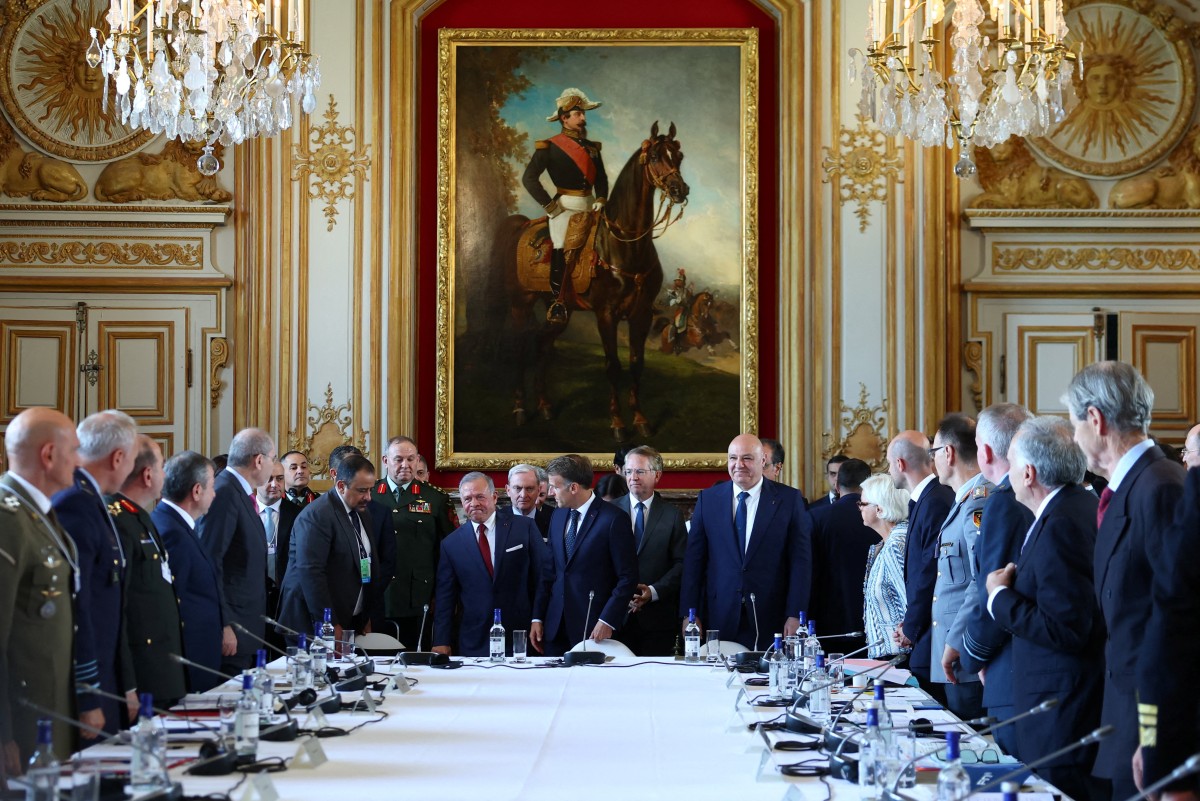
A preparatory meeting for the international conference in support of the Lebanese army was held in Paris on September 17.
The Lebanese president attended, along with leaders and representatives of Arab states, including Jordan’s King Abdullah II.
Beyond the lofty speeches about the need to strengthen the capabilities of Lebanon’s military and the warm embraces between French President Emmanuel Macron and President Aoun, the signs are not encouraging.
Indeed, the final date of the conference has not been set, although it is widely expected to take place in October.
Moreover, according to consistent media reports, the Lebanese army—and, by extension, the political establishment—has shown no “enthusiasm” for any confrontation with Hezbollah, leaving many players hesitant to offer their support.
The intransigence of the two belligerents in the last two wars—Israel on the one hand and Hezbollah on the other—is another decisive factor.
On Lebanon’s political scene, two events this week have reinforced this impression.
First, during a plenary session of the Lebanese Parliament featuring a debate on the Salam government’s performance—the chamber renewed its confidence in the government on September 16—Hezbollah MP Hassan Ezzeddine declared that “no one should bet on the Resistance being weakened,” once again denouncing the framework agreement signed by the Lebanese and Israeli authorities last July.
His remarks were echoed the following day by a leading figure in the pro-Iranian group, MP Hussein Hajj Hassan.
Second, in a major interview with AFP this week, Joseph Aoun said he was determined to disarm Hezbollah, but “without confrontation.” It was a response to the so-called sovereigntist forces urging him to pursue a more proactive policy toward the Shiite militia.
The situation in Lebanon remains more intractable than ever. Will diplomatic efforts and Nawaf Salam’s intervention at the UN help clarify matters? Or will the country once again pay the price for regional developments over which it has no control?