

Troubling American Passivity in the Face of Aggression from Iran's Radical Wing
Houthi escalation against a Saudi oil refinery and the Yemeni port of Mokha


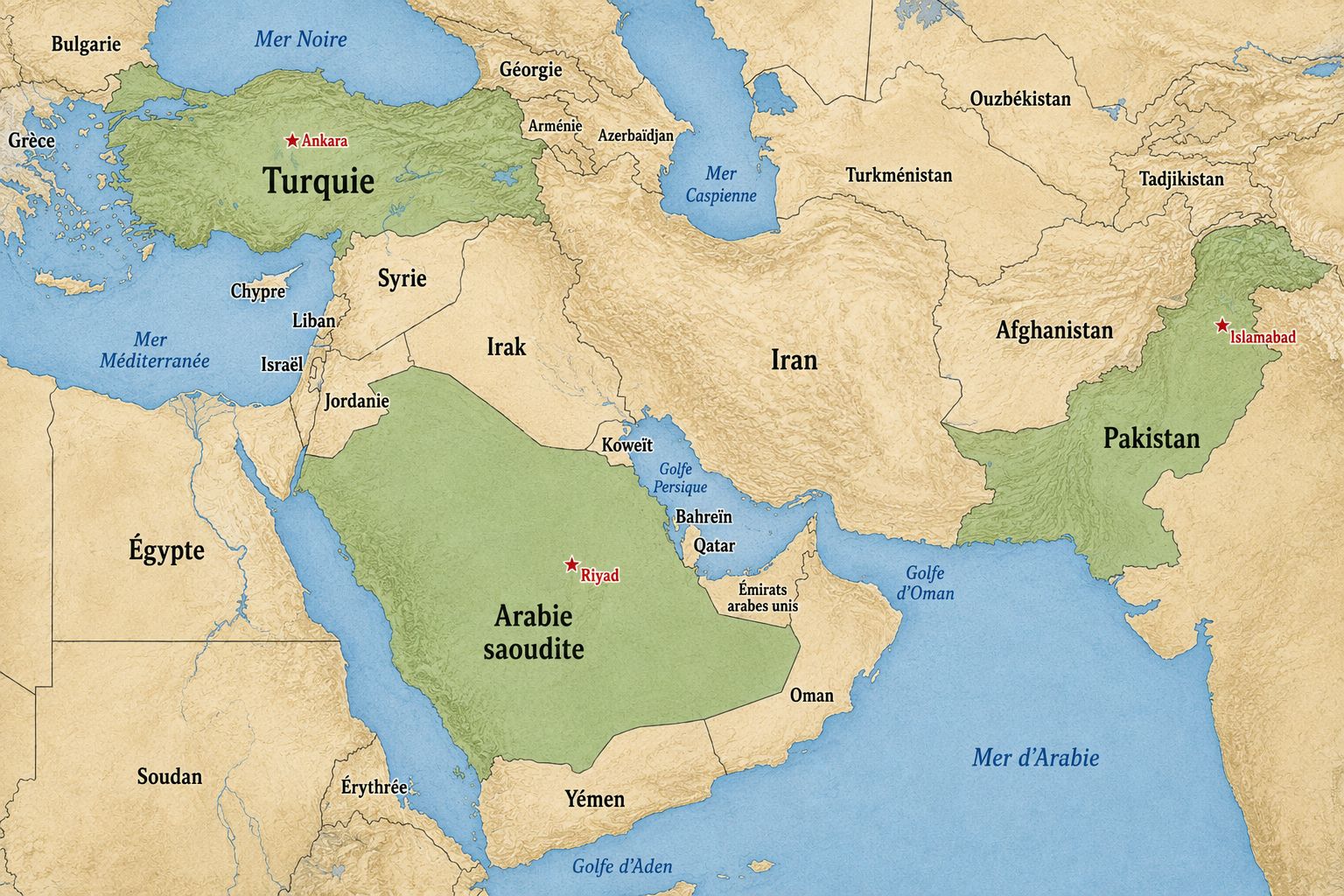
The Trump Administration displayed a troubling and unusual passivity last week in the face of aggression (and arrogance) from the radical wing of the Iranian regime and its proxies — both in the Strait of Hormuz and on the front opened by the pro-Iranian Yemeni Houthi militia against Saudi Arabia. It was against this backdrop that a mutual defense pact was sealed this week between Saudi Arabia, Pakistan, and Turkey, widely seen as a kind of Sunni NATO against Iran.
The past week in the Middle East will likely be defined by a single image: Saudi Crown Prince Mohammad bin Salman, Turkish President Recep Tayyip Erdogan, and Pakistani Prime Minister Shehbaz Sharif signing a mutual defense pact on Friday in Mecca — a location of profound symbolic significance.
It is hard not to see this as an alliance of Sunni powers arrayed against the mullahs' regime — weakened by its recent war with the United States, yet still capable of causing considerable harm, as demonstrated by its attacks on neighboring Arab states and the aggressive posture of its proxies.
The signing of this trilateral defense pact coincides with the activation of the Yemeni front against Saudi Arabia in the Red Sea and Bab el-Mandeb area, and with the blockade the pro-Iranian Houthi militia is attempting to impose on Saudi ports.
This new alliance has also become a priority for its signatories because the American ally appears to be seeking a way out — one that would not be too humiliating — that would allow it to disengage entirely from the Iranian conflict in order to protect its own interests.
If this apparent US withdrawal actually materializes (which has yet to be demonstrated at this stage), it would mean that the Trump Administration had effectively given up in the face of the Iranian regime, leaving its radical wing free to stage a comeback by rapidly rebuilding its military apparatus and infrastructure — not only economic, but above all nuclear and ballistic.
The scope of the defense pact
Returning to the trilateral defense pact: it sends a message in several directions.
Ankara was quick to clarify that the alliance is not directed against any particular party, while Riyadh stressed that it was not linked to any nuclear ambitions — given that Pakistan is a nuclear power and that the US Secretary of Energy recently announced a forthcoming agreement with the kingdom on civilian nuclear development, something the US president has made contingent on peace with Israel.
The development of this landmark alliance will need to be closely watched in the weeks and months ahead, especially since the signatories speak of "deterrence" — by what means, and against whom?
The three signatories also stated that the pact is open to other nations. Already on Saturday, Turkish Foreign Minister Hakan Fidan declared that Egypt could soon join the new alliance, according to AFP.
No reopening of the Strait of Hormuz in sight
Friday's signing came at the end of a week of truce — or rather, American military passivity. That did not stop the mullahs' regime and its Yemeni ally, the Houthis, from continuing their aggression.
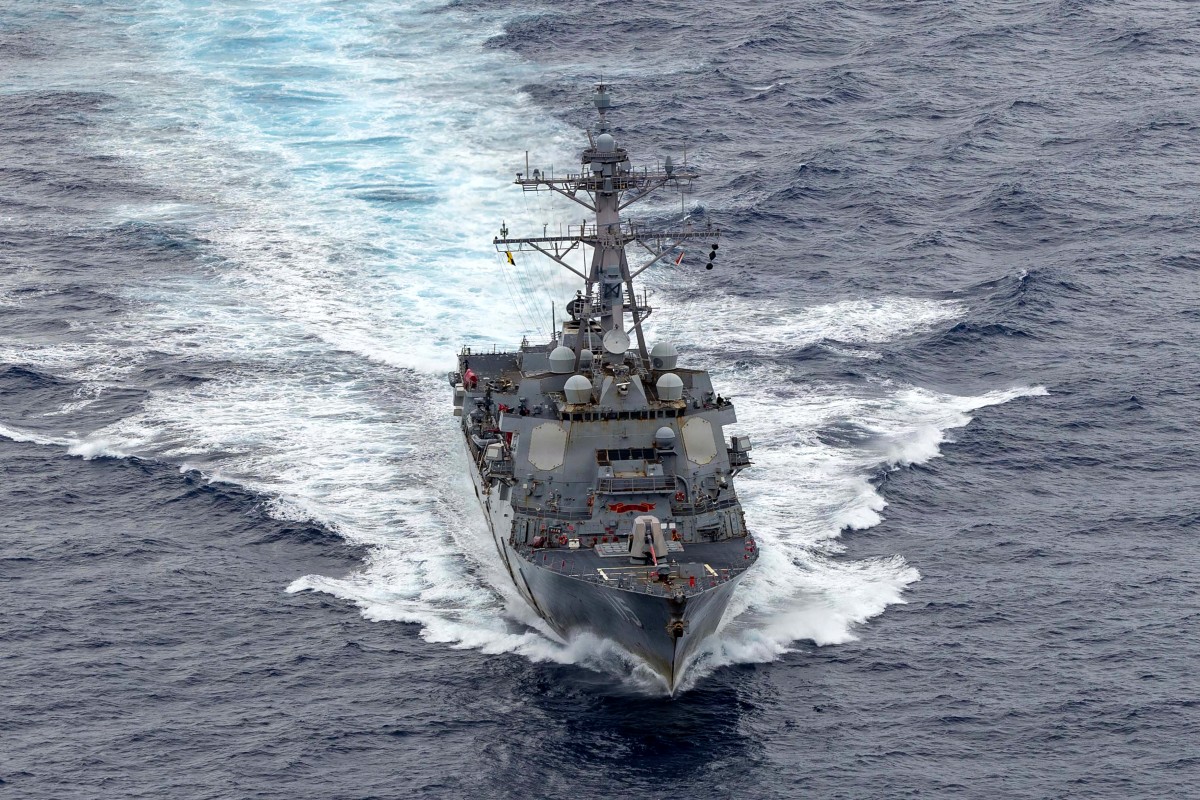
A guided-missile destroyer patrolling the operational area of the US Navy's 5th Fleet in the Gulf. (Centcom)
The Revolutionary Guards launched an attack over the weekend on an oil tanker belonging to the United Arab Emirates in the Strait of Hormuz, and over the past twenty-four hours, the Houthis first struck a refinery at Aramco's facilities in Saudi Arabia, before firing multiple missiles and drones on Saturday against the area around the Yemeni port of Mokha, targeting both port infrastructure and civilian facilities (homes, a hospital, etc.).
According to an initial toll, the bombardment killed seven people and wounded 35 others. Late on Saturday evening, the Houthis resumed their intense shelling of the Mokha port area.
It is worth noting that this week's attacks — on the Emirati tanker, the Saudi Aramco refinery, and positions held by the Yemeni government allied with Saudi Arabia — prompted no American response.
As for the negotiations that were supposed to resume on Monday, as President Donald Trump had announced in exchange for calling off a US military operation against Iran, they never took place — the Iranians having refused any contact with the US administration!
Iran's conditions put to Washington
Regarding the hypothetical reopening of the Strait of Hormuz, the Iranian Revolutionary Guards stated over the weekend that it does not depend on an agreement with Oman, but rather on the United States accepting their conditions — thereby putting the ball back in Washington's court, which continues to refuse the imposition of any toll on maritime passage.
The Iranian conditions announced on Friday included: an end to all "threats and insults directed against Iran" (!), a halt to all wars on all fronts (including Lebanon), the lifting of the blockade on Iranian ports, the withdrawal of all American forces from Iran's neighborhood, the payment of compensation for damages caused during the war, the lifting of all sanctions, and the unfreezing of Iranian assets.
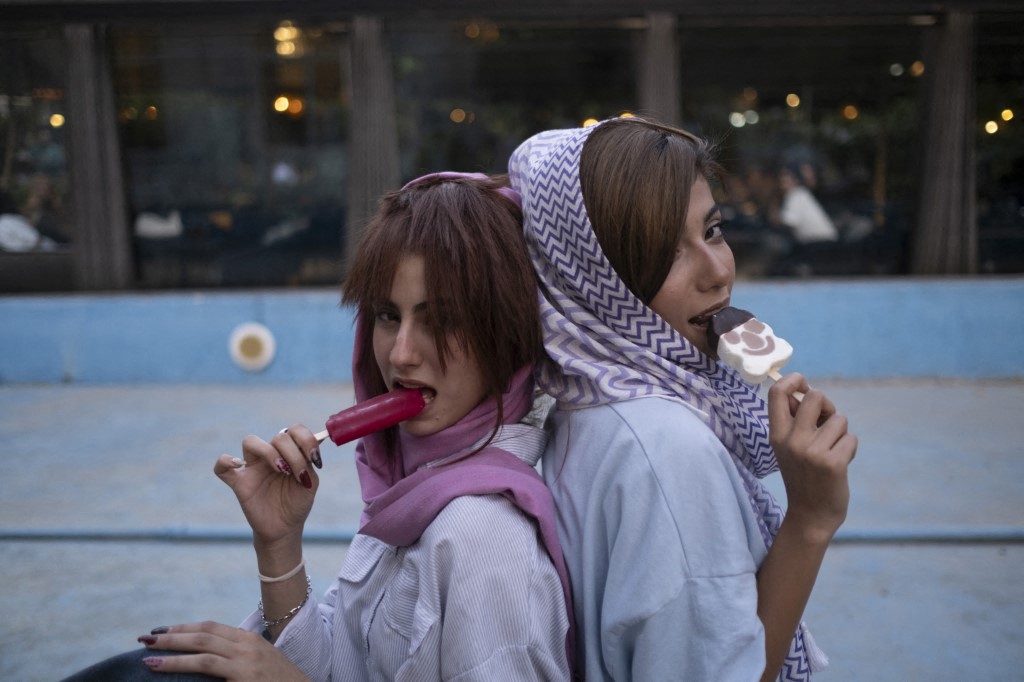
Two young Iranian women pose for a photographer while eating ice cream at a summer fashion event — an unusual sight in Tehran as residents take advantage of the ceasefire. (Morteza Nikoubazl/NurPhoto via AFP)
This unchanged belligerent rhetoric can likely be explained by the fact that American threats have remained empty all week, despite Iranian attacks (direct or through proxies) on vessels in the strait — at least six — with no response whatsoever from the US military.
In this context, it is worth noting that according to Israel's Channel 13, the head of US Central Command, who has been visiting Israel since the end of the week, conveyed a message to the Israeli government indicating that Washington wants the Jewish state to put an end to military operations in Iran, Lebanon, and Gaza.
Israeli leaders reportedly responded that Israel will not hesitate to directly strike the Iranian regime if it resumes building up its nuclear and ballistic arsenal.
Finally, to close out this regional file, Supreme Leader Mojtaba Khamenei made headlines three times on Saturday. He reportedly held a meeting with Iranian President Massoud Pezeshkian, appointed Mohammad Bagher Zolghadr as political adviser, and designated Mohsen Rezaei — a veteran of the Iran-Iraq war and former head of the Revolutionary Guards — as his representative on the Supreme National Security Council.
Lebanese-Israeli negotiations at an impasse
This week was also significant on the Lebanese front. Over three days, from Tuesday to Thursday, the seventh round of direct negotiations between Lebanon and Israel took place, held for the second time in Rome (at the US Embassy) rather than in Washington.
This seventh round was already off to a bad start, given Israeli statements — particularly those of Prime Minister Benjamin Netanyahu — that suggest a clear lack of intention to withdraw from Lebanon.
While the unofficial reason is a hardening of rhetoric ahead of the Israeli legislative elections scheduled for October, and Netanyahu's desire to distance himself from anything that might upset public opinion or his hardline allies, the official reason is concern over a potential rebuilding of Hezbollah's military capabilities in evacuated areas.
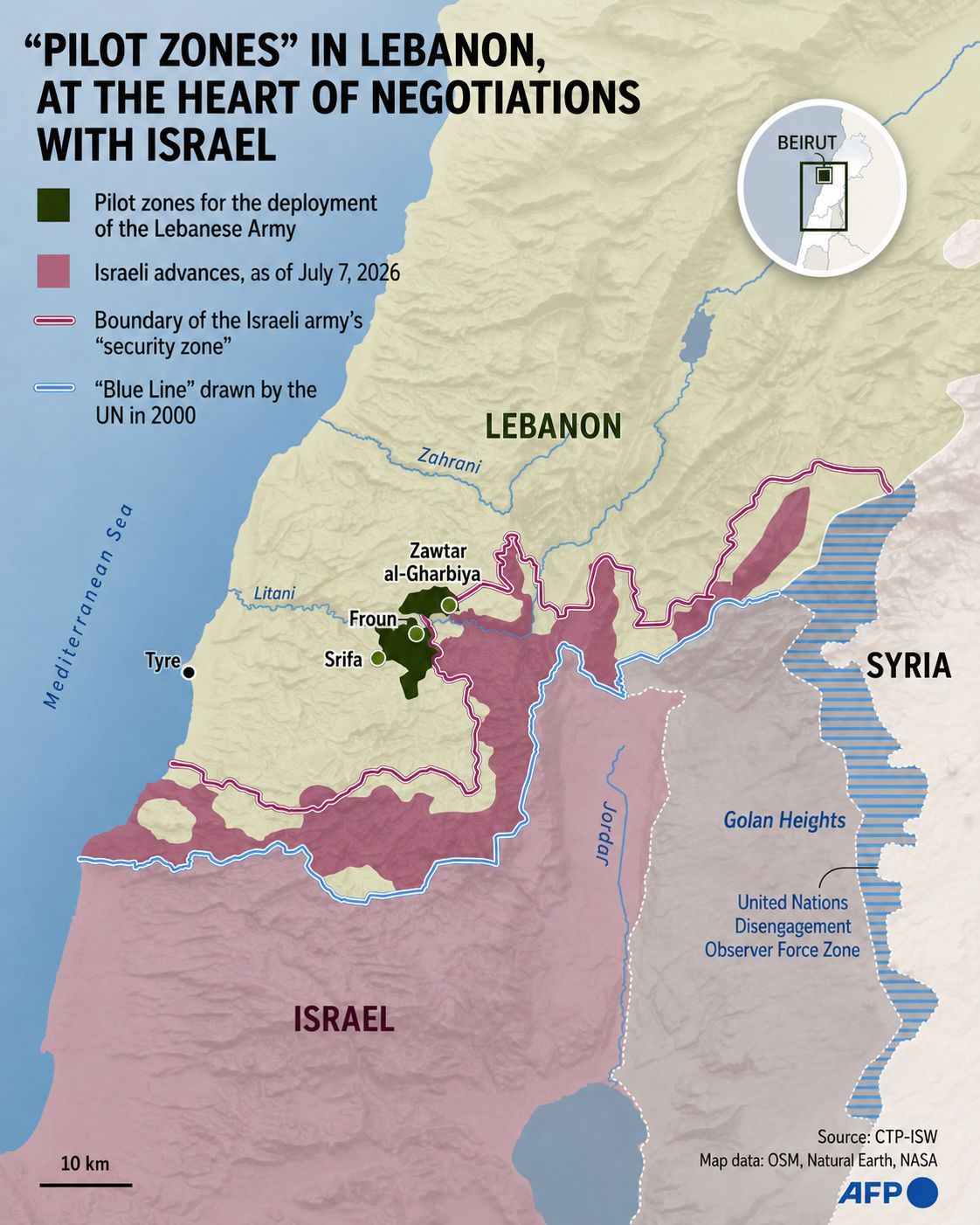
All indications coming out of the Rome talks point to a lack of meaningful progress and no new concrete measures, even though the Lebanese delegation's primary objective was to define new pilot zones for Israeli withdrawal and Lebanese army deployment (under the framework agreement signed in June).
So much so that the next round of talks, scheduled for early September, now appears to be in jeopardy.
One might have thought all was (nearly) lost, were it not for a Reuters report on Friday citing an unnamed "Lebanese official." According to this official, Lebanon and Israel "have agreed on a shortlist of countries capable of sending troops to verify Hezbollah's disarmament."
He did not reveal which countries are on the list, but the agency noted that the final decision rests with the United States.
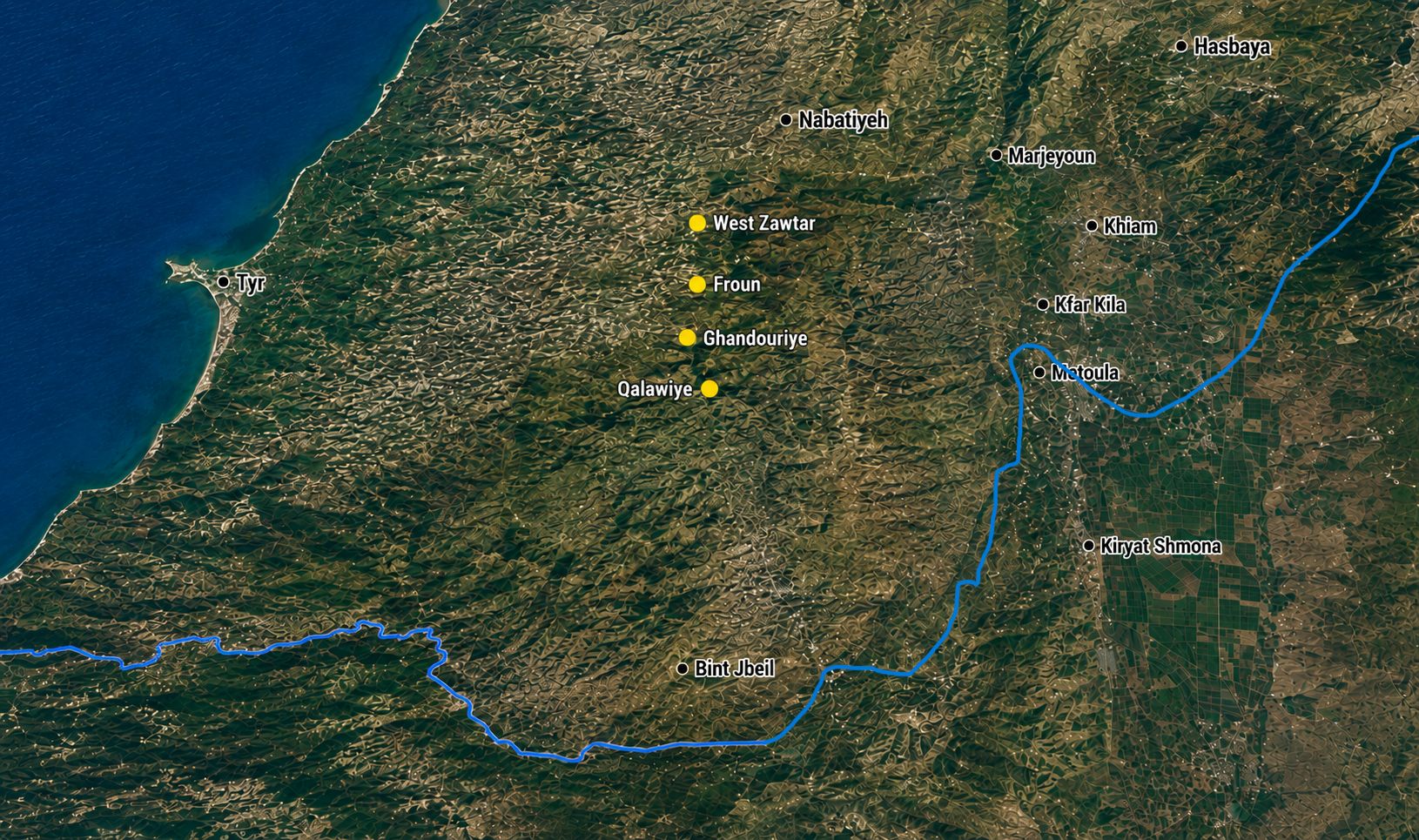
Meanwhile, southern Lebanon has seen a genuine escalation over the past few days. Hezbollah continues to act as though it is observing the ceasefire, but it appears to have unofficially resumed operations. This was evidenced by an explosion in the village of Taybe that killed two Israeli soldiers and wounded others earlier this week.
It was the second such incident in just a few days. Israel's response came swiftly. For the first time in several weeks, the Israeli army issued an evacuation order for a southern Lebanese village — Mansouri in Tyre — which has since been subjected to near-constant bombardment.
Israeli strikes, which never truly stopped, are intensifying daily, particularly around what is described as a major Hezbollah military complex on the hill of Ali el-Taher.
Even more worrying, Israeli incursions into Lebanese territory are resuming. The one drawing the most attention this week is a growing incursion near the village of Zawtar el-Charqiya, just steps away from one of the pilot zones evacuated in July where the Lebanese army deployed — Zawtar el-Gharbiya. As a result, the two armies have found themselves dangerously close in recent days, at a time when a Lebanese soldier was wounded by Israeli fire in Mansouri while attempting to reopen a road.
From Yemen to Lebanon: Iran Wages a Covert Proxy War
Escalation in Yemen; explosives seized in Lebanon: Iran reactivates its proxies
When Terrorism Enters the Middle East Conflict…
Middle East Conflicts Take Center Stage at the UN General Assembly
The Houthis Continue Their Escalation Against Riyadh
Más de LevantTime .
Ver todo


Más en Weekly essentials
Ver todo


Lo último de Levant Time
Ver todo


