

For Hezbollah, the current conflict is an extension of the Battle of Karbala!


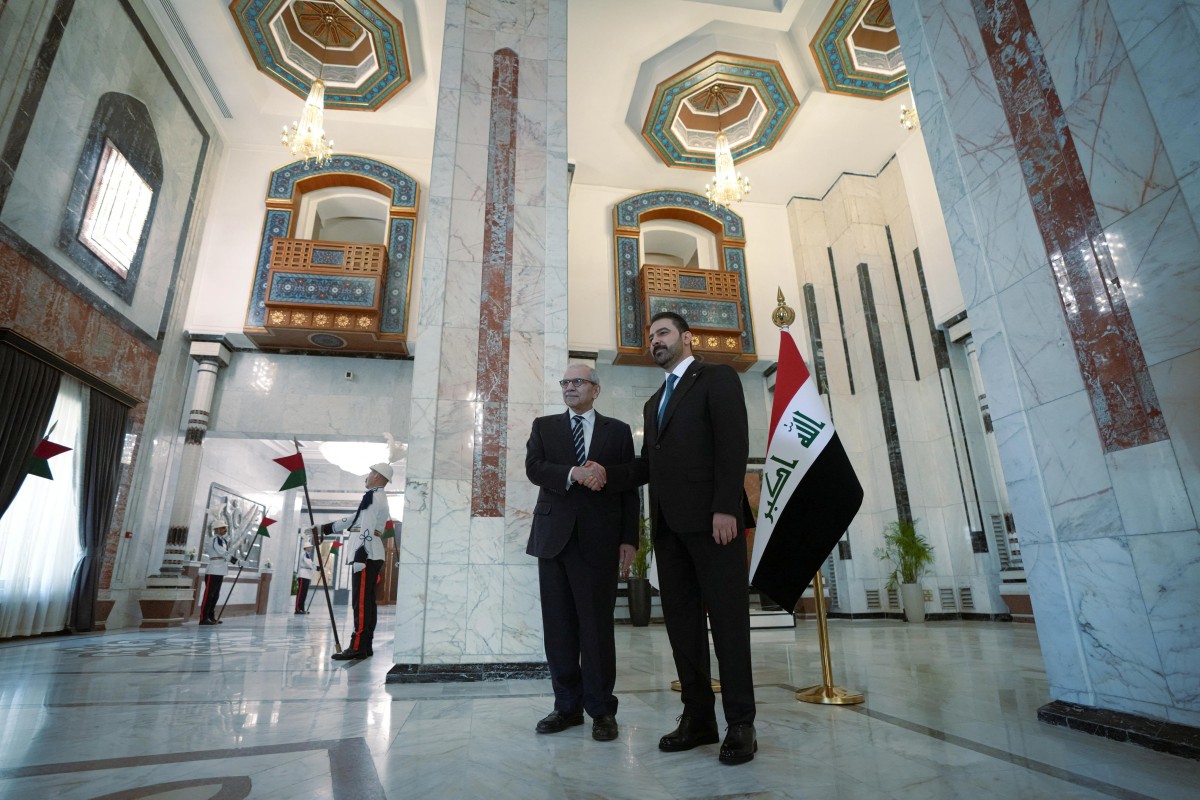
The past week came to a close on Sunday with two undeniably significant developments. The first was Prime Minister Nawaf Salam's visit to Baghdad, where he held talks with Iraqi leaders focused primarily on economic matters.
Accompanied by Energy Minister Joe Saddi, the prime minister discussed with his Iraqi counterpart the possibility of including the Tripoli refinery in the reactivation of the oil pipeline linking Iraq to Syria, with a view to exporting Iraqi oil.
An agreement to that effect was signed between Syria and Iraq just days ago, and the Lebanese government is seeking to revive the Tripoli refinery's role in this context.
The second development has a macro-political and supranational dimension: an exchange of messages between Hezbollah and the elusive and mysterious Iranian Supreme Guide Moujtaba Khamenei.
The document reveals that Hezbollah reaffirms its allegiance to the Iranian Supreme Guide, emphasizing that the current conflict in the region is 'a continuation of the Battle of Karbala.'
Reaffirming its determination to pursue 'armed resistance,' Hezbollah stresses its 'full solidarity with Iran and the Islamic Revolutionary Guards,' adding that the party 'remains under the leadership of Sheikh Naim Qassem' and stays 'loyal to the leadership of Moujtaba Khamenei.'
In the wake of Hezbollah's renewed pledge of allegiance, a message attributed to Moujtaba Khamenei and addressed to the pro-Iranian party states that 'perseverance on the path of resistance will bring the divine victory promised to the mujahideen who walk the path of truth.'
A lull on the American-Iranian front
On the military operations front, the American-Iranian front has been experiencing a fragile lull since Friday evening.
After 13 consecutive days of American bombardments on Iranian soil and Iranian retaliatory strikes on neighboring Gulf countries, Friday and Saturday nights were calm, even as the Yemeni front flares up and southern Lebanon remains, for now, far from the brink of escalation.
The American war against Iran has just taken a new turn toward an uncertain future.
After roughly 13 days of palpable escalation, marked by massive American bombardments on Iranian territory and continuous Iranian retaliatory strikes on neighboring Gulf countries and Jordan, the military tension suddenly subsided on Friday.
Iranians have now experienced their second calm night, as could be observed Sunday morning. According to American media outlets, this lull stems from an order issued by President Donald Trump on Friday. The Iranians have also halted their strikes against neighboring countries.
This development has raised several questions in the media. Is this lull temporary or here to stay? What might it lead to — new negotiations, or an escalation of the conflict, with ground combat, for example? And what truly motivated Trump's decision?
That last question is crucial. According to numerous American media outlets, including the New York Times and CNN, the American government fears the depletion of its stockpile of interceptor missiles used to protect Gulf countries. It also reportedly fears a broader conflict spreading across the Middle East.
Trump, for his part, continues to send mixed signals. While insisting he is considering even more significant strikes on Iran, he nonetheless assured that he is 'talking to them right now,' suggesting they are 'getting more and more serious' for 'an obvious reason' — an apparent reference to the devastating blows dealt by the American air force.
This sudden lull stands in stark contrast to Israeli behavior in recent days.
Kept out of the latest strikes against Iran — despite being the preferred partner (if not the instigator) at the start of this war against Iran in late February — Israel took extreme precautionary measures this week, asking its population to be ready to take shelter at any moment.
Several airlines suspended their flights to Tel Aviv in recent days.
According to some reports, Israel had expressed readiness to carry out targeted strikes on Iranian soil, but was held back from doing so by President Trump.
Yet on Sunday morning, the Israeli government approved extending the state of emergency until August 11.
In any case, one key appointment to watch next week is the planned meeting between Israeli Prime Minister Benjamin Netanyahu and the American president in Washington on Tuesday.
Netanyahu had struggled to secure this meeting, a sign that tensions between the two men over the war in Iran remain.
Will the Israeli PM manage to influence his American partner's decisions, given that both men must contend with crucial domestic electoral deadlines in the coming months?
For President Trump, the midterm elections could prove difficult, as rising oil prices and inflation linked to the war in Iran have seriously dented his approval ratings.
As for Netanyahu, he is once again gambling with his political future.
That said, these disagreements and calculations do little to alter the strategic relationship between the two countries. One development this week reinforced that point: on Thursday, the U.S. Secretary of Energy announced an upcoming agreement with Saudi Arabia to develop a civilian nuclear program, drawing worried reactions from Democratic lawmakers and Israeli parties, who said they feared a new nuclear arms race in the Middle East.
Later that same day, President Trump posted a message on his social media platformTruth Social, with a surprising message: he insisted that this deal with the Saudis could only move forward if Saudi Arabia recognized Israel and signed the Abraham Accords, already ratified by several Gulf states.
Satisfaction on the Israeli side, with Netanyahu calling it "a historic step forward." On the Saudi side, silence.
A troubled first deployment of the army in South Lebanon
On the ground, it is clear that while Iran observed an implicit truce with the United States by holding back its missiles and drones for two days, the Yemeni front — on the side of the pro-Iranian Houthi rebels — continues to flare up.
The Houthi rebels proved threatening throughout the week, directing missiles toward Saudi Arabia for the first time since 2022, and disrupting the passage of ships through the Red Sea.
They targeted two Saudi oil tankers during the week (only one, according to Saudi authorities).
In response, the pro-Saudi legitimate Yemeni government launched attacks against rebel-controlled areas.
This Yemeni front, activated by Iran, appears for now to be overshadowing the South Lebanon front.
Hezbollah continues not to respond to Israel's ongoing operations in occupied areas and even beyond.
While they claim to be respecting the ceasefire — specifically the one brokered by the Iranians as part of the Islamabad process, rather than the one secured by the Lebanese authorities in the framework agreement signed directly with the Israelis in Washington — the pro-Iranian militia's leadership is mindful of their fighters' exhaustion, but also, and above all, of the war-weariness among their supporters, a large portion of whom remain displaced.
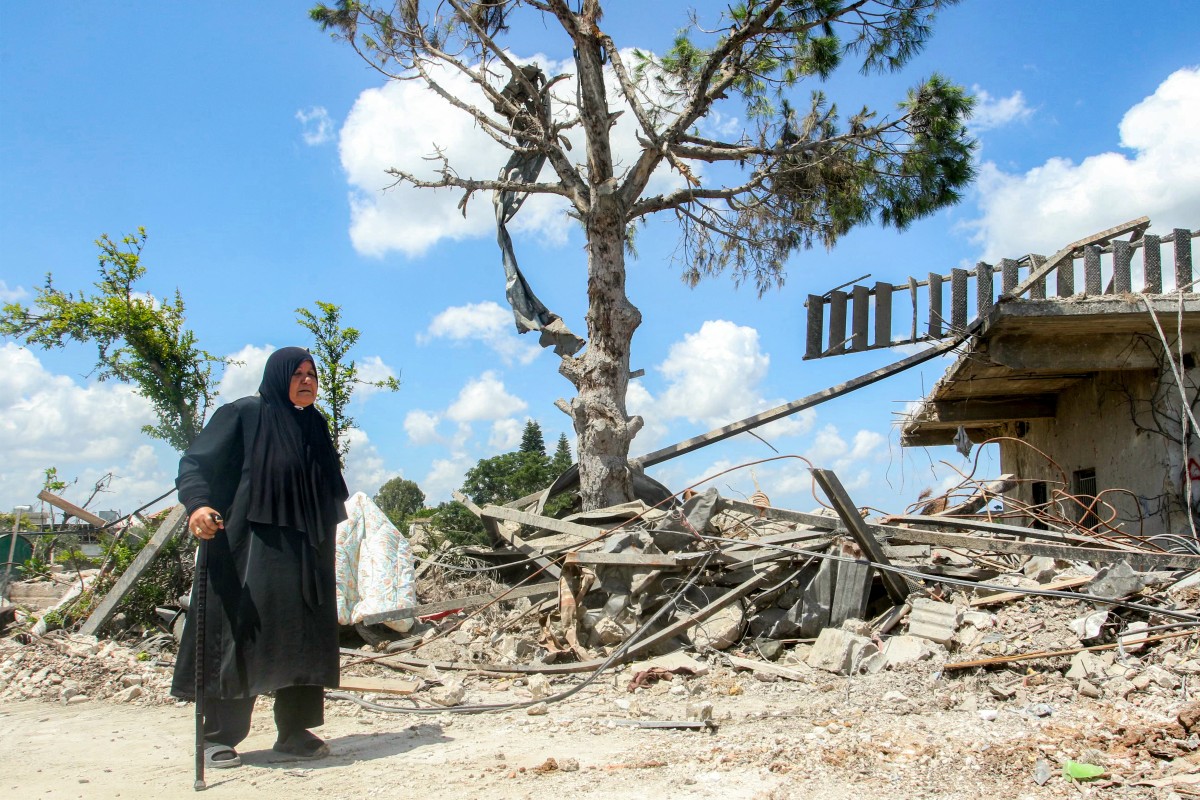
Also in South Lebanon, a pivotal development took place on Tuesday in connection with the Lebanese-Israeli framework agreement: the deployment of the Lebanese army in a village on the edge of the occupied zone, Zawtar el-Gharbiya.
The Lebanese army's entry into the village did not go smoothly: the Israeli army fired toward Lebanese soldiers—without causing casualties—claiming that the Lebanese vehicles had moved outside the designated area. The Lebanese army flatly denied these allegations.
Aoun in Washington
Nevertheless, the Lebanese authorities, regularly criticized by the Iranian axis, continue to pursue the path toward lasting peace. This is evidenced by Prime Minister Nawaf Salam's visit on Wednesday to Zawtar el-Gharbiya, where he planted a Lebanese flag in the village and delivered a reassuring message to the people of the south, affirming the state's commitment to stand by them.
The visit by army commander-in-chief Rodolphe Haykal the following day reinforced that impression.
This message is more critical than ever for people living in the devastated areas. The first reactions from Zawtar residents upon seeing the destruction—after being allowed to return and inspect their properties following the army's deployment—have been heartbreaking.
However, the key event of the week in terms of restoring the state's prestige took place in Washington. In the United States since Saturday, with a packed schedule of meetings with American officials—including Secretary of State Marco Rubio on Sunday—Lebanese President Joseph Aoun was received by President Donald Trump at the White House on Tuesday.
In terms of optics, the joint press conference between the two presidents revealed genuine chemistry between the two heads of state, with the message conveyed being one of a relationship moving in the right direction.
On the substance, all signals were equally positive. That same evening, the American president announced a symbolic yet significant measure: the resumption of direct flights between the United States and Beirut, which had been suspended for more than 40 years.
The Lebanese president, for his part, expressed on multiple occasions after the meeting his confidence that the country is on the right track. Doubts certainly remain and the challenges are still enormous, but this Washington meeting will not have been a missed opportunity.
Unsurprisingly, the president's visit to the American capital and his performance there earned him broad support from within Lebanon's political class.
Even Nabih Berry, the Speaker of Parliament and leader of Amal—a Hezbollah ally who had distanced himself from the president's decisions in recent weeks—called him upon his return.
Hezbollah, on the other hand, continues to attack Aoun relentlessly: in a scathing statement on Thursday, the party accused the president of having 'failed to secure a single national sovereignty-related demand,' asserting that he 'did not obtain any American commitment regarding an Israeli withdrawal.'
On this front as well, the Shia militia appears increasingly isolated.
On Saturday, the president received an additional boost of confidence during the beatification Mass of the 'father of Greater Lebanon,' Patriarch Elias Howayek, held at the patriarchate's summer residence in Dimane (Bcharre, northern Lebanon), through the words of Maronite Patriarch Bechara Rai.
At this religious and political gathering—which brought together figures from all communities (with the surprising exception of Nabih Berry)—the patriarch hailed 'the positive signs' that emerged from the Washington meeting and reiterated his support for the president.
From Yemen to Lebanon: Iran Wages a Covert Proxy War
Escalation in Yemen; explosives seized in Lebanon: Iran reactivates its proxies
When Terrorism Enters the Middle East Conflict…
Middle East Conflicts Take Center Stage at the UN General Assembly
The Houthis Continue Their Escalation Against Riyadh
المزيد من Taline Becharraoui
عرض الكل


المزيد في Weekly essentials
عرض الكل


الأحدث من Levant Time
عرض الكل


