

Why Do Youssef Raggi and Simon Karam Stir Discomfort?

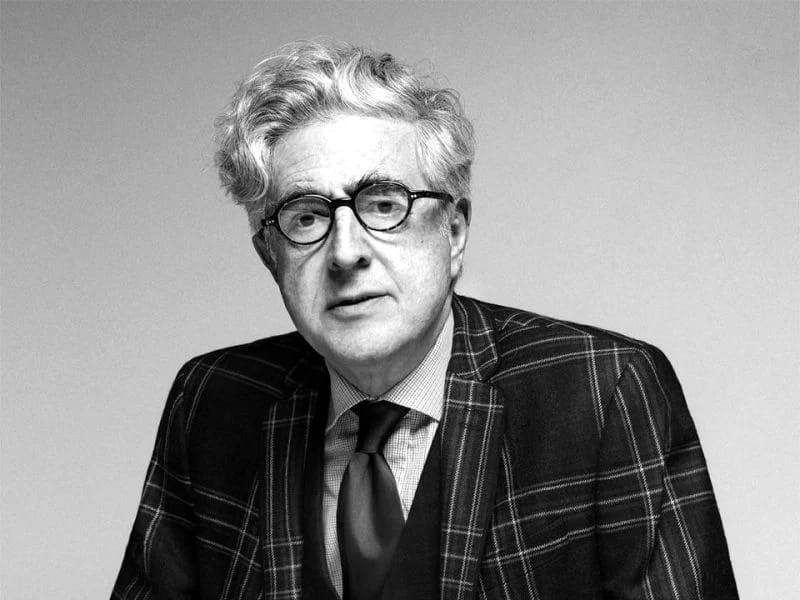
Foreign Minister Youssef Raggi and former ambassador Simon Karam—Lebanon’s representative at the meetings of the ceasefire supervision mechanism with Israel—clearly unsettle pro-Hezbollah circles because they herald the long-overdue return of external sovereignty. That sovereignty means a state’s refusal to submit to any higher authority and its recognition by other states as an equal.
Youssef Raggi and Simon Karam come at exactly the right moment—at a time when most Lebanese have grown disillusioned with everything. Many now look back with nostalgia to the period preceding the 1975 civil war, that blessed era when the Lebanese state was master in its own house, exercising both external and internal sovereignty—that is, exclusive authority over its territory and population.
“One does not carry the homeland on the sole of one’s shoe.”
It is worth recalling that there was a time—peaking in the 1970s—when patriotism was considered outdated. Certain activists and self-proclaimed intellectuals sought to outbid one another by being more Palestinian than Lebanese, placing Yasser Arafat’s interests above their own country’s(1). These lost souls, affiliated with countless fringe groups and seduced by the dream of a universal revolution, were little more than extras playing the role of useful idiots, much like pro-Soviet sympathizers in Western Europe during the Cold War.
Later, these same rebels—our local “hardliners”—allowed themselves to be endorsed by the regime installed in Damascus, a regime that ruled with an iron whip. In the end, these “Young Turks” were absorbed by the Hariri system, which granted them comfortable retirements(2).
What a heroic journey it was—from underground activism under the First Republic to cushy sinecures under the Taif Republic!
And what of our sovereignty in all this, one may ask?
Erasure and Renunciation
Lebanese citizens had lost their taste for independence. No longer masters of their own destiny, they succumbed to the supposed comforts of submission to “certain demands.”
Palestinian, Syrian, Israeli, and Iranian actors—separately or simultaneously—had all abducted Lebanon’s national sovereignty. The “party of foreign interests” prevailed, and collaborators could strut proudly as the state was hollowed out from within. Crude officers roamed freely in fashionable salons, while courtiers responded only with bows and flattery. Our politicians—mere supplicants—queued in Anjar, hoping for an audience with the masters of the moment. The outcome: a tamed parliament, subjugated armed forces, an infantilized judiciary, a “Finlandized” diplomacy—and the list goes on.
Without Shame
No, Youssef Raggi will not mince his words. He will not travel to Tehran any more than anyone else would have gone to Canossa. Minister Araqgi can meet him in Switzerland, on neutral ground. The days when our officials were summoned to Damascus, or when orders from the Pasdaran were instantly enforced, are over.
Moreover, Simon Karam’s appointment marks a reset of the rhythm. Hezbollah will no longer deal with a pliable figure heading Lebanon’s delegation to the ceasefire monitoring committee. In his time, the former ambassador rejected Syrian domination over our national will. With full latitude, he will defend Lebanon’s interests—not those of the mullahs. Add to this that his appointment has stripped the Speaker of Parliament of decision-making powers he had wrongly appropriated.
So, enough is enough—the patriots are back. And nothing is more exhilarating than breaking the chains that bind the homeland.
1-They were supposedly persecuted by « political maroniticism »
2- Then they could convert their militant past into financial assets or posts as ministers.
In Search of Lebanon, from Beirut to the Vatican
UN: Paris Wants to Replace UNIFIL With a 'Different Type' of Presence
The Abolition of the Death Penalty: Ibrahim Najjar and Élie Keyrouz’s Long Fight
The Testament of Hassan Rifai
A ceasefire... yes, but what happens next?
المزيد من Youssef Mouawad
عرض الكل


المزيد في Politics
عرض الكل



Mexico: after the Elimination of El Mencho, the Calm Before the Storm?
«Remaining»: Rekindle the Memory of the Victims of Political Assassinations Since 2005
Revolutionary Guards, Supreme Organ of Repression
Tropic Thunder: Understanding US Interventionism in the Caribbean

Tropic Thunder: Understanding US Interventionism in the Caribbean
الأحدث من Levant Time
عرض الكل


