

The Death of God and the Commonality of Time
The Shiite Predicament with Modernity

The Shiites knew "the death of God" more than a thousand years before the rest, when the lineage of Hassan ibn Ali al-Askari was cut off and he died by poison — the last of the great, infallible Imams. Shia political fiqh did not withdraw into some haven of consolation; it insisted, rather, that divine wilaya and the infallibility of the wali must endure. And so the son of Hassan came into being — most necessarily —, then disappeared in a Minor Occultation, followed by a Major Occultation, in the most prudent of all precautions… And thus Shia political fiqh deflected the idea of "the death of God" and fled from it toward the end of time… suspending time, leaving it hanging by a single hair: the awaiting of the Mahdi, who will return from his Occultation to fill the earth with justice and equity after it has been filled with oppression and iniquity…
A Tour of the Shia Political Imaginary Before Khomeini
Awaiting his noble return, political history remains for the Shiites a body of grievances and tragedies. They neither disavow them nor labor to avert them; quite to the contrary, this accumulation is a necessary sediment for the Mahdi's return. Furthermore, the Shiites long stood in a state of juridical release from the state, deeming it illegitimate, and harbored deep wariness toward the concepts of modernity and their outcomes — except within the latitude conceded by certain religious authorities, in isolated flashes, with wide variance between openness and closure.
Awaiting the Mahdi, the Lord of Time, the Shia political imaginary finds itself before an epistemological deadlock and an existential predicament. The connection with God has been severed; and while awaiting the return of His Hujja, time becomes a commons, ownerless in the absence of the Lord of Time. This led a number of Shiites across the ages to withdraw from power and boycott it. Others engaged with existing authority on the grounds that it was necessary — for people must have governance, whether righteous or corrupt.
The deadlock of Shia political fiqh very nearly drove it to embrace the project of the civil state and enter modernity through that door, having no alternative to offer beyond waiting or dealing with the existing reality by necessity. Hence, before Khomeini, the Shiites had on their own effectively killed God, on the roadside of the long wait for the return of His Hujja. And the Shiites' participation in nationalist, progressive, Marxist, leftist, socialist, liberal, secular, and atheist parties and organizations was entirely natural… These political and intellectual currents filled the place of a God who had turned His back and left His servants to await His return.
The Window onto Western Modernity and Its Closure in Iran
"God is dead, and we have killed him," in the words of the philosopher Friedrich Nietzsche. It was thus that modern Western society moved to curtail religion's role as moral arbiter. As a result, epistemological, economic, and technological systems grew and flourished in conditions hospitable to every requirement of growth, prosperity, and well-being. Religion did not return to the public sphere except escorted by the epistemology of the sciences — as a theory of knowledge offering answers to humanity's great questions from outside the box of religion's ready-made answers — and by the philosophy of religions, which transformed the creeds of Western societies into relative truths.
The plurality and renewal of gods, the relativity of truth and the measured appreciation of its necessity, the changing and accountability of leaders within the framework of the rotation of power, diversity as a source of wealth and difference within the management of plurality: these are all co-extensive paradigms of modernity. The result was the liberation of the human being and the reinforcement of his rights as an individual citizen, a state whose legislation and laws derive from a civil reference, the welfare of the individual and the supreme interest of society, and a rationalist impulse to consolidate these achievements, reevaluate them, and build upon them.
That said, I will not engage here with modernity and the critique of modernity, nor will I revisit Foucault fleeing it for the embrace of the Islamic Revolution in Iran, only to return and revise his opinion — searching, like Lévi-Strauss and others, for his quarry for the critique of modernity, in the natural course of the development of societies.
It had always been an exercise in plowing the waters to extract a political project for society from the folios of Shia political fiqh. Until Khomeini arrived and drew the theory of wilayat al-faqih from the cellars of the religious tradition, sealing the window onto Western modernity in Iran and the Arab world. He fashioned, in the eyes of the Shiites, an exact replica of the Lord of Time, and installed the Iranian wali al-faqih as his deputy.
How the Occultist Mind of the Shiites Operates Under the Doctrine of Wilayat al-Faqih
The wali al-faqih has his Shiites in many Arab cities. They are the mustadaafun — the oppressed — by their governments and within their national states. For this reason, they must profess loyalty and obedience to the wali al-faqih at the expense of their belonging to their national identities and the causes of their communities; indeed, his claim upon them is the equivalent of the Prophet's claim and of God's own. Political borders are nothing but soft barriers before the expanding wilaya. While "the support of the mustadaafun" wherever they may be in the world is the foundational value of the Iranian Islamic Republic's constitution, "the export of the revolution" — toward this end — is the road to extending influence and expansion.
In this way, the wali al-faqih shattered the Shiites' awaiting of the Mahdi, being himself his deputy and present among them at the same time. And he kept them in a state of perpetual waiting. Their minds thus came to rest on the occult, which displaces all realistic approaches.
The will to obstruction consequently overwhelms every society in which the Shiites of the wali al-faqih are present — for what matters is his religious mandate, which he ratifies on behalf of millions of Shiites. And ruin, destruction, and gnawing from within ensue, for governance is permanent revolution and the export of revolution — not stability, peace, and the sovereignty of states within the obligations of each one's national security. Endless wars blaze and killing becomes habit, against the erasure of development and its requirements… Or woes proliferate and blood is shed and human values are violated and chaos and upheaval spread — for that is divine will and there is no way around it. Every fallen one becomes a martyr, every martyr is blessed, felicitous in his death — which occasions congratulation more than condolence, addressed to the Lord of Time, the Imam al-Mahdi, and to the Islamic Nation. The fall to earth is an ascent to heaven and an elevation, and the shroud of death a divine decoration. Until complete defeat and thunderous collapse arrive in culture, politics, security, and civilization — in Iran and beyond Iran.
And here comes the role of the sanctification of ignorance and the denial of reality: defeat becomes victory, humiliation becomes honor, and self-respect becomes blind obedience… There is no room to hold the wali al-faqih, his agents, or his followers to account, for pledging allegiance to him is an absolution of all obligation.
The Shiite operating under the doctrine of wilayat al-faqih functions within parallel systems in the society of his state and does not work for the welfare of society as a whole — for what concerns him is his religious duty, to which he remains faithful while betraying everything else. The Shiite of wilayat al-faqih does not weigh options rationally, does not shrink from chaos and destruction, does not find it objectionable to live in a society without a state, and does not hesitate whether death falls upon him or he falls upon death… The surrender of his affairs to his wali is the key to understanding his mind and behavior — not rationality as a methodological approach. Naturally and ordinarily rational questions — such as development, production, and stability — do not belong to the occultist mind of the Shiite who holds to wilayat al-faqih.
The Death of Khamenei and All the Date-Palm Gods
"Khamenei is dead, and we have killed him." Following this announcement, the American administration can extract the Shiites from the cave of their political fiqh and their occultist mind with a decisive blow and usher them into modernity. And if the son-Khamenei returns, as sons of gods do, the revolution of communication will expose the vulnerabilities of his alleged sanctity — from insufficient qualifications for the marjaïyya to the ease with which he can be targeted and struck, rendering him from every direction into a god of dates, easily eaten, as Muslims throughout history have generally made a habit of doing when hunger strikes: they eat their gods.
In Search of Lebanon, from Beirut to the Vatican
UN: Paris Wants to Replace UNIFIL With a 'Different Type' of Presence
The Abolition of the Death Penalty: Ibrahim Najjar and Élie Keyrouz’s Long Fight
The Testament of Hassan Rifai
A ceasefire... yes, but what happens next?
المزيد من Ali Khalifé
عرض الكل

المزيد في Politics
عرض الكل


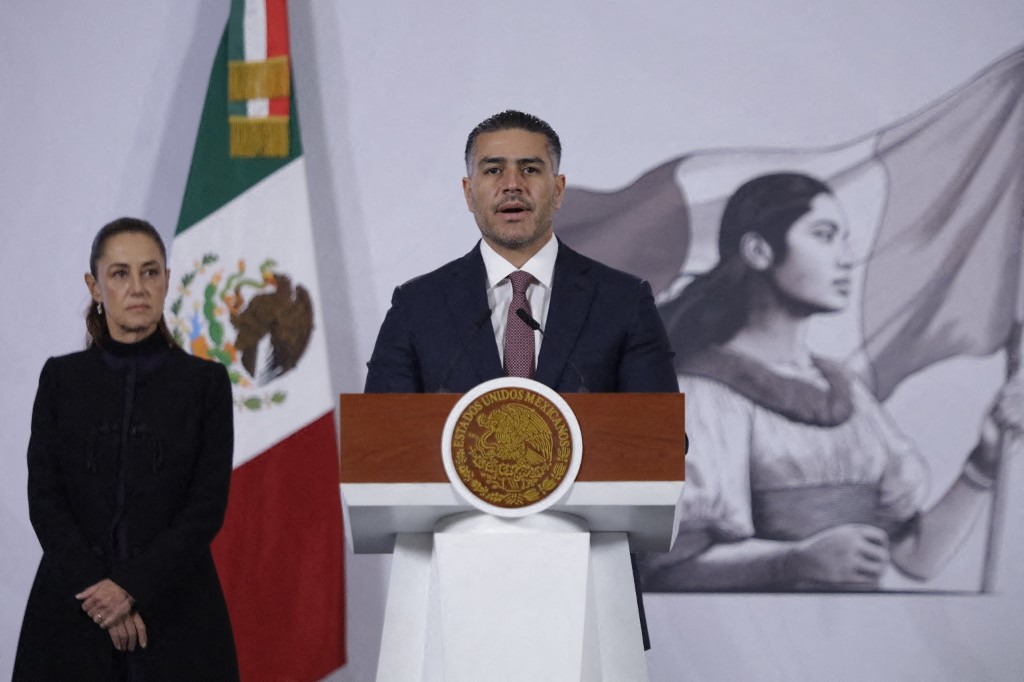

Mexico: after the Elimination of El Mencho, the Calm Before the Storm?

«Remaining»: Rekindle the Memory of the Victims of Political Assassinations Since 2005
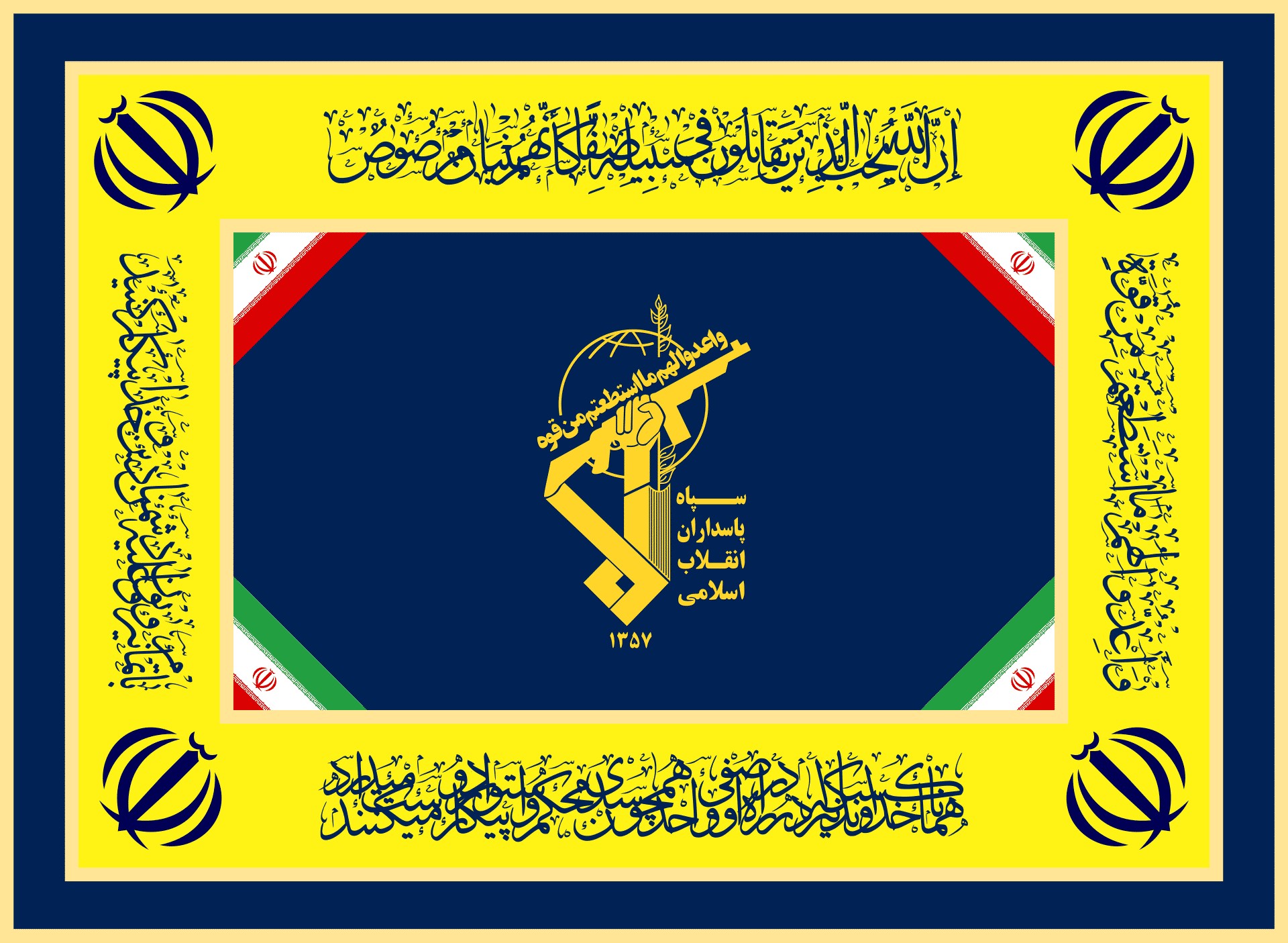
Revolutionary Guards, Supreme Organ of Repression

Tropic Thunder: Understanding US Interventionism in the Caribbean

Tropic Thunder: Understanding US Interventionism in the Caribbean
الأحدث من Levant Time
عرض الكل


