

The War in Iran: Positioning of the Key Players


On 28 February, thunder rolled across the world – an abrupt and violent movement. Brutal, certainly. Unexpected? Not quite. The event had long been anticipated – yet its timing, scale and objectives remained unknown. The date is now clear. The scale, however, is still uncertain. As for the objectives – what do they mean for Israel and for the United States?
Given the stance of the mollah regime toward Israel – and the foundations of power it has built at great expense to pursuit the goal of eradicating the country and paralyzing Lebanon – Israel is fighting for its survival. So, too, does Benjamin Netanyahu. The objective that follows is stark: eradication.
The United States has an entirely different agenda. Negotiations with Iran had stalled – a familiar Iranian tactic. President Trump, accustomed to swift deals and frustrated by his interlocutors’ delays, had one aim: to eliminate a religious power with which it was impossible to negotiate a mutually beneficial agreement, starting with the United States itself. Along the way, he sought to avenge the 1979 hostage crisis, a wound that remained raw. The ultimate goal: to resolve the Middle East issue quickly and clear the way to focus on the Indo-Pacific.
Could Netanyahu have pushed Trump’s hand? It’s a plausible hypothesis. For the White House, the objective was a quick victory without committing ground troops. For the Israelis, the approach is long-term. That difference promises to be a major point of contention.
Russia: silent. Its focus lies elsewhere. Its positions in Africa, including Libya, are secure; its footholds in Syria (Tartus, Hmeimim) and Sudan (Port Sudan) are established. Only victory in Ukraine remains in its sights – a victory that will be sealed once negotiations with the United States guarantee recognition of Russian control and ownership of Crimea and the oblasts of Donetsk, Luhansk, Kherson, and Zaporizhzhia, which it has not fully conquered. Additional claims concern the broader future of Ukraine. President Putin’s stance makes it likely that Trump would support such negotiations.
China: silent. Its main concern remains securing its supply of hydrocarbons, essential to maintaining its industrial power. The military successes in Venezuela by U.S. forces, and in Iran by American and Israeli armies – noting that both countries possess Chinese detection systems and air-defense equipment – do not prompt China to make a show of force, except – like the Russians – to insist on adherence to international decisions, which are otherwise ignored by both Iran and Venezuela.
States that have sought protection from Russia or China after expelling other, perhaps imperfect but loyal countries, will find themselves at a loss if they become targets in the future, given the lack of a Russian or Chinese response to the offensive against Iran.
The UAE Modernizes, Europe Absent
What does the future hold for the BRICS+? Only time will tell. But those who claim to be protectors cannot afford to act solely as predators.
Having freed themselves from Saudi tutelage – long burdensome and mired in conventional as well as economic stagnation – the Emirates have modernized, paving the way for a prosperous, globally connected future. They have secured strategic autonomy, and the contrast with Saudi geopolitics is evident on almost every front: Saudi Arabia is a strategic partner of Pakistan and backs Somalia’s federal government, while the UAE leans toward India and maintains a special relationship with the unrecognized Somaliland; in Sudan, Riyadh supports the regular army (SAF), whereas UAE backs the Rapid Support Forces (RSF); in Yemen, Saudi Arabia supports the internationally recognized government, the UAE the southern separatists; at sea, in the Red Sea and the Indian Ocean, Saudi Arabia pursues a national security strategy, while the UAE has developed a network of ports and logistics hubs across the Indian Ocean.
Finally, regarding Israel, Saudi Arabia has still not officially recognized the Jewish state, unlike the UAE, signatories of the Abraham Accords (2020). Saudi Arabia, aspiring to be a territorial and political power, seeks to establish a system of collective security. The Emirates, by contrast, aim for maritime and commercial partners. Two very different approaches to politics, international relations, and diplomacy. Two divergent global positions in terms of influence and action.
Europe? Absent. Or at least inaudible. It had every reason and every opportunity to play a role – the capacity to do so was there. How could it, when part of Europe is focused on the East, hypnotized like a rabbit caught in a car’s headlights, while another, smaller portion looks toward the sea, the Mediterranean, and the Near and Middle East? A third part is incapable of action, viscerally attached to the United States, no matter the cost.
And Iran in all this? Who is in command, who is leading, who has a strategy? For now, Iran attacks every country.
In conclusion, the United States and Israel pursue different objectives at different tempos. There was a convergence of immediate interests. In the medium and long term, however, their paths appear to diverge sharply.
Israel has no intention of negotiating. What, then, will become of Iran? Fragmented, fractured, Westernized? In any of these scenarios, the outcome would favor neither Russia nor China.
As for the United States, fixated on its desire to see this reviled religious government disappear, it could not negotiate on its own terms. Now, the question remains: with whom will it negotiate?
In Search of Lebanon, from Beirut to the Vatican
UN: Paris Wants to Replace UNIFIL With a 'Different Type' of Presence
The Abolition of the Death Penalty: Ibrahim Najjar and Élie Keyrouz’s Long Fight
The Testament of Hassan Rifai
A ceasefire... yes, but what happens next?
More from Jean-Patrick Dayras
View All


More in Politics
View All



Mexico: after the Elimination of El Mencho, the Calm Before the Storm?
«Remaining»: Rekindle the Memory of the Victims of Political Assassinations Since 2005
Revolutionary Guards, Supreme Organ of Repression
Tropic Thunder: Understanding US Interventionism in the Caribbean
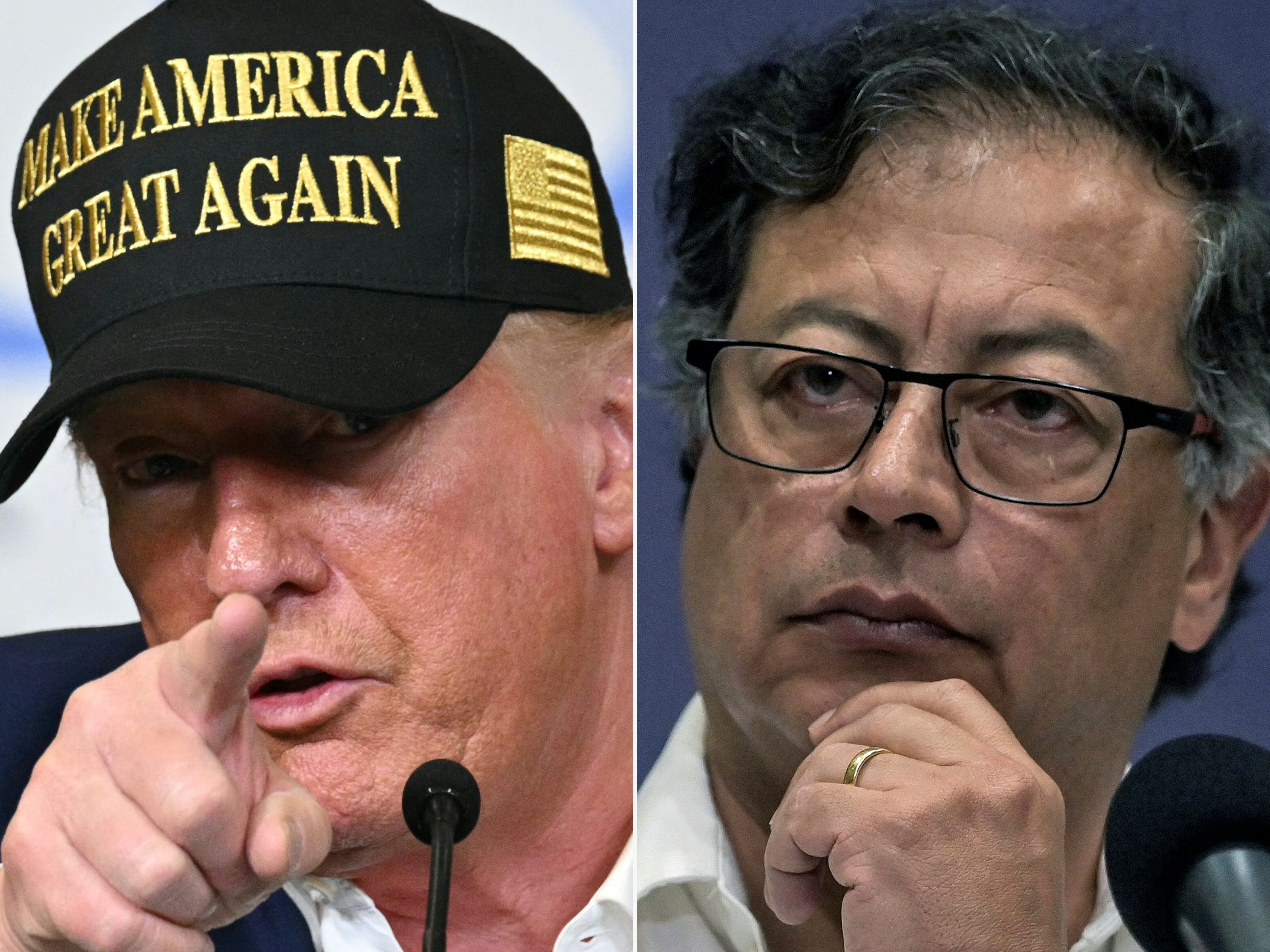
Tropic Thunder: Understanding US Interventionism in the Caribbean
Latest from Levant Time
View All


