

The “Water Nobel” for an Iranian “Tiller of Waters” Opposed to the Mullahs

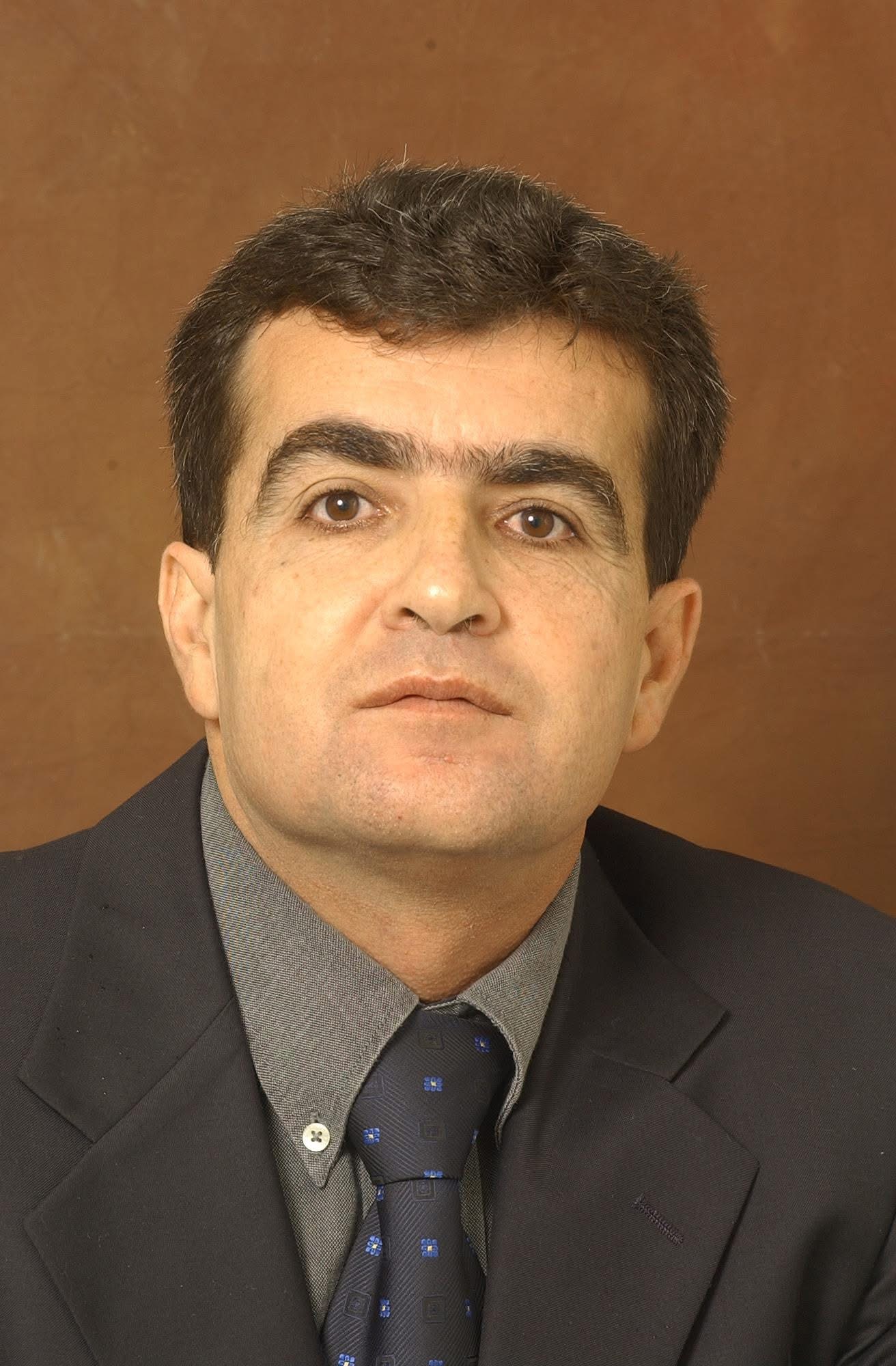
In Toronto, Canada, Iranian scientist Kaveh Madani, born in Tehran in 1981, heads the United Nations University Institute for Water, Environment and Health, which coordinates research on water resources and makes policy recommendations. In 2026, he received the Stockholm Water Prize, widely regarded as the “Nobel Prize of Water,” notably for his work on the concept of “water bankruptcy,” at a time when the world is depleting its water resources faster than they can be replenished. Madani is seeking to use his position to make his voice heard within the Iranian diaspora, particularly during the war waged by the United States and Israel against Iran. He regularly speaks out on social media, where he has thousands of followers. He denounces abuses committed by the Tehran regime and draws attention to the environmental damage caused by the war in which his country is involved, including the toxic rainfall that followed missile strikes on oil depots in Tehran.
Although the world’s attention is focused on his country, Madani still finds reasons for hope. “The situation is dramatic, but Iranians are fortunate to belong to a nation with a great history and to have educated people fighting for a better life.” Women in particular, he emphasizes, pointing to the veil imposed on them by the regime, which has largely been cast aside in the streets of the capital since the “Woman, Life, Freedom” movement of 2022. Yet the nights of this Iranian, born two years after the establishment of the Islamic Republic, remain haunted by the search for a new horizon for his country, as though he were tilling the waters, to borrow the metaphor from a novel by Lebanese writer Hoda Barakat. For what is happening today amounts to a double betrayal of the Iranian people. At the beginning of the war, the West had promised to encourage the Iranian opposition in the days following the initial strikes, thereby fostering uprisings that could bring about the collapse of the mullahs’ regime. That promise was echoed by US President Donald Trump, who told Iranians: “It is up to you to take over the government. That will be your mission.” The promised democratic assistance never materialized, nor did the support envisaged for the 60% of the population who aspire to a better life. But these Iranians do not want to die in vain while the waters of freedom remain captive and the danger is beyond control. Life is becoming increasingly difficult as the war continues, despite promises to end it within two weeks without causing damage to civilian areas. Unfortunately, the path has once again been closed to protesters, and the waters of change will no longer be able to follow their natural course.
Just minutes before leaving for Tehran in September 2017, Kaveh Madani, born in the Iranian capital in 1981, was deeply anxious about what awaited him in his homeland. He recalls how, after fourteen years away, at the age of thirty-six, he chose to leave his prestigious professorship at Imperial College London, where he taught systems analysis and public policy. He was giving up a flourishing intellectual life, during which he had published his research on water in scientific journals and received numerous international awards, to return and immerse himself in the world of Iranian politics. Just days after his arrival, Issa Kalantari, vice president of the Islamic Republic, appointed him to the second-highest position in the Ministry of Environment under President Hassan Rouhani’s government (2013–2021).
The risk was considerable, particularly as Silicon Valley had been courting him, recognizing the value his research on water resources might acquire in the coming years as data centers, which consume vast quantities of water for cooling, continued to proliferate. “It would have been easy to say no. But this was an unprecedented opportunity for someone with no political or family connections. I was not a typical ideologue. And I wanted my knowledge to serve my country,” explains the researcher, who holds a doctorate in civil and environmental engineering from the University of California.
Madani’s troubles began the moment he stepped off the plane. While passing through customs at Imam Khomeini Airport, he was briefly detained by the Revolutionary Guards. His phone was hacked, and his computer and emails were searched. It was merely a foretaste of the ordeal he would endure at the hands of the Revolutionary Guards for nearly seven months. The institution deeply distrusted the presence, within the Islamic Republic’s government, of this distinguished academic who had spent most of his life abroad. Regarded as a kind of “Western infiltrator,” he soon became the target of the most outrageous rumors, worthy of a spy novel. “The funny thing is that the regime saw me as Agent 007, working for MI6, Mossad and the CIA.” He was even compared to Eli Cohen, the famous Israeli spy who infiltrated Syria between 1961 and 1965. Cohen had provided valuable intelligence about Damascus’s plan to divert the waters of the Jordan River, intended to deprive the Jewish state of water from the occupied Golan Heights.
Whenever Madani was invited to represent Iran at COP23 in Bonn or at the “One Planet Summit” organized by Emmanuel Macron in Paris, he was regularly subjected to questioning upon his return to Tehran. The Revolutionary Guards accused him, among other things, of pushing for the ratification of the 2015 Paris Climate Agreement in order to “restrict Iran’s development.”
In 2018, following a wave of arrests of environmental activists accused of espionage, Madani also spent several days in prison. One of his close associates, sociologist Kavous Seyed-Emami, died just days after his arrest in the notorious Evin Prison, with the authorities claiming he had committed suicide. The shock did not prevent Madani from criticizing the authorities over their management of water resources, now one of Iran’s major problems. Another preposterous rumor then spread across social media: he had supposedly helped Israel and the United States secretly disrupt Iran’s climate by making the country’s clouds disappear, thereby causing repeated droughts and water shortages. In the eyes of regime supporters, Madani was nothing more than a “biological terrorist,” a “water terrorist.”
Yet Iran has, in Madani, one of the leading experts capable of helping resolve a crisis that has repeatedly driven people into the streets. But the regime allowed the situation to deteriorate. Before 1997, the country was irrigated through qanats, underground channels that collect water from the mountains. Then, faced with rapid urban growth in a country whose population now stands at around 93 million, the authorities built dams, reservoirs and groundwater pumping systems without any genuine national planning. The result was a rapid expansion of agricultural land and water consumption, while Iran’s water reserves dwindled year after year. In 2025, the driest year in nearly six decades, President Masoud Pezeshkian warned: “If it does not rain, we will have to start rationing water distribution in Tehran. If the drought persists, we will face a water crisis and be forced to evacuate the city.” Today, the situation remains catastrophic, with water reserves approaching exhaustion. In April 2018, Madani decided to flee. While traveling to Bangkok, Thailand, to attend a United Nations meeting, he deliberately chose not to board the flight from Istanbul that was supposed to take him back to Tehran. Instead, he went into exile to resume his academic career abroad.
Madani is now trying to draw attention to the war his country is waging against the world and its neighbors, both near and far, and to a postwar period that promises to be far more complex in human and financial terms. Iran’s young people cannot travel to every glacier on the planet to stop this war, which has become a source of instability. Iranians live beneath a sword of Damocles hanging over the valley of their crises. They are hemmed in by the retaining walls against landslides erected by the mullahs, while the West seems scarcely concerned with developing models that would enable them, in the future, to identify dangers and dispel doubts surrounding a double betrayal, for which they are paying a heavier price than the rest of the world, with sanctions that have become unbearable for Iranian youth.
Hezbollah: What If Disarmament Began in Janta?
Power, the Illusion of Power, and the Fait Accompli
Lebanon: The Return of Assassinations and the Dictatorship of Powerlessness
Why Are the Lebanese Divided Despite All That Unites Them?
Taif, the Constitution, and the Republic’s Bad Habits (2/2)
Mais de Yakzan Takki
Ver tudo


Mais em Analyze
Ver tudo


O mais recente do Levant Time
Ver tudo


