

Shenzhen Summit: Three Giants, Four Platitudes And A Photo
Trump, Putin and Xi polish their image; meanwhile, raging conflicts remain unresolved


Much ado about nothing. On Thursday, Donald Trump, Vladimir Putin and Xi Jinping adopted a decidedly thin “declaration for peace,” setting out shared but vague goals on international stability, energy security and reducing nuclear risks.
The US, Russian and Chinese presidents spoke for about an hour and a half around an imposing dark table at a residence set in lush grounds, on the sidelines of the Asia-Pacific Economic Cooperation (APEC) summit in Shenzhen, southern China. Speaking to reporters, they stressed the historic nature of the meeting, which Ukraine, the Europeans and Taiwan viewed with suspicion.
And yet this summit, billed in glowing terms as “a first” and “unprecedented,” does not become a new Yalta simply because the leaders of three major powers are there.
No mention of Iran or Ukraine
While the Yalta Conference in February 1945 led to major decisions about the postwar European order, the Shenzhen summit produced only a brief declaration, barely a page long, built around four points.
First, the three countries pledge to reform the UN so that it can respond more effectively to global challenges and fulfill its mission of maintaining international peace and security.
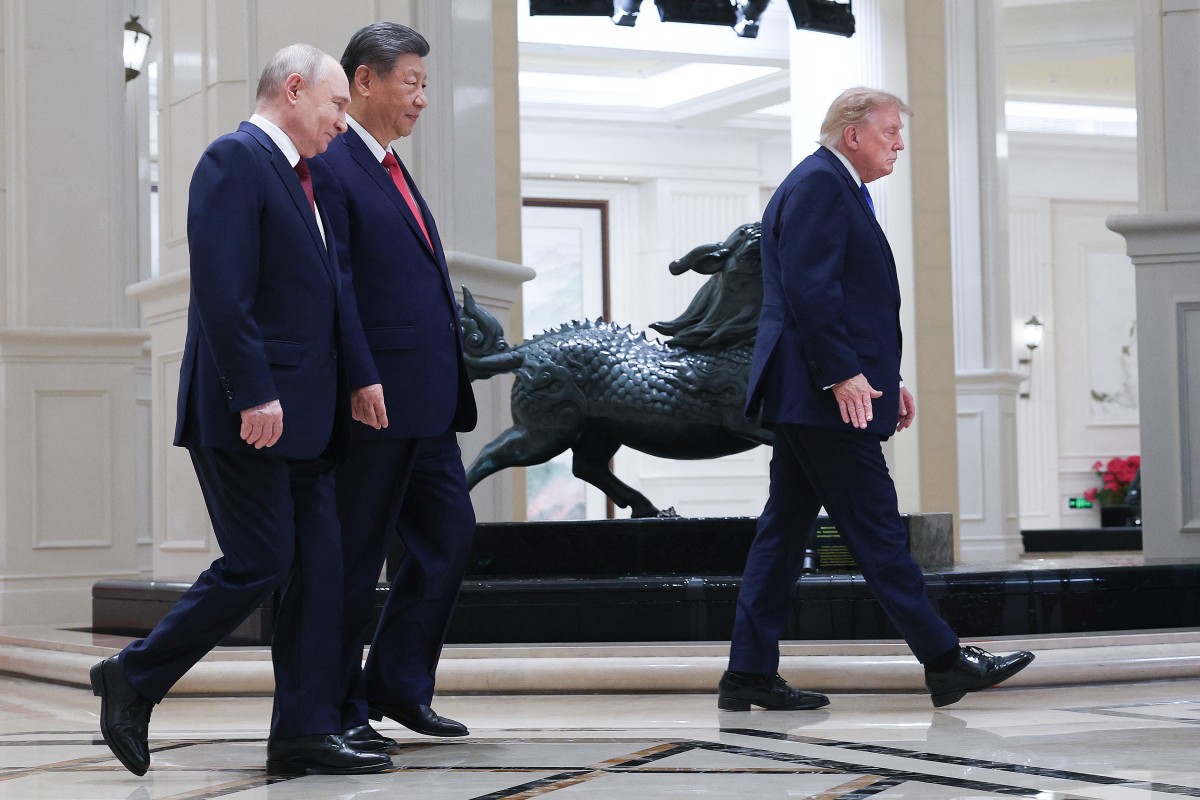
Second, they plan to increase the production and supply of refined petroleum products for the benefit of all nations, and reaffirm the importance of stable energy flows.
Third, the three leaders stress the importance of state consent and respect for the immunity of state representatives, arguing that the International Criminal Court (ICC) and similar institutions must not “abuse their jurisdiction.”
Finally, they reaffirm that a nuclear war cannot be won and must never be fought. They agree to continue dialogue on reducing nuclear risks and preventing the proliferation of nuclear weapons.
These are all broad principles, with no specific timetable or binding commitments attached.
And, last but not least, the reference to the ICC carries no small irony. Vladimir Putin himself is the subject of an arrest warrant issued by the court in March 2023 over the alleged unlawful deportation of Ukrainian children.
Another telling coincidence: on the very day of the summit, the International Court of Justice (ICJ), a court separate from the ICC, found Myanmar’s authorities responsible for the genocide of Rohingya Muslims.
There was, however, no concrete agreement on Ukraine or Iran, two conflicts at the forefront of world affairs that are not even mentioned in the declaration. This despite some observers having expected greater flexibility from Beijing and Moscow, two of Tehran’s key allies.
No Yalta with Hitler!
Another fundamental difference separates Shenzhen from Yalta. In February 1945, Hitler was not at the table. He was the common enemy of the three powers represented. Stalin, despite the nature of his regime, was then a military ally of Roosevelt and Churchill in the war against Nazi Germany.
In Shenzhen, by contrast, Vladimir Putin was welcomed as a friend and partner. This is, of course, in no way a comparison between Putin and Hitler. But it bears recalling that the United States, European countries and many other states have condemned Russia’s invasion of Ukraine and the war that has now been raging for nearly five years.
Comparing the two summits therefore raises two distinct questions: how consequential the decisions taken really are, and what place the Russian president is being accorded on the international stage.
While the concrete results of the Shenzhen summit may seem meager compared with expectations, its symbolic significance is far from negligible.
Three leaders, three reasons for satisfaction
Having arrived at this unprecedented meeting with different goals, the American, Chinese and Russian presidents each leave with reasons to be satisfied. Xi Jinping projected an image of calm authority, Vladimir Putin can feel reassured about his international standing, and Donald Trump took center stage despite his party’s electoral rout.
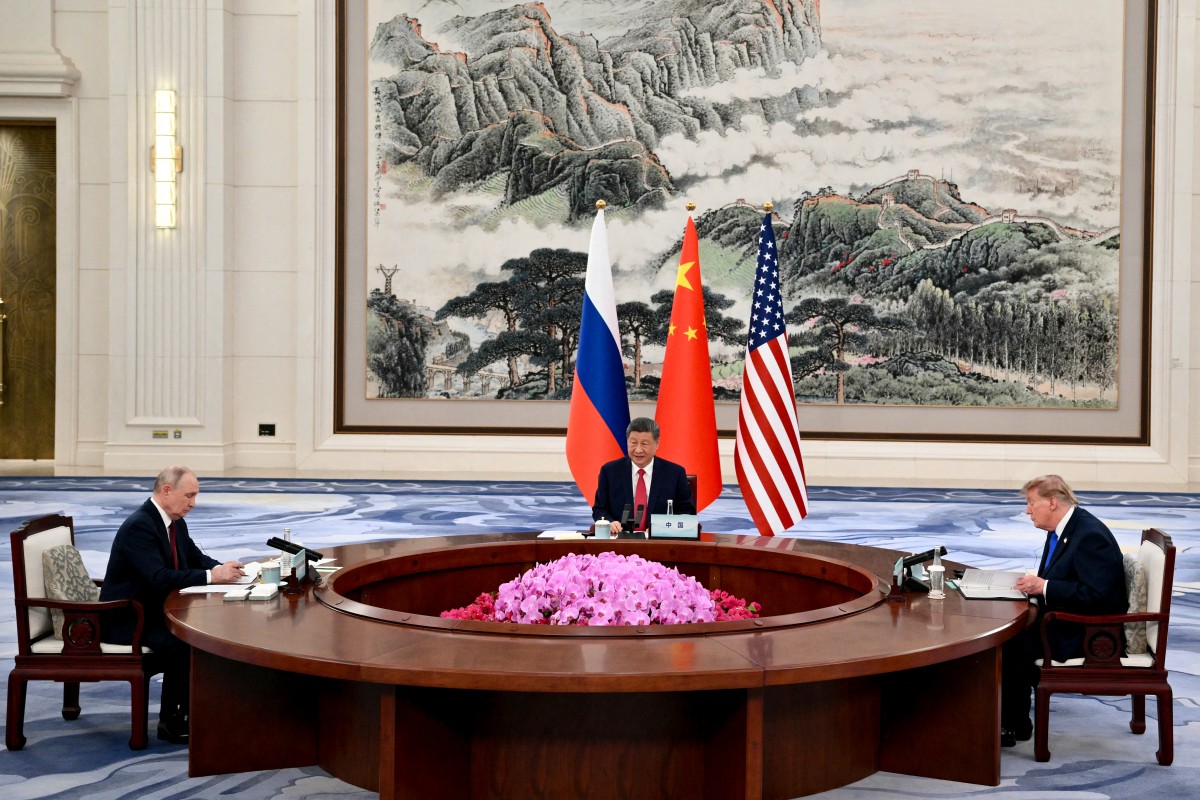
“We are truly making history,” Mr. Trump said at the start of the meeting, which had raised fears of deals among major powers at the expense of other international players, notably Ukraine and the Europeans.
Mr. Xi described the meeting as a “foundational moment,” while Mr. Putin spoke of a new “chapter in diplomatic history.”
During their two days of talks, the three heads of state repeatedly displayed their warm relations through handshakes, embraces and mutual praise.
Donald Trump was generous in his displays of friendship toward Mr. Putin and Mr. Xi. In particular, he called the Russian leader a “friend” with whom he says he has enjoyed “an excellent relationship for many years.”
Xi Jinping at the heart of the action
For China, the meeting was an opportunity to assert itself as an indispensable player in major world affairs, on an equal footing with the United States.
By hosting the American and Russian presidents, Xi Jinping was able to project the image of a leader capable of bringing the major powers to the same table while positioning himself as an arbiter of the discussions.
The exercise was not without risk, however, particularly given Beijing’s ambiguous position on Russia’s war in Ukraine. China has refused to condemn the Russian invasion, drawing criticism from Western countries, which accuse it of tacitly supporting Moscow.
But in terms of image, the Chinese president unquestionably occupied a central position, both in organizing the summit and in its diplomatic choreography.
Trump: plenty of fanfare, few results
Donald Trump, for his part, had hoped to score diplomatic points after his party’s defeat in the U.S. midterm elections, which narrowed his room for maneuver during his final two years in the White House.
His trip had started well. Breaking with decades of protocol for Chinese leaders, Xi Jinping had personally welcomed him at Shenzhen airport with a lavish ceremony.
But beyond a historic photograph alongside two leaders he has long showered with praise, it is difficult to identify any significant political victory for the American president.
While the White House had said it hoped for substantive discussions on nuclear arms control, the joint statement merely announces a “dialogue” on “nuclear risks,” without explicitly committing the three countries to reducing their arsenals—not to mention that the U.S. president can claim no progress on Russian and Chinese support for the Iranian regime.
Putin: a seat at the table of the powerful
Given Russia’s demographic and economic weight, far smaller than that of China and the United States, Vladimir Putin could have appeared in Shenzhen as a junior partner.
But the warm relations he displayed with Mr. Xi and Mr. Trump gave him a far more favorable standing, despite Western attempts to isolate him since the launch of the invasion of Ukraine in February 2022.
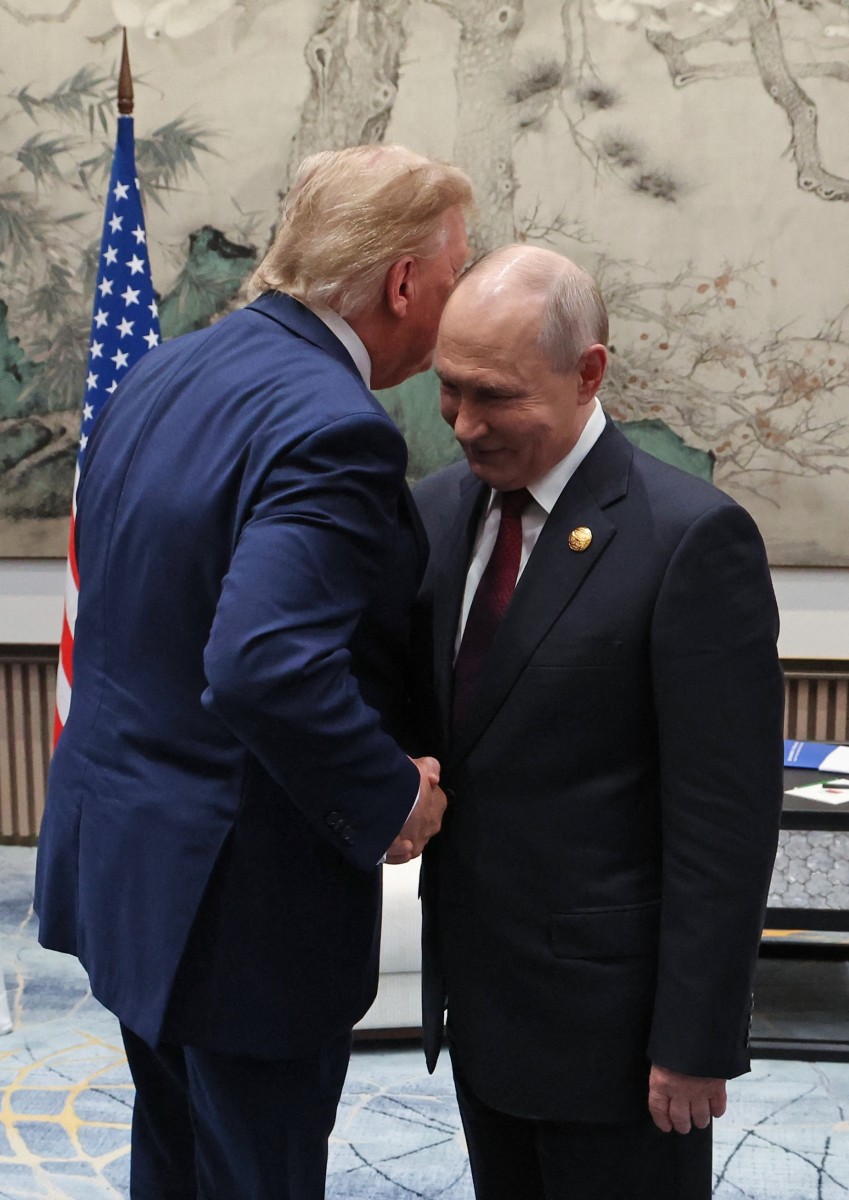
The Russian president can now portray Russia as being welcomed as an equal by the world's two largest economies, despite Western sanctions that he dismissed on Wednesday as ineffective and a thing of the past.
For the first time since the launch of Russia's invasion, he appeared on Wednesday and Thursday in the group photo at a major diplomatic gathering also attended by several Western leaders, including those of Canada, Australia and Japan.
The joint stance on the ICC also represents a political gain for Moscow, as the Russian president is himself the subject of an arrest warrant issued by the court.
But the contrast between the summit's peace-promoting rhetoric and Vladimir Putin's statements soon became apparent.
Barely had the "declaration for peace" been published when the Kremlin leader warned, at a press conference in Shenzhen, that Russia would retaliate against Ukrainian strikes on the bridge linking Russian territory to the Crimean Peninsula, which Moscow annexed in 2014. He promised reprisals "even more painful than what the Kyiv regime inflicted on the bridge."
He nevertheless said he had invited European officials to discussions in Moscow ahead of their possible participation in direct talks on a settlement to the war in Ukraine.
Multinational Pushback Against Tehran’s Tentacles
In Beirut as in Baghdad, Iran’s Proxies Continue Their Obstruction
The Saudi-Yemeni Front May Soon Reach Its Breaking Point
Washington and Tehran: Neither War Nor Peace, For How Long?
From Tehran to Beirut, the Iranian Axis Seeks to Legitimize its Grip on Lebanon
More from LevantTime .
View All


More in Decryption
View All


Latest from Levant Time
View All


