

Multinational Pushback Against Tehran’s Tentacles
U.S. civilian infrastructure targeted by Iranian cyberattacks


It has been described as “historic” by various Western political and media circles. The French daily Le Figaro has voiced fears of a “new Yalta,” lamenting the European Union’s absence from a meeting that could “decide the world’s affairs”…
The trilateral summit bringing together US President Donald Trump, Russian President Vladimir Putin and Chinese President Xi Jinping on Thursday, November 19, in Shenzhen—China’s technology megacity—will certainly have the pressing issues of Iran, Ukraine and nuclear weapons on its agenda.

But should we therefore expect a sweeping, swift accord on dividing global influence among these three superpowers? Only the course of developments on the Iranian and Ukrainian fronts, and perhaps over Taiwan in the longer term, will resolve the uncertainty on this score.
For now, while the true outcome of the Shenzhen summit remains to emerge, attention is focused primarily on what increasingly looks like a buildup, or a genuine multinational awakening (better late than never…), in response to Iran’s expansionist excesses and the insidious, destabilizing tentacles that the mullahs’ regime has evidently extended across much of the world.
Turning first to military operations linked to the armed conflict in the Gulf, the Islamic Revolutionary Guard Corps launched fresh salvos of ballistic missiles against Bahrain and Kuwait on Tuesday night, claiming to be targeting US bases. Saudi Arabia and Qatar, as well as Lebanese Prime Minister Nawaf Salam, condemned the attacks in the strongest terms.
This is the fourth time in less than a week that Bahrain has come under Iranian fire.
The attacks followed the conviction by a Bahraini court of 53 Shiite opposition figures accused of plotting, with the support of Iran’s Islamic Revolutionary Guard Corps, to overthrow Bahrain’s monarchy and establish an autocratic, theocratic government based on the doctrine of wilayat al-faqih (guardianship of the Islamic jurist), which requires total and unconditional allegiance to Iran’s Supreme Leader.
These latest attacks by the Revolutionary Guards would thus appear to be a direct response to the conviction of the Bahraini Shiite opposition figures, who received lengthy prison sentences. Iran’s response speaks volumes about the “diplomatic” methods of the mullahs’ regime in Tehran.
Cyberattacks in the US
The Revolutionary Guards’ tentacles are clearly not confined to the Gulf and the Middle East. A major development on this front emerged internationally—specifically in the United States—on Wednesday: US Secretary of Homeland Security Markwayne Mullin officially reported Iranian cyberattacks on the US transportation, energy and water sectors. “Iran-linked cyber actors have targeted American civilian infrastructure,” the US secretary stressed.
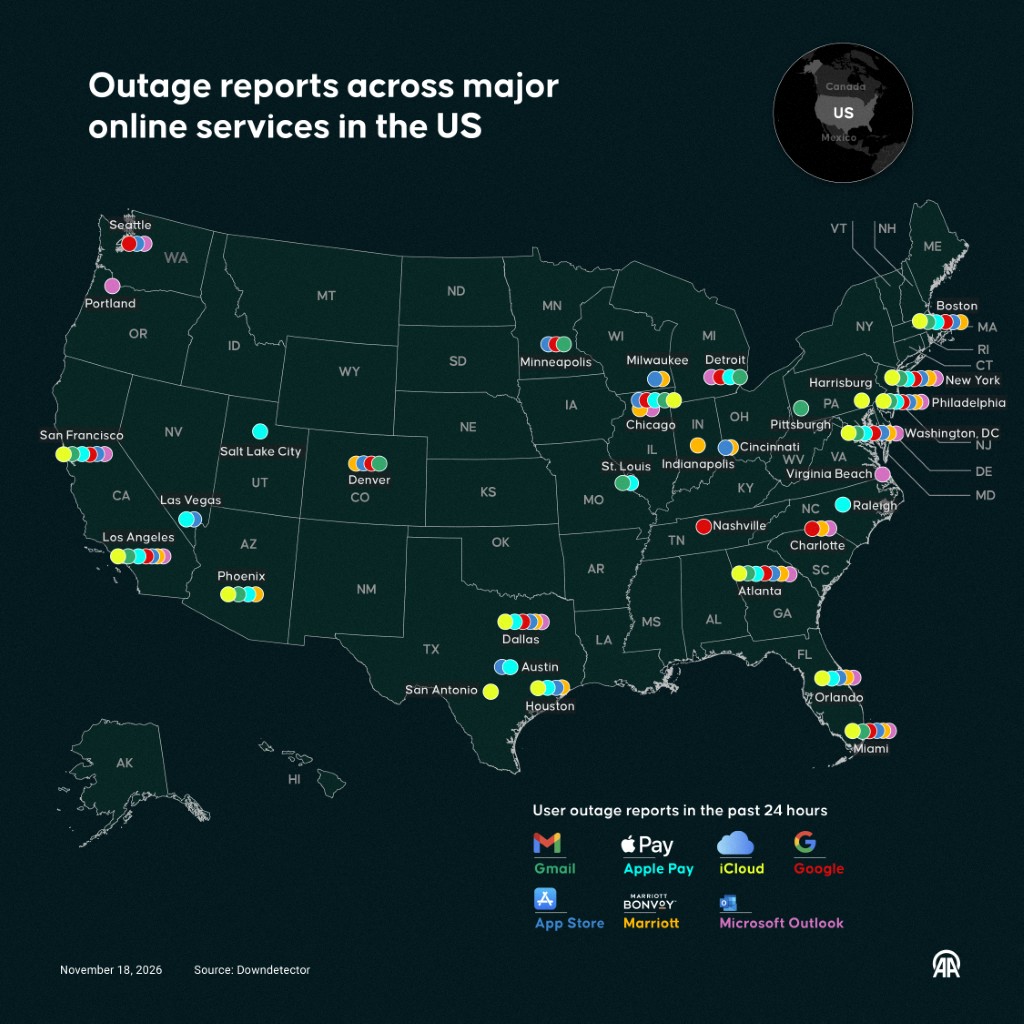
This is the first time a senior official in Washington has reported Iranian cyberattacks against infrastructure in the United States. It is worth recalling that earlier in the week, CNN—generally highly critical of the Trump administration—reported that, according to US intelligence reports, the Islamic Republic of Iran had planned terrorist operations in Washington using tactical chemical weapons.
In the same vein, US intelligence has also reported in recent days on Iranian preparations to target senior officials in Washington.
Cells dismantled in Germany and Macedonia
In Europe, German security services raided the Berlin offices of the Islamist association El-Irchad (“Guidance”) earlier this week. The association is accused of engaging in activities aimed at providing support to Lebanon’s Hezbollah.
The association was consequently banned in Germany, along with three other associations with ties to Hezbollah. At the same time, raids were also carried out in Berlin at the offices of 28 centers suspected of having links to a “terrorist organization” and spreading subversive propaganda, according to German authorities.
Elsewhere in Europe, North Macedonia announced early this week that it had dismantled a terrorist cell that, according to Macedonian authorities, was affiliated with the Revolutionary Guards and was planning to carry out “an assassination” in Greece. Greek media confirmed the report, saying the cell had branches in Greece and was under the direction of an Iranian national.
Amid these tensions over the Iranian regime’s conduct, conflicting reports have been leaked to the press about a possible large-scale US-Israeli attack on vital facilities and infrastructure in Iran.
In this connection, the head of Mossad was summoned late Wednesday to a meeting with the Israeli military’s chief of staff and the head of US Central Command, CENTCOM, to discuss “closer US-Israeli coordination in the event of an attack on Iran,” Israeli sources said.
Two other significant developments concerning Iran are worth noting: large popular demonstrations against the regime in Tehran took place a few days ago in the streets of the Kurdish-majority town of Abadan; and, closer to home, a scathing comment about Hezbollah was reported Wednesday evening by the Arabic-language channel Al-Hadath (which is close to Saudi Arabia), citing “Lebanese sources” who stressed that “Hezbollah’s anger over the legal proceedings brought by the Lebanese judiciary against its supporters shows that the party is living in the past.”
“The state,” those sources noted, “is not responsible for Hezbollah’s inability to grasp that the era of its hegemony is over.”
The comment speaks volumes about the level of tension between the central government and the pro-Iranian party. That tension mirrors the multinational pushback against Iran’s destabilizing excesses, which clearly no longer seem to have any limits…
Shenzhen Summit: Three Giants, Four Platitudes And A Photo
In Beirut as in Baghdad, Iran’s Proxies Continue Their Obstruction
The Saudi-Yemeni Front May Soon Reach Its Breaking Point
Washington and Tehran: Neither War Nor Peace, For How Long?
From Tehran to Beirut, the Iranian Axis Seeks to Legitimize its Grip on Lebanon
More from Michel Touma
View All


More in Decryption
View All


Latest from Levant Time
View All


