

"Itinéraires" by Jamil Molaeb: A Dust-Free Human Geography

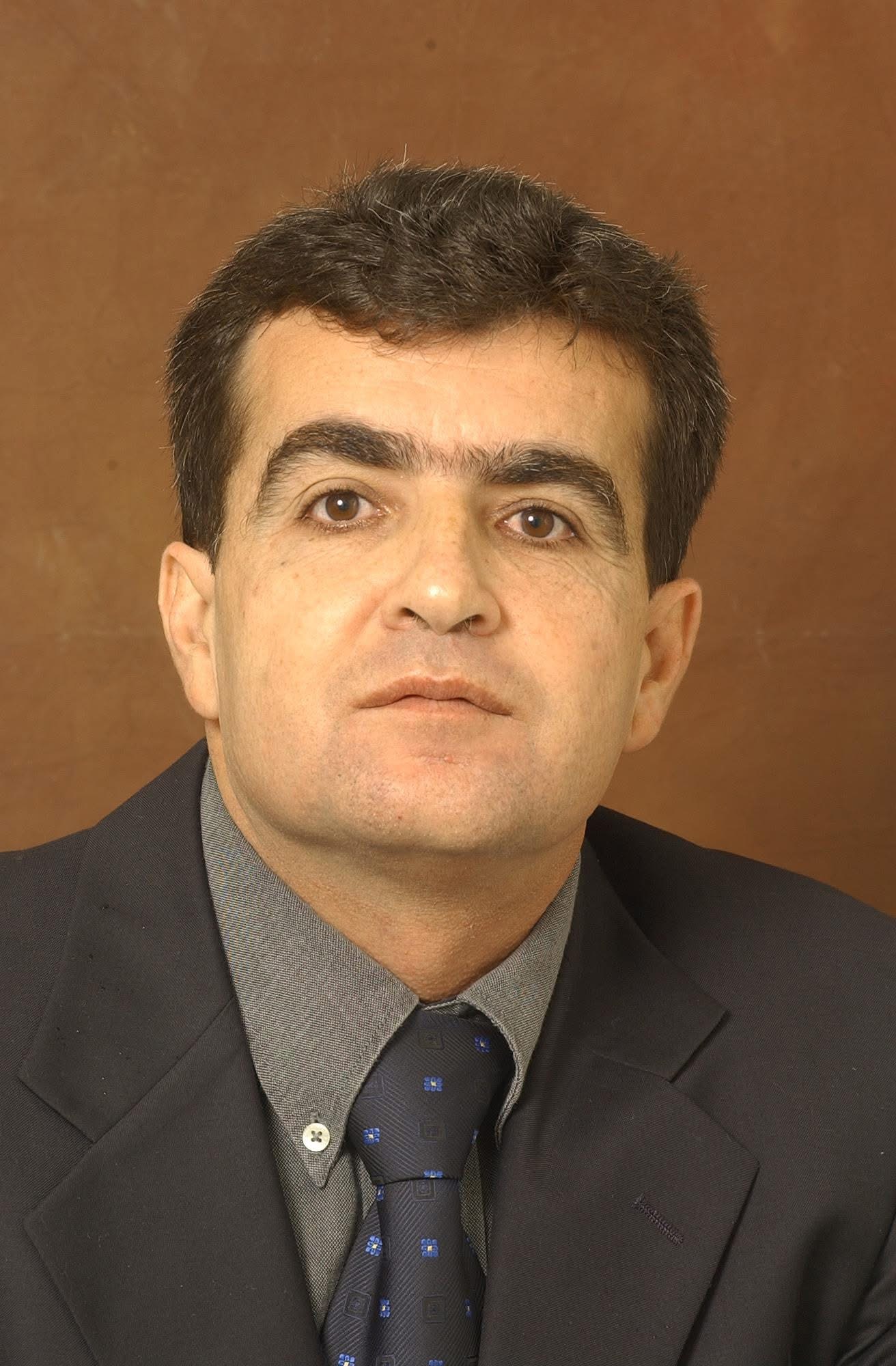
Lebanese artist Jamil Molaeb seeks to read cities, their transformations and their cultural, economic and political changes, bringing forth a theater of colors in which a pictorial language shaped by more than five decades of travel unfolds. His exhibition “Itinéraire,” at Galerie Janine Rubeiz in Beirut, thus traces an artistic and visual biography of the world. It opens onto an urban world of color and travel, from Shanghai to New York, from Japan to Mexico, and from Beirut, Jerusalem and Baalbek to Europe, Moscow, Algiers and Tangier.
Molaeb does not paint cities as they are, but as they have settled in his memory, with the particular emotions each city awakens in him. He retrieves their memories through color and line, exploring techniques and artistic schools ranging from Impressionism to Expressionism, from formal reduction to figurative representation. The city is no stranger to Jamil Molaeb’s paintings and drawings. His work brings together figuration and abstraction in a contemplative, expressive language, combining accomplished classical technique with an Expressionist avant-garde that evokes painting and what lies beyond it, without a trace of dust. His works seem to belong to that urban space, as though emerging into the light with all their possibilities fulfilled, through consummate technique and a refined perspective.
Molaeb is known for his command of his artistic tools and for his mastery of colors, which he knows how to blend and guide toward their aesthetic dimensions and deeper meanings, transporting some fifty cities into another realm.
Beyond the landscape and the artist’s gaze upon it, Jamil Molaeb paints the echo of places within his own sensibility, according to his personal vision and emotions. In this respect, he is close to two schools, Impressionism and Expressionism, which he interprets according to his own vision. He moves between the Impressionist approaches of Renoir, Monet and Pissarro and the Expressionist tendencies of Van Gogh and Gauguin, while also drawing on the chromatic richness of Matisse, Cézanne and Pissarro.
Even in paintings that tend toward miniature or abstraction, the elements and distinctive features of the landscape remain visible. His abstraction is never radical. He is careful to preserve the identity of each place, with color consistently taking precedence between Impressionism and Expressionism. As though they were two poetic worlds in motion. Through the pursuit of his own artistic signature, he continues to seek a universal modernity, enriched by his experience as a professor and his academic background.
This artistic project has unfolded over an astonishing length of time. An artist of singular standing, Molaeb uses color to explore the history of cities, some of which face catastrophe. He thus draws us back to the search for the meaning of the city in modern societies. The artist places it within the landscape as a spectral, silent presence between light and shadow. At times, the viewer’s gaze escapes the painting to explore its empty spaces in the face of everything unfolding around it, or to flee everything along with the painting itself. In this exhibition shaped by journeys, every city is, to some extent, a memory, a chromatic personality within history.
Molaeb tells its story with an absolute emotional attachment, through painting charged with feeling. It is as though he had spent his entire life in the heart of these places, achieving controlled expressive precision without pushing it to its furthest extremes. His work flows between figuration and abstraction, heritage and modernity, remaining attentive to the structural and experimental possibilities of form, between local sensibility and a modern vocabulary acquired through his academic training and teaching. So much so that it becomes difficult to distinguish who influences whom: Jamil Molaeb the artist or Jamil Molaeb the academic. He thus moves toward a painting of urban stability and an open, diverse society. It is as though he were anticipating the disappearance of places we have known for decades or centuries.
Beyond the landscape, he traces the connections between cities through a human and anthropological geography, using Impressionism, Expressionism, reduction and condensation. He engages in a kind of game of democratic erasure. Works of art become the most democratic expressions of the evolution of cities, which reject distance and isolation, bringing people together and embracing everyone. We stand before them with passion and imagination. They represent an attempt to democratize urban history, its questions and transformations, as an act of freedom, a way of shaping vision and a source of pleasure.
This major exhibition confirms the diversity of experiences and styles, while reminding us that the visual arts are part of transformations at every level. Molaeb absorbs the energy of these places, their architectural and geometric forms, their elements, rhythms and distinctive characteristics. He thus becomes a sensitive and distinctive witness, a builder of the world’s pictorial memory, interpreting it through meaningful artistic visions. Jamil Molaeb’s paintings do not present cities as tourist destinations, but as living entities shaped by historical memory, movement and light. They are not subjects external to the artist, but sensory and emotional experiences that he reconstructs on the surface of the canvas. He captures the inner imprint each city leaves upon him: the rhythm of its streets, the density of its architecture, the openness of its spaces and the contradictions between old and new. Masses of color become vibrant worlds, while forms, lines and colors converge to express the mood of each city, between Impressionist sensibility and an awareness of pictorial structure.
In “Baalbek” (acrylic on canvas), ruins, columns and human figures crowd together. “Istanbul” (gouache on paper) possesses a fluid pictorial power: water occupies everything living on the surface of the painting. This is a strength, for Molaeb does not fear emptiness. In “Fez” (gouache on paper), he reduces the Moroccan city to masses, colors and lines, creating an attractive work in which the beauty of the architecture does not retain its full structural distinctiveness. “Moscow” (gouache on paper) has its own particular “mood,” as does “Algiers” (gouache on paper). In “Shanghai” (gouache on paper), the exotic city appears similar to Mediterranean or Arab cities, despite the vast cultural and civilizational differences. “Tangier” (gouache on paper) lends itself to his pictorial language and his joyful, radiant palette. By contrast, “Cairo” (gouache on paper) emerges as a city of chaos, contradictions and congestion. Most ominous of all is “Jerusalem,” with its minimalist lines threatened by erasure and disappearance, becoming almost invisible. “New York,” meanwhile, is an immense pictorial experiment depicting the city of towering capitalist skyscrapers through a bleak, cold and desolate vision. Yet Beirut remains the beautiful journey after Baysour, where his museum stands. He returns to Beirut to breathe its urban air once again.
In this truly astonishing outpouring, the artist offers a reflection that warns against the effects of change on the ideal cities whose beauty he celebrates, now exposed to threats of every kind that weigh upon their heritage. The builders of past centuries had mastered their craft. But this historical order now faces a new challenge that could lead to its disintegration. Danger is not always where we first look. Yet it exists, and it takes many forms. Attention must be paid to the risks associated with wars, fires, heat, floods and concrete. A wave of color carries these warnings about the fragility of heritage and cities under different administrations. Molaeb seems to suggest that an acceleration occurred during the 2010–2020 period. We are increasingly exposed to unusual events requiring urgent intervention. Yet extending such interventions more widely will take time and demand considerable human, technical and financial resources. Capacities are unequal. Some have substantial resources to develop advanced conservation projects. But what of small museums, associations, municipalities or private owners whose means are limited? Urban heritage is also a genuine source of resilience for communities. These buildings were often constructed with remarkable sensitivity to their environment. We have much to learn from the earthen architecture of Sana’a, threatened with disappearance, restored, and then once again destroyed by war, along with all its aesthetic and economic values.
There is a genuine need to reflect on ways of living with beauty, a question that extends beyond heritage alone.
This is why art remains an essential presence in confronting the horrors of history and resisting the fragmentation of memory. These paintings are an attempt to resist oblivion. They are even a political struggle for the survival of cities in the face of despair. Such is the philosophy of this exhibition, in which Molaeb raises profound questions about the contradiction between the idea of the city and the context of continuous war in the region, and about how memory can become a free instrument of expression or a means of escaping the reality of war and destruction. These are not merely cities, but spaces of collective memory, where images of the past coexist with the horrors of the present, and where color remains a way of living, a political, social and cultural act.
With the OIF, Francophone Literature Breaks Down Borders
Eva Gonzalès: Subtle Freedom Through the Brush
September News: The Battle of Lebanon
The Samir Kassir Festival, or the Lebanon Yet to Be Born
Why Habermas Remains Urgently Relevant
More from Yakzan Takki
View All


More in Culture
View All



'Byblos' at the IMA: a cultural resistance in the face of war
Latest from Levant Time
View All


