

Trump vs. the Democrats: a Showdown is Brewing
Confusion over Syrian military deployment in Saudi Arabia


Two can play at that game. Following the electoral landslide that gave Democrats commanding majorities in the House of Representatives and the Senate, US President Donald Trump set the tone on Saturday by appointing Stephen Miller as White House chief of staff.
An unwavering loyalist, Miller had until then been the president's behind-the-scenes adviser, particularly on immigration crackdowns, a cornerstone of Trump's agenda. A figure on the most radical wing of the American conservative movement, his appointment signals Donald Trump's intention to take a confrontational approach.
The chief of staff holds a highly strategic position, effectively coordinating the administration's work and, crucially, controlling who gets access to the president and what information reaches him.
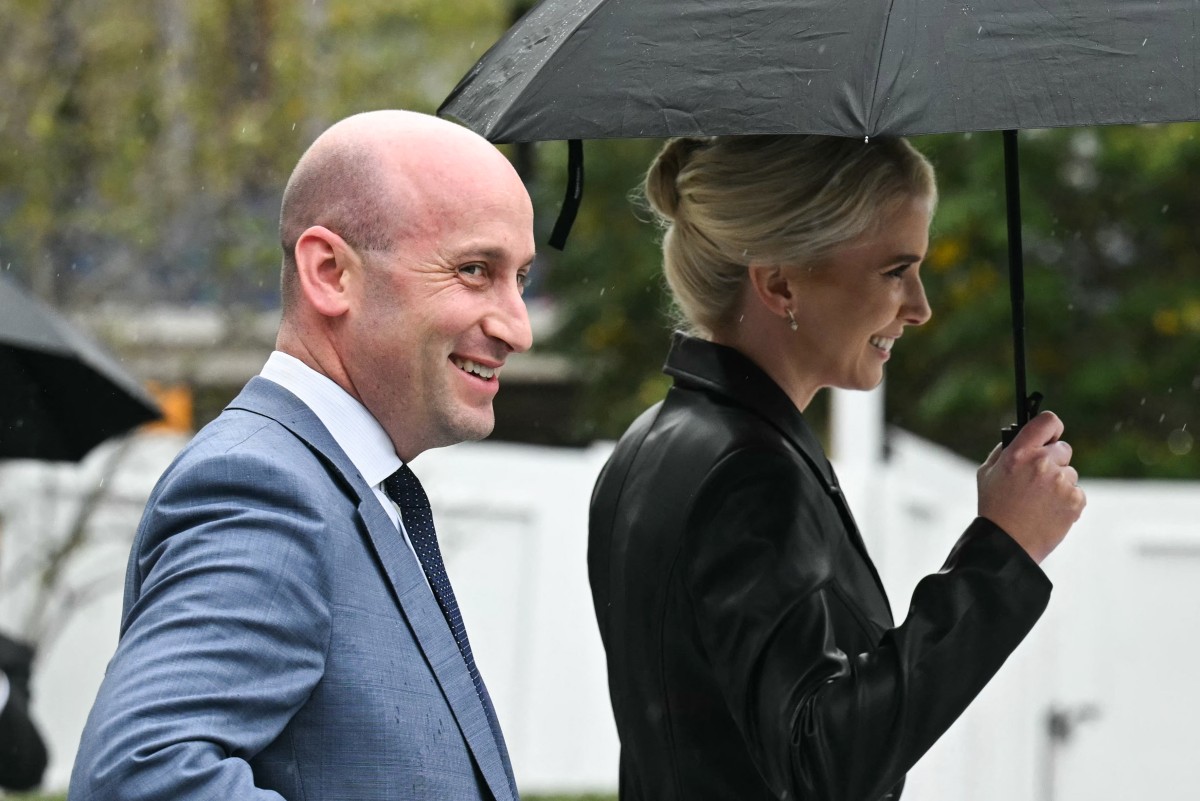
New chief of staff Stephen Miller with Natalie Harp, a special assistant to Donald Trump. (AFP)
At 41, Stephen Miller frequently echoes far-right rhetoric about the supposed decline of the West in the face of an "invasion" of migrants. He sees the issue as existential, declaring that "this is a fight to save civilization."
He was one of the architects of the "Muslim ban," restrictions on entry to the United States imposed on citizens of several predominantly Muslim countries that subsequently faced legal challenges.
Democrats condemned his appointment, arguing that the midterm elections had also been a repudiation of the methods used by Immigration and Customs Enforcement (ICE), which is carrying out a mass deportation campaign.
"Stephen Miller is a dangerous xenophobe and a deranged extremist who has American blood on his hands," protested Democrat Hakeem Jeffries, the likely next speaker of the House of Representatives.
On his Truth Social platform, Trump gave another sign of his determination to thwart the Democratic majority that will control Congress from January, posting a photo of himself with the caption "MR. VETO."
Syrian troops in the Arabian Peninsula?
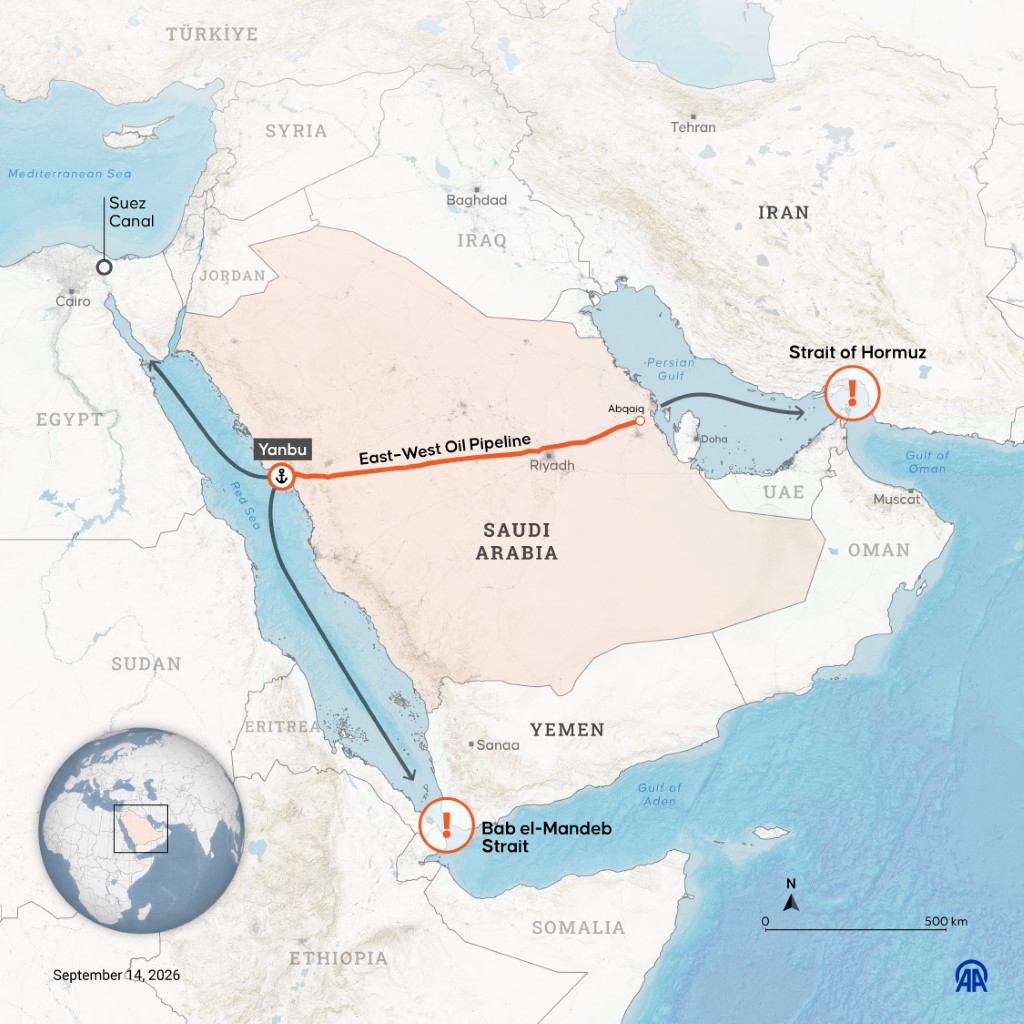
Trump acknowledged that the conflict with Iran, which sent oil prices soaring, had played a major role in his party's crushing defeat. But the US president refused Saudi Arabia's request for assistance, prompting Riyadh to seek more reliable regional allies.
Against this backdrop, officials from Yemen's UN-recognized government said on Saturday that Syria would deploy thousands of troops to Saudi Arabia and Yemen, where some were reportedly already present, to support the Yemeni government and its Saudi ally against the pro-Iranian Houthis.
"The Syrian and Saudi sides have agreed to send around 3,000 troops to fight the Houthis," said a source within the Presidential Council, Yemen's highest governing body, speaking on condition of anonymity because of the sensitivity of the issue.
Hundreds of Syrian soldiers are reportedly already stationed on both sides of the border between Yemen and Saudi Arabia, according to the same Yemeni government source and separate military sources.
The statements came three days after Syrian President Ahmed al-Sharaa visited Riyadh, where a framework cooperation agreement was signed. The agreement focuses primarily on "training military forces and strengthening their capabilities," a Syrian diplomatic source said. The same source, however, denied that Syrian troops were being sent to Yemen.
According to Damascus, the military agreement with Riyadh could pave the way for Syria to join the so-called Mecca defense pact, formed in August by Saudi Arabia, Pakistan and Turkey.
Battle-hardened former foreign jihadists
If confirmed by Riyadh and Damascus, this would be the first large-scale foreign deployment on this front since hostilities resumed in Yemen in July. Saudi Arabia is seeking to rally its allies in response to near-daily Houthi attacks that have targeted its oil infrastructure and airports since October.
The Syrian army is made up of a disparate collection of armed groups, mainly Islamist, some of which include battle-hardened former foreign jihadists in their ranks.
The Islamists of Hayat Tahrir al-Sham (HTS) produced their own drones for operations against government forces. Syrian fighters from Islamist groups had also taken part in other conflicts abroad, notably in Libya, Nagorno-Karabakh and Niger.
Faced with Houthi attacks, Saudi Arabia had appealed to the United States for help, but received no favorable response.
Egypt, meanwhile, recently pledged to provide Riyadh with defensive military assistance, without specifying the details.
France, for its part, has deployed personnel to protect the Saudi oil terminal at Yanbu, while London announced in October that it would deploy fighter jets to help protect Saudi territory.
Hezbollah Continues to Wreak Havoc Across the Region
Middle East Conflict: War or an Unlikely Peace?
France Act III: Another Weekend of Riots
Dahr el-Baïdar Explosives: Charges Brought Against 13 Hezbollah Members
Election Ends in Deadlock, Netanyahu Remains in Charge
المزيد من LevantTime .
عرض الكل


المزيد في Decryption
عرض الكل


الأحدث من Levant Time
عرض الكل


