

“No State Can Have Two Armies and Two Decision-Making Authorities,” Salam Says in New York
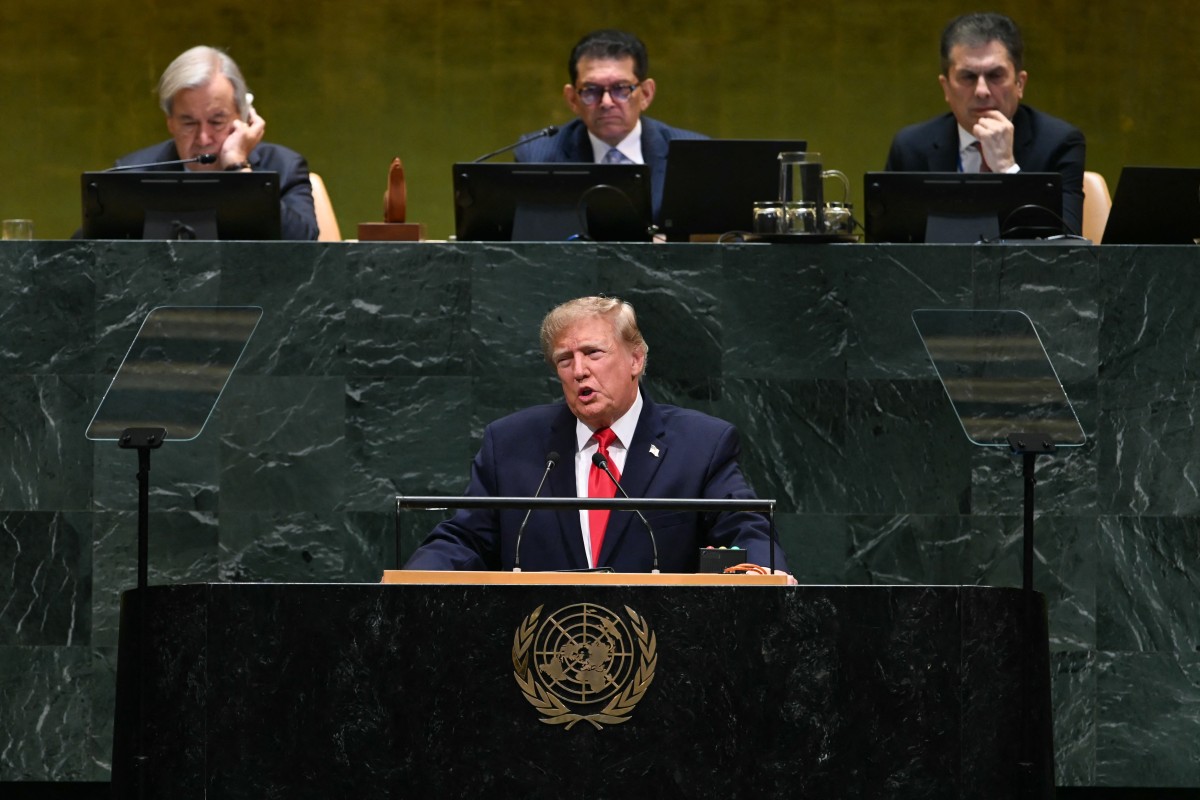

Lebanon did not miss this week’s major UN General Assembly gathering at United Nations headquarters in New York. Prime Minister Nawaf Salam has held a series of meetings on the sidelines of the event over the past two days, beginning with UN Secretary-General António Guterres on Monday evening. The messages he delivered were of vital importance, both with regard to the renewal of the mandate of the United Nations Interim Force in Lebanon (UNIFIL) and the state’s monopoly on arms.
On the Lebanese political front, the presence of Foreign Minister Joe Raggi alongside Salam did not go unnoticed, at a time when his near exclusion from the diplomatic trips undertaken by the president and the prime minister had raised questions among observers and caused tensions with the party that had backed his candidacy for the post, the Lebanese Forces.
The issue of maintaining an international force in southern Lebanon was therefore raised by the Lebanese prime minister with Guterres on Monday evening, as noted in a statement issued by the Presidency of the Council of Ministers. Salam stressed the importance of maintaining an international presence in the south, where a war between Hezbollah and the Israeli army has been raging for nearly three years. An international presence, he insisted, would support the Lebanese state’s efforts to extend its authority across its entire territory.
This international presence, whether through an extension of UNIFIL’s mandate – which is expected to begin withdrawing at the end of 2026 – or its replacement by another international force, European or otherwise, is a demand of the Lebanese authorities. The first option faces categorical opposition from the United States and Israel, which believe that UNIFIL has not been sufficiently firm in monitoring Hezbollah and its activities in the south.
The issue of the state’s monopoly on arms and the extension of its sovereignty was clearly at the heart of Salam’s address to the Lebanese diaspora gathered at the Consulate General in New York, at the invitation of Consul General Talal Daher.
“There can be no state with two armies, nor can there be a state with two decision-making authorities,” he stressed, according to remarks reported by our New York colleague Sylviane Zehil. The prime minister recalled the “important and decisive decisions” taken by his government, while acknowledging the “difficulties” encountered along the way. He stressed that “the state (must be) the sole authority throughout its territory, that decisions on war and peace must rest exclusively with the state, and that the army and legitimate security forces are the only ones responsible for the security of the Lebanese people.”
Emphasizing that sovereignty, security and economic recovery are three inseparable issues, Salam said his government was working “to secure an Israeli withdrawal, consolidate the return of our compatriots to the South, and launch the process of recovery and reconstruction.”
The monopoly on arms and the disarmament of militias were also discussed by Salam and his Iraqi counterpart, Ali al-Zaidi. The two men agreed on the “common challenge” of disarmament in both countries, given Hezbollah’s stated refusal to surrender its weapons and the refusal of some pro-Iranian militias in Iraq to do the same.
Salam also met with Jordan’s King Abdullah II, with whom he discussed regional stability, and Turkish President Recep Tayyip Erdogan, with whom he discussed the role Türkiye could play in the recovery of southern Lebanon.
Trump: “While Others Have Talked, I Have Acted”
The conflict in Iran was very much present at the UN on Tuesday, notably in US President Donald Trump’s address, in which he forcefully defended his war against the Islamic Republic. “Imagine if this regime had succeeded” in obtaining a nuclear weapon, he told representatives from around the world, in an apparent attempt to rally countries behind his war against Tehran, which he described as “the number one sponsor of terror.”
“I call on all nations to join us in isolating Iran economically,” the US president said. Trump asserted that Iran’s nuclear program had been destroyed, along with most of the country’s military power. He again threatened to “annihilate the Islamic Republic” unless a deal was reached after the US midterm elections. He urged Iranians not to count on the outcome of those elections or on a possible setback for his party.
Trump emphasized that he alone had acted against Iran, even though the danger posed by the country has been denounced by numerous nations and said he had restored America’s standing. “The United States is stronger than it has ever been, and its military is the most powerful in the world,” he stressed.
Trump is due to discuss Iran with his Chinese counterpart, Xi Jinping, in just two days. He is also expected to meet with the leaders of the Gulf countries to discuss the conflict on the sidelines of the General Assembly.
Iran is represented in New York by President Masoud Pezeshkian and Foreign Minister Abbas Araghchi. Also on Tuesday, an Iranian official told Reuters that the Strait of Hormuz could reopen within seven days “without conditions” if the Americans reduce their pressure on Iran. Despite the aggressive tone of Trump’s speech, the same official told the agency that Secretary of State Marco Rubio was willing to meet with Iranian officials in New York. However, according to several media reports, no such meeting is currently scheduled.
More Than 150 Killed in Yemen
On the Yemeni front, the confrontation that has resumed in recent weeks between the Houthis and the internationally recognized government forces on the one hand, and Saudi Arabia on the other, is intensifying. In just the past two days, the conflict has claimed more than 154 lives, while nearly 30,000 people have been displaced since the Houthis advanced toward positions along the Red Sea.
The latest development on Tuesday was a direct appeal by the G7 foreign ministers to the Houthis, urging them to halt their military actions, which are putting another strategic strait, Bab al-Mandab, at risk, following the Strait of Hormuz, which has been effectively closed since March.
The other major issue in the Middle East remains the Palestinian territories. The issue featured in Guterres’ address on Tuesday, when he voiced concern over “ethnic cleansing” in the occupied West Bank. He called for respect for international law and reiterated his commitment to the two-state solution.
Meanwhile, the Israeli army continues its attacks in southern Lebanon and, on Tuesday, also in Syria. According to Syrian television, Israeli forces “carried out an incursion with three vehicles into the village of Saida in the Golan, setting up a checkpoint to search passersby.”