

Houthis Accused of Targeting Mecca

Marked by shifting flashpoints of tension, the regional crisis continues to escalate without, however, crossing a point of no return. The standoff over the Strait of Hormuz now appears to have taken a back seat as the world focuses on tensions in the Red Sea, and more particularly on the renewed military conflict between Yemen’s Houthis and Saudi Arabia.
Riyadh on Wednesday accused the Iran-backed group of attempting to strike Mecca with a drone, which the kingdom considers a “red line.” According to the Saudi-led military coalition, cited by AFP, the drone was destroyed south of the city by Saudi air defenses just before “entering the prohibited airspace over Mecca.”
Through their military spokesman, Yahya Saree, the Houthis were quick to deny the accusation, saying they were targeting only military structures and sites, as well as Saudi oil tankers.
Nevertheless, the attack sparked a wave of outrage across the Arab world, with Arab League Secretary-General Nabil Fahmy denouncing it as an “extremely serious act.” The Organization of Islamic Cooperation (OIC), in turn, condemned what it described as “heinous attacks against holy sites,” which were also condemned by Lebanon and Jordan.
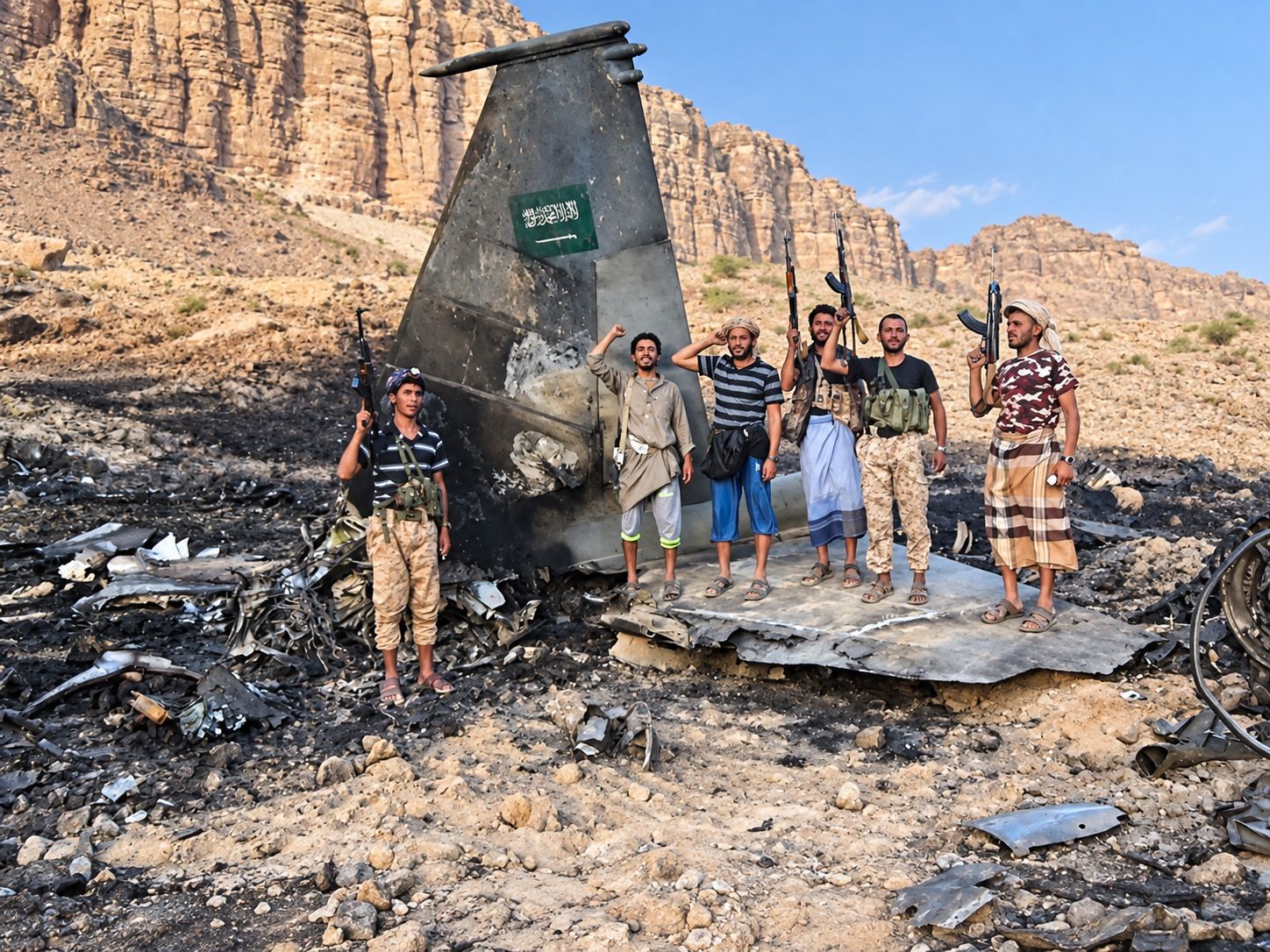
As if to demonstrate that their focus was on military and oil targets, the Houthis announced, just hours after their denial, that they had carried out attacks against a facility belonging to Saudi oil giant Aramco in Yanbu, on the Red Sea, as well as against the Khamis Mushait air base. They also said they had shot down a Saudi F-15 over Yemen’s Marib province and released a video showing the attack on the drone. According to their spokesman, the Saudi air force carried out 450 strikes in Yemen this week.
Following the Mecca incident, Riyadh has apparently not intensified its strikes against the Iran-backed group, which recently made a significant advance in the Red Sea, a strategic maritime route, taking control of the entire Yemeni coastline, including the port of Mocha and Perim Island, which overlooks the Bab el-Mandeb Strait.
Saudi Arabia does not appear willing to become more deeply involved in the regional conflict, the strings of which, as we know, are being pulled by Iran. It is apparently counting on a forceful intervention by the United States, which, however, has no intention, at least for the time being, of returning to the military option against Tehran and its proxies in the region. Israel’s Channel 12 thus reported “deep frustration” in Saudi Arabia over the “lack of American initiative.” Citing a source close to the royal family, the Israeli channel said that “the Houthis are exploiting the lack of concrete US action, and the Saudis are paying the price on the ground.”
The info coincided with another, carried by Reuters, concerning direct contacts between Washington and the Houthis. US officials reportedly met with representatives of the Iran-backed group on Sunday at the US Embassy in Muscat. The Houthi representatives reportedly assured them that they had no intention of targeting American and… Israeli (!) ships transiting the Red Sea and remained committed to the ceasefire reached with Washington in 2025. According to Reuters, the US State Department did not confirm the meeting.
The United States continues to escort oil tankers through the Strait of Hormuz. According to Energy Secretary Chris Wright, “nearly 18 million barrels of oil passed through [the Strait of Hormuz] on Tuesday, which is at the pre-conflict level” with Iran.
Saudi frustration also reportedly stems from the fact that Riyadh has had to reduce its oil deliveries to Europe since Tuesday because of Houthi attacks that damaged its main export pipeline to the Red Sea. The kingdom had shut down the East-West pipeline on Friday, while some European customers, including Polish company Orlen, were seeking alternative sources of supply, AFP reports.
International Conference on the Lebanese Army
In Lebanon, as Israeli strikes and demolitions continue unabated in the south of the country, President Joseph Aoun flew to Paris on Wednesday, where an international meeting on support for the Lebanese army is due to open tomorrow, Thursday.
In an interview with AFP before his departure, the head of state reaffirmed the government’s determination to disarm Hezbollah, but “without confrontation.” He again stressed his commitment to a security agreement with Israel following the withdrawal of Israeli forces from the south of the country, which, he said, could pave the way for a future peace agreement.
Meanwhile, at the Lebanese Parliament, where a general policy debate was under way, punctuated by heated exchanges between opposition MPs and Hezbollah MP’s, the latter reiterated that there could be no question of their group laying down its arms.
For many observers, disarming Hezbollah is possible only as part of a regional settlement whose contours remain highly unclear.
Against this backdrop, it is worth noting remarks by US Vice President JD Vance, who said in an interview with Fox News on Wednesday that “the conflict with Iran will enter a different phase within two months,” while defending President Donald Trump’s policy toward the Islamic Republic. This came as China, through its Foreign Minister Wang Yi, announced that Beijing was prepared to defend Tehran’s “legitimate rights and interests.” He nevertheless called on both belligerents to exercise restraint, saying he did not want to see tensions “spill over into Yemen and the Red Sea.”
Meanwhile, according to the Washington Post and the New York Times, Washington is preparing to sell Israel 40,000 bombs worth $2.8 billion, including 20,000 MK-84s and 20,000 BLU-117s.
In Gaza, meanwhile, Israeli Defense Minister Israel Katz said the military was ready to “finish the job” against Hamas and implement a “migration plan” for Palestinian residents. US Ambassador to Israel Mike Huckabee, however, denied any plan to relocate Palestinians from Gaza against their will.