

Dory Chamoun, one of the leading figures of the March 14 movement, has died
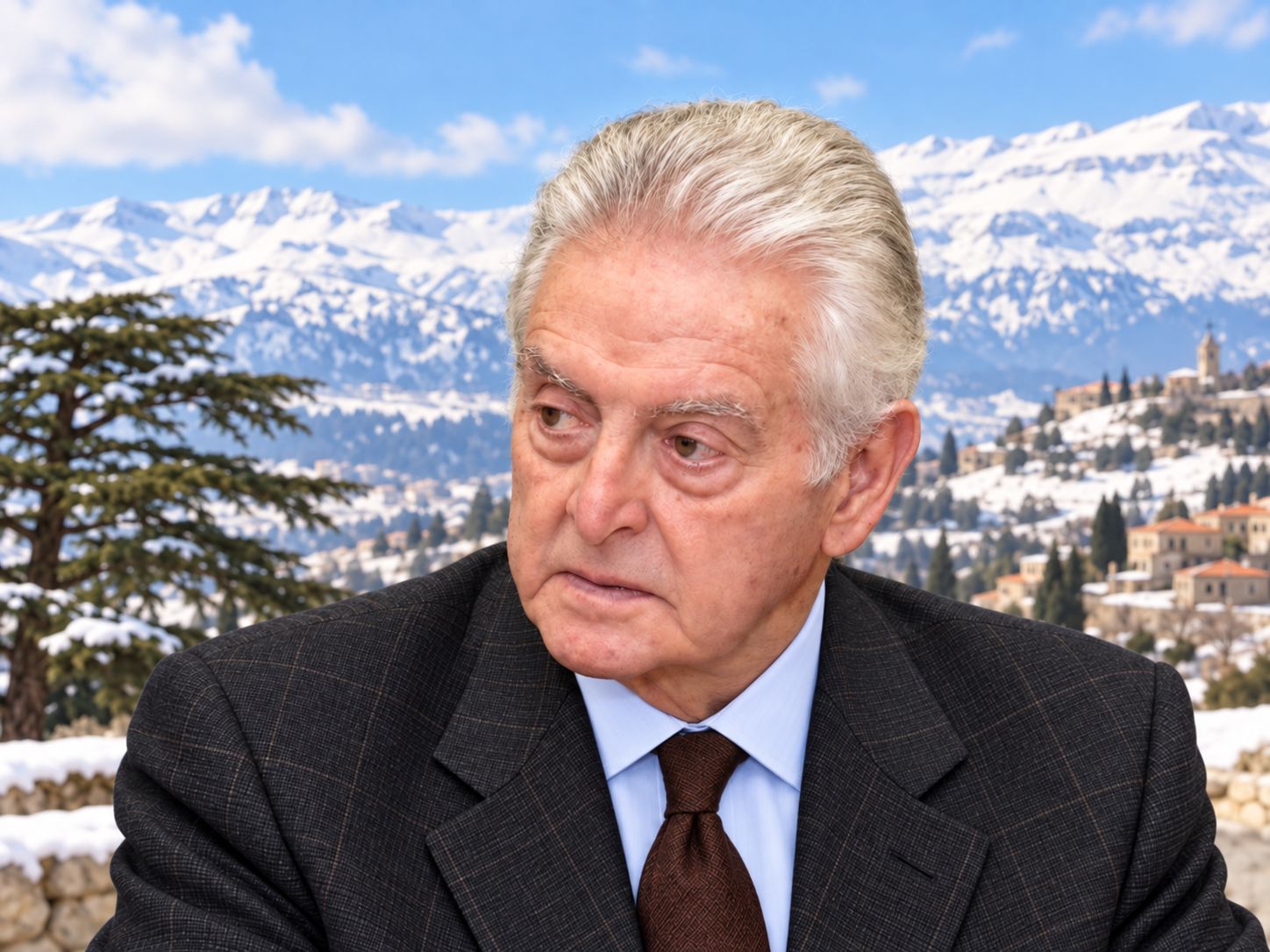

Beyond the usual reports on the war in the Middle East and on the southern Lebanese front, Lebanon woke up to sad news on Monday morning. Dory Chamoun, a former MP and former president of the National Liberal Party, died in Beirut at the age of 95.
The son of Lebanon’s iconic President Camille Chamoun, Dory Chamoun made his mark on the country’s history throughout the various phases of the Lebanese war, particularly in the aftermath of the assassination of his charismatic brother, Dany Chamoun, along with his family. Lebanon was then entering a period of intensified Syrian occupation that would last until 2005.
A staunch opponent of Hafez Assad’s Syrian regime, Dory Chamoun was among the leading Lebanese figures who played a key role in countering the influence of the former Syrian regime (which fell in December 2024) in Lebanon. He was one of the prominent figures of the Kornet Chehwan Gathering, which campaigned for Lebanon’s independence and sovereignty and which, under the leadership of Maronite Patriarch Nasrallah Sfeir, would form the foundation of the March 14 movement that emerged following the assassination of former Prime Minister Rafic Hariri in 2005. The emergence of the March 14 movement would ultimately lead to the withdrawal of the Syrian army from Lebanon in April 2005.
Dory Chamoun had been close to the political line of former President Michel Aoun before becoming one of his staunchest opponents after Aoun’s return from exile in 2005, when he moved away from the sovereigntist camp and closer to pro-Syrian figures and parties, notably Hezbollah in 2006.
Politically, Dory Chamoun headed the National Liberal Party following his brother’s assassination. He was elected president of the municipality of Deir el-Qamar (Chouf, Mount Lebanon) in 2004 and remained in the post until 2009, when he was elected MP for the Chouf. His son Camille has himself been an MP since 2022. News of Dory Chamoun’s death prompted an outpouring of tributes on Monday.
Commemorating the Assassination of President Bachir Gemayel
It was a twist of fate that Dory Chamoun died on the 44th anniversary of the assassination of President-elect Bachir Gemayel, who was killed 44 years ago, on September 14, 1982. As every year, the Lebanese Forces held a large-scale ceremony on Sunday evening in Achrafieh, Beirut, to commemorate the anniversary of the assassination of their founder. The speeches, particularly that of his son, MP Nadim Gemayel, unsurprisingly focused on the latest developments in the war between Hezbollah and Israel in Lebanon.
Building on the Lebanese authorities’ initiative to launch direct talks with Israel, Nadim Gemayel made clear that he had no objection to Lebanon making peace with all those around it, including Israel, if that was in the country’s interest. This year’s ceremony was notable for the participation of figures from different Lebanese communities.
The Lebanese Israeli talks are currently on hold until October, due to Israel’s continued attacks in the south and Hezbollah’s categorical rejection of anything that could lead to its disarmament, as the group opposes the negotiations. A new round of talks was due to take place in Rome this week, but was postponed until October, according to a U.S. State Department official who announced the decision on Friday. However, the Lebanese and Israeli ambassadors to Washington are expected to meet in the U.S. capital this week.
Awaiting the Israeli Elections
An indication of what may be behind the stalemate in the talks with Israel was offered by David Schenker, former U.S. assistant secretary of state for Near Eastern affairs, during a televised interview this weekend. According to Schenker, the framework agreement signed by Lebanon and Israel in June, which was intended to lead to a gradual Israeli withdrawal followed by the deployment of the Lebanese army, has been put on hold until Israel’s parliamentary elections in October.
The election is crucial for Prime Minister Benjamin Netanyahu, who is not the frontrunner and prefers to keep the pressure on Hezbollah in the south in an effort to strengthen his position in the vote. According to MTV reports, Netanyahu is expected to continue capitalizing on the destruction last Thursday of the tunnels built by Iran beneath the strategic Ali el-Taher hill (near Nabatiyeh), a Hezbollah stronghold, by “revealing” what the tunnels contained. Various sources have reported rumors that foreign militiamen were present there.
On the Lebanese side, it is worth noting that Interior Minister Ahmad Hajjar arrived in Pakistan on Monday for an official visit. Pakistan, it should be recalled, is the preferred mediator in the talks between Iran and the United States.
Postponement of the Muscat Meeting
As far as the regional conflict is concerned, Monday’s main development was the postponement of a ministerial meeting due to take place in Oman, at Teheran’s initiative, between Iran and the Gulf states, to discuss a possible arrangement concerning the Strait of Hormuz. None of the countries responded to the call. Bahrain had publicly refused to participate. Oman cited the need to postpone the meeting in order to create “conditions conducive to constructive dialogue.”
U.S. President Donald Trump, it should be noted in this regard, had previously said that he cared very little about the meeting. Iran, for its part, accused Saudi Arabia of requesting its postponement under the “pretext” of the escalation of the war in Yemen.
On the ground in the Middle East, Yemen is indeed the hottest flashpoint. The pro-Iranian Houthis claimed in the morning that the Saudi military had carried out around 50 strikes in Yemen over a 24-hours period. The Houthis, for their part, later claimed to have targeted Saudi military installations.
Meanwhile, a source at the World Health Organization said that the intensification of fighting in Yemen had resulted in 2,883 casualties over several days, including 504 deaths and 2,379 injuries, between September 6 and 12. Iran, which has come under U.S. and Saudi criticism over the escalation initiated by its Yemeni proxy, denied through its Foreign Ministry having any connection to the resurgence of these military operations.
The other affair to shake the Middle East on Monday was a scandal reported by U.S. media involving an espionage case: information provided by Chinese intelligence services reportedly guided the Iranian military in July in carrying out a strike on a U.S. base in Jordan, which killed three American soldiers. China denied the reports, saying they were “groundless.” President Trump played down their significance, stressing that if China spies on the United States, the practice is reciprocal. Chinese President Xi Jinping is expected to make an official visit Washington in late September.