

Lebanon: Between Inertia and Imposed War, The State in the Eye of the Hezbollah Storm

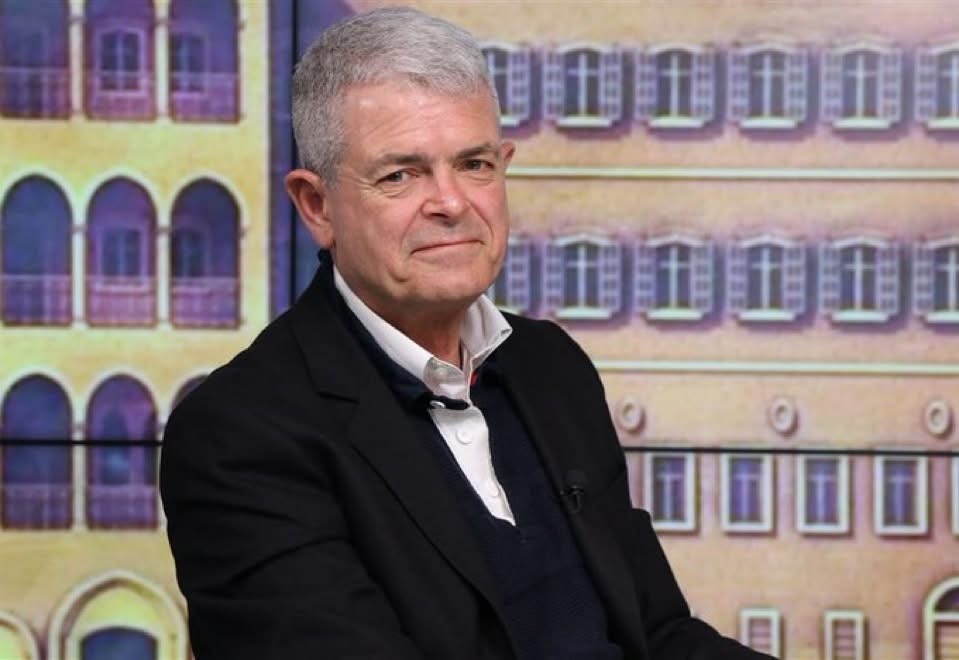
Lebanon today stands divided along a stark vertical fault line, particularly since the executive branch moved to ban all Hezbollah’s military activity. Meanwhile, the situation on the ground continues to deteriorate, as the conflict between Israel and Hezbollah steadily widens.
The opening of the southern front, coupled with Hezbollah’s political and media responses – in which it criticizes the Council of Ministers and the President of the Republic, and attacks Lebanon as a whole – can, at best, be described as irresponsible, if not openly defiant. The first to pay the price are Hezbollah’s own supporters; Lebanon as a whole comes next.
Hezbollah supporters and their families, fleeing Israeli threats and bombardment, are now facing their fifth exodus since 1992. There is, however, no guarantee that this one will once again be temporary – particularly if, as Israel’s Defense Minister has stated, Israel expands its occupation of southern Lebanon in order to establish a buffer zone stretching northwards.
Defying all logic, many Hezbollah supporters accept this situation. They express unwavering trust in their leadership, loyalty to the Islamic Republic of Iran, and certainty of victory over Israel, no matter what happens. They are convinced that their destiny is to die avenging Khamenei’s death. This suicidal logic is deeply troubling, and the government’s inaction risks prolonging an erosive status quo.
Since the November 2024 ceasefire, Israel has continuously targeted Hezbollah’s leadership and infrastructure, without provoking any retaliation. At the same time, the group persisted in refusing to restore state sovereignty, thereby reneging on its commitments in this regard.
Until now, Israeli strikes had been conducted within a well-defined and predictable geographical framework. However, since 2 March, Lebanon has been drawn into a new “support war,” modelled on 2023–2024, version 2.0 – entirely unnecessary and having no impact on the broader conflict between Iran, the United States, and Israel.
It is increasingly clear that Hezbollah will never change its stance, consistently prioritizing ideology over the pragmatism it once claimed to champion. Faced with the choice between suicide and options that would ensure the safety of its supporters, it has chosen suicide – a path it cannot, however, impose on other Lebanese, who have opted for the rule of law, continue to believe in it, and have been striving for fifty years to build such a state.
Syria’s thirty-year occupation of Lebanon, followed by the dominance of Hezbollah and the Amal movement, has eroded the state from within. It facilitated the entrenchment of their supporters – as well as others belonging to corrupt fiefdoms – within the country’s administrations, judicial apparatus, and security institutions, systematically undermining their foundations.
Without the presence of a handful of genuine resistors – discreet yet active within these institutions, and there are enough of them – the state would have long since ceased to exist.
Passivity, the Worst Option
Over the past fourteen months, the executive and the President of the Republic have spared Hezbollah, adopting a paralyzing stance of passivity while a dynamic shift was underway across the Middle East. Machiavelli considered passivity to be the worst option: if those in power remain passive and neutral, they become the prey of the victor. Lebanon cannot afford to alienate the United States, home to more than a million Lebanese – including dual citizens and Americans of Lebanese descent. Among them are senators, members of Congress, and officials such as Thomas Barrack, Massaad Boulos, Darrell Issa, Daren Lahoud, and many others who work tirelessly in support of Lebanon.
Still drawing on Machiavelli, and especially in times of belligerence, Lebanon cannot adopt a passive stance between Washington and Tehran. Such neutrality has become synonymous with ruin. Once again, Israel is expanding its occupation of southern Lebanon, and Hezbollah and Iran are completely unable to prevent or deter it. On the contrary, they are helping provide the very pretext for Israel to occupy more Lebanese territory and displace its inhabitants.
Some observers claim that enforcing the latest decision of the Council of Ministers would lead to civil war or an armed confrontation between the army and Hezbollah. These arguments cannot be sustained, as Hezbollah cannot afford – after all it has endured – a direct clash with the military institution or the risk of further alienating the majority of Lebanese.
Other skeptical analysts doubt the army’s ability to enforce the government’s decision. At a historic moment such as this, only statesmen – rare in these times – could make a difference, possessing a clear vision and plan for doing so, without the country sliding into civil war or internal confrontation. For example, the Supreme Defense Council, which includes the President of the Republic, the Prime Minister, and the Ministers of Defense, Interior, Finance, and Economy, should convene in an open session and oversee, hour by hour, the mission to disarm Hezbollah, rather than leaving the army to struggle alone against a politically complex situation that has been dragging on for forty years.
The Supreme Defense Council could thus take the initiative and fully assume its responsibilities, since the decision-making power rests with it and not the military. In doing so, it would also reaffirm the supremacy of civilian authority over the army during a crisis such as the one we are experiencing.
Left to their own devices, military actions can have significant political repercussions. On this basis, the army should be politically secured – not only through a decision by the Council of Ministers, but also through close, hour-by-hour oversight to ensure the proper implementation of that decision.
Moreover, the parliamentary Defense Committee is conspicuously absent. Yet it is responsible for meeting periodically, and as frequently as the gravity of the situation demands, to question, take responsibility, and, where necessary, legislate to guide the actions undertaken, providing all resources required to support the army in successfully carrying out its assigned mission.
From the Clash of Civilizations to the Security of Humanity
Who, then, claimed the annexed Golan?
Lebanon: Is Neutrality the Next Project?
But Who Are These Houthis Threatening Freedom of Navigation?
We Do Not Want a Lebanese Hashd al-Shaabi
Más de Khalil Helou
Ver todo


Más en Opinion
Ver todo


Lo último de Levant Time
Ver todo


