

When a Sovereign Minister is Condemned and Populist Outbursts are Rewarded

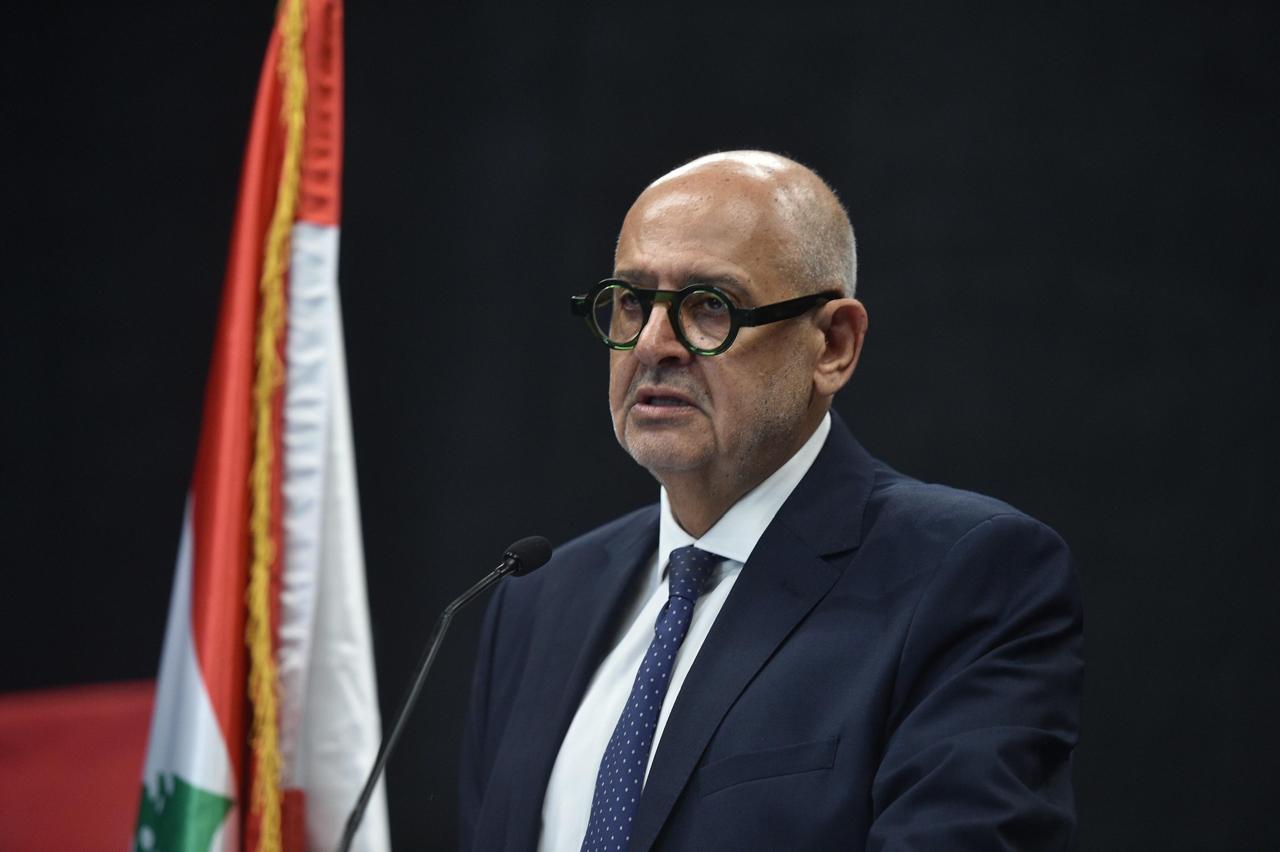
In Lebanon, politics is no longer measured by results or the extent to which national interests are protected, but rather by the loudness of one's voice, the intensity of one's rhetoric, and the ability of an official to appease the instincts of a divided and exhausted public. In this climate, any minister who chooses calm, cool-headed thinking, and working without grandstanding becomes a potential target of constant accusation. This is precisely what Foreign Minister Youssef Raggi is facing, as he is subjected to a campaign of criticism inseparable from a deeper crisis afflicting the very concept of the state.
Since assuming the foreign ministry portfolio, Raggi has not acted like a "populist" minister, nor has he sought to transform his position into a platform for rhetoric or a tool for scoring domestic points. He has treated the Ministry of Foreign Affairs as a sovereign ministry that is supposed to protect Lebanon's position at a highly dangerous regional juncture, not as a platform for political posturing. This choice, which should be self-evident, has become grounds for accusation in Lebanon, because the prevailing political culture now considers shouting a stance, recklessness a form of courage, and diplomacy a sign of weakness or complicity.
The attack on Youssef Raggi does not stem from an accurate assessment of his performance, but rather from an unfair comparison between what he does and what his opponents wish he would do. He is criticized for not making inflammatory statements, for not raising expectations he knows are unattainable, and for refusing to embroil Lebanon in conflicts beyond its capacity to withstand. But what is presented as "weakness" is nothing more than a realistic understanding of Lebanon's true size and the balance of power that governs the region.
Lebanon today is a near-collapsed state: a devastated economy, weak institutions, deep political divisions, and weapons outside state control that restrict sovereign decision-making. In this reality, foreign policy becomes the last line of defense for what remains of the state. Any miscalculation, any ill-considered statement, could open the doors to further international isolation for Lebanon, or plunge it into a confrontation for which it lacks the tools and the means to withstand. Youssef Raggi understands this reality and deals with it with diplomatic acumen, not populist sentiment.
It is unfair to hold the Foreign Minister responsible for the accumulation of thirty years of failed policies. Raji did not inherit a stable state or a sound network of relations. Instead, he inherited the image of a state lacking credibility, viewed with suspicion by the international community, which thinks twice before engaging with it. Within this narrow margin, he is trying to repair what can be salvaged, maintain a minimum level of communication with the international community, and prevent a complete break in relations, the cost of which would be catastrophic for Lebanon.
Most importantly, Youssef Raggi did not use his position to settle internal scores, nor did he transform the Ministry of Foreign Affairs into an extension of a local political battle. He did not speak the language of axes, nor did he present Lebanon as a tool in a regional conflict. Rather, he tried to establish a discourse that reflects the concept of the state, even if that state is weak and fragmented. This behavior, which should be the standard for any foreign minister, is met with suspicion and accusation in Lebanon, because those accustomed to the logic of dominance are not reassured by the logic of balance.
Defending Youssef Raggi does not mean claiming that he is infallible, nor that his performance is above criticism. Criticism is a right, and accountability is a duty. But what is happening today goes beyond criticism to a trial of intentions, an attempt to dismantle any model of an official who doesn't engage in populist rhetoric. The foreign minister is expected to be an echo of the angry street, not a guardian of the national interest, and to appease a fleeting public, even at the expense of the country's future.
In such a bleak moment for Lebanon, calm becomes an act of resistance, and diplomacy a courageous choice, not a sign of weakness. Defending Youssef Raji is defending the idea that Lebanon is still capable, despite everything, of producing officials who operate with the mind of the state, not the logic of sectarianism, and with the calculations of the national interest, not the language of instinct.
This choice may not be popular, and it may not garner immediate applause, but it is the only option capable of protecting Lebanon from further collapse. And in a country accustomed to punishing reason and rewarding madness, defending diplomacy becomes a battle in itself.
From the Clash of Civilizations to the Security of Humanity
Who, then, claimed the annexed Golan?
Lebanon: Is Neutrality the Next Project?
But Who Are These Houthis Threatening Freedom of Navigation?
We Do Not Want a Lebanese Hashd al-Shaabi
Más de Jad Akhawi
Ver todo


Más en Opinion
Ver todo


Lo último de Levant Time
Ver todo


