

«Ukraine has survived»: Putin's foiled gamble

The war in Ukraine, triggered by the Russian invasion on February 24, 2022, is entering its fifth year. Moscow's offensive initially aimed to overthrow the Ukrainian state in a few days, but it met fierce Ukrainian resistance and massive mobilization by Westerners to help them. The worst conflict on European soil since World War II has resulted in hundreds of thousands of deaths and injuries, while millions of Ukrainian refugees have fled into exile.
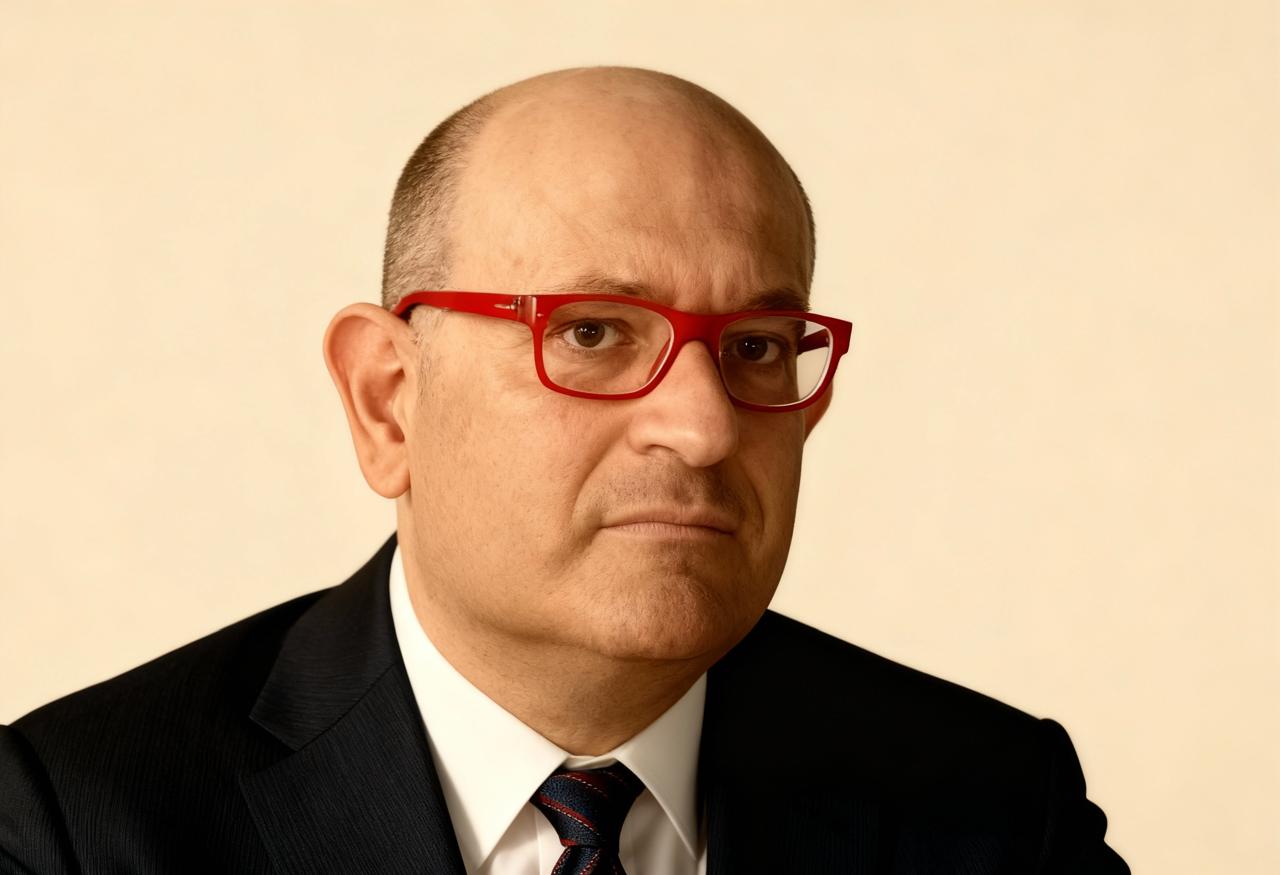
On the occasion of the fourth anniversary of the conflict's outbreak, Levant Time interviewed Constantin Sigov, philosopher, director of the Centre for European Studies at Mohyla University in Kyiv and of the Dukh i Litera (Spirit and Letter) publishing house.

«Four years after the start of the full-scale Russian invasion, the first observation is that Ukraine has survived, it has not given in at all,» Mr. Sigov immediately emphasizes. «It even won the Battle of Kyiv, whereas exactly four years ago, on February 24, 2002, Russian President Vladimir Putin was convinced that this battle would be decided in three days,» he affirms, echoing the statements of Ukrainian President Volodymyr Zelensky who was receiving the heads of state and government of Ukraine's allied countries in Kyiv. «Everything Ukraine has endured must not be abandoned, forgotten, or betrayed,» Mr. Zelensky declared in an address to the nation.
Mr. Sigov reminds us that Ukraine has been resisting for twelve years, since Russia's annexation of Crimea in 2014. «Ukraine is not only defending its territory, it is defending a principle particularly relevant today in the Middle East and among our European neighbors, namely that borders must not be changed by force and violence.»

But this resilience is threatened by the changing US policy towards Ukraine and NATO allies. It is true that G7 leaders, including Donald Trump, affirmed their "unwavering support for Ukraine" last Tuesday, while some thirty leaders of Kyiv's allied countries urged Russia to accept a "complete and unconditional ceasefire".
For its part, the UN General Assembly adopted a resolution on Tuesday, February 24, reaffirming its support for Kyiv and its territorial integrity: the text was adopted by 107 votes in favor, 12 against, and 51 abstentions… including the United States, because the text emphasizes "firm commitment to the sovereignty, independence, unity, and territorial integrity of Ukraine within its internationally recognized borders".
The Americans do not want to refer to «Ukraine's territorial integrity and international law so as not to put pressure on ongoing peace negotiations.»
The battle for Europe's independence
A year ago, a month after Donald Trump's return to the White House, the United States, with Russian support, pushed a resolution through the Security Council calling for a swift peace, but without mention of Ukraine's territorial integrity, much to the dismay of Kyiv's European allies.
Saluting President Trump's diplomatic efforts, Russian Ambassador Vassili Nebenzia assured that Russia was participating "in good faith" in the negotiations. The same Vassili Nebenzia was present at the Council meeting on February 24, 2022. He fiercely defended his country's good intentions while 150,000 Russian soldiers massed on Ukraine's borders, before being interrupted by his Ukrainian counterpart, in tears after being informed by his government that the Russian army had broken through the front...
Asked to comment on this new reality, namely the complete drying up of financial and military aid from the Biden era, Mr. Sigov reminds us that polls show that the majority of Americans wish to further support Ukraine. A factor that, especially on the eve of the US congressional elections, must be taken seriously by the Trump administration. Kyiv is thus banking on the coming months, which will be decisive.
Mr. Sigov also recalls the «decisive» role of economic sanctions: «The essential thing is to deprive Russia of its capacity to harm. And if Europe clearly sets this objective, the solution will become possible.» He added: «One can generally say that the battle for Ukraine's independence, today, has become the battle for Europe's independence. Independence from both Russian gas and oil, but also from American influence. And in this sense, for a long time, Ukraine, Europe, and democratic countries in general are in the same boat.»
A real awakening of consciousness
«For the moment, we are witnessing a real awakening of consciousness. I think it was clear at the Munich Security Conference that, indeed, the Scandinavian countries, along with Germany, France, and Great Britain, are sensitive to this approach. But there is a terrible delay in decision-making, especially concerning the «Russian ghost fleet,» those oil tankers clandestinely used by Russia to export its oil despite international sanctions.»
«But unfortunately, there is still funding coming from European Union countries. To name just Orban's Hungary and Slovakia, which have not chosen to be on the right side of history and justice.»
On another note, Mr. Sigov recalls the experience gained by Ukrainians due to their determination: «From the invasion, Ukrainians were very inventive, they used drones which greatly helped to stop the aggressor, and even in some places to make them retreat, as in the Kharkiv Oblast (administrative region).»
But he also reminds us that the country «is paying an enormous price: hospitals are receiving a great many seriously injured men and women, a true daily tragedy.» «It is therefore clear that what is severely lacking is massive military aid, which has been decided upon but is slow to be sent.»
Mr. Sigov adds in this context, not without a hint of bitterness: «There is truly an asymmetry when we know that North Korea, without having an economy like Germany or France, supplies more ammunition to Russia than the European Union sends to Ukraine. So, I believe that what is lacking behind all this is a true political will and a determined strategic decision.»
An impossible peace
The academic recalls Putin's declaration: «Russia has no borders,» before quoting Orwell: «They are perfectly capable of putting their boot on the face of a human being of any nationality.» «So, we are truly witnessing a genocidal war, according to all the criteria developed by the greatest jurists at the time of Nuremberg and afterward. This term was coined by Raphael Lemkin, himself a jurist who studied at the University of Lviv.»
He continued: «According to these criteria, the idea of the erasure of a nation, of its culture, of its identity, and the means of systematic aggression against civilians, including by cold, by all inhumane means, appears.»
Mr. Sigov asserts that there is no political will on the Russian side to end the aggression: «One should not look for a black cat in a dark room (…). In my opinion, the war will only end when Putin no longer has the resources to continue it.»
Indeed, the Kremlin affirmed on Tuesday, February 24, that "Russia's objectives have not yet been achieved," adding: "That is why the special military operation (the name given by Russia to the invasion) continues" in Ukraine.
Vladimir Putin, for his part, considered that the Westerners, who arm and finance Ukraine, had not managed "to inflict a strategic defeat on Russia on the battlefield".
Conflict of interest
Moscow, which occupies about 20% of Ukraine, continues a slow but steady advance on the front. Russians regularly carry out massive drone and missile strikes, which have devastated Ukraine's energy grid, causing power and heating outages in the middle of a freezing winter.
Near the front, entire cities have been reduced to rubble and the cost of rebuilding Ukraine over the next decade is estimated at more than 500 billion euros, according to an international report published last Monday, February 23.
Several rounds of negotiations have taken place in recent weeks. Washington is pushing to end the war based on its plan, unveiled in late 2025, which grants enormous concessions to the Russians in exchange for US security guarantees for Ukraine. Moscow indeed demands that Ukrainian forces withdraw from the areas they still control in Donbas and thus abandon this large industrial basin in eastern Ukraine to the Russians… which Kyiv refuses, especially since the American guarantees are very vague.
The Americans are represented in the discussions by Trump's close advisor, Steve Witkoff, and the president's son-in-law, Jared Kushner. The appointment of the two negotiators is criticized in Washington and Europe for what it represents as a conflict of interest. Especially since, whether in Ukraine or Gaza, Trump's associates will be the primary beneficiaries of the peace dividends.
In Search of Lebanon, from Beirut to the Vatican
UN: Paris Wants to Replace UNIFIL With a 'Different Type' of Presence
The Abolition of the Death Penalty: Ibrahim Najjar and Élie Keyrouz’s Long Fight
The Testament of Hassan Rifai
A ceasefire... yes, but what happens next?
Más de Roger Barake
Ver todo


Más en Politics
Ver todo



Mexico: after the Elimination of El Mencho, the Calm Before the Storm?
«Remaining»: Rekindle the Memory of the Victims of Political Assassinations Since 2005

Revolutionary Guards, Supreme Organ of Repression
Tropic Thunder: Understanding US Interventionism in the Caribbean
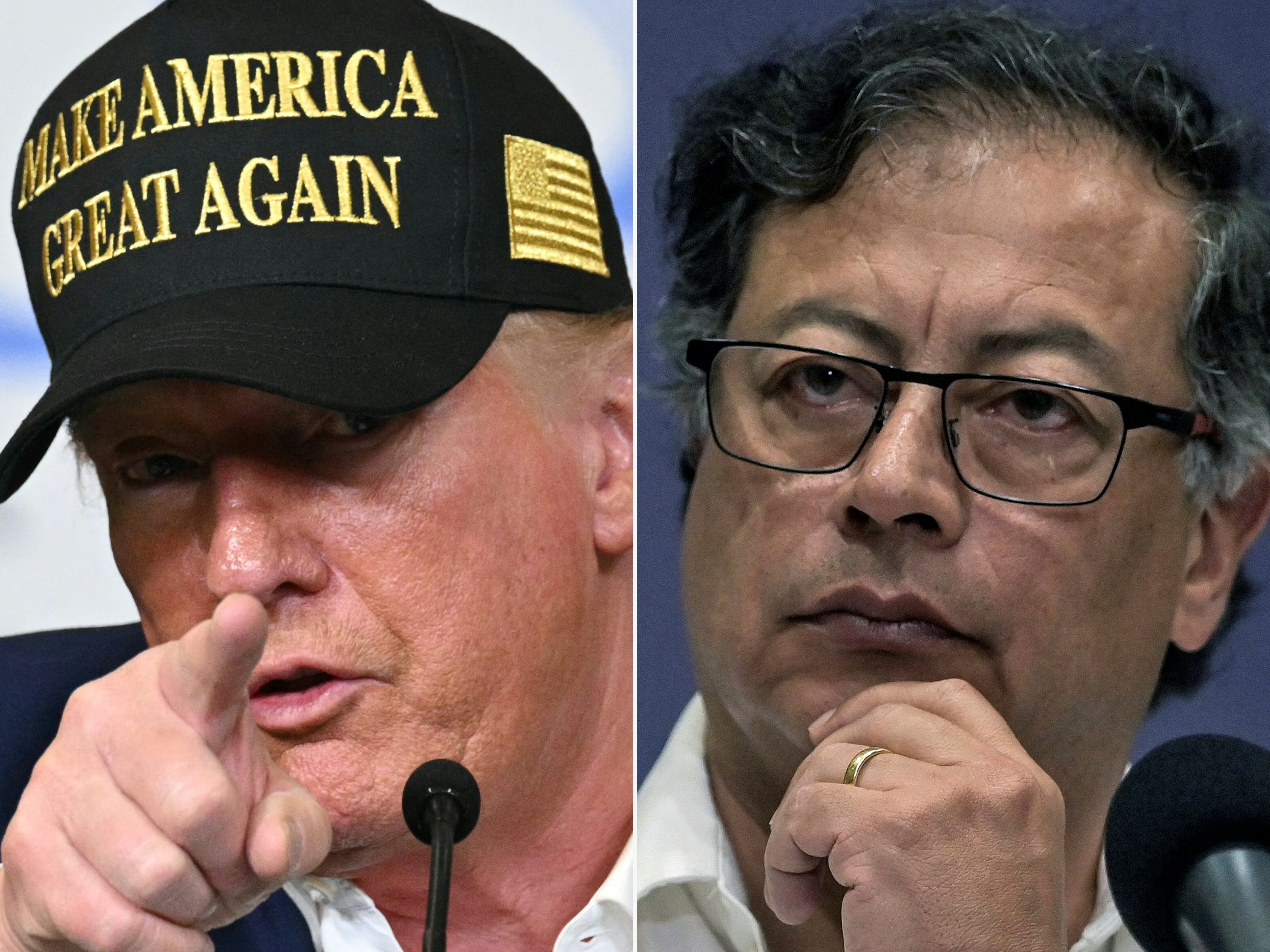
Tropic Thunder: Understanding US Interventionism in the Caribbean
Lo último de Levant Time
Ver todo


