

Viktor Orbán, Standard-Bearer of Europhobia and Champion of Corruption
The Hungarian Prime Minister loses his post after 16 years of rule

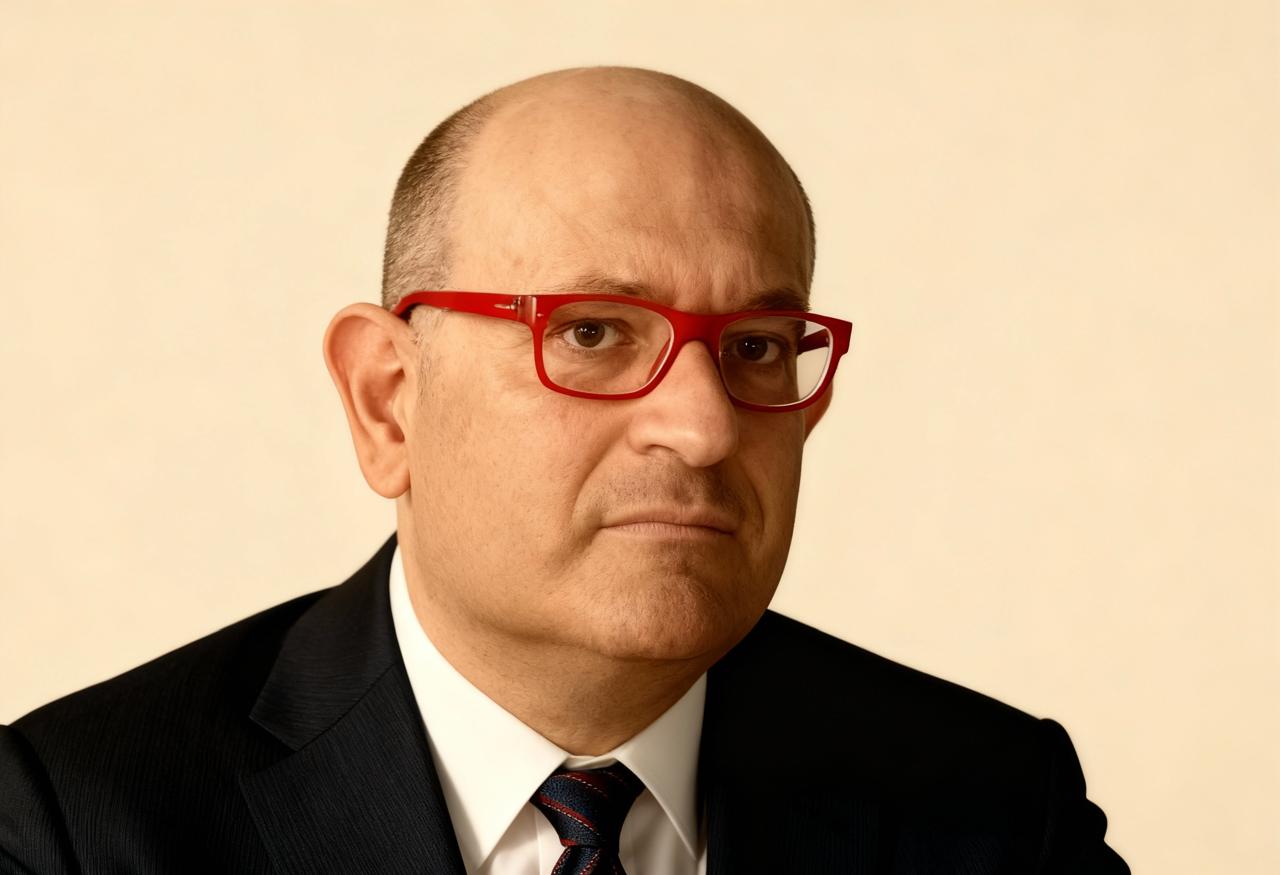
Ruling Hungary with unchallenged authority since 2010, Prime Minister Viktor Orbán has now been defeated at the polls, swept from office by public fatigue over corruption and perceived assaults on the rule of law. Now 62, he asserted himself on the international stage through repeated clashes with Brussels and his overt ties with U.S. President Donald Trump and Russian President Vladimir Putin. Orbán also shocked with his indulgence toward far-right ecosystem and the broader autocratic network in Europe and around the world.
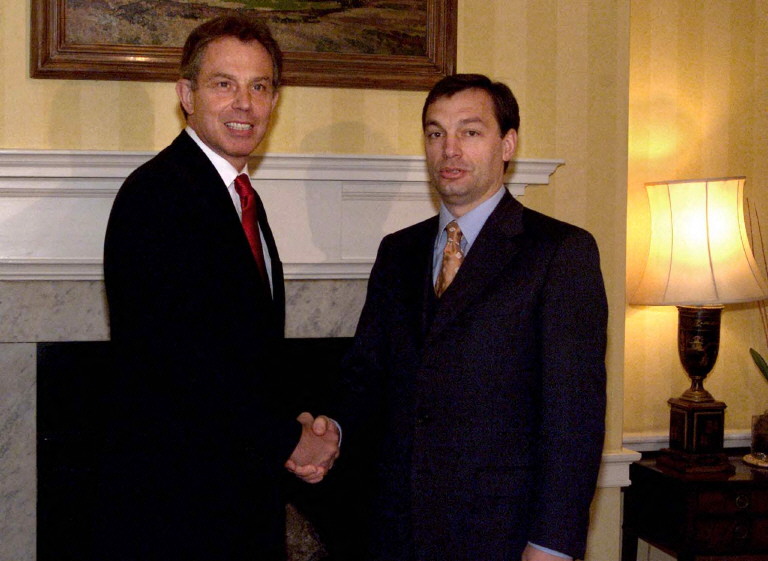
Viktor Orbán received by Tony Blair at 10 Downing Street in January 2002, a year before the ill-fated invasion of Iraq built on spurious claims. According to Voltaire, “Politics is the art of lying at the right time.” (Gerry Penny/AFP)
At the NATO summit in Washington in 1999, Orbán – then a young prime minister of a Hungary newly admitted to the Alliance – was mistaken for an interpreter by security personnel. “No, sir,” he reportedly replied to the officer, “I am the Prime Minister of Hungary, but I would be happy to interpret if you wish.”
The anecdote, illustrative of his relative anonymity at the time, illustrates the still marginal position occupied by Central Europe’s new democracies in the late 1990s within the Euro-Atlantic order. Hungary, newly emerged from the Soviet sphere, was not yet seen as a major political actor – still less its leader.
Champion of “Illiberalism”
The man once mistaken for an interpreter has gradually established himself as a central figure of “illiberalism.” Popularized by Orbán himself, the concept refers to a system in which power is exercised by bypassing individual freedoms, the rule of law and the separation of powers, while preserving the institutional appearance of democracy.
In practical terms, elections continue to be held, but the press and the opposition are placed under pressure, the judiciary loses its independence and checks and balances are weakened. In the Hungarian case, this is compounded by heightened nationalism and a socially conservative outlook rooted in another era: any resemblance to populism is far from accidental.
Yet the young Orbán himself experienced the realities of communist dictatorship, when Hungary was still within the Soviet orbit. He first made a name for himself as a committed liberal, co-founding the “Alliance of Young Democrats,” the future backbone of the Fidesz party, and challenging the regime in 1989 with a passionate speech in favor of democracy.
The shift occurred gradually. Orbán adopted a more authoritarian discourse, targeting the independence of the judiciary, the media and key institutions. Returning to power in 2010 in a country weakened by the economic crisis, he set about methodically consolidating his party’s grip over the state apparatus, universities and the media, in the name of defending the “Hungarian nation.”
His restrictions on freedoms, particularly those affecting the LGBTQ+ community, led to tensions with the European Union, which decided to freeze several billion euros in funds earmarked for Hungary.
Defending family, rural or Christian values is not in itself objectionable. What is, however, is the use of a well-honed strategy: instrumentalizing fears to seize power, spreading xenophobia and fueling Europhobia under the guise of patriotism.
Post-Communism
Formerly communist Europe went through a painful transition. Societies in the East experienced a genuine shock as they moved to liberal democracy. The old system, despite its constraints, provided a form of stability, a comfort zone. They had to learn to govern themselves without the experience of Western societies.
Even today, the differences between the two halves of the former continent remain visible, as if the vanished wall continued to exist in an immaterial form.
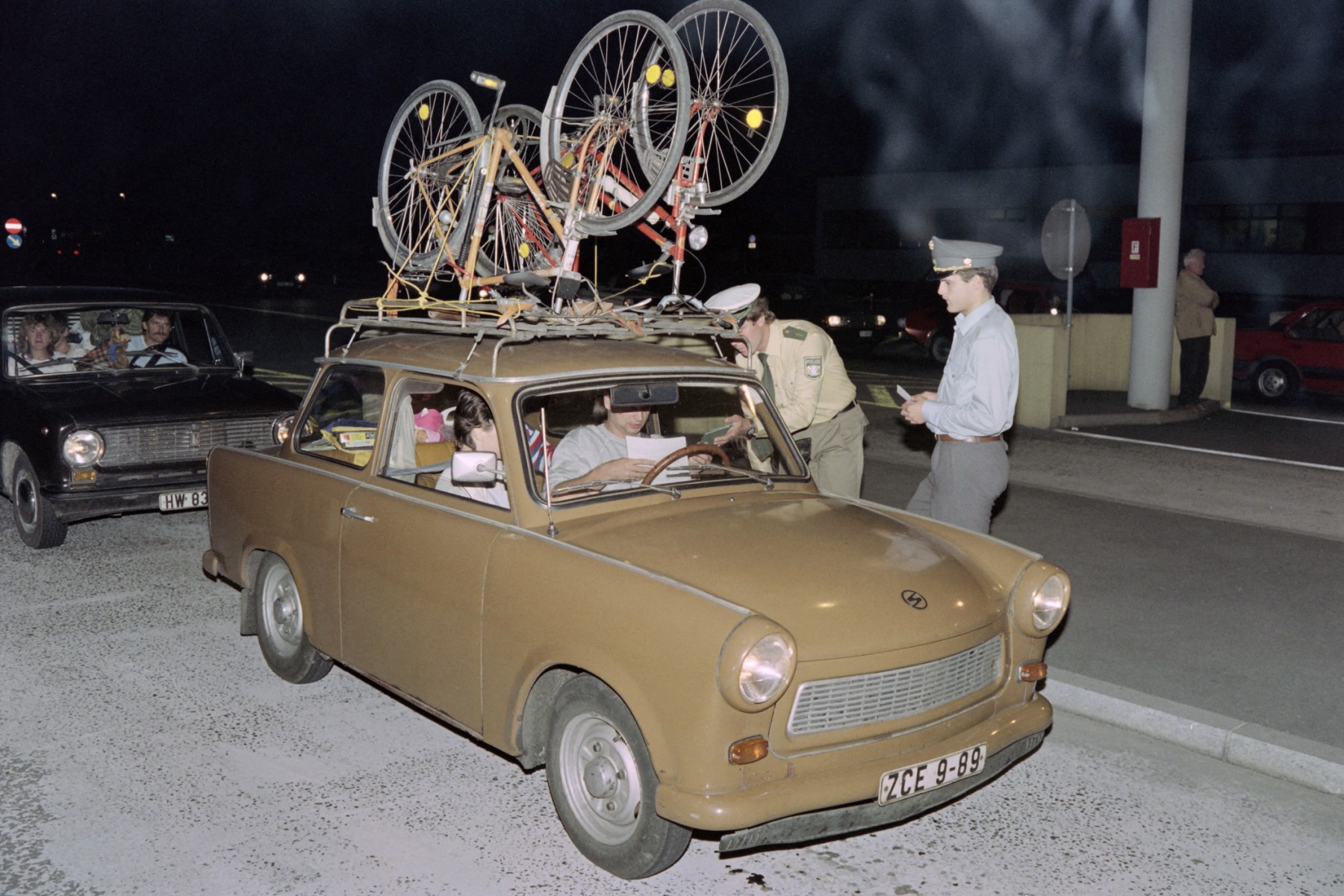
September 1989: East Germans crossing the Hungarian border en route to West Germany in their now-legendary Trabants, a symbol of the decay of communist economies. (Christophe Simon/AFP)
In Germany, for instance, “Wessis” still sometimes mock “Ossis”, more than three decades after reunification. Much like East German Trabants – cars made from cotton-reinforced resin – set against West German BMWs.
This divide is not limited to economics or technology; it also concerns mentalities. It is therefore unsurprising that far-right parties today perform better in former communist regions.
The Nationalist Turn
After consolidating his conservative base, Viktor Orbán drew on a nationalism deeply rooted in Hungarian society, shaped by a historical sense of isolation and insecurity within a nation surrounded by three major cultural spheres: Slavic, Latin and Germanic.
This reflex is not unique to Hungary. In Poland, Serbia, the Czech Republic and Slovakia, distrust of the “outsider” remains a powerful political driver.
In this context, Orbán has taken a firm stance against European migration policies, going so far as to have a several-hundred-kilometer fence built in 2015 to prevent migrants from entering the country.
His strategy rests on the designation of an external enemy. As the political scientist and Hungarian MP Zsuzsanna Szelényi has noted, this logic enabled him to win decisive victories in the 2014, 2018 and 2022 elections.
Dangerous Ties with Russia
In his latest campaign, after communists and migrants, Ukraine became the main target. Accused of seeking to drag Hungary into a war with Russia, it served as a scapegoat in an increasingly polarized discourse.
The campaign relied in particular on disinformation and the use of content generated by artificial intelligence. Tabloids close to the government circulated manipulated images, amplified by networks of fake accounts.
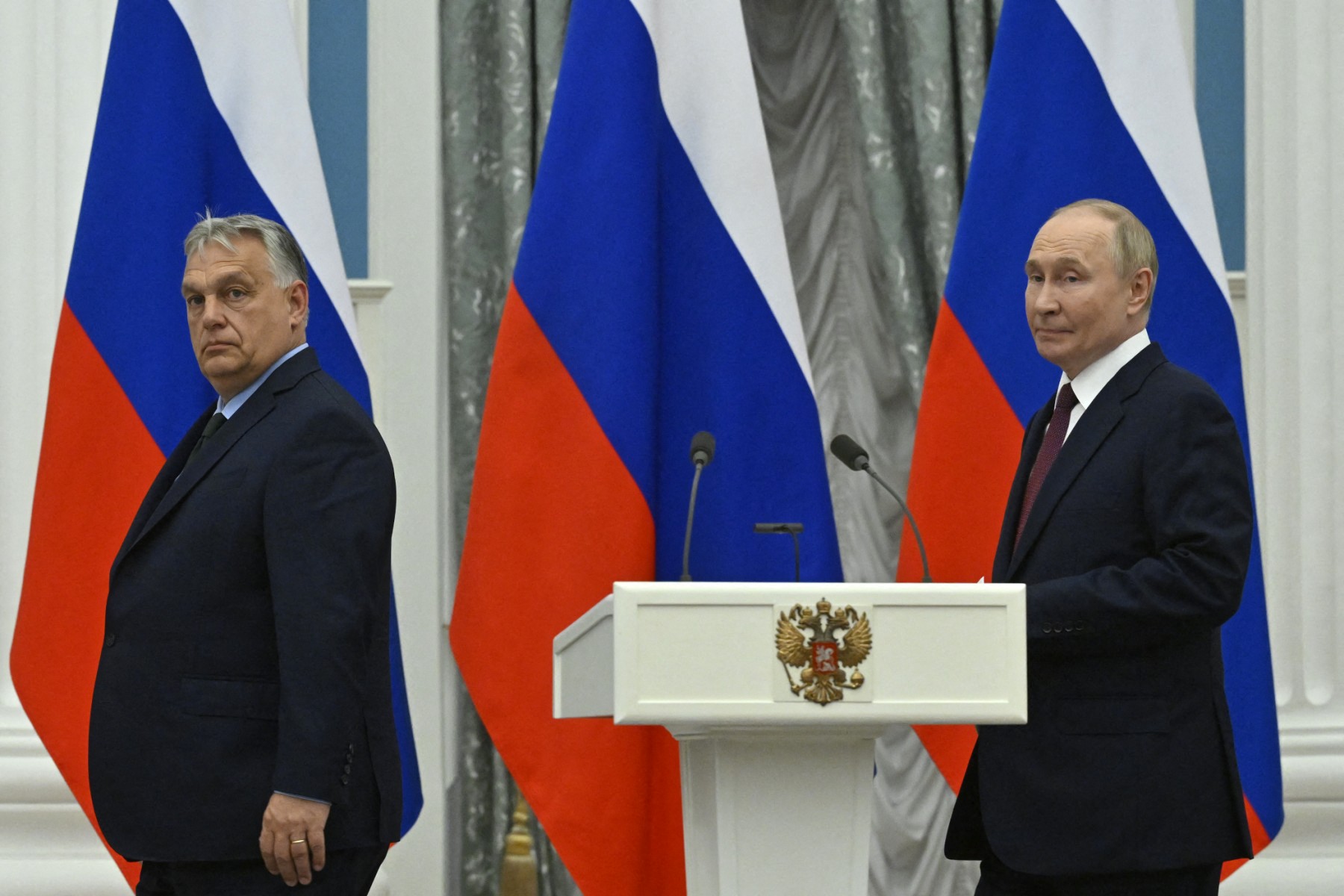
Orbán has never severed ties with Putin, even after the invasion of Ukraine and Russia’s international isolation. (Alexander Nemenov/AFP)
Experts also point to Russian influence operations, including deepfake videos and content presented as news articles.
Posters funded by public money portray Volodymyr Zelensky negatively, sometimes alongside European figures, in deliberately provocative staging.
Orbán did not hesitate to declare at a rally: “We must choose who will form the government: me or Zelensky!”
Despite its excesses, this rhetoric is rooted in a real fear: that of Hungary being drawn into a conflict.
“The Fidesz appeals to the deepest need for existential security,” Zsuzsanna Szelényi told AFP. “Their message is: when the world falls apart, trust what you already have.”
Identity Tropism and Lebanese Links
In recent years, Viktor Orbán has methodically built a transnational network grounded in an identitarian and political reading of Christianity, conceived both as a civilizational framework and as a lever of influence.
This strategy has taken the form of numerous conferences and forums held in Budapest, bringing together conservative and Christian actors from Europe and the Middle East in an openly stated logic of ideological convergence. As early as 2019, Gebran Bassil, leader of the Free Patriotic Movement, took part in a conference on the “persecution of Christians” in Hungary, where he secured financial support for ecclesiastical projects.
Budapest simultaneously launched, in the same spirit, a fund for the “reconstruction of churches” in Lebanon. This orientation was reinforced in 2025 with a conference held in Budapest entitled “The Future of Lebanon from a Christian Perspective,” organized and supported by the Hungarian government, which brought together several Lebanese Christian parties. The initiative is part of a broader Hungarian policy aimed at positioning itself as a protector of Christians in the Middle East, while forging political alliances with their representatives.
Within this framework, Christian parties in the Middle East – and in particular the Free Patriotic Movement – appear as peripheral but symbolically valuable partners, allowing Orbán to anchor his project of a “Europe of Christian nationalisms” in a broader geopolitical and civilizational dimension.
This rhetoric of “protecting Middle Eastern Christians” is also what Vladimir Putin invoked when intervening in Syria. Moreover, from the mid-2010s and the early years of the Syrian war, Budapest adopted a distinctive line within the European Union by refusing to fully break with Damascus.
Without officially recognizing the regime, the Hungarian government maintained open channels of communication and opposed any policy of regime change in Syria. This position fits into a broader geopolitical vision in which Orbán views Assad’s fall as opening the way to radical Islamist forces and new waves of migration towards Europe. In this perspective, Assad ceases to be merely a problematic autocrat and becomes, in Budapest’s implicit discourse, a functional bulwark.
This indirect rapprochement was also reflected in Hungary’s so-called “Christian protection” policy, notably through the Hungary Helps program. The initiative financed reconstruction projects in Syria, often in areas under regime control, prompting criticism within the EU, with some seeing it as a form of creeping normalization of Damascus.
Without ever explicitly embracing Assad, Orbán thus contributed to undermining the European consensus of isolation, introducing an alternative logic: that of a civilizational pragmatism in which the survival of Christian communities justifies the maintenance of relations – even indirect ones – with the existing power.
Europhobia
Paradoxically, despite Hungary being a major beneficiary of European funds, the Orbán government has displayed outright hostility towards the EU.
For years, Brussels has had to contend with a leader maintaining close ties with both Moscow and Washington, repeatedly obstructing key decisions, particularly on aid to Ukraine and sanctions against Russia.
Orbán has regularly used his veto power to block European initiatives, contributing to the paralysis of several major dossiers.
More seriously, revelations by The Washington Post have pointed to the possible leaking of sensitive information to Russia. According to these reports, Hungary’s foreign minister is said to have kept Moscow informed in real time about internal discussions within the European Union.
Faced with these allegations, official reactions in Budapest have ranged from dismissal to defiance.
Blatant Corruption
But above all, it was corruption that precipitated Orbán’s downfall.
Despite a carefully calibrated campaign, voters punished a system marked by the spectacular enrichment of the Prime Minister’s entourage and the deterioration of public services.
Officially, Orbán declares modest personal wealth. But in a country ranked among the most corrupt in the European Union, this display of frugality is hardly convincing.
Hungarians denounce a quasi-feudal system in which those close to power accumulate wealth and influence.
His father, his son-in-law, and his business allies have seen their fortunes grow exponentially, often through public procurement contracts financed by the European Union.
According to Transparency International, billions of euros are lost each year due to corrupt practices, while Brussels maintains the freezing of significant funds.
What of His Successor?
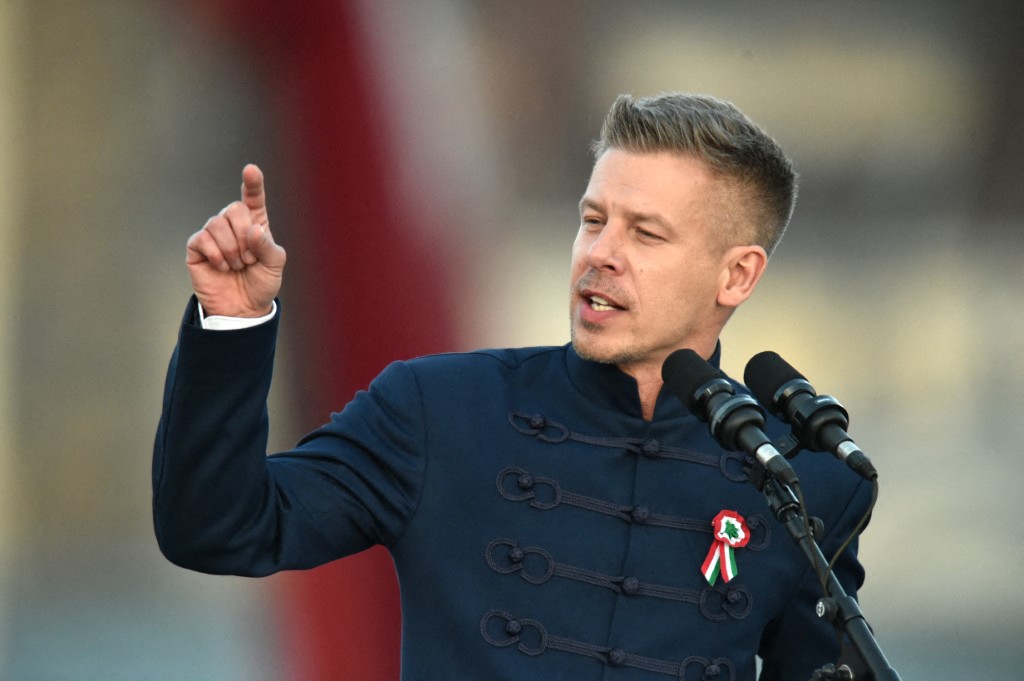
Péter Magyar, the parliamentary election winner, wearing the traditional Hungarian jacket, the bocskai, at an election rally last March. (Balint Szentgallay/NurPhoto via AFP)
The winner of Sunday’s election, Péter Magyar, inherits an immense task: dismantling the political architecture built by Orbán, restoring institutions, and rebuilding ties with the European Union.
A former insider of the system, he retains some of his predecessor’s hardline positions, particularly on immigration and social issues, but promises to restore the rule of law and combat corruption.
For many Europeans, he embodies an “Orbán without corruption and without Europhobia” – a formula that remains to be tested.
Beyond Hungary, the stakes are global. Orbán had become a reference point for numerous nationalist movements. His defeat represents a symbolic setback for the far right, without however signaling its disappearance.
In Central Europe, as in the United States with the “MAGA” camp, or in Russia, the dynamics that propelled Orbán remain active.
The page may be turning in Budapest. But the model itself has not yet had its last word.
The Nobel Prizes and the Search for a Glimmer of Light in Human Behavior
Iran: Executions of young people, a favored tool of repression
A Chinese Perspective on Lebanon's Collapse
Dahr el-Baidar Explosives: Toward the End of Complacency?
Lebanese Moderation Needs a Project
Más de Roger Barake
Ver todo


Más en Analyze
Ver todo


Lo último de Levant Time
Ver todo


