


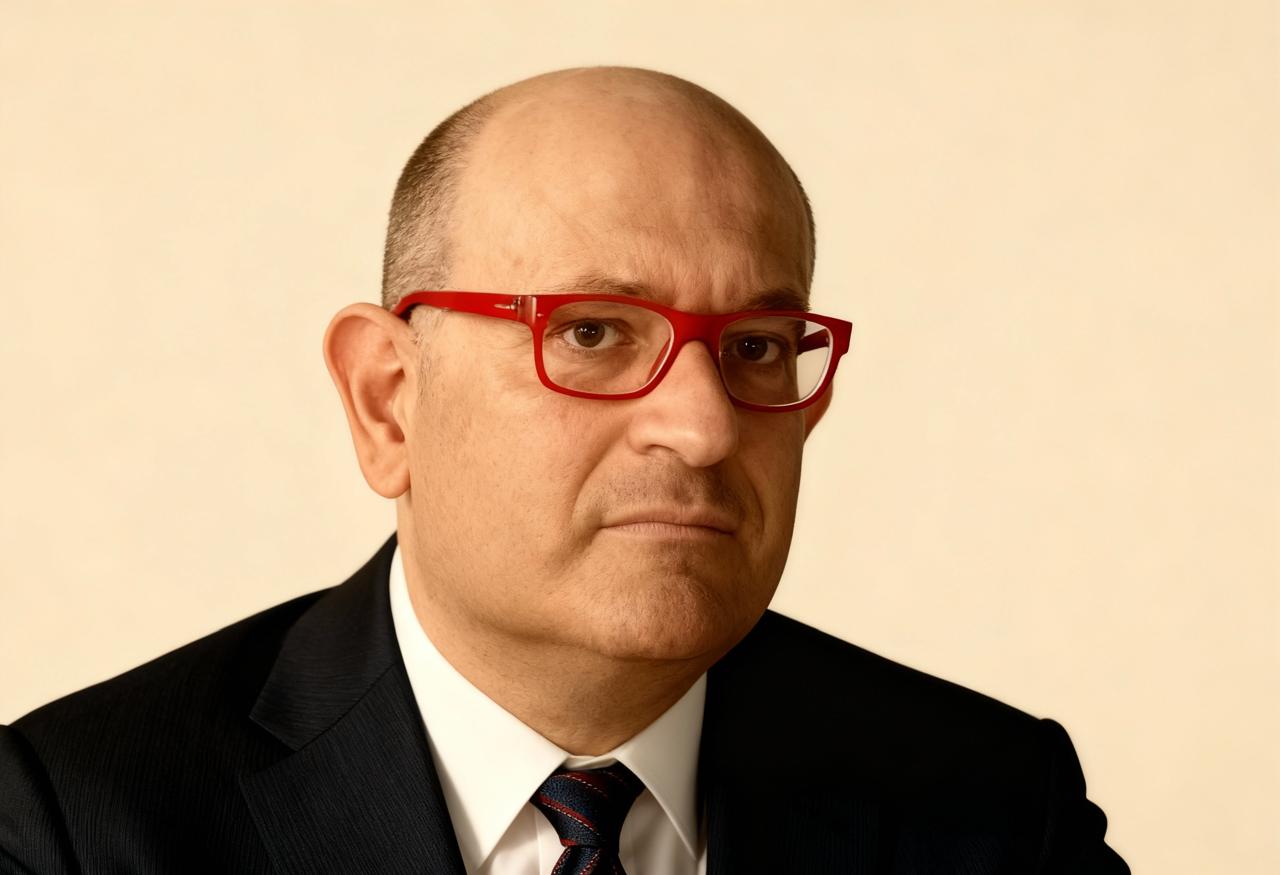
It is not the first time that Iranians have taken to the streets to challenge their rulers. But this latest popular movement is distinguished by the mobilization of a new actor: the Bazaar merchants, considered one of the pillars of the Islamic regime.
It all began on December 28, when Tehran merchants launched a strike to protest against hyperinflation and economic stagnation. The movement has since expanded to include political demands.
Since the beginning of the protests, the authorities have adopted a dual approach, combining appeasement, by recognizing "legitimate demands" related to economic difficulties, and firmness against any attempt at destabilization.
Iran's Supreme Leader, Ayatollah Ali Khamenei, in power since 1989, stated on Saturday, the seventh day of the popular uprising, that the economic demands of the demonstrators were "just" but that the "rioters" should be "put in their place"...
Decades of popular dissent
Protest movements have punctuated the life of the Islamic Republic since 1999. In July of that year, a student protest movement erupted, seeking to defend the reformist president Mohammad Khatami. The violent intervention of the Bassij virtually put an end to the protest.
In June 2009, the disputed re-election of ultraconservative president Mahmoud Ahmadinejad, Khamenei's favorite, triggered a protest movement denouncing fraud. The authorities eventually crushed the revolt with severe repression that left dozens dead and thousands arrested, thereby crushing opposition political and intellectual circles under the weight of often very heavy sentences.
In late December 2017, hundreds of people demonstrated in Mashhad, the country's second-largest city, and in other cities against rising prices, unemployment, and the government. In November 2019, demonstrations were organized shortly after the announcement of a sharp increase in gasoline prices. Hundreds of deaths and thousands of arrests were also reported.
In July 2021, protests erupted against water shortages in the drought-stricken Khuzestan province. Meanwhile, in Tehran, people protested against electricity cuts.

An increasing number of Iranian women are appearing bareheaded in public in Tehran and major cities, defying the obligation to wear the veil in force since the advent of the Islamic Republic in 1979.
The last, and probably most bloody, uprising dates back to September 2022. The death in custody of Mahsa Amini, a young Iranian Kurd arrested for allegedly violating the dress code with a poorly adjusted veil, triggered months of demonstrations across the country, under the rallying cry "Woman Life Freedom!". Several hundred people died, including dozens of security force members, and thousands of protesters were arrested.
An unprecedented mobilization
Returning to the current wave of defiance, it has mobilized large cities such as Isfahan, Shiraz, and even the holy city of Qom, a bastion of Khomeinist thought, where a man was killed by the explosion of a grenade he intended to use.
Some protesters did not hesitate to chant "death to the dictator!", the famous slogan launched against the Shah during the Islamic Revolution of 1979. This slogan is now being used by the people against the tyranny of the mullahs...
According to Lebanese journalist and Iran specialist Ali al-Amine, "for the first time, we are witnessing a movement that has emerged from within the Iranian bazaar," which, in his opinion, is "a significant indicator that will have a considerable impact."
Mr. Al-Amine recalls that this "takes us back to the Iranian revolution, to its beginnings in 1979: what tipped the course of events at the time was the strike organized by the bazaar, which played a major role in the fall of the Shah's regime."
Why the bazaar? "The mullahs' regime rests on three main pillars: the seminaries (the Hawza) and religious authority, the Revolutionary Guards, and the bazaar," says Ali al-Amine. "All previous movements took place outside this trio." He adds, "Today, the bazaar has entered the scene and even influences religious authority thanks to 'Khoms' (one-fifth or 20%), an Islamic tax that is an obligation for all Shiites. This tithe effectively serves to finance the clergy. Seminaries are funded by Khoms funds, etc. This money is always in the hands of the wealthy classes, i.e., the bazaar merchants."
One ill, several triggering symptoms
The Iranian streets are stirring because the country's economy is weakened by decades of Western sanctions related to its nuclear program. The chronic depreciation of the Iranian rial leads to hyperinflation (52% year-on-year in December) and high price volatility.
Discontent is also generated by the consequences of "the 12-day war" that pitted Israel against Iran last June, during which Iran's nuclear facilities were hit by Israeli and American raids.
"Iran is currently at a dead end," states Ali al-Amine. "Even during past demonstrations, Iran could always address its population by saying: 'We are at Israel's borders, we are at the Mediterranean borders, we control Iraq, we control Syria...' This constituted a kind of guarantee for the regime's internal survival."
"Neither Gaza nor Lebanon, my life for Iran!"
The Iranian authorities also find themselves isolated after the blows dealt to their regional allies: Hamas in Gaza, Hezbollah in Lebanon, and the fall of Bashar al-Assad's Alawite regime.
Some Iranians harbor long-standing resentment against Tehran's financial and military support for these allies, while the country suffers economically. Iran International, a Persian-language television channel based abroad and critical of the government, reported a slogan "Neither Gaza nor Lebanon, my life for Iran!", chanted by some demonstrators.
"With its withdrawal from Syria and the revelation of its activities in other regions it had not previously targeted, Iran now faces several problems: growing internal crises, declining regional and international influence, strained foreign relations, and increasing American and Israeli pressure," continues Mr. al-Amine, before adding: "One of the most striking developments, according to Iranian sources, is that the demonstrations now involve both the middle and upper classes. Protests are observed in the heart of Tehran, Isfahan, and Shiraz, cities traditionally marked by movements from the affluent and middle classes, and this is another important indicator. These movements are among the options currently available to the Iranian regime, and their fate depends on the evolution of the situation."
Ali al-Amine states that "Trump's declaration, according to which he will intervene to defend the protesters, is a significant indicator. It strengthens the motivation of the Iranian people and encourages them to mobilize!" Notably, Israeli Mossad last Wednesday called on Iranian protesters to intensify their social mobilization: "Come out together into the streets. The time has come. We are with you," Israel's external secret services emphasized on their X account, addressing the protesters in Farsi!
Quo vadis?
The options available to Iranians, given this internal and external stalemate, also depend on the evolution, duration, and escalation of events. "I believe that Iran is currently faced with a choice: either conclude an agreement and accept significant concessions regarding its nuclear and ballistic programs, or simultaneously negotiate a definitive agreement with the Americans, which would effectively amount to a surrender," states al-Amine.
According to Ali al-Amine, "this is a major asset for the regime, and we could also witness the implementation of a plan already almost publicly discussed, aiming to replace the Supreme Leader with a three-member committee. This committee would include Khamenei's son, Mojtaba, a very close collaborator of his father and head of his office, effectively controlling the main state institutions and the decision-making process in Iran. This would pave the way for the concessions demanded by the Americans."
State institutions are not limited to the religious apparatus or the Pasdaran (Revolutionary Guards). Mojtaba Khamenei also oversees a network of companies that form a kind of parallel economy, equivalent to 60% of Iran's GDP. The volume of this industrial, commercial, and energy empire has been estimated at 95 billion dollars by a Reuters study...
In Search of Lebanon, from Beirut to the Vatican
UN: Paris Wants to Replace UNIFIL With a 'Different Type' of Presence
The Abolition of the Death Penalty: Ibrahim Najjar and Élie Keyrouz’s Long Fight
The Testament of Hassan Rifai
A ceasefire... yes, but what happens next?
More from Roger Barake
View All


More in Politics
View All



Mexico: after the Elimination of El Mencho, the Calm Before the Storm?
«Remaining»: Rekindle the Memory of the Victims of Political Assassinations Since 2005
Revolutionary Guards, Supreme Organ of Repression
Tropic Thunder: Understanding US Interventionism in the Caribbean
Tropic Thunder: Understanding US Interventionism in the Caribbean
Latest from Levant Time
View All


