

Trump-Xi: a Test Summit with Political and Economic Implications
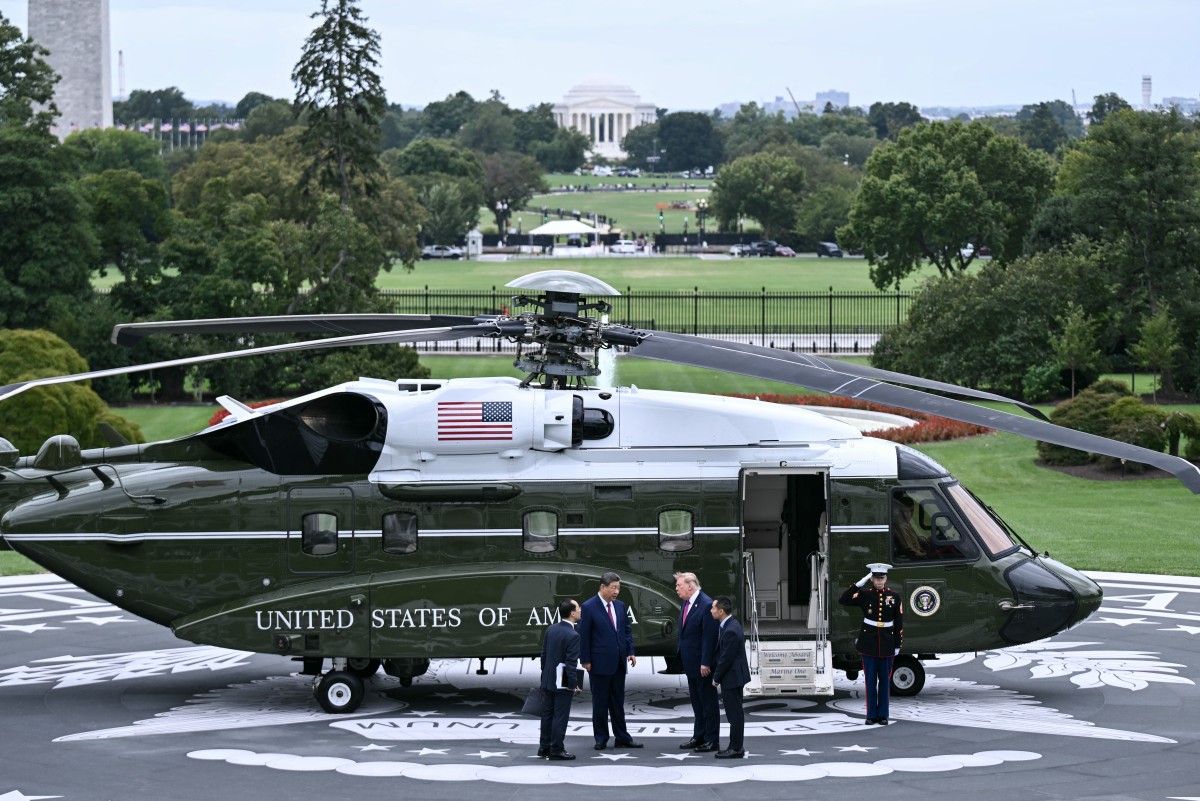

On Thursday, U.S. President Donald Trump welcomed his Chinese counterpart, Xi Jinping, to the White House for a closely watched summit with both economic and political dimensions, given its potential international repercussions.
Several sensitive issues are on the agenda: trade, U.S. tariffs, U.S. access to Chinese rare earths, artificial intelligence, U.S. support for Taiwan, Iran, U.S. sanctions imposed on Tehran, and Chinese support for the Islamic Republic. These are all issues that have left many analysts skeptical about the prospect of major announcements, including those quoted by Reuters. In their view, the Xi-Trump summit should primarily enable the two leaders to “stabilize a relationship under intense strain.”
In this context, it would be useful to raise a question of protocol. On Wednesday evening, Donald Trump personally welcomed his Chinese counterpart—on his first visit to the United States in more than ten years—as he stepped off his plane at Andrews Air Force Base. A red carpet was rolled out for the occasion, the first such welcome since 2015, when Barack Obama received Pope Francis at the same base, Reuters reported.
Given the importance of the issues at stake in this summit—the second between the two men in just a few months—it is legitimate to ask whether it can truly be limited to “stabilizing” bilateral relations.
Xi Jinping set the tone upon arriving in the United States by expressing the hope that the two countries would be “partners rather than rivals.” The phrase may be diplomatic, of course, but it may also reflect a genuine desire to reach agreements.
First, on the economic front: China is facing difficulties compounded by sanctions imposed on Iran, its main fuel supplier. Its industry also needs access to the U.S. market, which has become more difficult because of the high tariffs imposed by Donald Trump shortly after his inauguration in January 2025.
For their part, the United States wants to curb the inflationary trend that has been gathering pace since the U.S. president launched his war against Iran, and to stabilize international markets, especially the fuel market. It also wants access to rare earths, a large share of whose production is dominated by China. These minerals are essential to many industries, particularly defense, automotive, and technology.
Could Beijing and Washington agree on some form of trade-off? The question is worth asking, as is how far the two leaders would go in making concessions, assuming they are prepared to do so.
This is where the Taiwan and Iran issues come into play. Beijing considers the island part of its territory and is demanding that Washington reduce its support, particularly in defense. The United States, for its part, views Taiwan’s security as essential to its strategic presence in the Pacific.
A U.S. concession on this issue would be enormous because of its impact on the military and strategic balance in this part of the world.
Iran is another test. As a major economic partner of Tehran, China has influence that Washington hopes to leverage to secure from the Islamic Republic the agreement it wants to reach with it and to end a war that has become too politically costly for Donald Trump.
The question, then, is this: Would Trump offer his guest a sufficiently attractive trade deal in exchange for Chinese pressure on Tehran? And vice versa?
So far, nothing suggests that China would be willing to sacrifice its relationship with Iran in exchange for U.S. concessions—especially in light of recent reports in the American press on Thursday about the covert aid Beijing has provided to Tehran, including military equipment such as drone guidance systems. According to the same sources, U.S. officials have linked satellite imagery supplied by Chinese entities to an Iranian strike that killed three American soldiers several months ago.
Many questions remain unanswered. The summit, which will continue tomorrow, will ultimately make it possible to gauge the limits of this quid pro quo.