

The Risk of Instability of the Iranian Regime and its Repercussions on Hezbollah and Lebanon

The question of the Iranian regime's future today arises not as a theoretical question, but as a consequence of the unprecedented accumulation of internal crises and external pressures since the establishment of the Islamic Republic in 1979. However, the importance of this question lies not only in the fate of Tehran, but also in the repercussions of any change within the Iranian decision-making center on its regional structures, notably Hezbollah in Lebanon, considered the most successful model of a 'functional weapon' beyond Iranian borders.
First: The nature of the relationship between Iran and Hezbollah
The impact of any upheaval in the Iranian regime on Hezbollah cannot be analyzed without a precise description of the nature of the relationship between the two. This relationship:
• Is not a circumstantial political alliance.
• Is not limited to financial or military support.
• Is based on an ideological, organizational, and strategic link.
Hezbollah emerged in the context of the export of the revolution and developed according to the doctrine of the 'Guardianship of the Islamic Jurist' (Wilayat al-Faqih), which confers a supranational character on its supreme authority. Therefore, any modification within this center of authority affects not only the level of resources, but also the legitimacy of its role, function, and decision-making power.
Second: The Iranian regime between security resilience and structural erosion
The Iranian regime demonstrates a clear capacity to control the population through:
• The cohesion of the Revolutionary Guards.
• Control over key sectors of the rentier economy.
• The management of repression at a calculated cost.
However, this cohesion masks a structural erosion manifested by:
• A decline in popular legitimacy.
• The rupture of the social contract.
• The transformation of ideology from a mobilizing force into a burden.
• A silent division within the elites between the logic of the state and that of perpetual revolution.
This model, structurally, resembles historical ideological systems that did not collapse at the height of protests, but rather when they lost the ability to manage their internal contradictions.
Third: Historical Comparison – Lessons to Apply
1. The Soviet Union
The Soviet Union did not collapse as a result of a direct popular revolution, but rather due to:
• Prolonged economic exhaustion.
• The inability to reform ideology from within. • The loss of control over the periphery before the collapse of the center.
Proxy parties in Eastern Europe did not collapse immediately, but they suddenly lost their function when the center disappeared.
This model can be partially applied to Hezbollah if Iran's ability to finance and provide strategic protection to it diminishes.
2. The Shah's regime
Despite a different context, the fall of the Shah demonstrates that:
• Powerful institutions are insufficient if they hesitate at the decisive moment.
• Legitimacy, once lost, cannot be restored by force.
• External forces cannot save a regime that has lost its internal cohesion.
Ironically, the regime that overthrew the Shah is today facing a similar dynamic, with the difference that it possesses a network of regional armed groups.
3. Arab regimes after 2011
The Arab experience has shown that:
• Regimes do not always fall, but they lose their ability to maintain total control.
• Affiliated armed groups become more aggressive as central power weakens.
• Fragile states pay a double price for this weakness.
Fourth: Possible scenarios for the impact of Iranian transformation on Hezbollah
1. Continuity and gradual decline
In this scenario, the regime remains in place, but its ability to:
• Provide substantial funding.
• Manage open confrontations.
• Protect its allies from international pressure is reduced.
This would lead Hezbollah to:
• Reduce the stakes of engagement.
• Focus on internal issues.
• Redefine its priorities.
2. Compensatory tensions
A regime in crisis could resort to:
• Regional escalation.
• The use of its allies as a means of deterrence.
This scenario is the most dangerous for Lebanon, as it transforms the Lebanese arena into a space for compensating for the weakness of the central government.
3. Strategic transformation
If a fundamental change occurs in the structure of the Iranian regime, Hezbollah will face a historic choice:
• Either transform into a full-fledged Lebanese party, with all necessary redefinitions of its armament and role.
• Or find itself confined to a specific environment, accelerating its internal isolation.
Fifth point: Lebanon, a fragile system facing external transformations
Lebanon is not merely a spectator of this trajectory, but an integral part of it. The weakness of the Lebanese state:
• Makes any regional upheaval more devastating.
• Prevents the absorption of shocks.
• Transforms internal divisions into instruments of external conflict.
Conversely, any decline in Iranian hegemony theoretically opens an opportunity to restore balance, but this opportunity remains conditioned by the existence of:
• A comprehensive national project.
• The ability to manage the transition without resorting to vengeance.
• The will of the Shiites to break the monopoly of representation.
Therefore, even if the imminent collapse of the mullahs' regime cannot be predicted with certainty, it can be affirmed that this regime has entered a prolonged period of structural instability.
In such phases, the pillars of the regime do not collapse immediately, but gradually lose:
• The clarity of its functioning.
• The solidity of its support.
• The ability to impose previous power structures.
Given its fragility, Lebanon will be the first affected, not by the final collapse itself, but by the process of erosion. The real challenge is not to predict the end of the Iranian regime, but to assess Lebanon's capacity to confront a Middle East where Tehran is no longer able to exert its influence as before.
In Search of Lebanon, from Beirut to the Vatican
UN: Paris Wants to Replace UNIFIL With a 'Different Type' of Presence
The Abolition of the Death Penalty: Ibrahim Najjar and Élie Keyrouz’s Long Fight
The Testament of Hassan Rifai
A ceasefire... yes, but what happens next?
Mais de Jad Akhawi
Ver tudo


Mais em Politics
Ver tudo



Mexico: after the Elimination of El Mencho, the Calm Before the Storm?

«Remaining»: Rekindle the Memory of the Victims of Political Assassinations Since 2005
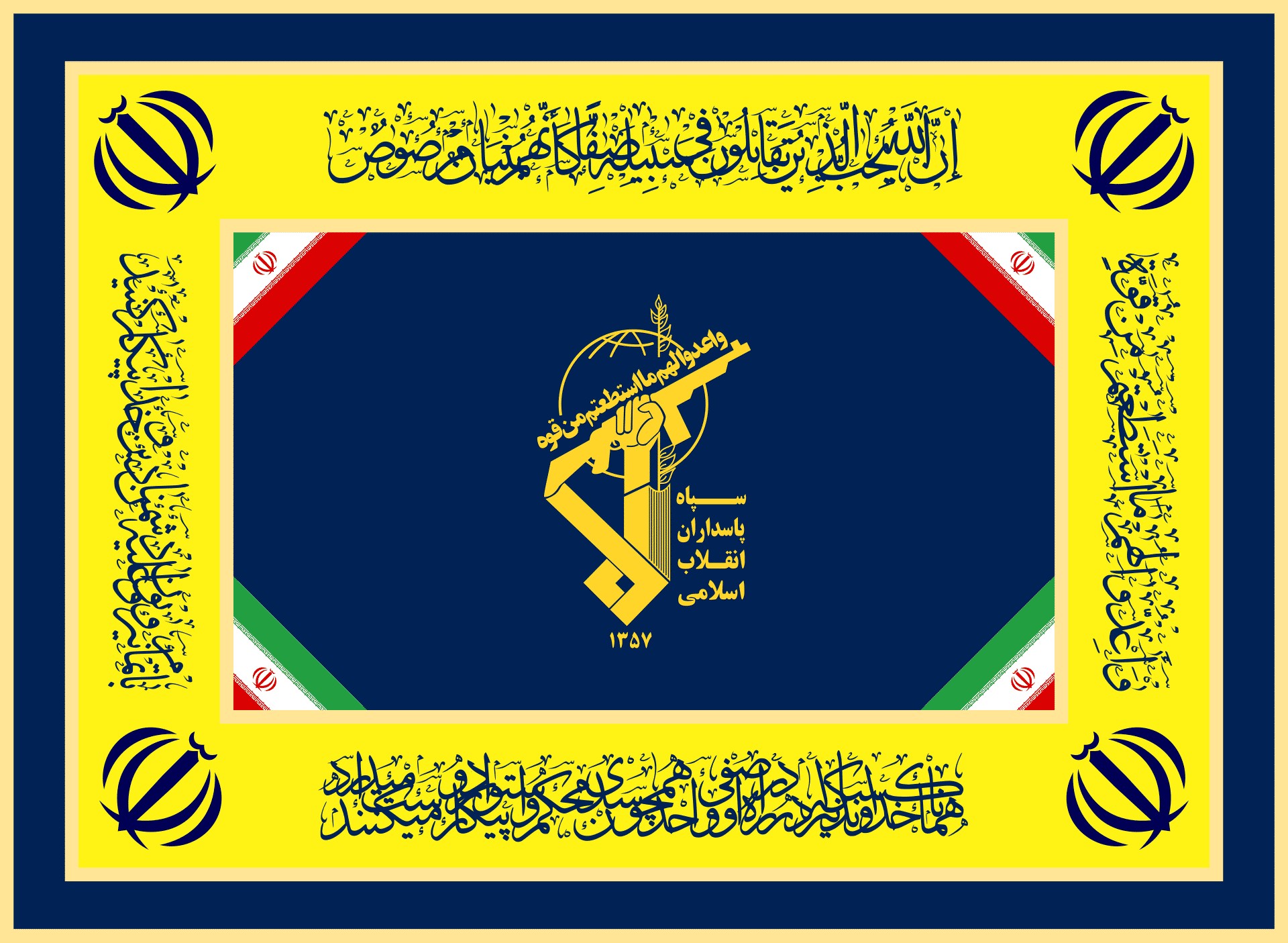
Revolutionary Guards, Supreme Organ of Repression
Tropic Thunder: Understanding US Interventionism in the Caribbean

Tropic Thunder: Understanding US Interventionism in the Caribbean
O mais recente do Levant Time
Ver tudo


