



The Gulf States have emerged and become rich, certainly, thanks to the exploitation of their resources, but they have carried out, through rapidly crossed stages, a true cybernetic conversion that amounts to a revolution in the proper sense.
The era of soft power in which they engaged was achieved through reorientations, observations, transformations, and adaptations, thanks to which they became a regional power. They subsequently expanded their capabilities and developed their multi-service area of action, which conferred upon them a global status.
But these states did not want to stop there. The dynamism that allowed them to achieve their sought-after goals did not stop at this stage. The will and energy that characterized all these existential transformations led them to board the train configuring a new world, that of networks, data, their processing and management: the world of flows, connectivity, and also of space. They are becoming important actors in the new globalization scheme; they are at the « smart power » stage.
The United States is perceived as the protector in military and strategic terms. As for the rest: talk to everyone and intervene where their interests are perceived. Act in areas where they will increase their wealth, maintain their current status, in order to develop and strengthen their positions. This is why Saudi Arabia and the United Arab Emirates wanted to be accepted into the BRICS+ group; Kuwait and Bahrain have submitted their candidacies.
Are the Gulf countries in question powerful? Are they all powerful together? Independently of one another? Another way to ask the question: do they have the means of power? It appears clear that their power is relative and selective.
Referring to Raymond Aron's succinct but well-founded definition, the Gulf States are far from being powerful. But all together, and each partially and individually playing their part, they assert themselves as an indispensable focal point in many regional and global problems. Their wisdom in many difficult-to-solve issues, their know-how as mediators, their asserted and often very clear political and strategic positions place them above certain countries where it would be futile, illusory, to engage in negotiations.
Economy, Finance, Diplomacy, Listening, Intra- and extra-regional positions, Entry into BRICS+, Modern and quality armaments dedicated to their own defense, Industrial-maritime and port development, Trade, Tourism, Global sporting, cultural, artistic events: the list of their advantages is long. It constitutes proof of the multiplicity of their assets, conferring upon them an international stature.
Their power is not what one might expect from great countries, but it is progressing. The transition from hard power to soft power was an evolution. The transition to smart power is a revolution at the end of which no one is yet able to say how far it will go and who the winners will be. Let's consider these Gulf States. Their power is their importance in all these sectors of excellence. Their will is to be present where the world already counts on them, where they believe their place should be.
NB: The importance of this subject prompted the organizers of the 4th edition of the Mediterranean Strategic Meetings (RSMed 2025), a conference organized annually in Toulon (France) since 2022 by the Mediterranean Foundation for Strategic Studies (FMES), to dedicate a round table to it in the program of October 8 and 9, 2025.
Read on the same topic:
The Gulf States, from oil to power (1/3)
The Gulf States, from regional to international (2/3)
A Series of Tight Votes in the Race to Succeed Guterres
In Search of Lebanon, from Beirut to the Vatican
UN: Paris Wants to Replace UNIFIL With a 'Different Type' of Presence
The Abolition of the Death Penalty: Ibrahim Najjar and Élie Keyrouz’s Long Fight
The Testament of Hassan Rifai
More from Jean-Patrick Dayras
View All


More in Politics
View All



Mexico: after the Elimination of El Mencho, the Calm Before the Storm?
«Remaining»: Rekindle the Memory of the Victims of Political Assassinations Since 2005
Revolutionary Guards, Supreme Organ of Repression
Tropic Thunder: Understanding US Interventionism in the Caribbean
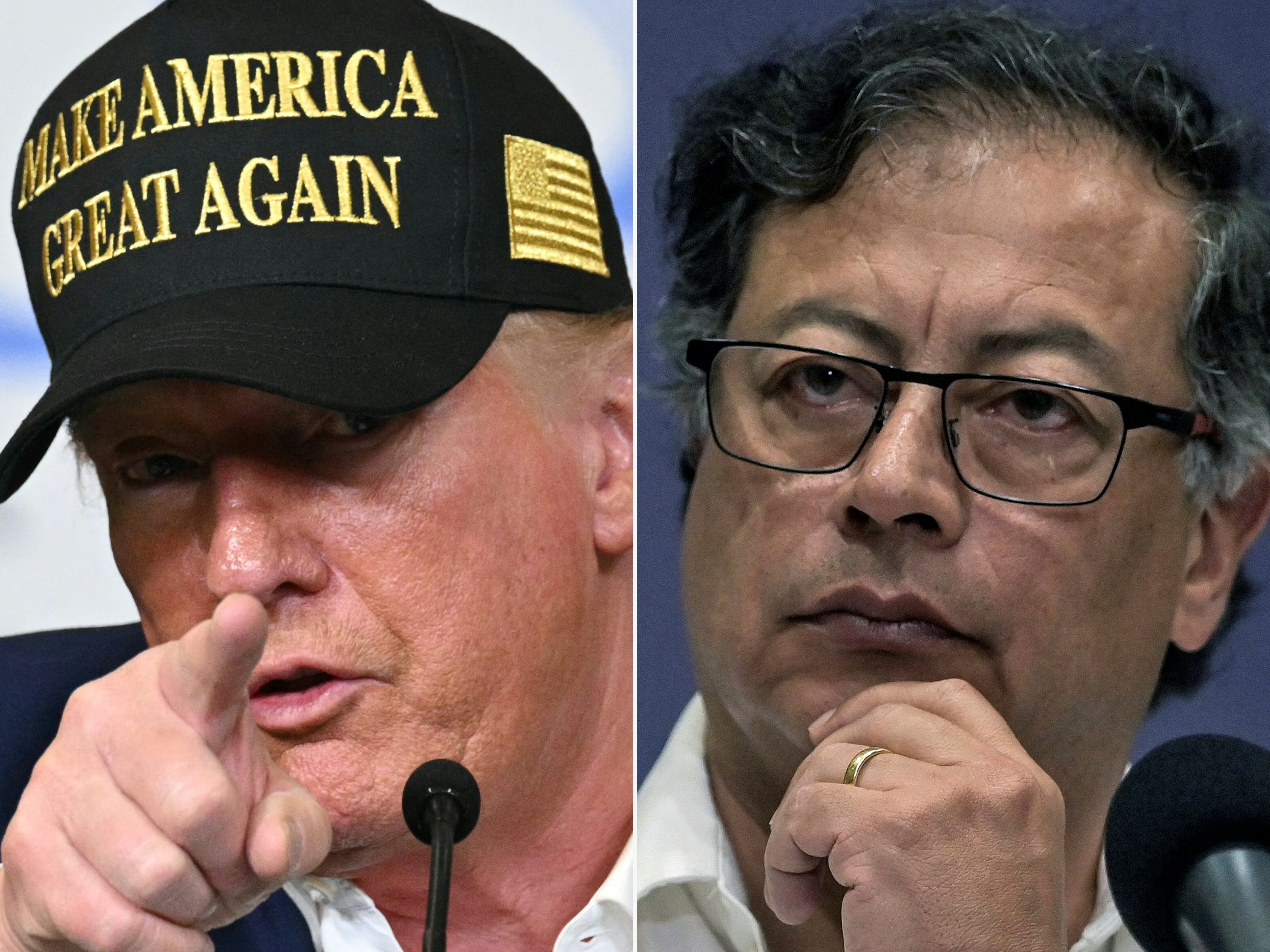
Tropic Thunder: Understanding US Interventionism in the Caribbean
Latest from Levant Time
View All


