

Russia, Ukraine, Iran, China, Japan: naval or maritime powers? (3/3)
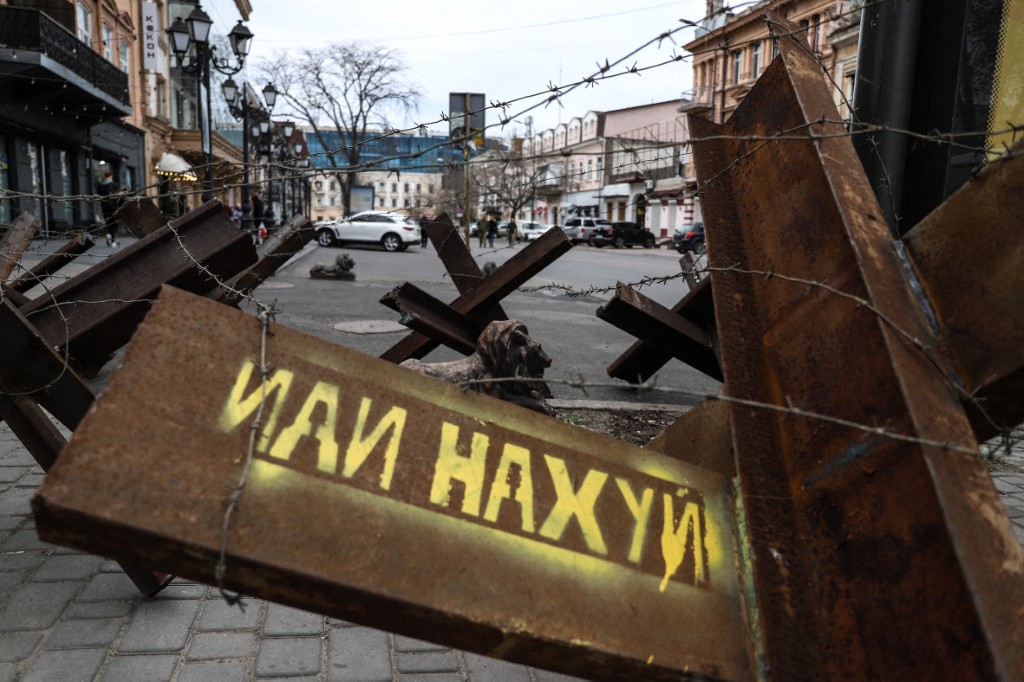

For Russia (in the Black Sea), Ukraine, Iran, China, and Japan, what role does the sea play in their overall strategy? Total or partial control, local or broad? Maritime power? Naval power?
Jean-Patrick Dayras, Rear Admiral (ret.)
Russia is unquestionably a maritime power. It has a substantial combat fleet, including frigates and corvettes, submarines, and anti-ship missiles. It also has a significant amphibious force. It controls the port of Sevastopol. In theory, it is also a naval power, given the number of its vessels and the diversity of their operational capabilities. But it has no drones. With a clear advantage in tonnage, the Russian navy enjoys overwhelming conventional naval dominance.
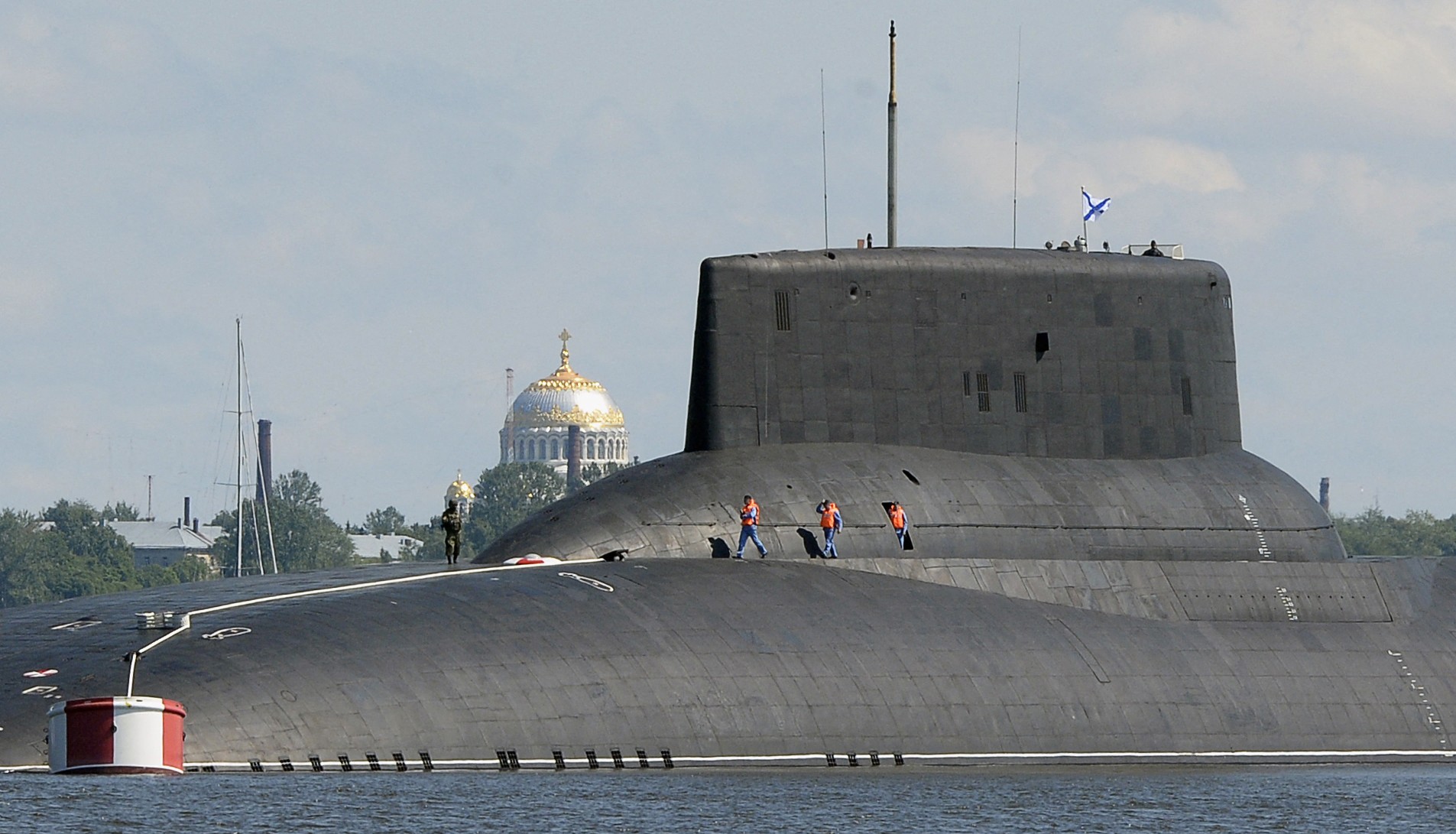
The Russian submarine Dmitry Donskoy (Typhoon class in NATO classification), at the Kronstadt naval base on July 26, 2017. (AFP)
This assessment must be qualified, as will become clear in the analysis and presentation of the Ukrainian navy, which is highly effective in asymmetric warfare and thus significantly restricts the Russian navy’s freedom of action. The latter does not control the Black Sea; at most, it may be able to do so temporarily by blocking the port of Odesa.
Ukraine has limited combat fleet capabilities. It has few or no frigates or corvettes, no submarines, few anti-ship missiles, and no amphibious capability. But it has developed naval drones, anti-ship missiles, aerial drones, and cruise missiles to strike Russian vessels; it also has satellite intelligence to strike their bases. Ukraine does not have a conventional navy capable of competing with the Russian navy. It has a small, primarily defensive navy.
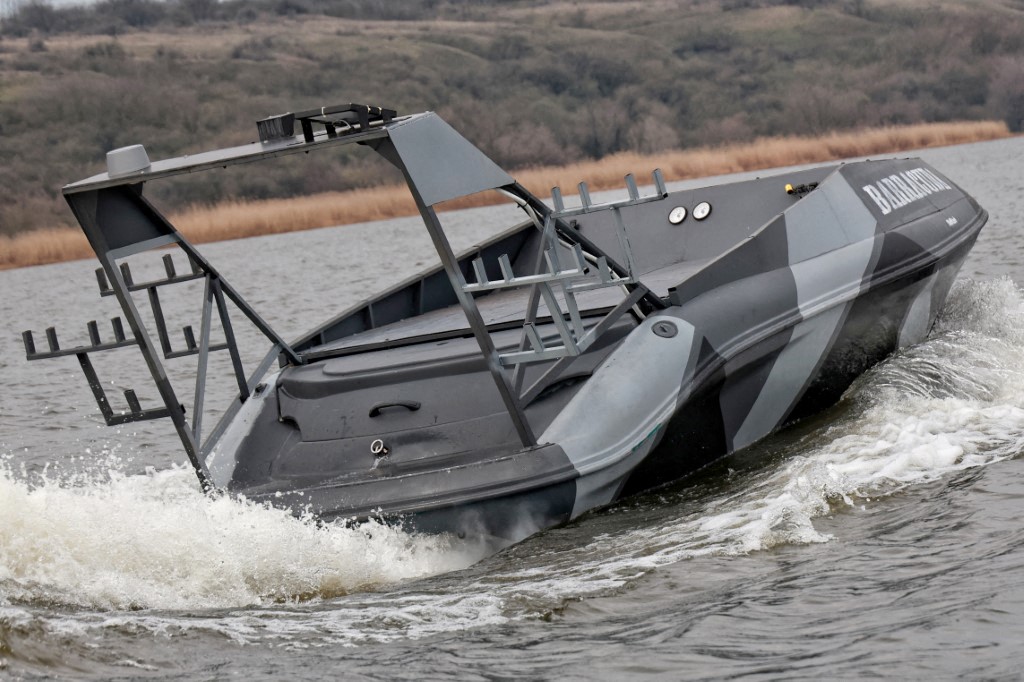
It is craft of this kind, such as the naval drone Barracuda, that have put Russian forces to the test. This multipurpose drone boat is equipped with a modern tracking system, a remote-control device, and artificial intelligence functions. (AFP)
At present, Russia has a much more powerful navy, but one that is heavily constrained and vulnerable in the Black Sea. Ukraine has a small conventional fleet, but an extremely advanced asymmetric naval warfare capability.
Ukraine has not won the race for tonnage; it has changed the rules of naval warfare.
Iran has two maritime forces:
• The Iranian Navy, comprising frigates, corvettes, submarines, logistics vessels, and missile ships. Following various attacks and because of embargoes, it has been severely degraded.
• The navy of the Revolutionary Guards, designed for asymmetric warfare in the Persian Gulf. It has fast patrol boats, anti-ship missiles, drones, mines, and surveillance assets. It has retained significant operational capability, enough at this stage to impose a relatively airtight blockade of the Strait of Hormuz.
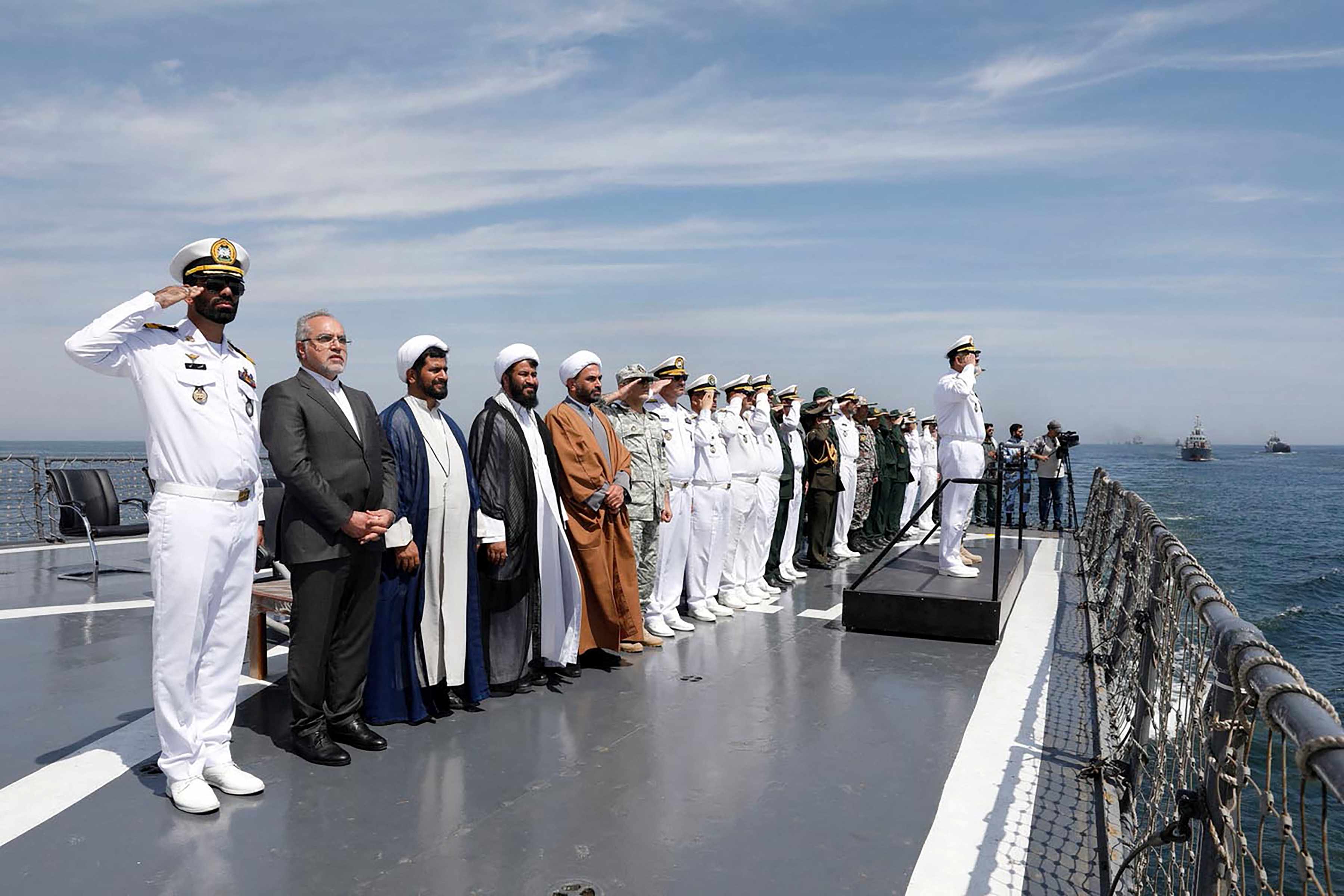
Iranian officers and religious dignitaries during naval exercises in the Persian Gulf.
Iran does not need an ocean-going fleet to threaten maritime traffic; the Revolutionary Guards’ asymmetric naval capability is effective enough. Iran may therefore have lost the ability to fight a true naval battle while retaining a strong capacity for maritime denial and disruption in the Persian Gulf and around Hormuz. It is not a maritime power, but the very model of what a naval power is. It neutralizes the United States Navy in the strait and its approaches.
It should be noted that we do not address here the use of “proxies” (such as the Houthis), an original variant of action and blockade capabilities, and thus of naval power and local control of the sea.
China — One could simply say: a rapidly rising maritime and naval power.
Since the 2000s, China has been building both dimensions in parallel: the world’s largest merchant fleet by tonnage, the largest container ports, a dominant shipbuilding industry, and at the same time the world’s fastest-growing navy (the second-largest fleet by number of vessels). This is a rare case of an integrated, deliberate strategy. Maritime power feeds naval power. Both theories apply concretely to the South China Sea.
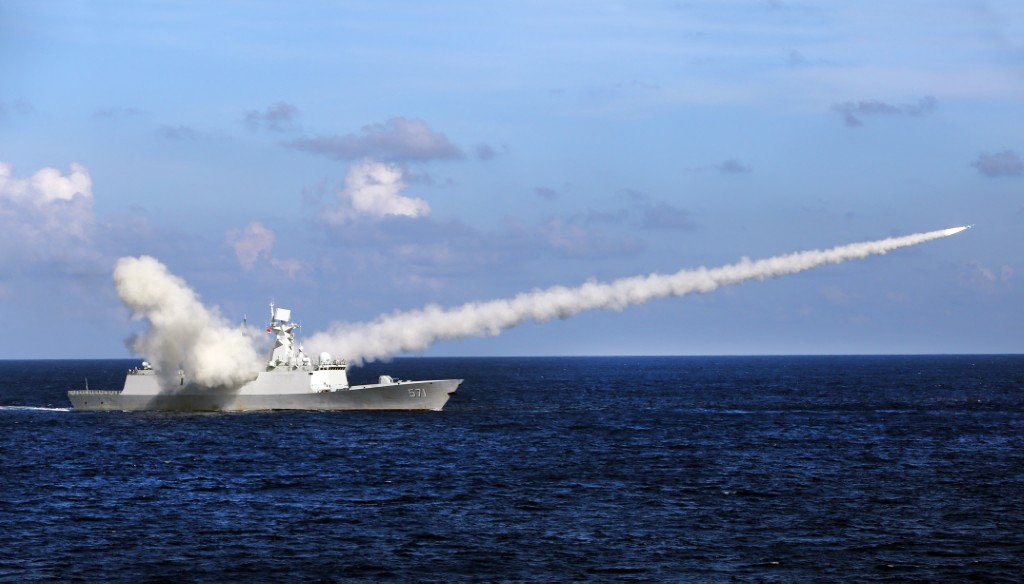
A missile frigate Yuncheng fires an anti-ship missile during a military exercise. (AFP)
China’s strategy is far closer to Corbett than to Mahan, and this is a deliberate, coherent choice; it does not seek a decisive battle. Beijing does not seek a confrontation with the U.S. Navy. It would be impossible to win today on the high seas. Faced with the United States and superior U.S. naval capabilities, which Beijing cannot match far from its own shores, the instruments it employs rest on a different logic, with submarines as the key to defending territorial waters. This is an active-defense posture. It is not a quest for Mahan’s decisive Trafalgar.
With regard to control of maritime spaces, China aims to achieve relative, local control. This is precisely the “Corbettian” logic: China does not seek global command of the seas in the manner of the U.S. Navy, but rather local, priority control over its immediate periphery. As early as 1986, the concept of an “offshore defense naval strategy,” intended to control the maritime area within the first island chain, was defined with the objective of controlling sea lines of communication. Global control of the oceans is not envisaged.
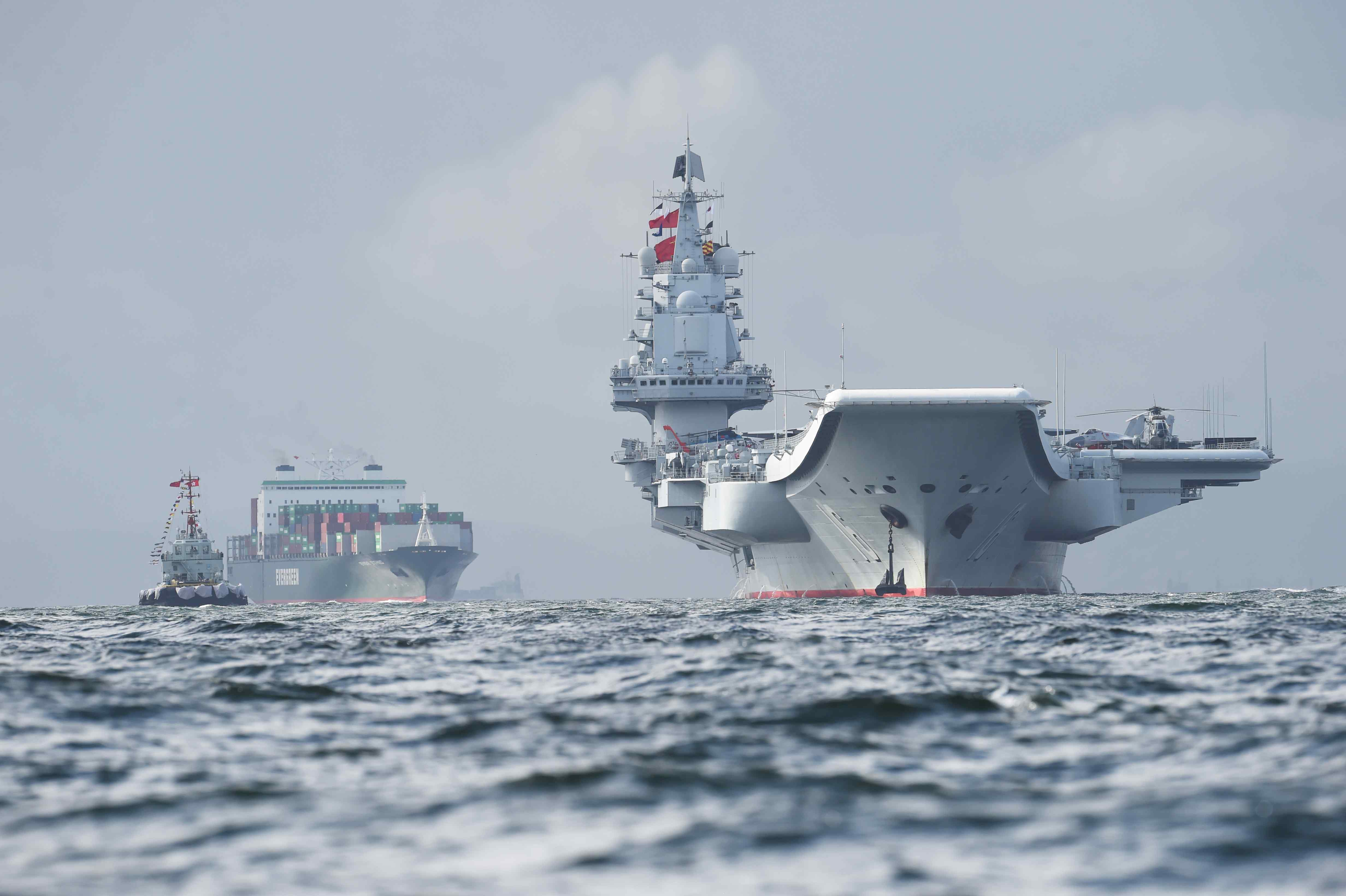
The Liaoning, China’s first aircraft carrier, was built from the Varyag, a vessel from the former Soviet Navy.
This is pure Corbett: the South China Sea constitutes China’s economic “Achilles’ heel” because of the Strait of Malacca, which it does not control, giving rise to what has been called the “Malacca dilemma.” The objective is not battle, but securing supply lines—energy and trade—through a permanent presence (“string of pearls,” forward bases).
China has therefore chosen, for four decades, to apply the policy of the “fleet in being,” in a 21st-century version. The deployment of the Chinese navy around Australia in early 2025 is a striking example: between February 21 and March 9, 2025, the Chinese navy sent a group of three vessels to conduct live-fire exercises in Australia’s exclusive economic zone, in retaliation for Australian and New Zealand freedom-of-navigation operations in the South China Sea and the Taiwan Strait. This was a demonstration of capability that imposes constraints on the adversary without seeking confrontation. It is the very logic of the “fleet in being.”
China is thus establishing a submarine bastion in its approaches and developing future power-projection capabilities. Beyond the economic aspects, there is a purely military objective: ensuring the freedom of action of its nuclear-powered ballistic missile submarines. The “ten-dash line” area is very deep and, once secured, quickly accessible from bases on Hainan, allowing submarines to be deployed discreetly; this also requires control of the Taiwan Strait. This is a logic of strategic deterrence, complementary to the Corbettian approach. There is a genuine long-term “Mahanian” ambition here.
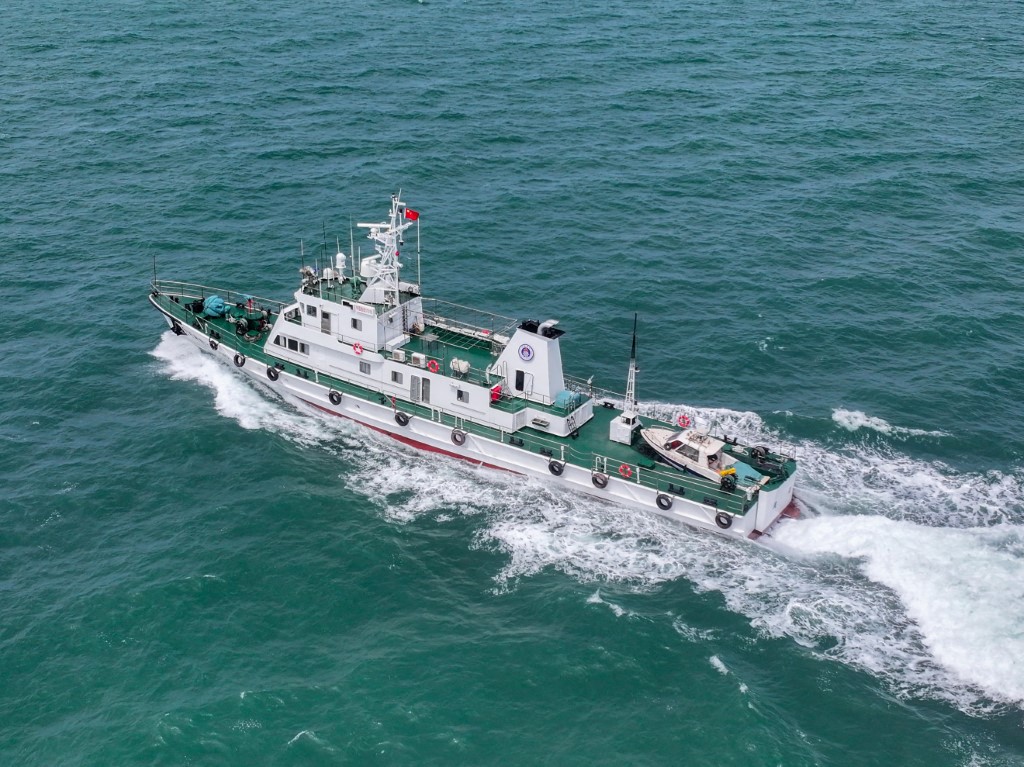
An SAR patrol vessel in Qingdao harbor.
The goal is to be able to operate continuously anywhere in the world by 2049. Since 2014, China’s fleet has ranked second globally by tonnage, behind the United States. In 2026, its expansion continues. The Chinese navy has commissioned its most advanced aircraft carrier, the Fujian, and is conducting ever more distant deployments, including in the western Pacific and around Australia.
China is therefore pursuing a two-stage strategy: Corbettian doctrine to manage today’s balance of power in a contested area where superiority has not been secured—the South China Sea (relative, local control; avoidance of head-on confrontation; harassment; maritime militia; artificial islands)—followed by Mahanian doctrine as its strategic goal once it has sufficient industrial and naval power by 2049 (a blue-water fleet and global power projection).
Japan a historic maritime power (merchant shipping, shipbuilding, fishing), but a naval power—through its Maritime Self-Defense Force—that remains legally constrained by Article 9 of its Constitution. Its growing distrust of North Korea, backed by China (and Russia), is leading it to acquire capabilities associated with both theories. Pacifist on paper, Japan’s fleet is technically highly advanced and among the most powerful in Asia.
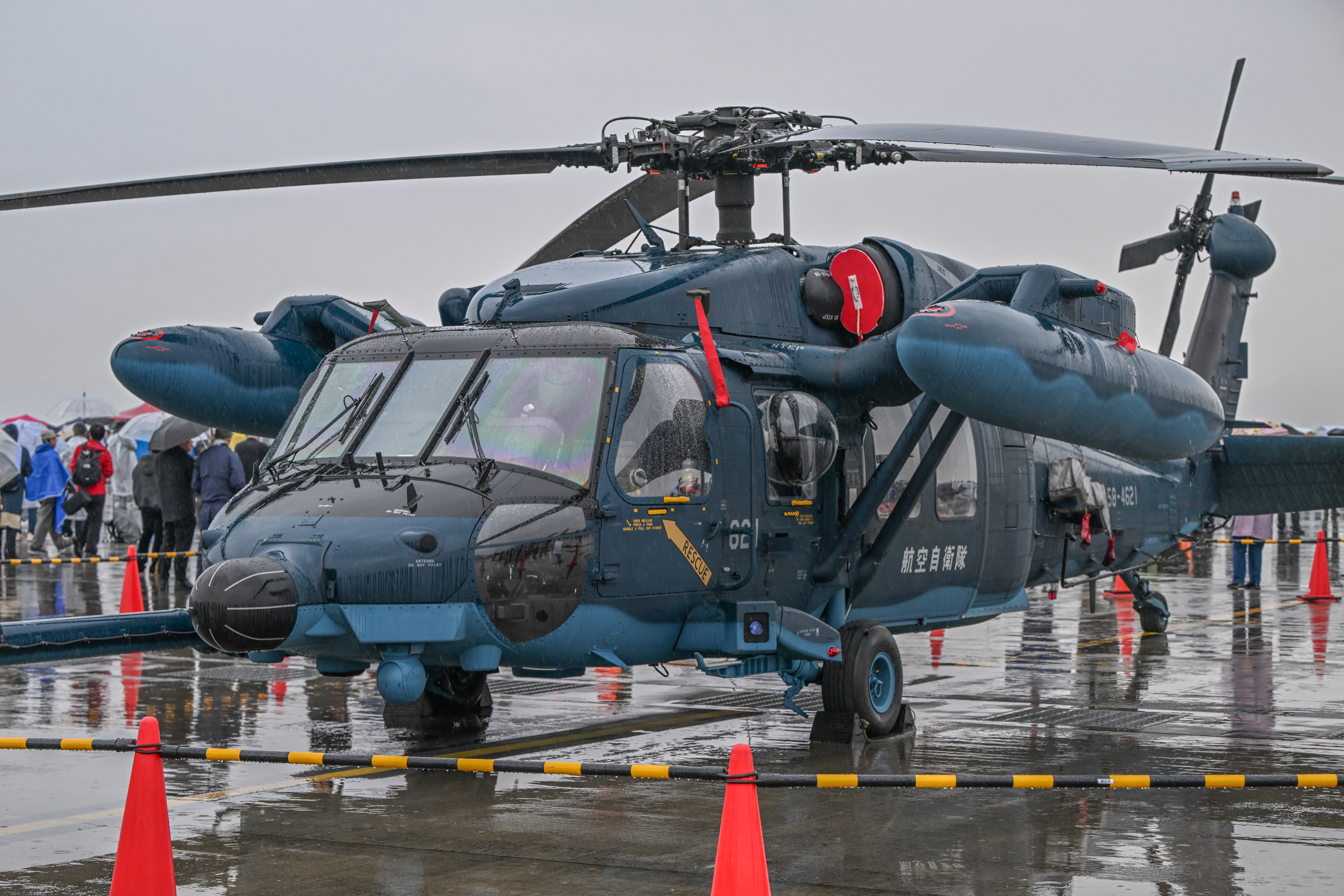
A Japanese navy Sea Hawk. (AFP)
The United States Navy and that of France are the only fully rounded navies. They possess every naval capability.
The United States remains faithful to Mahan’s historic model. It is the very embodiment of total synthesis: a merchant fleet, shipbuilding industry, overseas bases, and the world’s leading navy. Today, the U.S. merchant fleet has weakened considerably, with most ships involved in U.S. trade flying foreign flags, while its naval power remains dominant. This is the reverse of Norway’s imbalance.
Read more on the same topic:
Changing the rules of naval warfare internationally (1/3)
Command of the sea, naval power, maritime power (2/3)